Hawaii to Tahiti – Update #3
Video update and navigation report from Hōkūleʻa
Video update and navigation report from Hōkūleʻa
By ʻOiwi TV
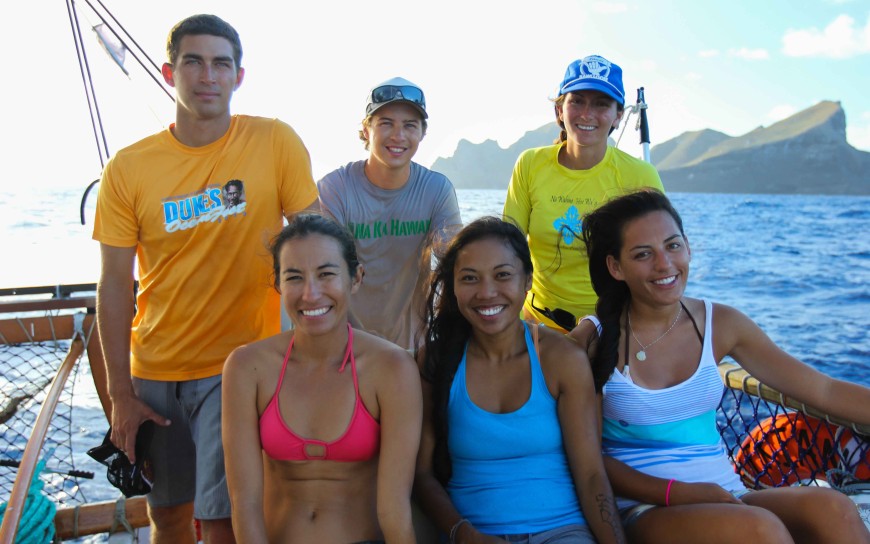
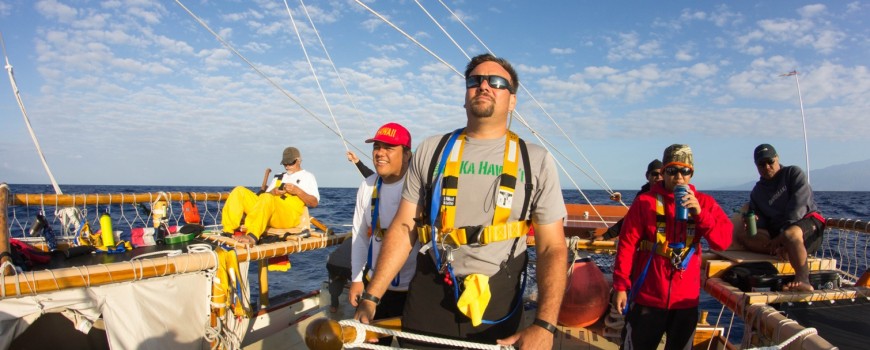
The Worldwide Voyage leg to Tahiti has multiple levels of reconnection and perpetuates traditional navigational studies. By understanding the history between Hōkūleʻa and Tahiti, some of the newer navigators in training get a bit anxious for the challenge ahead.
“I can imagine that finding something like Tahiti and what that did to reopen that route, it’s got to be such a deep amount of joy finding that. So, to get like a taste of it, it gave me more fears now. It gave me more doubts in myself, challenged me more. Being a kink in that whole chain, every day that’s a fear, doing something, offending somebody, not being able to live up to certain things, to ruin that story that’s been, that our ancestors were explorers and they were great and they were cutting edge and that it’s continued through to today because of the leaders that we have in Polynesian Voyaging Society right now,” said apprentice navigator Austin Kino.
“We’re not navigators by any means. We’re just students and if Nainoa still calls himself a student, it’s like, well then what are we? We’re just like, the tiniest, tiniest fraction of what they are,” said Jenna Ishii, another apprentice navigator onboard Hōkūleʻa.
With this in mind, these crew members reflected on their anxieties as well as their goals to overcome them as they grow into navigators.
“I think my greatest fear is being on the canoe, and trying to navigate as our hui, and then having Nainoa step in and just being like, you guys, we’re not prepared for this. I think that would be one of my biggest fears, it’s just, you know, not being successful, not living up to all that is kind of being put on us. It’s a big kuleana to be a part of this leg,” said apprentice navigator Haunani Kane.
“After this voyage, one of the big hopes is that those of us that have been learning will be able to kind of take the reigns. It’s a heavy kuleana that a lot of us do take seriously. And I think the teachers that we have, that invested their time in us, kind of having faith that their students will maintain, you know, the all that Hōkūleʻa has done up until now and continue that into the future,” said navigator Kaʻiulani Murphy.
With this pressure and understanding of their responsibilities, these individuals are also redefining the terms of success for this voyage to Tahiti.
“It’s not that we were able to navigate this and find this independent and everyone else is just quietly sitting by and watching us necessarily try things make mistakes, try them outthat really, really engage that opportunity to learn. Becausegoing to Tahiti is not a very frequent voyage. It’s been, I think, 19 years since we did this to Tahiti and it’s just a golden opportunity to learn so much,” said Lehua Kamalu, apprentice navigator.
“When we find, you know, Tahiti or the Tuamotus, whichever comes first for me, I think, I’ll feel good that we honored our teachers that they’ve done their job and that’s what Mau told Nainoa, you know. It’s that they’ve passed down everything they could in the best way possible that we could then take it, take it on,” said Jenna.

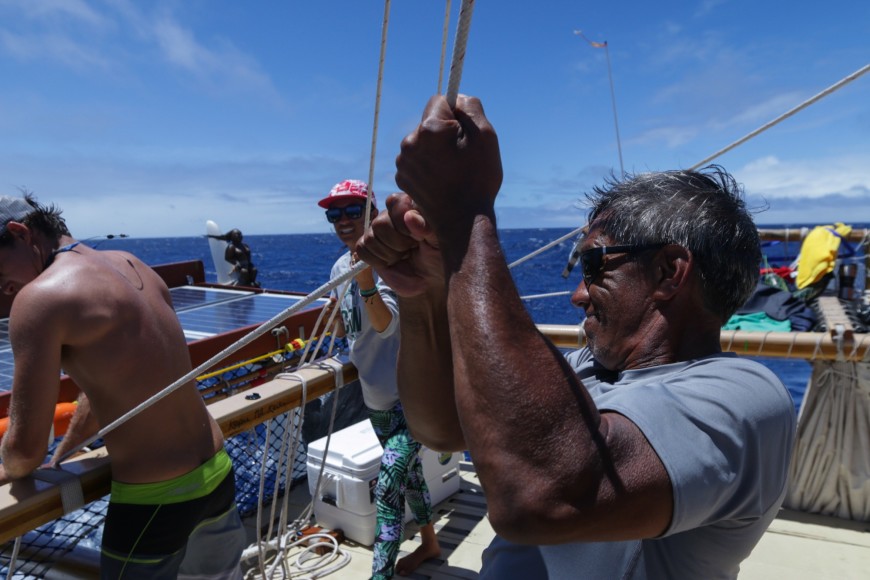
Quick update. from Hikianalia and Hōkūleʻa. Includes video navigation report.

Update via ʻŌiwi TV

Photos as Hōkūleʻa and Hikianalia voyage to Tahiti.
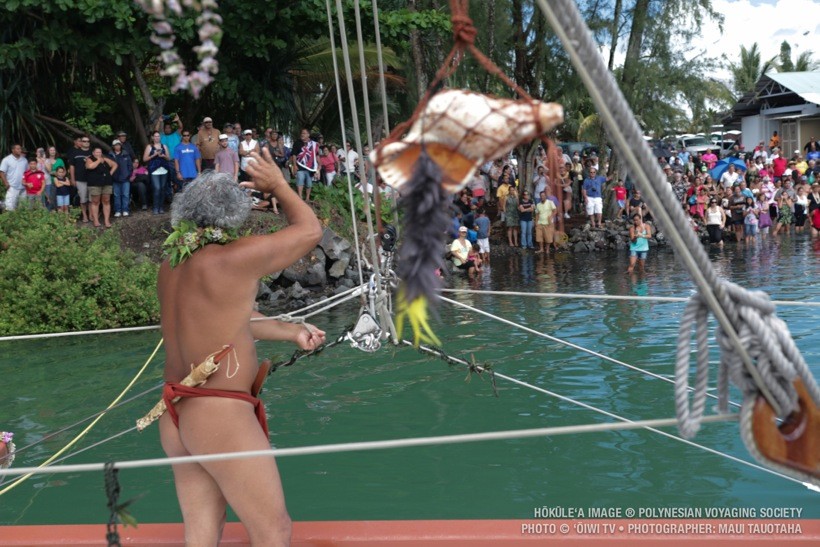
Hōkūleʻa and Hikianalia depart Hilo for Tahiti.
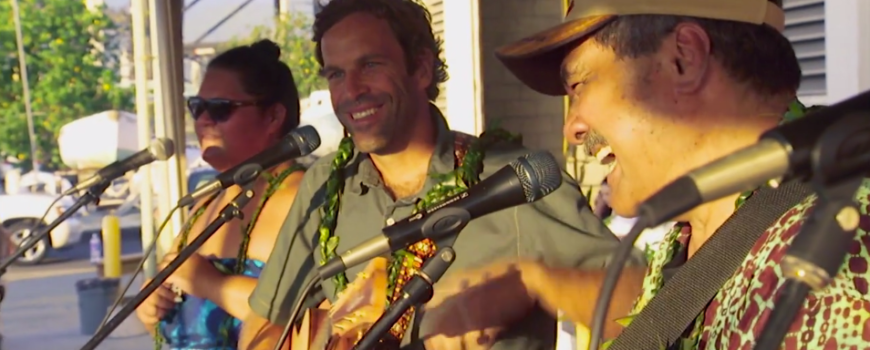
A new composition by Jack Johnson, Chucky Boy Chock, and Paula Fuga celebrate the new generation of navigators.
Now, some 15 years later, on the eve of this historic departure for these canoes and crews, it really is amazing to see how much of the preparation process of has remained the same. Hilo has been the staging point for many voyages to the South Pacific because of the easting that the canoes will need to get as they sail south. Hilo being one of the most eastern points in the Hawaiian chain makes the job that much easier from the start. But, Hilo is a perfect launching point for a slew of other reasons. Hilo’s spirit of hoʻokipa, or giving and offering, has epitomized the sense of community that we intend to take with us around the globe.
Literally thousands of members of our ʻohana waʻa (canoe family) have come to see the canoes. School groups by the busloads have come to share mele (songs) and hoʻokupu (offerings) to the canoes and crew. But if one looks a little closer, they can start to really notice how well this community still understands the sense of aloha. Every day for the past 10 days this community has come out to feed the crew three meals a day. Cars have been dropped off to help with last minute runs to the store. People have come without any expectation of personal gain to give of their time to just help us prepare for this 47,000 mile journey. Just this morning after sunrise, one of the uncles from nearby came to drop off a dozen or so lei, that he personally strung together with flowers from his yard, just to “Aloha” the canoes. He didn’t even ask to come aboard, rather, he left them in the care of one of our watch captains to bless the canoes with the sweet fragrance that reminds us all of Hilo.
What started as a mere dream to take our vessels around the world has come to full fruition, thanks in no small part to this sense of aloha, kuleana (responsibility) and sincere belief that the expansive ʻohana waʻa has in the mission of the canoes. From large corporations that are based on the East Coast to the woman who set up her own tent and massage table at Palekai to massage the sore muscles of a worn crew, they are all part of a this community, the ʻohana waʻa. It just so happens that this community is bound by the values that come from these vessels rather than the geographical space that they occupy. And for me, as a crew member, as a media maker and as a father, my great hope is that Hōkūleʻa and Hikianalia will travel the globe connecting a community that helps us all to recognize that we are all not that different if we look at our values and what makes us want to move forward together, as citizens of Island Earth.
Nāʻālehu