Songs of the Sea Through Marine Acoustics
When we are sailing, it is hard to see what’s inside the water but that night in the ITCZ we saw so much life.


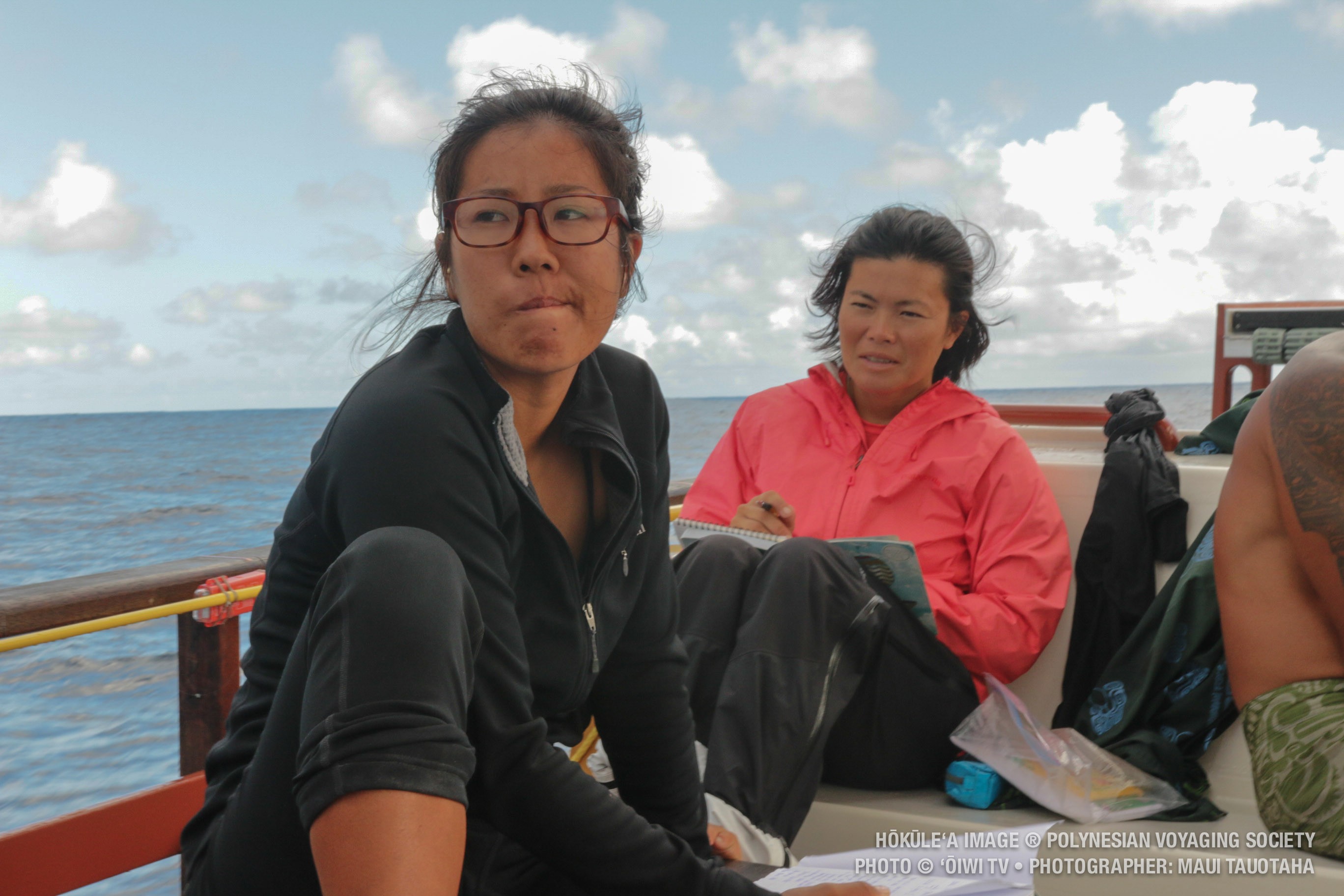
 We saw a lot of phosphorescent plankton at night and even caught them with plankton nets. A few days ago when we were in the ITCZ (Inter Tropical Convergence Zone) we saw a pod of dolphins. That night we saw many red eyes of ika (squid), malolo (flying fish), and even a small manō (shark). When we are sailing, it is hard to see what’s inside the water but that night in the ITCZ we saw so much life. Even though we are passing by an abundance of sea life, we don’t really hear them so I’m looking forward to the audio recordings that Hikianalia has been gathering throughout our voyage as we cross different latitudes on our way to Tahiti. My deepest gratitude goes out to the researchers, Whitlow Au, Jessica Chen, and Alexis Rudd from the University of Hawaiʻi for making this amazing project happen onboard Hikianalia, the science and technology canoe. It is through their project that we will gain a better understanding of marine life and our impact to the health of our ocean through the songs of our ocean animals.