Crew Blog | Rick Kilbride: The Relay

As a brief participant in Hōkūleʻa’s adventures in Maine and Canada, I’ve been privileged to observe this amazing organization and two dozen or so of the kind and spirited people from which it’s formed.  Along with the rest of the crew, I was presented a cherished eagle feather in Yarmouth, Nova Scotia at our welcoming reception there.  This is a pretty amazing gift for my bit part in this adventure.

IMG_0104

As I heard the crew discussing Hōkūleʻa’s Worldwide Voyage with visitors during boat tours and as I watched the leaders plan next legs, I thought of the marathon this is.  Much of what I heard was about the port visits and seas crossed by a vessel already 2/3rds the way around the world.  There was also the planning: finding the weather windows, preparing and provisioning the vessel, having the crews ready, setting up arrangements in the next ports, as well as contingencies, and on it went.  It is exhausting, and it is an enormous responsibility to the crew and the leaders.  Yet as I observed it and participated in some of it, I became aware that a marathon is not what this voyage is.  It’s a relay.

IMG_9943

In the context of the larger goals of the Polynesian Voyaging Society, Hōkūleʻa’s expedition is about passing along the baton.  It’s about handing forward to others the goals and dreams of the organization.  Nainoa Thompson was specific that the last leg approaching Hawaiʻi is to be navigated by the younger members.  In that unambiguous way, this journey is to end with a new generation carrying the baton.

IMG_0369

But the theme is broader than that.  Hōkūleʻa’s voyage is also about handing forward a sense of identity to Native Hawaiians that they are to pass to their children and communities.

lehua

In a relay, those that begin the journey are not those that finish it.  Further, the winning team doesn’t have to have the fastest members, but it does have to have those that can effectively hand off the baton.  We all know that passing the baton can be accomplished smoothly, or it can be fumbled and dropped.

Importantly, Hōkūleʻa speaks to the goals of clean oceans and living in a sustainable way on our earth.  The founders, maybe all of the crew, know that these are objectives of the journey that are not likely to be fully realized while they hold the baton.  Treating the earth more kindly, to which all the crew is so committed, is about helping a broader society meet these challenges.  It’s a way that we all seek to live, as well as a serious task that must be passed ahead and shared by a broader society.  This is why the educational aspects of the mission are both the most critical and the most far reaching.  Passing the message and the spirit of Hōkūleʻa to the next generations and influencing their education is the baton that must not be dropped.

Rick teaches at the University of New Hampshire and assisted the Worldwide Voyage in the northern waters of New England and Canada.


Help fund the Voyage as we sail the East Coast

Hōkūle‘a’s visit to the eastern United States is a historic milestone in her 40 years of voyaging.

Celebrate with us by pledging your support to the Mālama Honua Worldwide Voyage.
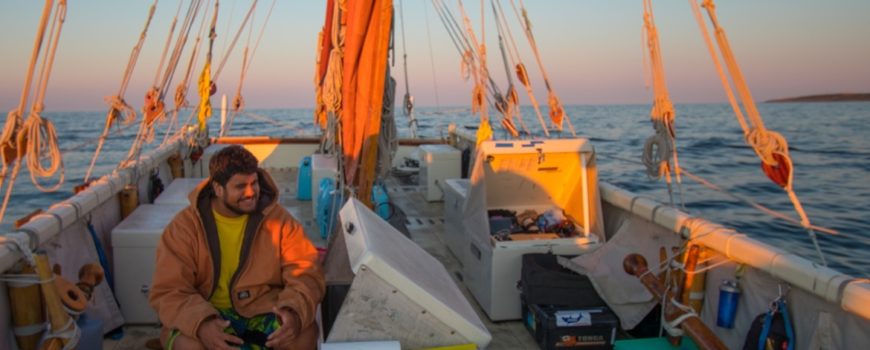
Continue Reading

Crew Blog | Nā’ālehu Anthony: The Wonderment of a New Port

As we sail from port to port, state to state, country to country for some, we are in a constant flux of emotion. There are times when we wish we could just stay a bit longer to investigate a place and learn more about the rich history of these extraordinary places; other times we know we have several more ports to get to in a short time and the anxiety builds as we await departure. The crewmembers who sign up and dedicate themselves to be part of the pool that are selected for the Worldwide Voyage are adventurous and inquisitive by nature; we take any opportunity to look around and explore whenever there is a scrap of free time between waʻa duties.

DJI_0002

>What’s interesting to me is the variety of travel experiences our crew have had (or not) before the WWV. Some of us have jobs that have taken us to many different places, so life on the road is not necessarily a new thing (although doing it by canoe is new for almost all).  And then there are other crewmembers who have not traveled a lot before joining the Voyage, if at all.  On this leg, some of the younger crew who have not been to the East Coast before this, let alone some of these more remote places that we have been to like Mt. Desert.  Just for myself, places like Apia or Cocos Keeling or Cape Town or more recently Yarmouth were never on my radar as possible places to visit but they became stops on the Voyage and therefore for me.  No matter where we might go and how often we travel, everyone agrees that arriving and visiting a place via voyaging canoe is unique, humbling, and life-changing.

IMG_2488Twenty-two year-old crewmember Nakua Lind is a perfect example of a new crewmember that has seen the world because of the WWV. Currently on his 11th leg of the Voyage, he has now seen more countries and ports than any of his contemporaries in his hometown of Hana, Maui.  As of his last days of high school a few years ago, however, Nakua had not yet ever even ventured outside of Hawaiʻi.  After graduating, he went on a youth trip to Spain – and got the travel bug.  Meeting up with Hōkūleʻa in dry-dock as we prepared for the Worldwide Voyage may seem like a happy coincidence, but we know it was more fate than accident – his great-grandfather Sam Kalalau, Sr. was one of the crewmembers on the original 1976 voyage to Tahiti.  Now a veteran on Hōkūleʻa, Hikianalia and several of our escort vessels, Nakua has been to ports like Rangiroa, Bali, Natal, Mauritius, and many, many others between.  Whenever he is called upon to support and crew any of the vessels and kuleana to support the Voyage, his answer is always yes.

IMG_2462

Nakua will probably end the voyage in 2017 as one of the top 5 crewmembers in terms of most miles served, behind only the captains and navigators who are on board for multiple legs at a time. And why shouldn’t he? He is young and dedicated, a humble and gracious servant to the canoe and mission; he is also becoming leader in his own right in many ways, embodying the core values of servant leadership. He has the kind of laughter that is contagious, and so he keeps the mood light even when the weather is dark and foreboding. He has the moʻokūʻauhau that connects him directly to the canoe and her humble beginnings. But perhaps most importantly, he is a sound investment in the future of Hana and Hawai’i.

IMG_2603

The point is this: Nakua and many of the now more than 250 crew will be forever changed by this voyage. These crewmembers will come back to Hawaiʻi in 2017 with a different worldview of what is possible for the places we call home. The idea of servant leadership will be embedded in them because of the examples we see in the leadership on the canoe.  Our floating island, Hōkūleʻa, changes everyone she meets, and those most impacted know that the kuleana of passing on those values to their own communities will set a new course and sail plan for a better future for this island called Earth.

No pressure Nakua, but we’re counting on you.

SB 68,
Nāʻālehu


Help fund the Voyage as we sail the East Coast

Hōkūle‘a’s visit to the eastern United States is a historic milestone in her 40 years of voyaging.

Celebrate with us by pledging your support to the Mālama Honua Worldwide Voyage.

Continue Reading

Hōkūleʻa Update | August 8, 2016

Leg 22 of the Worldwide Voyage has the perfect mix of veteran and new crewmembers. Since we started the voyage, more than 250 crewmembers have participated in the 21 preceding legs. This provides for a pretty good chance that some of our crew have sailed together before.

But no matter if you are a seasoned mariner or a newcomer, we consistently emphasize safety training to get everyone up to speed with the latest procedures that we have implemented for the Worldwide Voyage, especially the man overboard drill. We have refined how the system works and what to do in case someone falls over. We also went over the drill in case there is a fire on board, and we practiced opening and closing the front and back sails with the crab claw sail set. Even though many of us have sailed many miles on this canoe, things are always a bit different when we get back on board. Practice. Practice. Practice.

IMG_8874

While the safety aspects are the most important to the success of the voyage, there is also time needed for crew to get their bearings on board.  Even for myself, I need to take the time to get my sea legs and remember all the parts of the job that I have to do.  Moving into the bunk takes effort to set up all the gear and pelican cases in Starboard 4, and the media box that used to be sovereign territory for the ʻŌiwi TV crew has now been named “The Nav Room” with a sticker being placed unceremoniously above the latch.  I tried to peel it off but to no avail. So instead I put blue tape with the word “Not” above it. So it really is a different experience for each person as they get on board and get acquainted with the canoe and find their rhythm.

IMG_2455

But it was also a reunion for many on this leg of the journey.  The crew pool is so big that sometimes we don’t get to sail with people we know or we haven’t seen them since the last time we were all on board. I did a quick check today and found out the following:

  • The last time Kala was on board was in the Pacific in 2014. 
  • Hye Jung has not been on board since Australia
  • Timi and Tamiko last sailed in South Africa 
  • Nakua was last on board for the US Virgin Islands and Cuba leg.
  • For Zane, Keala, Art, Kalepa and myself, we were all part of Leg 20 that came up the coast from Virginia
  • And we have a fresh set of new crew members who are sailing their first leg of the Worldwide Voyage: Niko, Hina, Kaʻai  and Trissy.

IMG_2462

The stories of the different ports come out along the way.  The more seasoned crew share tips and tricks for the younger ones. There are a multitude of lessons embedded in the tales of crossing the Pacific or the Cape of Good Hope in South Africa. Luckily, some of this crew are great storytellers.  Not only is this the perfect mix of crew but this is also the perfect training ground for the new crew and a great leg for the veterans to hone their skills. As we get ready to embark on this next journey back down the coast we are reminded how lucky we are to be here with the mama canoe taking part in this epic voyage.  Mahalo to everyone at home who supports each of these crew members.  We will keep each other safe and travel carefully to the next stop. 

Until then well be standing by 68.

Aloha,
Nāʻālehu


Help fund the Voyage as we sail the East Coast

Hōkūle‘a’s visit to the eastern United States is a historic milestone in her 40 years of voyaging.

Celebrate with us by pledging your support to the Mālama Honua Worldwide Voyage.

Hōkūleʻa Update | Bay of Fundy

As the Mālama Honua Worldwide Voyage that launched from Hawaii in 2014 continues, crew members of Hōkūleʻa found themselves this week at one of the most amazing natural sites in North America – the Bay of Fundy. Nestled between the Canadian maritime provinces of New Brunswick and Nova Scotia, the Bay of Fundy is approximately 170 miles of rugged cliffs, booming ocean waves, and other awe-inspiring ecological elements. In 2014, an international panel of experts named the Bay of Fundy one of the natural wonders of the world due to the location having the highest tides on earth, attracting the rarest species of whales in the world, and housing semi-precious minerals and dinosaur fossils.  The visit to the Bay of Fundy supports one of the objectives of the Mālama Honua Worldwide Voyage to seek out environmental stories of hope and highlight the importance of caring for Island Earth.

IMG_8778

The Hōkūleʻa crew visited the area during a new moon cycle, a time when the tidal shifts are more spectacular. Kalepa Baybayan, pwo (master navigator) and captain of Hōkūleʻa’s current leg of the voyage, described their location. “It’s the geography of the bay that really accentuates the tidal currents here. It’s very wide at the mouth and very narrow at the end. There’s also this thing called tidal resonance, where the water flows in from the mouth of the bay to the inland shore, matching the tidal period and that accentuates the tide.” 

Greg Turner, a tour guide and expert for the Bay of Fundy, further explained the natural activities in the area. “I think one of the most spectacular parts of that (natural) formation and many others around the Bay of Fundy is the fact that if you are standing on the ocean floor, you can imagine six hours from now being completely covered in water and all of (the area) being totally underwater.”

IMG_8786

Hōkūleʻa crew members were in the Nova Scotia area for about a week, engaging with the area’s First Nations, learning about Canada’s natural resources and conservation efforts and offering canoe tours to the community. The legendary voyaging canoe departed Yarmouth, Nova Scotia on Thursday, Aug. 4, and has returned to Mt. Desert, Maine. The crew plans to continue engagements in the US New England states as she sails back down to New York.


Help fund the Voyage as we sail the East Coast

Hōkūle‘a’s visit to the eastern United States is a historic milestone in her 40 years of voyaging.

Celebrate with us by pledging your support to the Mālama Honua Worldwide Voyage.

Crew Blog | Niko Powell: Southwest Nova Biosphere Reserve

After a few days in Yarmouth, Nova Scotia enjoying the hospitality of the community here the crew got a special gift – one of the provinces’ very energetic community members treated us to a tour of the local Biosphere Reserve. We were introduced to John Sollow, a wealth of energetic knowledge of the Southwest Nova Biosphere Reserve (and probably every individual residing within). The cascade of information began as soon as we jumped in the car; touring on our way up the coast of Nova Scotia we are steeped in stories of ages past and present, from the once booming cotton canvas fabrication mill of Yarmouth, to the newest owners of the oldest house in the town.

IMG_4667

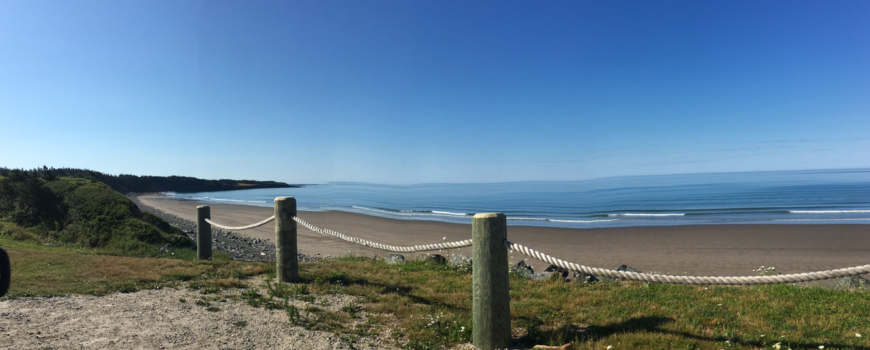
We came gliding into the windswept coastline, breathing in the shores and scents of Mavillette Beach. The crew paused for a moment to take in the old beauty of the long grey Nova Scotia sand and lowland ecosystem. Great Blue Herrings stood stoic in the tall grass and snaking salt marshes with small white houses planted on the emerald hillside. We scampered off through the hills, passing quaint homes and wooden churches to the French Acadian community and the Municipality of Claire.

IMG_8246

Greeted by friendly faces and ambient French Acadian music, we arrived at the Rendez-vous de la Baie, a community and museum dedicated to the history of the early settlers in Nova Scotia and their story. This community from the beginning only sought to coexist in peace and simplicity, marrying into indigenous Mi’kmaq families – they were then broken from their land and families for 100 years until finally finding communities that accepted them, becoming the Cajun communities of Louisiana, or finally coming back to Nova Scotia to reunite long lost families and grow into the Acadian people of today. Their perseverance, through discrimination and suppression have made them a proud community, but they have never lost sight of the peace they came to this land with. As Denis Comean, our guide through Acadian history illustrated perfectly, he spreads the spirit of togetherness and acceptance to everyone he meets in hopes that he might impact even one life.

After we departed, we looped back through the inland forests of Digby county and intoIMG_1480 Yarmouth county once more. We moved through the Acadian forests, a shamble of long leaf and conifer trees that stretches into a rolling green sea; driving, we slid down into long troughs only to climb up the crest of another green roller, passing meadow and farm, wooden home and church.
Along the way, John continued his storytelling adventure, describing some of the work he and other community members are struggling to do to combat the pollution of the lakes we could see shining between the trees we passed. As he explains, this is what the Biosphere Reserve is – a melting pot of community working together to grow and help to conserve the land that they wake up in the morning to. Maybe that’s what we should all aim to do – make a conscious effort every day to work hard, sleep well, and wake up to a beautiful morning.


Help fund the Voyage as we sail the East Coast

Hōkūle‘a’s visit to the eastern United States is a historic milestone in her 40 years of voyaging.

Celebrate with us by pledging your support to the Mālama Honua Worldwide Voyage.

Crew Blog | Nāʻālehu Anthony: Capturing the Changing Tides

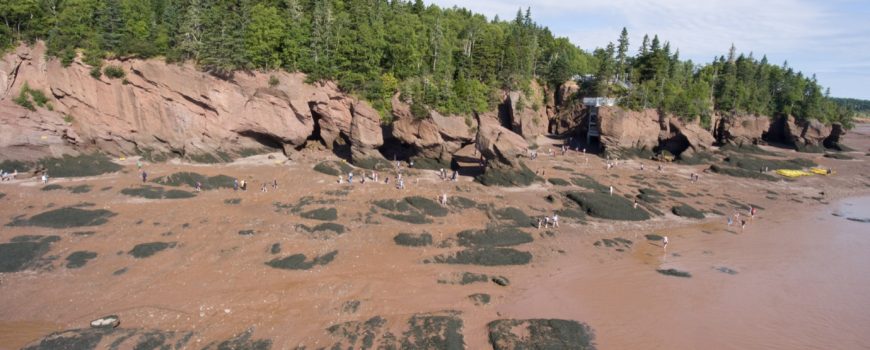
Today we spent the day at Hopewell Rocks in New Brunswick Canada. We were hoping to catch the enormous tide going in and coming out on this new moon that adds at least a few feet to the regular tidal surge. We are estimating that the total tidal shift will be 42 feet over 6 hours. We arrived and set up our cameras just after the lowest point in the tide.  The kind folks at the park allowed us to drive down to the location and forgo the 700-yard walk down to the flowerpots with all our gear.  A special shout out to Paul and Annik who really helped us get set up and accomplish everything we needed to in the available time. 

DJI_0108

We utilized a total of 9 cameras to try to capture today’s transition: two DSLRs, two GoPros, a drone, a DJI Osmo, a DJI Phantom 4, a Panasonic HPX 250 and an iPhone. Because our time on location is so tight (we have to drive the 600 km back to the canoe tonight), we needed all this gear to capture the different perspectives and durations to show the change over time. The tidal change is one of the most dramatic natural phenomenon that I have witnessed in a long time.  The landscape is, in itself, dramatic as the towering rocks stand in defiance to the endless onslaught of the tides. These rocks are known as “flower pots” because of the vegetation growing on the top of the towering pillars. The bottoms of the pots are eaten away by hundreds of years of tidal surge, but they remain. Guides tell us that these rock structures will not fall for at least 250 more years if conditions stay as they are now.    

IMG_8744

When one overlays the beauty of the flower pots with the fast moving tides, the sight is really something to behold.  We were hoping that our cameras can catch what the minds eye cannot fathom; just how fast the water encroaches on the landscape. For that I did a bunch of tests over the last few weeks to get a better sense of how to use the technology to illustrate this change through the lens. The core of it is a basic time lapse that we added a little twist to – literally – to make our time lapse pan across the landscape. For this we used a syrp genie that you can get off the shelf at all the big photography retailers.  It’s a pretty nifty thing. It has an app for an iphone and you can control just a few variables; panning angle, duration of the capture and length between each shot.  

IMG_8754

But besides the technical build of all this equipment meant to capture the tides coming in about 42 feet and then going back out, there is also a story of the extreme natural wonderment that comes with a place like this.   The whole concept is really hard to fathom; billions of tons of water will flow in and out of the Bay of Fundy every 12 hours. It’s like nature has perfected this delicate symphony of water moving across the landscape of the thousands of years that it has taken to also carve into the landscape to what we see today.  I really thought that the whole movement would be more violent then it is just because of the sheer volume of water that needs to move as quickly as it does. But in actuality, the water is very graceful and gentle. It’s kind of like at the beaches in Hawaiʻi where the water laps up against the sand except this water is in a constant state of pushing towards the land, gaining at every small ripple. 

IMG_8778

The other thing captured in almost all the footage is the volume of people that descend upon this place.  Thousands upon thousands come to witness the the flower pots in the summer every day.  They come on foot.  They come by bus. They even come by kayak, paddling through the water that was ocean floor literally minutes before. The season is short at Hopewell Rocks as the park is closed for the winter. This is another tide that rolls in and out during the year, flooding with visitors in the summer when the weather is more comfortable and ebbing as the snow brings some amount of quiet to the place so it can regenerate and find renewal for the next season of flooding tides. The rhythm of life is undeniable here stay tuned for the video story that we are working on that hopefully captured the pulse of Hopewell Rocks. 

SB 68
Nāʻālehu


Help fund the Voyage as we sail the East Coast

Hōkūle‘a’s visit to the eastern United States is a historic milestone in her 40 years of voyaging.

Celebrate with us by pledging your support to the Mālama Honua Worldwide Voyage.

Hōkūleʻa Update | August 5, 2016

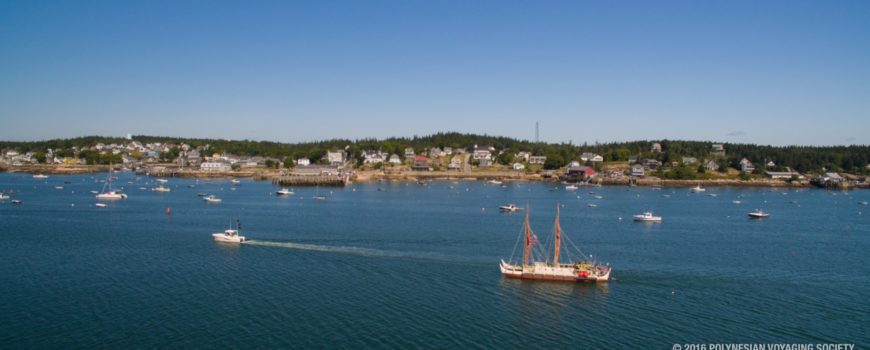
It’s our first morning back in Hall Quarry, Maine on the pier at J.W. Boat Co. We wake up to find that Rick, our enthusiastic escort captain is eager to share that he has a two-hour tour of parts of the island that includes breakfast at the local cafe. While Hōkūleʻa has been sailing around the world, her crews have shared the importance of learning local knowledge not only from indigenous people, but also from mariners who have been sailing and motoring in the places we are fortunate to visit. Rick, with his lobster boat, the Quinipet, has been traversing these East Coast waters for decades and, fortunately for us, has an oven that’s been baking us blueberry muffins along the way. Quinipet has been a companion for Hōkūleʻa for our Leg 22 visit from Maine to Yarmouth, Canada and back. Rick has been extremely helpful in giving advice, knowing where to avoid and best routes for our journey. We are thankful for his willingness to help with this journey and be a part of the crew, like many other friends we’ve met these past three years. 

DJI_0039

Our first stop is to Brandon & Laura’s cafe, where the sign says “Eat where the locals eat.” There are random humorous signs that hang everywhere which include “Fish stories told here – ‘some true’” and “Business hours subject to change during fishing season.” Even though we’re off watch, the voyage continues on land. No matter where we go, people are interested in why we sail and so discussions soon starts with the locals of the place with us strangers who were clearly not from around these parts. A man even gave us a magic show where he made one dollar bills turn into 100 dollar bills; we adults were actually quite impressed. After a breakfast full of homemade oatmeal, cinnamon bread, and blue berry pancakes with real maple syrup, we set out on a mobile tour guided by captain Rick.

IMG_0405

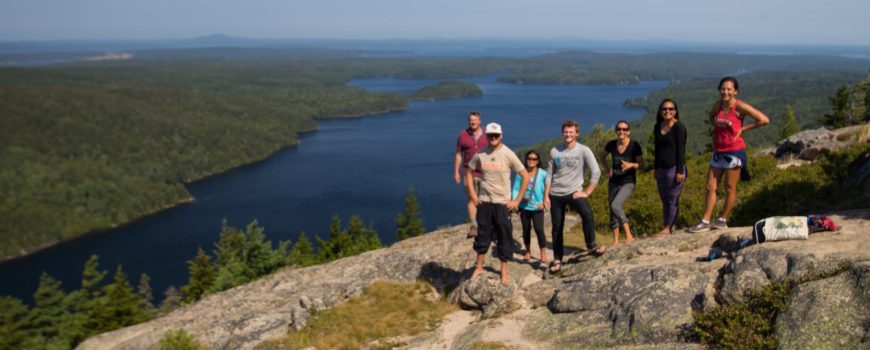
Down the rocks of Bass Harbor head, we visited the light house where we learned that this was the location where Captain Rick proposed to his wife. We passed Beech Hill farm that looks so beautiful with all kinds of fresh food growing. We saw rows and rows of kale and it looked like they were harvesting beets in the field. Rick swears by their tomatoes as well. We had a choice to go ma uka or ma kai, towards the mountains or towards the sea. We chose ma uka. Climbing up the smooth rocks, some of the crew naturally took off their slippers to hike. We learned how to tell the difference between fur and spruce trees; “flat flexible fur, sharp spiky spruce.” Barefooted we reached the top of Beech Hill where an old fire watch station still stands. There once was a time where people use to be paid to look for forest fires and direct the firefighters on where to go. Now it is a boarded up relic that has some of the best views of the area. From the top we are able to see the entire ahupuaʻa; what we call everything from the mountain to the sea at home. Rick stands pointing to every lake, hill and mountain by name because he is connected to this place. 

I encourage you to go on a hike and look around just like how we did today. Can you name every mountain or river? Do you know the stories of your place? Draw a map and if you don’t know the answers, go find them. Mālama honua, taking care of the world begins with deeply knowing and taking care of the places we call home. 


Help fund the Voyage as we sail the East Coast

Hōkūle‘a’s visit to the eastern United States is a historic milestone in her 40 years of voyaging.

Celebrate with us by pledging your support to the Mālama Honua Worldwide Voyage.

Hōkūleʻa Update | August 4, 2016

I forgot how much I missed sailing on board Hōkūleʻa. 

Keala, Kālepa and I drove back to Yarmouth, Nova Scotia with just enough time to get on board Hōkūleʻa to make the transit to Mt. Desert, Maine.  By the time we got our gear back to the pier and returned the car, it was about 1:30am and crew call was at 3:30am for a 4:00am planned departure.  The canoe was set to go when we got there, and so we rested for a few minutes in the darkness of the early morning and got up with the rest of the crew to cast lines and depart. Exiting any new sea channel is always precarious; the one at Yarmouth was no exception, but we did so without any major hiccup or unnecessary fuss. After making sure we were safely underway, my watch went back to sleep. We were not scheduled back up on watch for four more hours, and so I jumped into the starboard 4 bunk with no problem of getting more rest after a really long day. 

IMG_0355 

In summer here in the north waters of the East Coast, the wind has a crisp edge to it, and the sun is hot. The combination is great if you can find a balance between the two.  At the early morning light when my watch has to get up, it’s hard to tell if the wind and sun are working well together.  The canvas flap of the bunk is the only barrier between me and the outside world, and it is doing a fine job protecting me from the elements. I can still hear the wind and water rushing by and can hear the crew in conversation in the distance.  This can, however, be a hard lesson in the early morning as the wind can come at us with some cold, consistent, force.  

IMG_0369

So the first thing I do before even considering going outside my bunk is feel the deck of the canoe.  Is it wet? Is there rain? If there is, I need to think about what I need to do to stay dry in anticipation of four hours of standing watch in the elements. Today the deck is cold and a little damp from the dew but it is not covered by cold wet rain. Then I reach up as high as I can out side the bunk to check the temperature of the air. Is it colder than it was when I went to bed? How much wind is there? Today I can feel the wind but I also feel the heat of the morning sun competing against the wind. These are the tests of my natural environment that I practice every morning so that I can put on a jacket or a couple of layers to protect me from the weather that can be so unforgiving it becomes the villain in some of the novels from these parts. 

IMG_0389

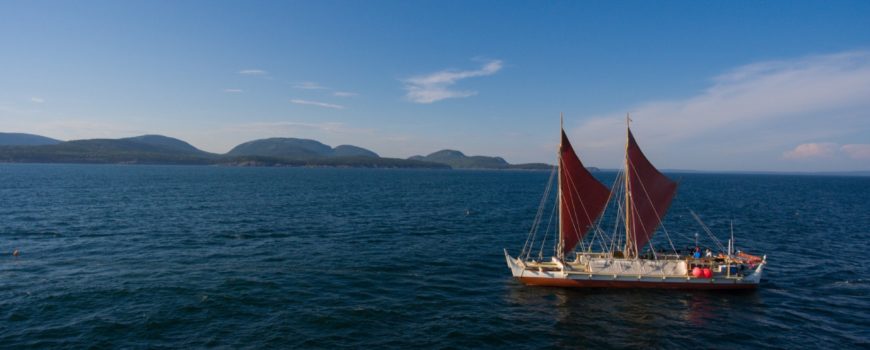
I climb out of the bunk through the flap in the canvas that protects us. I immediately feel the warm sun on my face as I take a second to get my bearings.  Its always like this in the early days of the journey, but things become more rhythmic as we progress. Getting up and seeing the sails open and the sky clear takes me to a whole other place.  The horizon is empty all around us. Our main and mizzen crab claw sails are open, filled with the crisp wind that we always hope for.  The last crew put up a jib so that the steering would be more balanced. I forgot how much I missed this.  It has been a year since I got to sail with no sight of land, with the sails up driving us towards a destination with certainty. The morning light shines on the canoe with favor and the scene is dream-like for me.  Maybe its just too early in the morning, maybe its because just hours ago we were on a dock surrounded by the sleepy town of Yarmouth. Whatever it is my brain is still having trouble processing that were sailing in the deep sea. 

 SB 68
Nāʻālehu


Help fund the Voyage as we sail the East Coast

Hōkūle‘a’s visit to the eastern United States is a historic milestone in her 40 years of voyaging.

Celebrate with us by pledging your support to the Mālama Honua Worldwide Voyage.