Photos: A Promise of Learning
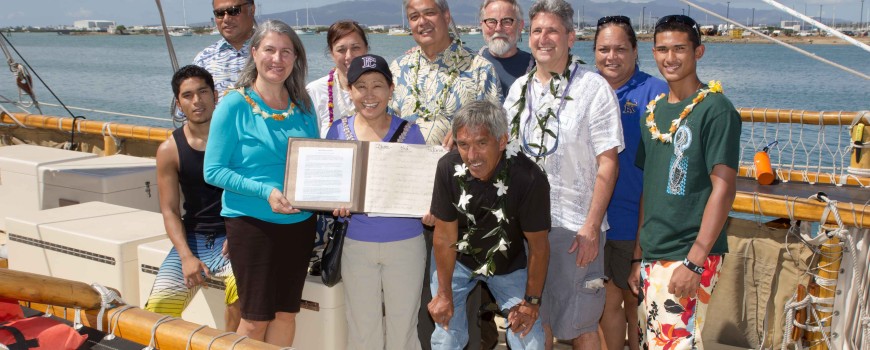
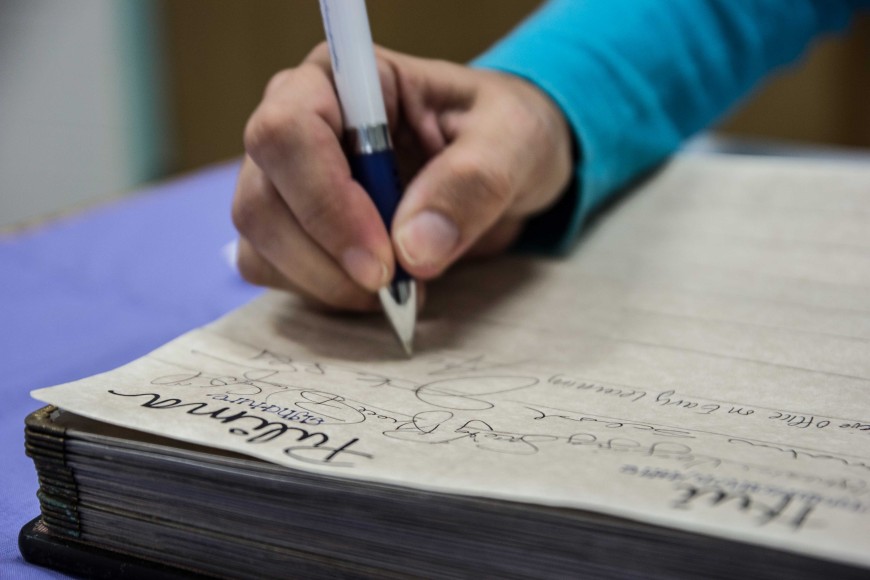
Hawaiʻi’s education leaders signed a promise to collaborate with the Polynesian Voyaging Society when Hōkūleʻa and Hikianalia depart on the Worldwide Voyage sponsored by Hawaiian Airlines.
Video: Waimānalo Waters
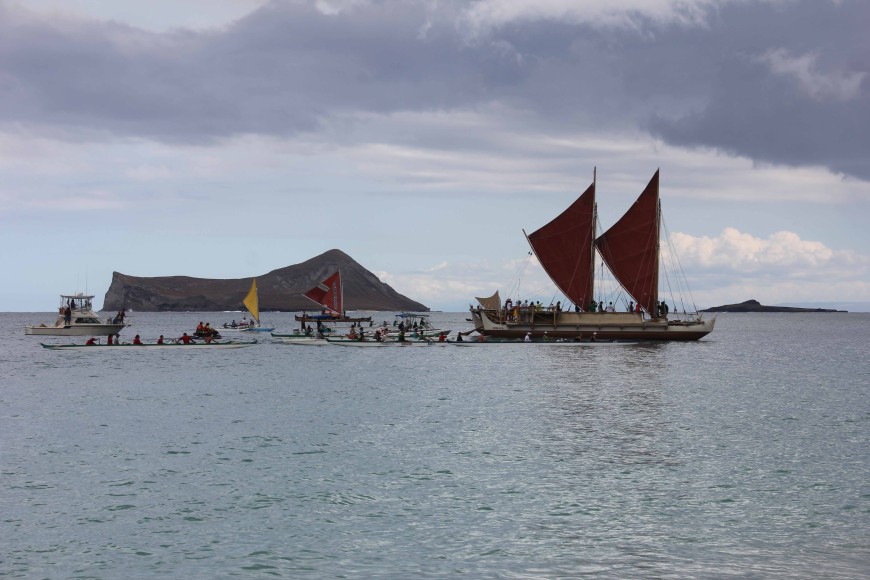
It means a lot to have Hōkūleʻa be here. First of all because they don’t represent people just coming, just navigators; they represent our lāhui. They embody the ʻike of our kūpuna. And they pretty much proved it. So I saw it as an opportunity to bring our community together a little bit more,” said Elijah Kalani Isaac, a Waimānalo resident.
Although Waimānalo was one of the last stops of the Mālama Hawaiʻi voyage, masses still lined the shoreline as the Hōkūleʻa approached.
Being on the Hōkūleʻa and seeing the response from all the people, that brought chicken skin to all those that was on the waa, And you could hear their voices coming out into the canoe, the waʻa. And then we heard the conch shells blowing and it was just amazing,” said Dennis Sallas, also a Waimānalo resident.
The arrival coincided with the annual Waimānalo County Fair where crew members were welcomed and recognized.
It’s a time for people to be happy. Especially good times, when we get to march together. And not being together in unity for an injustice, but something that we want to celebrate.
Video: Hōkūleʻa Arrives in Maunalua
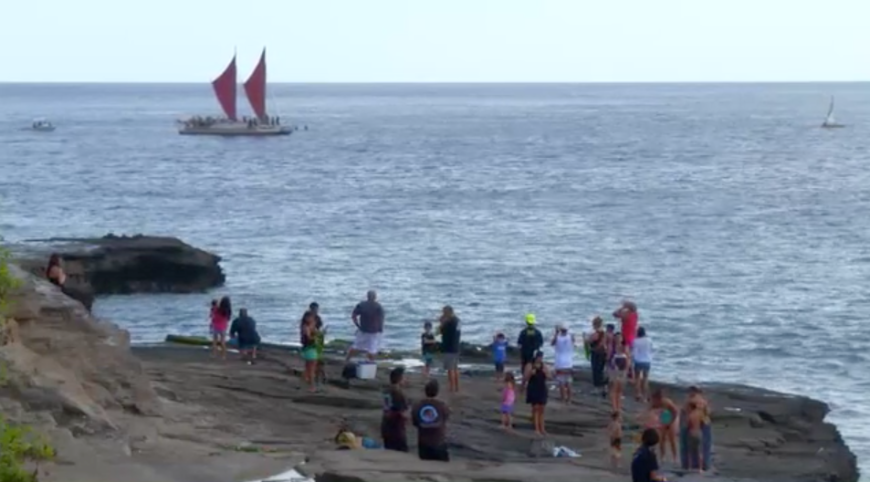
Hōkūleʻa was welcomed into Maunalua Bay at Kawaihoa by paddlers from Hui Nalu Canoe Club. After towing into the bay and dropping her sails and masts she made her way under a bridge to dock at Hawaiʻi Kai Towne Center where she was met by the Maunalua community. Mahalo to Ricky Mead and Jesse Yonover for their help with the Go Pro footage.
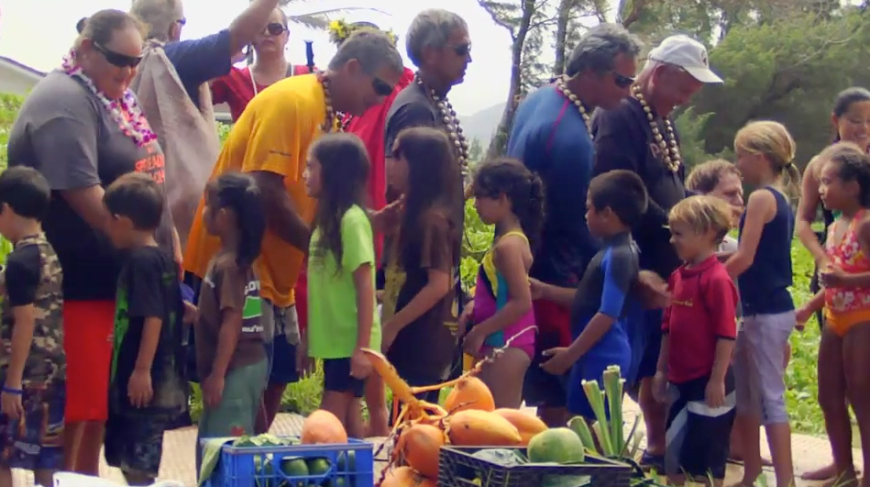
Video: Hōkūleʻa’s First Visit to Lāʻie, Oʻahu
Kūpuna, mākua, and keiki recently gathered at Hukilau Beach to greet Hōkūleʻa and her crew for their long-awaited first visit to Lāʻie.
“There is so much aloha that the community has for Hōkūleʻa and for the whole idea of voyaging,” said Kawika Eskaran, captain of Iosepa.
This aloha is manifested in the voyaging canoe Iospea, which is supported by the BYU-Hawaii and Lāʻie communities. Iosepa was launched from these same shores in 2001 and its vision has been reaffirmed by Hōkūleʻa's presence.
“I know there’s a lot of liability involved, especially we, who belong to the University and there’s liability with students, so what we’ve tried to do over the past 12 years is just develop a track record and show that we actually know what we’re doing. So to have Hōkū come, hold hands with us, lends credibility to all of our efforts,” explained Kawika.
“Hōkūleʻa has given them the strength to continue their journey with Iosepa,” remarked Koʻolau Hawaiʻi Civic Club Member, Dr. Francine Palama.
This collective voyage of the BYU and Lå'ie communities will continue in a younger generation who are connect with Iosepa, Hōkūleʻa, and our ancient seafaring traditions.
“It has been awesome for the children to connect, not only through ʻāina, through classroom, but through video, through all the pictures, all the stories, especially for today. It will inspire the children because they will see it as their own Iosepa, to see that there is another canoe that has a rich history and they too can also compare their history with what’s happening with Iosepa,” said Dr. Palama.
“You could use it as a metaphor for everyone’s lives: voyaging into the future, into the unknown, yet we hold hands as a crew, as a community you know, to meet the hardest of life’s challenges together,” reflected Kawika.

Video: Pacific Islands Leadership Program on Hōkūleʻa
“We are all connected by the ocean. The Hōkūleʻa is symbolic of those ties, and I believe that Hōkūleʻa is the ambassador, not only for Hawaiians, but also to all other indigenous people from the Pacific,” said Claire Hiwahiwa Steele, a project assistant with the Pacific Islands Leadership Program (PIL:P).
“I heard about the Hōkūleʻa back home, cause I’ve had the opportunity maybe three years ago to join members of the Fiji Islands Voyaging Society cause we also have like a waka, which is called the Utunialo. The waka or the canoes such as Hōkūleʻa or the Utunialo, it’s almost like this connection back to the natural environment,” remarked PLIP Fellow Akisi Vakamaiverata Bolabola.
A connection that has become blurred among many generations throughout the Pacific Islands due to colonization that started as early as the 16th century.
According to Akisi, “We get sucked into the need to have fuel and all that because of like transporting and shipping services and all of that 135509 but imagine if that were to come to pass. What are we going to rely on?”
Leaders. And Akisi is among twenty others who are a part of a new rise of leaders involved in the Pacific Islanders Leadership Program.
“It’s a three-month program where the participants are residents at the East-West Center in Honolulu studying leadership, and it is more culturally based so that they can apply it back home to strengthen ties and also to collaborate in economics, political and social issues that are happening in their homelands,” said Claire.
Through this program, these future leaders were given the opportunity to visit Hōkūleʻa in HER homeland, in Hakipuʻu, where she became the vessel to point them in the direction of sustainability, the path they will travel on together.
“It forces us to almost look at alternatives and at the same time, most of us are beginning to explore the traditional ways presented back then. We need to just take the time out, go back to the environment, go back to the sea, go back to the forest and find out how we can better give back to not only to our families, but to our communities, to this kind of innovative mechanisms. There’s so many ways we can learn from what was practiced before, and Hōkūleʻa is a great example,” said Akisi.

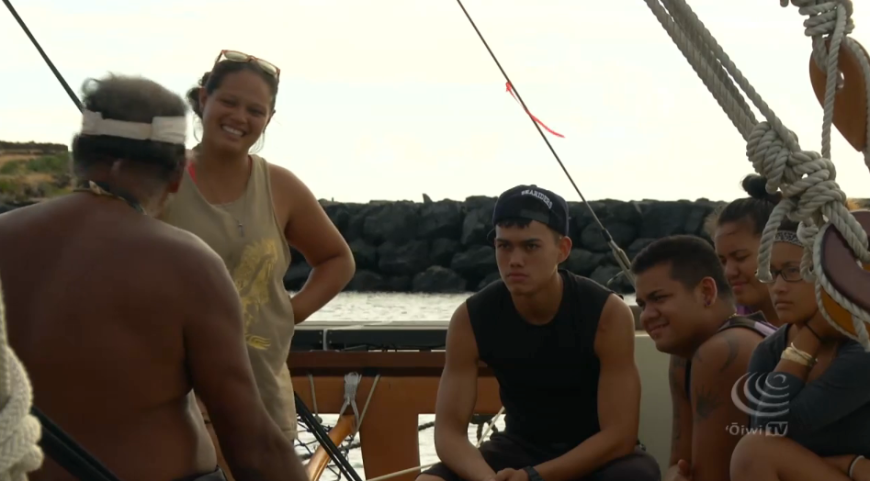
Video: MA’O Organic Farms
As Hōkūleʻa and Hikianalia continued their journey along Oʻahu’s Leeward Coast, the crew was greeted by community members who long awaited their return. One group in particular, was MAʻO Organic Farms who welcomed the crew to their ʻāina deep in the valleys of Waiʻanae. Crew members returned this hospitality by hosting MAʻO aboard the waʻa.
“I really believe that relationships are going to save the world. So coming here on Hikianalia and Hōkūleʻa was another reminder of that,” said Kaui Sana, a farm manager at MAʻO Organic Farms.
These relationships extend to the deeper connection of mauka to makai, which we as kanaka find identity and a sense of direction.
“We’re only a moment between two eternities What is my kuleana? What am I doing in the present, what am I doing for the future? What am I doing with all the knowledge that all my kūpuna left me? It’s like what Uncle Maka was saying, like it’s more than a boat; it’s your connection to the past, it’s your own knowing of where you are in the present and for me, that’s like what we’re trying to do at MAʻO,” reflected Sana.
After completing the MAʻO college internship program, Kaui understands the need to “grow” farmers who will help move Hawaiʻi back to a sustainable state.
“I grew up through MAʻO Organic Farms. We may not be growing as much traditional foods as we want, like kalo, ʻuala, we have maiʻa, you know, banana and stuff like that, but we grow vegetables- we grow kale, we grow lettuce, we grow turnips and it’s way different, but the practice is the same. The energy and the intention that goes into what we practice is Hawaiian. That’s the value,” explained Sana.
It is the understanding of this value that shines light on the purpose of every path traveled in Hawaiʻi, whether on land or at sea.
“To be able to be out in the open and just see nothing but know where you’re going. Must be a really amazing feeling. And that’s the same concept why everyone is watching Hōkūleʻa on her voyage. That’s their magical solution to finding a way back or knowing where our point is in these two eternities,” said Sana.