ʻŌiwi TV Waʻa Training

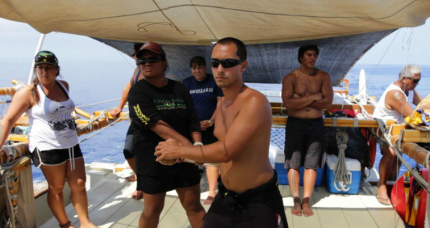
As Hōkūleʻa and Hikianalia continue on their initial legs of this epic worldwide voyage, we at ʻŌiwiTV are honored to document this adventure. A, ʻoiai, ma ka hana ka ʻike, we are doing some training of our own to make sure that we are prepared to bring you the best of the best!

“We’ve had the privileges to have been on sailing canoes. We’ve been up to the Northwestern Hawaiian islands, we’ve been to all kind of venues that really set us up in a great way to be able to execute a job such as this,” said Nāʻālehu Anthony, executive producer of ʻŌiwi TV.

“So I think in the past, you know, we’ve done stories in Norway, in Tahiti and different locations around the world. But I think for this Worldwide voyage, the thing that’s really different is that, instead of flying to these destinations and getting these stories, we’re trying to capture the stories as they are happening on the journey as the as they unfold onboard Hōkūleʻa and Hikianalia,” said ʻŌiwi TV production manager Bryson Hoe.

“The teamwork that we have on land at this point is in harmony. We can look at each other and know what’s needed. We’ve had a lot of preparation in the shooting half, but all of that has been on land. And that what we are asking now, photographer and editors to do is take the knowledge that we got on land and now do it on a canoe and be a canoe crew member as well,” remarked Anthony.

“I’m not too to maʻa being onboard. I have experience shooting here and there, and editing and what not, but literally, being on a different platform can be really, really challenging” said Hoe.

Hikianalia captain Bob Perkins stated that “Understanding that the boats going to be rocking and rolling and understanding also that you are going to be part of the crew.”

“It also has to be with the crew being comfortable with you. Being on a relatively small are for such a long time, it’s necessary to get to know these crews so then for me, that’s where the most interesting things happen onboard, you now, between people as they build these relationship,” acknowledged Hoe.

“When we talk about the core work that we do at ʻŌiwi TV, we’re constantly talking about the perspective. And so, if you want a Hawaiian perspective, on a Hawaiian canoe, then you have to have people come in that have that kind of perspective.”

“It’s never been done before, and that means it will never be done again. This is the first time, it is going to be the only time with this type of experience, taking these type of waʻas around the world has never been done,” said Bob Perkins.

Anthony said, “I am certain that the team can do it. There’s this funny line that we use onboard the canoe right, ʻI trained my whole life for this.ʻ But I really feel like the last five years of what we’ve done in terms of building capacity, in terms of training crews, in terms of, being pili to this larger term of the worldwide voyage is our opportunity to contribute and give back to the story of the canoe.”

Ua holo aku, a ua hoʻi palekana mai nō, but the fun and lessons have only just begun. So come along with us, the ʻohana ʻŌiwi TV as we bring you more stories of this epic worldwide voyage.
Continue Reading

Hōkūleʻa Training at West Hawaiʻi

Oiwi TV (Kawaihae)

While Hōkūleʻa is on her extended stay in West Hawaiʻi, it is a great opportunity for the local voyaging community to get training time aboard Hōkūleʻa.

[tabgroup] [tab title=English]

While Hōkūleʻa is on her extended stay in West Hawaiʻi, it is a great opportunity for the local voyaging community to get training time aboard Hōkūleʻa.

“We invited all of the crewmembers to gather as one crew and practice sailing together.” says Makaliʻi crewmember, Lehua Wilson Ah Sam.

Hōkūleʻa crewmember, Dennis Chun, says that, “bringing together people from different places and different organizations and getting into a situation where we all kind of needed to work with each other, and cohabitate in a sense, was really good; seeing people we haven’t seen in a long time, and rekindling old friendships, and introducing new friends into the circle.”

Pwo Navigator, Shorty Bertleman says “that’s why today it was awesome to sail with them again; with everybody. What we are trying to do is get people ready for what this mission is all about. Coming from the training from us, they get a lot of training on board Makaliʻi…but still we have to learn Hōkūleʻa. And even if we are voyaging people, we have to make sure that we do things right. That we plan right and we train properly before committing responsibility; taking care of that responsibility.”

“A lot of the crewmembers who sail on Makaliʻi, are very familiar to Makaliʻi. And having the ability of having Hōkūleʻa home…it was real specific for us that we wanted all of our crewmembers to get onboard Hōkūleʻa, because, that will be the canoe that will be sailing if they are fortunate enough to be crewmembers chosen for the worldwide voyage. So for a lot of them, none of them have sailed with Hōkūleʻa before; some of us, the older ones of the crewmembers have. But you know, in this training that everyone is trying to do, worldwide voyage, we wanted to be real specific to Hōkūleʻa.” says Pwo Navigator, Chadd Paishon.

The first stop for this ʻohana holokai was the traditional fishing village of Miloliʻi.

“It gave an opportunity for some of our younger Kauaʻi crewmembers to get on Hōkūleʻa, and to go out and sail. It was an opportunity for us as an organization on Kauaʻi to hui with Nā Kālai Waʻa here, as well as to meet wth the Hōkūalakaʻi guys in Hilo side, and all sail together, as ʻohana waʻa.” says Dennis.

“In that sense that whatever way that we can support with Makaliʻi, when Hōkūleʻa leaves Moku o Keawe, we will continue training with Makaliʻi. It’s a great honor to spend time onboard Hōkūleʻa, and for us, that’s really that part that we want the crewmembers all to understand. That whatever time they have, whether they are able to do one leg, or multiple legs, the time that you have is really short, so you have to make that time count.” says Chadd.

For more information, go to hokulea.org

[/tab] [tab title=Hawaiian]

Iā Hōkūleʻa e holo ana ma ka ʻaoʻao Komohana o ka mokupuni o Hawaiʻi, ua hoʻoholo ihola ʻo Makaliʻi mā, me nā kānaka holo kai ma o ka paeʻāina o Hawaiʻi, e hoʻohana i kēia wā e mea e hoʻomākaukau a hoʻomaʻamaʻa i ka holo kai ʻana ma luna o Hōkūleʻa.

“No kēia holo moana ʻana, ua kono nā crewmembers nō hoʻi o ka ʻohana o Nā Kālai Waʻa e hele pū a kau ma luna o kēia waʻa i mea e hoʻokahi ka ʻohana. I hoʻokahi kākou a pau, ʻoiai kēia Worldwide Voyage nō hoʻi, he mea nui no ko kākou kaiaulu, no ka paeʻāina.” wahi a Lehua Wilson Ah Sam, he kanaka holo kai no Makaliʻi.

Wahi a Dennis Chun, he kanaka holo kai no Hōkūleʻa, “ua hua maikaʻi kēia hui ʻana o nā kānaka no nā wahi me nā hui like ʻole, kau ma ka waʻa a komo like i ka hana. Ua launa hou me nā maka kamaʻāina, me nā maka hou kekahi.”

“No laila i maikaʻi ka holo kai ʻana. ʻOiai maʻa mākou i ko mākou mau waʻa ponoʻī, ke ʻimi nei kākou i ka hoʻoikaika ma ka Hōkūleʻa. I loko nō o ko kākou kālena holo kai, mau nō ka pono e hoʻomākaukau a makaʻala i ka hana i mea e ʻauamo maikaʻi ai i ka hana.” wahi a Shorty Bertleman, he kanaka hoʻokele.

“ʻOiai aia ʻo Hōkūleʻa i ʻaneʻi, he makakoho ko kākou holo ʻana me ia no ka mea, ʻoiana ka waʻa e holo puni honua ana. Pono nā kānaka e hele a maʻa i kona ʻano. Ua ʻike mua kekahi o mākou, akā, ʻano ʻokoʻa ʻo Hōkūleʻa i kēia manawa. No laila, pono kākou a pau e aʻo pū.” i ʻōlelo ai kahi kanaka hoʻokele aʻe, ʻo Chadd Paishon.

ʻO kahi mua a kēia mau holokai mai ʻō a ʻō i hele ai, ʻo ia hoʻi ʻo Miloliʻi, ka ʻāina kūʻokoʻa a kaulana no ka hana lawaiʻa kuʻuna.

“He wā ia i hiki ai ko mākou poʻe ʻōpio ke aʻo. He wā pū ia i hiki ai iā mākou a pau ke hui like, launa, a hoʻolauna kekahi i kekahi ma ke ʻano he ʻohana waʻa like.” i ʻōlelo ai ʻo Dennis.

“Me ia manaʻo, e ʻimi ana mākou i ala no mākou e hoʻomau aku i ka hoʻomākāukau ʻana, ke haʻalele ʻo Hōkūleʻa iā Hawaiʻi. He pōmaikaʻi ke kau moku ʻana ma Hōkūleʻa. Makemake mākou i ko mākou e ʻike i kēia waiwai a mālama i nā mea ia aʻo ʻia ma o Hōkūleʻa.” i ʻōlelo pani ai ʻo Chadd.

[/tab] [/tabgroup]


No nā kūmole a ʻikepili no ka Huakaʻi Holo Puni Honua, ʻo Mālama Honua, ma ka ʻōlelo Hawaiʻi!

Miloliʻi: One of the Last Traditional Fishing Villages

Oiwi TV (Miloliʻi)

“Miloliʻii is located in Kona Hema, or the south part of the big island. We mahalo our kūpuna, basically those who have already passed on and those we are grateful to have with us today. If it wasn’t for them who taught the younger generation, a lot of the practices the traditional practices of fishing, even with the māla, the ʻāina, everything would have been lost.”

“A famous concept we have aboard the waʻa is that the canoe is like an island in that all of our resources are limited to what we already have. This Mālama Honua sail really highlights the different communities that we visit who share this passion of striving for self-sustainable lifestyle.” says Makaliʻi crewmember Lehua Wilson Ah Sam.

Miloliʻi is one such community that has become known for sustainable fishing.

Miloliʻi community member, Lei Kaupu, says that, “Miloliʻii is located in Kona Hema, or the south part of the big island. We mahalo our kūpuna, basically those who have already passed on and those we are grateful to have with us today. If it wasn’t for them who taught the younger generation, a lot of the practices the traditional practices of fishing, even with the māla, the ʻāina, everything would have been lost.”

“They have a simple, yet productive lifestyle. We can all look to them for collaboration as role models.” says Lehua.

This isn’t however the first time Hōkūleʻa has been to Miloliʻi. She last sailed out of here on her 1985 voyage to Tahiti.

Pwo Navigator, Shorty Bertleman, says that “we were going to come here, maybe spend a few days then take off, but it turned out we stayed here for a few weeks. So we just fell in love with the community, the community fell in love with Hōkūleʻa.”

Lei says, “I remember the last time it has been here, it docked here is when I was knee high. By seeing that and by witnessing our kupuna and having the Hōkūleʻa come, they actually taught us a lot of things to sustain ourselves and then we were able to teach them as well.”

Having our haumāna, having our kamaliʻi from Miloliʻi to be able to witness Hōkūleʻa coming in today, it was such a blessing, and you could see the excitement in their faces cause now that circle has come fully around.

This thought was also shared by 1985 crewmembers who joined on this sail.

Hōkūleʻa crewmember, Dennis Chun, says that, “coming back here and looking at it, it’s almost the same. Some of the older folks are gone, but you know, basically, it’s still the same. So I think it is important for us that we understand, I think it is viable yea. It is a viable way of life. And looking around, look at the water, it’s just pristine. And the sea life; maybe that’s the way it should be.”

“They stand as a reminder of what is important for Hawaiʻi. So it is significant to travel and visit our communities. If not for our various communities island-wide, there wouldn’t be a waʻa community. We need to take care and visit all of our communities and promote this kind of sustainable living.” says Lehua.

For more information, go to hokulea.com

“He ʻōlelo kā kākou, ʻo ia hoʻi, he waʻa he moku, he moku he waʻa. Ma ia manaʻo, ʻike ʻia, ʻo ka waʻa, he mokupuni nō ia, aia ka ʻohana a pau, aia ka ʻai a pau, aia ka pono a pau e ola ai kākou ma ia waʻa, a pēlā pū ma ka moku. A ʻaʻohe ʻokoʻa o ka moku me ka waʻa. a no laila, no kēia holo moana ʻana o mālama honua, he pili loa i ke kipa ʻana i ia mau kaiaulu ʻoiai kū ikaika, kūpaʻa lākou i ko lākou nohona, he kupa ʻāina, he lawaʻi, he mahiʻai paha.” wahi a Lehua Wilson Ah Sam, he kanaka holokai no Makaliʻi.

Ua laha kēia ʻano nohona ma Miloliʻi, keu hoʻi ka mālama ʻia ʻana o nā hoʻoilina lawaiʻa ma o kēia kaiaulu kūʻokoʻa.

Wahi a Lei Kaupu, he wahine kupa no Miloliʻi, “aia ʻo Miloliʻi ma ka ʻaoʻao Kona Hema o Hawaiʻi Mokupuni. Nui ko mākou mahalo i ko kākou mau kūpuna no ka hoʻoili ʻana mai i ke ʻano noho kupa o ka ʻāina i kēia hanauna hou. Inā ʻaʻole no lākou, ua pau ko lākou ʻike no ka lawaiʻa a me ka mahi ʻai ʻana.”

“ʻAʻole lākou hoihoi i ka haʻalele i kekahi kaona ʻaʻole lākou hoihoi i ka noho moloā. Mea nui ke kipa mau ʻana i ia mau kaiaulu i mea, hoʻohālike paha, i mea e hōʻike aku, hōʻike mai, kōkua aku, kōkua mai kekahi.” wahi a Lehua.

Eia hou, ʻaʻole naʻe ʻo kēia ka makamua o ko ka waʻa Hōkūleʻa kipa ʻana aku iā Miloliʻi. Ma ka makahiki 1985, ua holo ʻo Hōkūleʻa mai Miloliʻi aku a hiki loa i Tahiti. ʻAʻole ʻo ia i kipa hou a i kēia wā.

Wahi a Shorty Bertleman, he kanaka hoʻokele, “ʻo ka pololei, noho mākou no kekahi mau lā, a holo aku. Akā, no ka nui aloha ma waena o mākou, ua noho mākou no kekahi mau pule.”

Wahi hou a Lei, “ma ia wā, he kamaliʻi wale nō au. ʻIke akula au iā Hōkūleʻa me ka ʻike hana kūʻokoʻa i kaʻanalike ʻia aku a kaʻanalike ʻia mai kekahi. Eia nō kā hoʻi, ʻike aku nei au i ka hānauna hou, e ʻike ana iā Hokūleʻa me ka hauʻoli, a pā ka naʻau. Ua hoʻi hou mai nō.”

A ua ʻike pū ʻia kēia manaʻo ma o kekahi o nā kānaka holokai, nāna i holo aku ma ia huakaʻi i ka makahiki 1985.

Wahi a Dennis Chun, he kanaka holokai no Hōkūleʻa, “i ka hoʻi hou ʻana mai, ʻaʻole nō i loli nui kēia wahi. Ua laha kekahi kānaka, akā mau nō ka ʻike. ʻIke leʻa ʻia ma o ka maʻemaʻe o ke kai, me ka momona o ka ʻai; mau nō ke kūʻokoʻa o ka ʻāina. A pēlā nō paha ke ʻano kūpono no kākou a pau.”

“He mea e hoʻomanaʻo iā kākou i ka pono o ke ola ma Hawaiʻi nei. He mea nui no mākou, no ka ʻohana Makaliʻi, inā ʻaʻole i loaʻa  kēia ʻohana no Miloliʻi, inā ʻaʻole i loaʻa ka ʻohana ma Hoʻokena, ma Kawaihae, ma Waimea, ma Kohala, ma Hilo, ma Kaʻū ʻoe, ma.. wai lā, ʻaʻole nō kākou ola. Ma laila ko kākou ola, no laila, he mea nui no ka hoʻomau ʻana i ko kākou ola, kēia noʻonoʻo ʻo he waʻa he moku, he moku he waʻa. Pono e hoʻi a mālama i ko kākou mau ʻohana ma ʻō a ma ʻaneʻi.” i pani manaʻo ai ʻo Lehua.


No nā kūmole a ʻikepili no ka Huakaʻi Holo Puni Honua, ʻo Mālama Honua, ma ka ʻōlelo Hawaiʻi!

Crew Blog: Lesley Iaukea, June 19

Maui (Lesley Iaukea) —

Crew Blog: June 19

Today was our second day in Māʻalaea and we’ve been really humbled by the outpouring of community support in such a short time here.  Many have come to say hello, talk story, and give food and ice to us as a welcoming gesture.  So far, we have welcomed about 300 guests on Hōkūleʻa for canoe tours and have made so many new friends in sharing our vision for the WWV.  Children have been making individual peace flags that we will bring with us when we voyage, hopefully making them feel connected to our voyage.  We will continue to offer daily canoe tours until June 26 from 9-12pm and 1-5pm, and then we plan to make ready and to sail to Lahaina on June 28.

Photo credit: Jenna Ishii

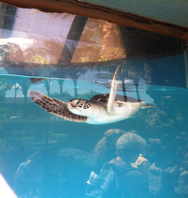
We started our day looking for an early morning swim, and we came across a turtle with multiple tumors.  As part of Mālama Honua, we felt we should inquire about how to help.  Lucky for us, the team from the Maui Ocean Center had come to have a canoe tour on Hōkūleʻa and referred us to the NOAA hotline.  We alerted the officials and learned a little bit about how to care for turtles.

Photo credit: Lesley Iaukea

We then had a private tour of the Maui Ocean Center where we learned about their release program of animals back into the wild. We were able to see healthy turtles, sharks, and manta rays at the center.

For information on how to report distressed animals, please call 1-888-256-9840. To visit the Maui Ocean Center and learn about their programs, please go to their website at: http://www.mauioceancenter.com/.

Photo: Lesley Iaukea

 The crew is excited for the week ahead, as we will team up with Maui crewmembers and go into the community for our Learning Journeys.  Please stay tuned for forthcoming blogs about the many Maui groups and communities that lead by example as they teach their keiki how to mālama honua.

Continue Reading

Pam Omidyar Blog on Civil Beat

Original source: http://www.civilbeat.com/voices/2013/06/18/19315-aina-lewa-kai-a-vision-for-healing-the-world/

Aina, Lewa, Kai: A Vision for Healing the World

By Pam Omidyar 06/18/2013

ʻImiloa Astronomy Center, Hilo

Editor’s Note: The Polynesian Voyaging Society recently hosted three days of launch events to mark its world wide voyage.

E ola ‘oe
E ola mākou nei

“If you have life, then we all have life.” This was the prayer each of us offered each young native plant after gently placing 400 young koa, mamane, ‘iliahi, pilo, and other native plant species into the rich mountain soil of Hawai‘i Island. These young trees will help rebuild the dense forest of Hawai‘i island. They will not only provide shelter for endangered birds like the palila, but also create the conditions to support more rainfall, prevent soil erosion, and deter invasive plants from disturbing our complex ecosystem.

Launching Mālama Honua

Friday: ‘Āina, the land

The day of planting kicked off the first of three days of launch events for the Polynesian Voyaging Society’s World Wide Voyage “Mālama Honua” (Care for the Earth). Together, the three days of launch events tell a compelling story about our global interconnectedness – with each other and with our planet.

Friday’s reforestation gathering, held in Keahou, was hosted by Kamehameha Schools and the Three Mountain Alliance. The Alliance – the largest watershed partnership in Hawai‘i – is a group of organizations dedicated to restoring Hawai‘i’s forests, and educating new generations about the interdependence of diverse species that arrived on Hawai‘i’s islands by wind, waves, and via birds. Key to the Alliance’s work is an effort to share the message that sustainability for our āina is key to preserving Hawai‘i’s fragile ecosystem today, and into the future. The interdependent relationship between land, water, and sky has never been more critical to our planet’s future, or more in jeopardy.

Why focus on reforesting, to launch a sail around the world? Quite simply, because land and sea are connected. Nurturing one benefits the other. In the most practical sense, Hawaiian seafarers would journey to the forests to select, with respect and care, the tree that would be their next canoe. Four hundred natives were planted on this day, but thousands of trees will be planted in Hawai‘i over the next few years to offset any carbon emissions generated from the Worldwide Voyage (WWV).

Beyond maintaining what we have, the larger purpouse of the journey is to improve ourselves, the world, and our islands, for those who follow. The Voyage is named Mālama Honua in honor of Polynesian Voyage Society’s (PVS) efforts to share aloha at home and in every port around the world through these priorities:

Culture: to practice and share Hawaiian culture and values and to celebrate diversity and culture around the world by engaging in the cultural protocols of others.

Leadership: to share and celebrate the wisdom of Hawaiian ancestors, both in Hawai‘i and globally, which serves as a model for cultural perpetuation and environmental stewardship.

Ocean: to raise awareness about the critical need to protect and enrich the ocean and share Hawaiian practices of natural resources management while learning from others about their good methods.

Voyaging: to perpetuate traditional navigation and ocean voyaging while creating unity among all those linked by oceans. And to celebrate these traditions around the world.

Education: to inspire youth to care for their communities and their environment, foster values-based education, and connect students to other cultures around the world.

Our children, the small trees in the forest, will be here long after our kūpuna, our elders, are gone. We must teach the next generation to steward the diminishing resources that will be needed in an ever-increasing global population.

As my daughter and I gently introduced plants into their new home, feeling the rich damp soil, I felt much gratitude to be able to participate in this worthy effort. My husband Pierre and I were born elsewhere, but our roots were attached and nurtured in Hawaiian soil for years. We returned to Hawai‘i with our family so that our children could also benefit from the Hawaiian values and traditions that will help them build a strong sense of identity and purpose to help make the world healthier.

Saturday: Lewa, the sky

The next night, after a fun learning trip with the kids to the Kīlauea caldera and lava tubes, we all went to the Imiloa Astronomy Center for a PVS event. Humbled by the 38 years of rich history of Hawaiian voyaging, we heard from Clyde Namū‘ō, Mayor Billy Kenoi, Nainoa Thompson, and others who shared with us the founding of PVS and the Hōkūle‘a, the vision of Mālama Honua, and a brilliant mini-lecture on star path navigation by pwo navigator Chad Kālepa Paishon.

Nainoa spoke passionately about how the voyages of the Hōkūle‘a were a core part of the revival of Hawaiian language and culture in Hawai‘i. So many people contributed their hearts, minds, and bodies towards not just each voyage of the Hōkūle‘a but also to the greater potential of what PVS could be. Nainoa then briefed us on the vision for the Worldwide Voyage, with values being central. Personally, I was struck by his notion about the importance of both preserving culture and identity while embracing diversity.

“The strength of this voyage is in diversity and not isolation. That is the route to peace,” Nainoa Thompson.

I passionately believe this to be true and feel strongly that culture and diversity can co-exist in harmony. For it is in the honoring of our differences while connecting to our shared humanity where the space for peace exists. The efforts of PVS and all those who support it, are part of a journey in the hard work of healing and moving forward. PVS and its supporters are creating a proud legacy for Hawai‘i.

What strikes me is the inward journey that must be taken; one that allows the outward journey to progress. Before we act, we must decide for ourselves our intention to act — and that is often a barrier. Native knowledge and wisdom were achieved through deep observation and reflection: Who are we in relation to the land, the sky, and the sea? The ability to be master navigators is far more than guiding a vessel in the ocean by following the cues found in the skies; it is caring for land and shoreline resources, and arriving at a greater understanding and integrity within.

I think about the legacies that Hawaiian leadership has left: Queen Lili‘uokalani’s sacrifice of land for the survival of her people and the trust she left to help Hawai‘i’s most vulnerable children; Princess Pauahi’s legacy of valuing education; Queen Emma’s commitment to the health and well-being of her people; and, King Lunalilo’s trust to help care for and give dignity to our kūpuna. They understood the priorities needed to prevent more suffering and to heal the damage the overthrow of the Hawaiian kingdom caused.

The kids had a wonderful time at ‘Imiloa; happily, our time on Hawai‘i Island included two visits! The Astronomy Center is truly a phenomenal blend of Hawaiian culture, language, and traditions, integrated gracefully with science and technology. What a wonderful way to inspire our youth by connecting them to their heritage and to the stars. I loved that the museum was fully bilingual as well. It would be wonderful to see all of Hawai‘i’s children grow up to be fully bilingual. The visit also humbled me to realize that I need to learn more about the Hawaiian language.

Sunday: Kai, the sea

On a beautiful Hawaiian Sunday, to fill the mana, we connected land and sky with the sea with a Hoʻolauleʻa, or celebration, for the Mālama Honua Worldwide Voyage at Palekai. We were humbled to step foot on the deck of these sturdy, yet precious, canoes before they left for the first leg of the voyage.

This was a lovely setting for a meaningful day filled with prayer; sharing of history and wishes for the future; hula and food. Children played and learned about PVS. There was swimming and canoeing, and the community was able to bless the Hōkūle‘a and its sister vessel, Hikianalia, before they embarked on the first leg of their voyage, Mālama Hawai‘i.

As the escort to the Hōkūle‘a the Hikianalia is a magical bridge between traditional sailing customs and green technologies. Her mana increases with every harmonious sail.

Our family has had the deep honor of sailing on the Hōkūle‘a. A March sail to Maui with Nainoa, crew, and environmentalist/humanist Paul Hawken will be remembered as one of the most special moments in my life. When I was nine, growing up on O‘ahu, I remember vividly the images and stories about Hōkūle‘a’s sail to Tahiti. My mom shared a friendship with Will and Lee Kyselka and I have fond memories of them even if I didn’t understand any of the astronomy at the time.

When our daughter visited Hōkūle‘a with her third grade class, a circle was completed. Like most tweens, our daughter balks at many of our requests to attend public functions – unless Uncle Nainoa is going to be there … and then she drops everything! To feel the mana of the Hōkūle‘a with our bare feet on her deck and to know we are even a small part of her history and her future feeds my heart with hope.

The Worldwide Voyage is a way to share this path to healing with the world – for Hawaiians are just one group of so many that have faced deep challenges. It is a chance to share the message that, despite much hurt and much loss, even of the destruction of a people, removal of their language, their cultural expressions of their identity like hula, and of their land, there is a way to heal and to rediscover the gifts of wisdom from Hawaiian ancestors and still move forward in the world with enough resources to share with everyone.

The ancient Polynesian people were history’s greatest navigators, explorers, and survivalists. They populated lands across the largest ocean on our planet. They used only what they needed to survive, took care to leave their lands in conditions that would be healthy for future generations.

As Hawai‘i’s wise leaders like Queen Liliuokalani and Princess Pauahi knew, every time a mother speaks to her child in Hawaiian, every time we see Hawaiian in museums and on signs, every time Hawaiian is taught in schools, every time we have more sacred ceremonies like those described above, Hawaiian identity and our spirits grow stronger, the ‘āina gets healthier, and the path forward becomes clearer.

“E ola oe. E ola makou nei. If you have life, then we all have life.”

Returning to this quote, it reminded me of the South African concept, ubuntu. In the Xhoas language, ubuntu is part of a longer expression that translates, “My humanity is tied to your humanity.” Archbishop Desmond Tutu often explains it as our deep interdependence: “If I lift you up, I rise as well.” “E ola oe.” This is ubuntu for the earth and oceans! What a sacred message the world must embrace if our planet, and therefore each other, is to survive.


About the author: Pam Omidyar is a philanthropist who provides financial support to the Polynesian Voyaging Society. She is also the wife of Civil Beat publisher Pierre Omidyar.


Community Voices aims to encourage broad discussion on many topics of community interest. It’s kind of a cross between Letters to the Editor and op-eds. This is your space to talk about important issues or interesting people who are making a difference in our world. Columns generally run about 800 words (yes, they can be shorter or longer) and we need a photo of the author and a bio. We welcome video commentary and other multimedia formats. Send to news@civilbeat.com.

Continue Reading