Mahalo Actus Lend Lease, LLC

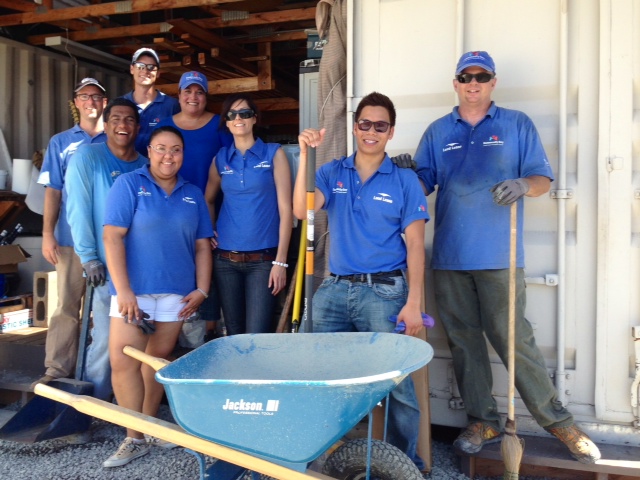
On Sept. 19, 2013, Actus Lend Lease LLC (a subdivision development company) donated their skills, resources and time to PVS for their annual, volunteer Community Day.  On a hot, windless day, approximately 17 volunteers donated their time and skills to build, paint and organize.  They donated all of the supplies, including wood, paint and gravel.  And, their management donated food and drink for all who participated.

photo 4
They helped us to build shelving and stairs for our storage containers, paint and waterproof the newest container (donated by Matston — Mahalo!), extend the roofing to further protect our supplies from weather, level the ground and remove a gnarled tree trunk, spread gravel to prevent runoff from around the area for health and safety purposes, and dispose of leftover construction and vessel maintenance materials.

photo 1
The Marine Education and Training Center has housed the Polynesian Voyaging Society and Hōkūleʻa since 2002.  Part of the University of Hawaiʻi’s Honolulu Community College, METC partners with PVS to maintain a learning experience that combines voyaging, waʻa kaulua building and maintenance, and cultural knowledge with state-of-the-art, high-tech boat building and maintenance expertise.  Together we have created — and are continuing to evolve — an experience-driven, culturally relevant format for training multi-generational voyagers, mariners and vessel experts.

photo 3

Our storage area in the parking lot of METC is now clean, safe and organized.  We aim to keep it that way.  Mahalo nui to Lend Lease employees, trades people, contractors and managers for helping PVS to give a visible mahalo to METC staff and HCC for continuing to allow us to be their tenants and partners in our collaborative educational outreach to the voyaging/maritime community. As always, PVS is grateful to our old and new partners.  Mahalo nui loa!

photo 5

Continue Reading

Video: Mākua Valley

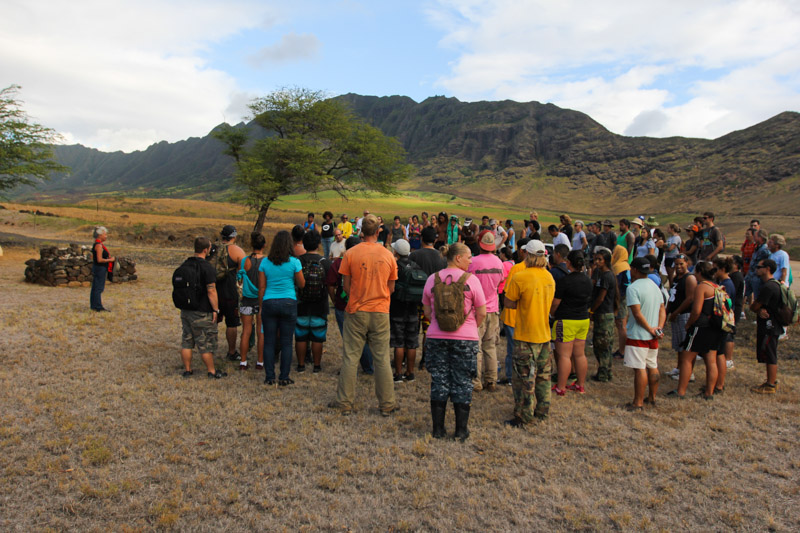
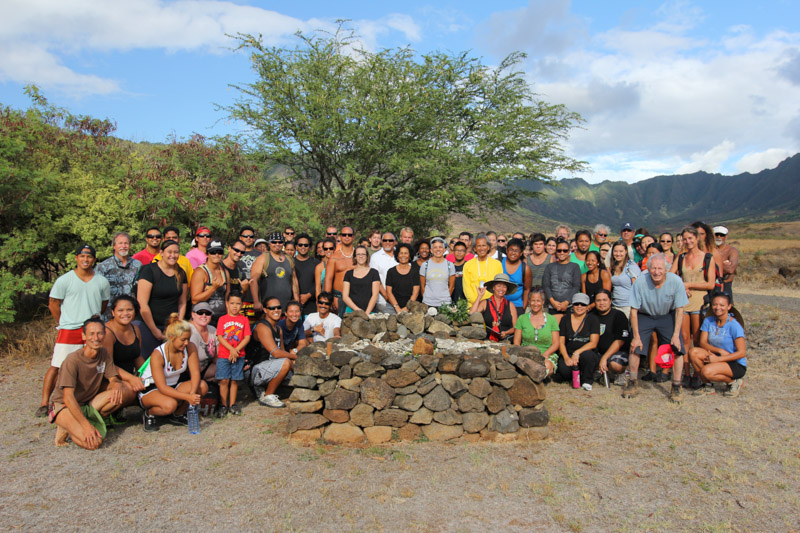
The Mālama Hawaiʻi leg of the Worldwide Voyage is coming full circle after a successful voyage to Kauaʻi, Niʻihau, and Nihoa. Hōkūleʻa and Hikianalia have now visited each of the 8 major Hawaiian islands and returned to Oʻahu’s Leeward coast where Mākua Valley greeted them.

“It was real special that the first stop on Oʻahu would be here. And this is a traditional stop! We know that there is a connection between here and Kauaʻi. We know that,” said Vincent Dodge, a longtime Mālama Mākua member.

In its more recent history, the U.S. military has used Mākua as a live fire training site since 1943. Dr. Fred Dodge and son Vincent of Mālama Mākua have gone through the long process of litigation with the U.S. Army to allow public access for community groups such as the ʻohana waʻa.

The determination of Mālama Mākua and other community groups to preserve cultural sites caused the military to temporarily halt the munitions abuse on the land. In those same efforts, the mission of the Worldwide Voyage is one of peace and restoration, mending the hurt that humankind has inflicted on mother Earth.

“Coming here to Mākua provides a unique opportunity for to see what’s happening to our ʻāina up close and personal, and what’s currently happening with the military and how they are using the land,” remarked Hōkūleʻa crew member Kaleo Wong.

For the majority of the patrons, this was the first time they were able to witness the storied valley for themselves.

“The most important thing for healing in any process is just a change of mindset.  So coming here and allowing community groups to come here and see, ʻike maka, and experience Mākua Valley for themselves puts people in this mindset what’s happening with our ʻāina and what can we do in the future to protect it,” said Wong.

With this rare access, Mālama Mākua members hope that the ʻohana waʻa takes the lessons of this sacred place with them on their journeys to distant shores.

“It was really our greatest pleasure and honor to cultivate the connection between the canoes and Mākua, the restoration of ʻāina, culture, and all the practices that come together,” remarked Dodge.

Continue Reading

Video: Navigating Through Generations

“I’m like the luckiest person on planet earth that has had, the Herb Kānes and the Mau Pialug and the Eddie Aikaus, and the greatest navigator that I know in my life is my father. My job is to do just a fraction of what they did for me for the next generation. You nurture the future in supporting the growth of young people.  And I take the gifts of training and navigation, and I create the opportunity for someone to take it. Take it from me, “said pwo navigator Nainoa Thompson.

“It’s exciting. But at the same time I feel it’s a lot of pressure,” remarked apprentice navigator Haunani Kane.

One of the selected navigators in training is Haunani Kane, who is also currently pursuing a graduate degree in geology and geophysics at the University of Hawaiʻi at Månoa.

“Young people like Haunani, they have strength, they vision, they have belief, they have values. And they’re going to go,” said Thompson.

“When we’re navigating, we’re going to aligning things like the stars, the swells, on these marks or these houses. So we can get an idea of what direction we’re heading,” described Kane.

Looking into the near future, Thompson trusted in more success yet to come. “Next year she [Haunani] will  graduate with her masters, and the next year she’ll pull Tahiti out of the sea. So she becomes rare today. But if so society helps young people to give them the opportunities to find their way, she’ll be commonplace tomorrow.”

Along with her applied graduate studies, Haunani learned a traditional skill and perspective of navigation while sailing.

“Uncle Bruce is so amazing. He does a lot of his navigation by just feeling. And what he taught me was when you start to pick up speed and then lose it, you’re starting to point too high. And just listening to the sails, trying to feel the direction of the swells and just the way the canoe was moving is trying to navigate.”

The proverb, he waʻa he moku, he moku he waʻa speaks to the similarities between the canoe and land. Values and lessons on the canoe are important just as much on land. As a result, experiences on waʻa become life lessons for crewmembers even after sailing on the waʻa.

According to Thompson, “It teaches perseverance. It teaches young people to be willing to take risks. It teaches young people to train and prepare, to find their destination.”

“I’ve  met some of my closest friends here and a lot of people I look up to.So I hope when I have a family, my kids can be a part of this as well,” remarked Kane.

They are going to go on this worldwide voyage…it’s going to change them; and they will change us.

Crew Blog: Kala Baybayan on Finding Nihoa

Nihoa, Northwestern Hawaiian Islands

8 September 2013

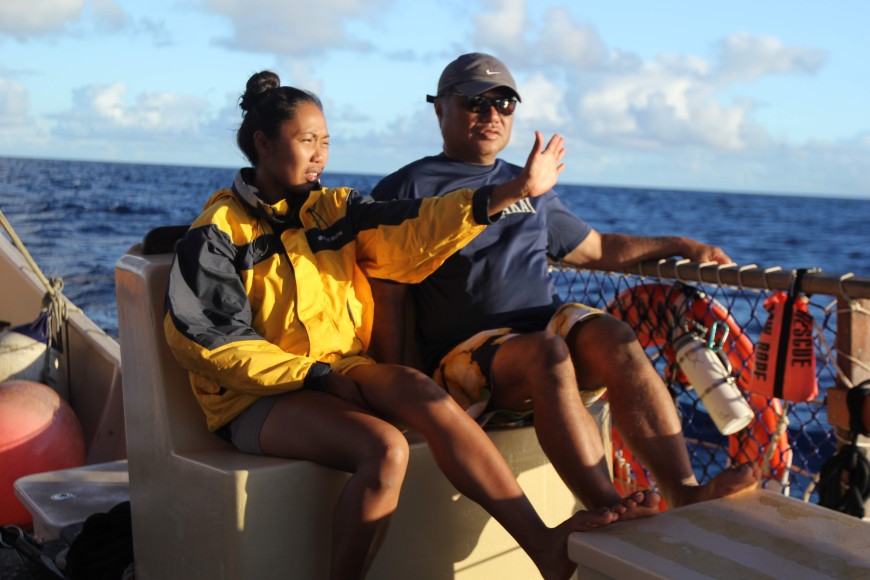
Six years ago was the first time I visited the island of Kauaʻi.  It was truly kupaianaha, since the vessel that carried me there was a double-hull voyaging canoe.  Before the island revealed itself to the canoe, fronting it was a night rainbow.  That was the first time I had ever seen a night rainbow and it was so special to share this experience with my dad (pwo navigator Chad “Kālepa” Baybayan).

Here I am again, and it is as special an experience now as it was then because it is my first deep-sea sail and this time I will be co-navigating with other young navigators to Nihoa.  I am here with my father who is my mentor and my teacher, and on this journey he and other pwo navigators will be there to help us as kumu.

As a student, I have always wanted the chance to learn from different teachers, and this trip is now giving me the chance.  This is truly such a special opportunity that may not present itself again, and I just hope that I will make the most of every interaction that I may have with each pwo navigator.

My father has taught me so much about voyaging and I still have so much more to learn.  I am always grateful for any and every moment I get to spend with him on the water, and I hope that this journey together will bring us even closer.

9 September 2013

Today Nihoa rose from the ocean.  I will never forget this day and seeing that grey jagged outline of the island on the horizon.  The navigation team did an amazing job, and I feel so privileged to be part of this.  It is so chicken skin how our approach put Nihoa between the two manu of the canoe, I have no words to explain this feeling.

Last night I was so anxious just trying to anticipate sighting the island.  I was talking to Uncle Shorty and he said something so profound to me that was told to him by Papa Mau: “You don’t need to see the island to know it’s there; you need to have the courage and trust that it’s there.”  In this modern day and age, we need to see things to believe that they are real.  Papa Mau’s perspective is that of deep wisdom and raises the importance of trusting that it is there.

I have so much appreciation for what Papa Mau has done for Pacific Island people.  His wisdom and teachings will be carried on for future generations because he has shared with us the magic of bringing the island to us; it is priceless and transcends boundaries. Mahalo e nā kūpuna.

Continue Reading

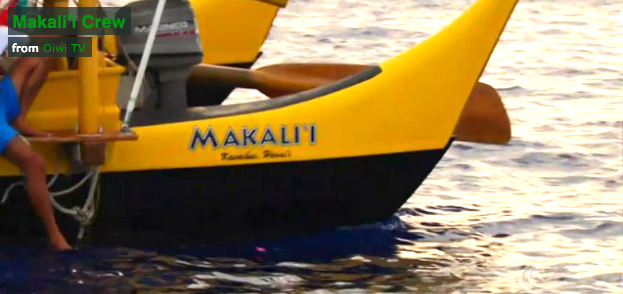
Makaliʻi Crew

As Hōkūleʻa continues her journey throughout the paeʻāina ʻo Hawaiʻi, we mahalo the Makaliʻi ʻohana who have cared for our waʻa on Moku o Keawe.

“The idea of building Makaliʻi came out after sailing on Hōkūleʻa. We decided that maybe it was possible to build something for the Big Island. And so, my brother and I, Clay Bertelmann, along with other core people, family and community members got together and decided to build a canoe just to support the voyages of Hōkūleʻa,” said pwo navigator Shorty Bertelmann.

“And it was really Clay Bertelmann, who is Shorty's older brother  who really took that sense of what we were learning from Hōkūleʻa and he really tried to see what the community would do to build another waʻa. And it was really from that sense of really wanting to continue what Hōkūleʻa was started. It was just saying, let’s build another canoe so that we can continue what Hōkūleʻa started. So that we can have a united community  and just continue Hōkūleʻas work,” remarked Makaliʻi captain Chadd Paishon. “It took about 9 months to build makaliʻi. and then she was put into the water in Kawaihae. So really it’s in that sense that we know, Makaliʻi, originally she was built for Moku o Keawe.”

“And so that’s how we started. Until today we do the same thing, we are in support of our mother. Our mother is Hōkūleʻa, and we are trying to do our best on the other islands,” said Bertelmann.

“Makaliʻi has been continuing with the education program over the last 18 years now. But now, what we’ve been doing with continuing the education programs that we have is real specific, more so to the West side of Moku o Keawe. Because now, we are fortunate, we have Hōkūalakaʻi, that’s on the Eastern side, Hilo side, and all that area. A lot of the crewmembers who sail on Makaliʻi are very familiar to Makaliʻi, and having Hōkūleʻa home, it’s a very short time, you know, even if it’s a month. It was real specific for us that we wanted all of our crewmembers to get onboard Hōkūleʻa because that will be the canoe that will be sailing if they are fortunate enough to be crewmembers chosen for the worldwide voyage. So it’s real specific, now it’s moreso focusing on getting our crewmembers ready for the worldwide voyage,” said Paishon.

Continue Reading

Learning Journey: Navigation Class Onboard Hikianalia from METC to Honolua Bay

By Linda Furuto

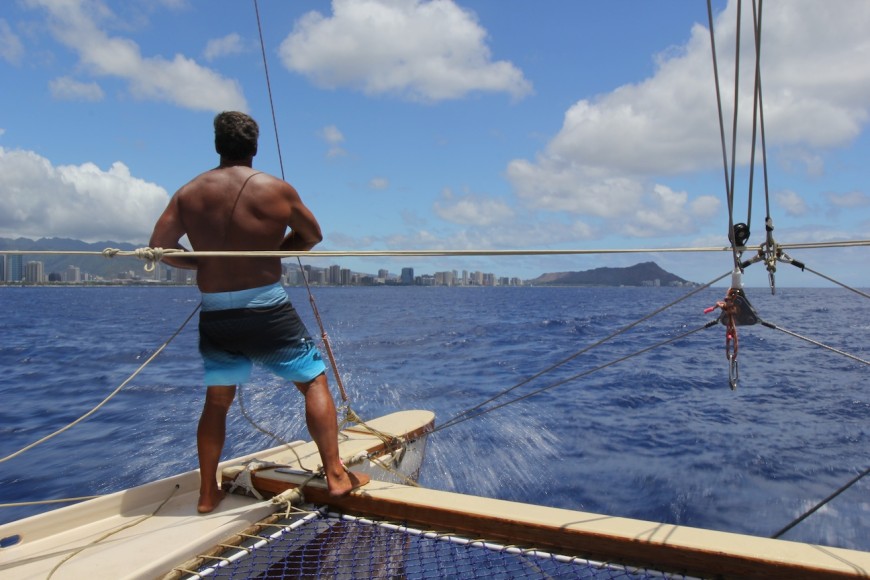
Kaʻiwi Channel – Life isnʻt meant to be planned, life is meant to be lived.  Those words rang true as they guided our experiences and learning over the past 24 hours.  We initially planned on leaving the METC on Saturday, August 17, but due to weather conditions leadership postponed the sail a day.  We left the METC at around 12:45 p.m. on Sunday, August 18 and made Laʻau Point about six hours later.  Mahalo nui to Bob Perkins and Keli Takenaga who towed us east to the winds.  Once set free, Hikianalia headed straight for the call of Molokaʻi.

A special opportunity presented itself and pwo navigators Nainoa Thompson and Bruce Blankenfeld thread Hikianalia from Molokaʻi through Lanaʻi and on to Maui where we arrived in Lahaina around 4:30 a.m. on Monday, August 19.  They shared stories about sailing in the 1970ʻs, conversations with ancestors while voyaging, and how the cultural climate of the islands has changed over the past four decades.  They also turned the sail into navigation training for the next generation.

Apprentice navigators Lehua Kamalu, Austin Kino, Jenna Ishii, and Haunani Kane have been training for the worldwide voyage, and will be participating in the big navigation training to Nihoa in preparation for Tahiti next year.  According to Haunani Kane, “Nihoa is a really small island and the cliffs are really steep, so itʻs a good place because itʻs small and hard to find.  Nainoa is trying to teach us what the island will look like at sunrise and what the Paniau Niʻihau line will look at sunset.  The important things are distance, speed, and your heading.”

Some of the questions from Nainoa for the crew are, “How tall is Nihoa?”, “How tall is Paniau?”, “How far is the run from Paniau to Nihoa, and how are you going to figure out your speed?,”  “What heading are you going to be towards?,” and “Once youʻre in the heading Noio Hoʻolua, what are you going to use to stay in that direction?” Hokupaʻa or the north star and the moon will guide us so we donʻt get lost.

We would also like to thank Archie Kalepa, Max Yarawamai, and Teri Hee who met us in the lee at the south of Lanaʻi, and provided a tow into Lahaina.  The goal is to make it to Honolua this morning so we can connect with Hokuleʻa, Uncle Les Kuloloio, and the PVS ʻohana on Maui.  May the moon above us continue to guide our and your paths with safe travels and life-changing journeys wherever they may lead.

Continue Reading