Crew Blog | Nāʻālehu Anthony: 325 Days to Go

Current conditions:

  • About an hour before sunrise
  • More than 4500 miles travelled in the last 24 hours and counting

Current location:

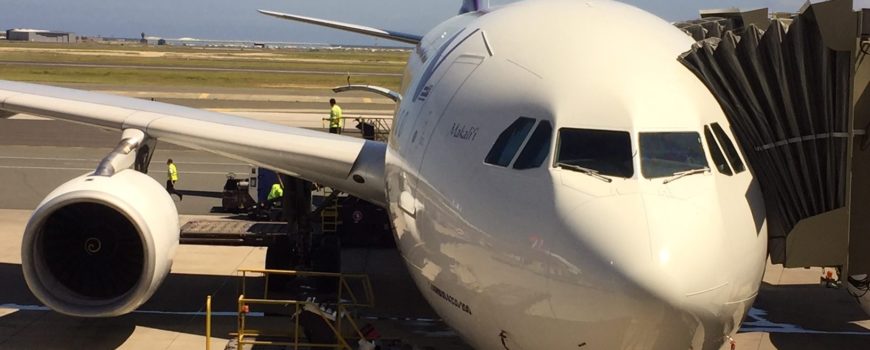
  • Hawaiian Airlines Flight 50
  • 37,000 feet somewhere above Grand Rapids
  • Mach .798

Nine Leg 22 crewmembers departed Honolulu some 8 hours ago headed for JFK airport in New York. From there, we will make our way to Maine to meet the Leg 21 crew to take over sailing Hōkūle’a for the next several weeks. Our responsibility is to take Hōkūle’a a little farther up the East Coast, picking her up in Mount Desert, ME and sailing to Nova Scotia. This will be the farthest North our mama canoe has ever sailed in her 41 years of exploration around the planet.

image1

Staring at the monitor in front of me, the contrast is too great not to serve as IMG_8506an important lesson: We travelled more than 4000 miles today, a distance that would take Hōkūle’a and her crew more than month to accomplish.  Of course, this Airbus A330 (appropriately named Makali’i) has a few more horsepower than any sailing vessel. The speed at which we are traveling – and the generosity of Hawaiian Airlines (thank you!) – allows our crew to cycle into port about every 5-8 weeks, where ever she may be.  Rested.  Ready.  We are here to test the theory that the journey really is better than the destination.   While most of us operate at warp speed (or at least Mach .798) in our daily lives, getting on the canoe is an important reminder that the really great experiences in life take time.   As a crew member, I used to experience a kind of whiplash trying to slow down to the rhythm on wa’a, coming in from the speed of regular life.  Since then I have learned to cope with the transitions a little better, though “reentry” after the long trips is still a challenge.

26,000 miles already sailed, more than 2 years since we departed Hawai’i… However you want to count the last 780 days of this voyage, one thing is for sure – it has been an epic voyage.  While we sail only 80-150 miles a day, the stops that we have made make up the mana of the voyage.   There are expatriates from Hawai’i that have found their way to the canoe “just to touch a part of home”.   There are the curious onlookers IMG_8504who cannot fathom that we “sailed that around the Cape of Africa???” And then there are those who can feel her mana reverberating; those who, although they might be seeing Hōkūleʻa for the first time, find her familiar, an echo of their own sacred spaces. Be it Pape’ete or Pagopago, Tonga or Tangier Island, Cocos Keeling or Cuba, this voyage has interacted with hundreds of thousands of people around the planet, millions of you count the clicks on the interwebs and people who watch the videos or read the blogs. If we were so inclined, we could maybe bask in the wake of what we have accomplished so far and try to measure the impact from it — except, we haven’t completed the mission yet.   We’re still thousands of miles from our destination.  We still have over 300 days to go before we get to Kualoa, Hōkūle’a’s home.

Given that, the question I have for everyone reading this is: what are we going to do with the next 325 days (give or take a dozen due to weather and other environmental conditions) to make sure we come home to a better place? Hōkūle’a may be the inspiration to do something extraordinary, but every one of the hundreds of thousands she has touched needs to be the engine to bring that inspiration to action.  That is our mission; simply to Mālama Honua and leave our spaces better than we found them.


Help fund the Voyage as we sail the East Coast

Hōkūle‘a’s visit to the eastern United States is a historic milestone in her 40 years of voyaging.

Celebrate with us by pledging your support to the Mālama Honua Worldwide Voyage.

Continue Reading

Crew Blog | Michelle Knoetgen: Island As An Anchored Ship

On the rocky shores of Appledore Island, Maine, we were greeted with periwinkle shells held fast by sea grass, hand made by a college student named Athena: one of the many touches that made us feel welcome.  A peaceful bird sanctuary inhabited by resident seagulls and a small population of seasonal humans, Appledore is home to the Shoals Marine Lab (SML), run by Cornell University and the University of New Hampshire. SML is the largest marine lab in the country that focuses on undergraduate education, offering courses in underwater research, marine sciences, sustainability, ecology, and evolution. The laboratory is a model of sustainable island living, with a green-grid energy system designed and maintained by students and staff. They live the values of mālama honua by composting food and other waste and by practicing behavioral conservation ­— a new term for some of us. What does it mean? One to two military-style (turning water off while lathering up) showers a week, and similar changes in habits to reduce consumption. Per person, Appledore Island uses one-fifth of the water that people use on the mainland. As our Captain, Bruce Blankenfield, reminds us, if you can dream it, you can make it happen. This is often in reference to Hōkūle‘a’s voyages, but also applies to any courageous act to aloha ‘āina.

The gorgeous Isles of Shoals reminded me of the finite resources in the Hawaiian islands – the most isolated archipelago on the planet – and methods, new and old, we can use to improve the way we’ve come to inhabit them: the way we source our food, clean and heat our water, cool our buildings, and dispose of our waste. What can we do better? What does that look like? Shoals Marine Lab is a shining example. They think of their island as an anchored ship, in the way that we think of our canoe as an island.  Katy Bland, a lab coordinator and one of the people instrumental in getting Hōkūleʻa crew to SML, has ties to Hawai’i through time spent in dry dock with Makali‘i, learning from Uncle Chadd Onohi Paishon through the Kumu pa‘a i ka ‘āina program. We spent the afternoon with Katy and her colleagues, sharing about the Worldwide Voyage and learning about the awesome problem-solving work SML is doing to understand and protect our Island Earth.

As we were about to hurry off Appledore Island on our way back to Portsmouth for another community engagement, we saw dark gray storm clouds cover the sky. Instead of stepping onto the metal boat that brought us across the body of water known as Bigelow Bight, we walked back up the lichen-covered rocks to Jenn Seavey’s house (SML Executive Director). We ate homemade blueberry coffee cake on her porch, listening to the first cracks of thunder and watching the lighting flash over the ocean. Being waylaid by the thunderstorm was a blessing it allowed us to spend more time on this special island with these special people. While we watched the storm, a couple of crewmembers played a Rarotongan ‘ukulele and sang in Hawaiian, others told jokes. We experienced island time and were gifted with the reminder that we’re not in control of everything: A lesson we learn every day on the voyage – to be flexible and open to enjoying life as it unfolds. After the sky cleared, we walked down to the rollicking pier, periwinkle shells on our wrists and ankles, carrying part of the island’s wisdom with us.


Help fund the Voyage as we sail the East Coast

Hōkūle‘a’s visit to the eastern United States is a historic milestone in her 40 years of voyaging.

Celebrate with us by pledging your support to the Mālama Honua Worldwide Voyage.
Hōkūleʻa Update | July 16, 2016

We left Salem, Massachusetts at the crack of dawn for the forty or so mile sail to Portsmouth, New Hampshire.  There was not a lot of wind, but we still had a clear and beautiful day, perfect to be on the water as the air temperature was predicted to reach ninety plus degrees.  We usually sail with a small handful of guests, who are often Native Americans from the land we have just visited.  We invite our new friends to sail with us to the next port because they have become family during our brief stays, and it is a way to thank them for their hospitality. But this particular sail from Salem to Portsmouth included only the members of our Leg 21 crew.

While it is always fun to have such appreciative guests along on a sail to continue sharing each other’s cultures, it is also special to be by ourselves.  Our crew has been together now – night and day – for almost four weeks.  We have become open and relaxed with each other and joke easily.  On this sail, we could just be ourselves, working together and helping where needed while being able to individually enjoy one of the primary reasons we are here: our love of being on the ocean.  On the way to Portsmouth, we saw lots of lobster fishermen and even a whale.

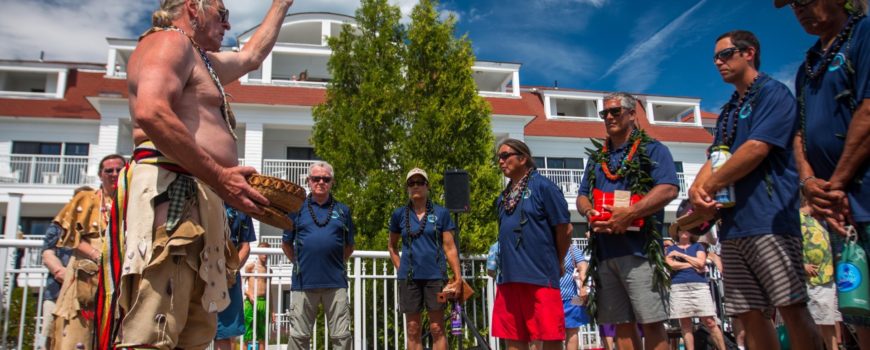
We came in to Wentworth Marina refreshed and looking forward to meeting the community of this area.  Sagamore (principle speaker) Paul Pouliot and his wife, Denise and a tribal elder were at the dock to greet us with prayers, tobacco and ancestral songs.  They are members of the Cowasuck Band of the Pennacook-Abenaki nation, one of five members of the Wabanaki Confederacy.  It was a beautiful ceremony, and we learned that like us, the Abenaki people are water people.  Sagamore Paul recounted how his people were fishermen, explorers and navigators. In this way, we are related. He welcomed us onto his land as family.

We ended the evening with a swim and a potluck clam bake at a nearby park, complete with lobsters, clams, and spam musubi, compliments of the local Hawai’i community who joined us. Amazing to continue to find so much commonality and family so far away.


Help fund the Voyage as we sail the East Coast

Hōkūle‘a’s visit to the eastern United States is a historic milestone in her 40 years of voyaging.

Celebrate with us by pledging your support to the Mālama Honua Worldwide Voyage.
Crew Blog | Catherine Fuller: Touching the Past

Many believe that touch has the power to heal…but can it heal cultural wounds?  On a visit to the Peabody Essex Museum in Salem, Massachusetts, we had the opportunity to test this idea.  The giver of this gift, Karen Kramer, one of the curators, is a different breed of museum leader.  For our visit to the museum, she brought out just a small sample of the large Polynesian collection housed in the museum, much of it not on public display. In most museums, items in these collections are displayed behind glass, or less frequently shared for closer inspection in private, secured rooms.  The ability to see, but not touch, elements of one’s own culture perpetuates the viewpoint that the relevance of native cultures is “past”; cultural objects are removed from circulation and displayed for view by the general public.  They are isolated from their context, taken from the hands that made them and exhibited for all eyes to see. Karen offered us a once in a lifetime gift: the choice to be able to handle objects that our kupuna were familiar and even intimate with. Her manaʻo is that the personal connection of people to objects helps to maintain them as a part of the living culture.

We viewed two fans, two fishhooks, an ʻulu maika disk, a large makaloa mat, a lei niho palaoa, an ipu, two poi pounders, a shark-tooth weapon, a feather cape, a kukui nut torch and a boar-tusk anklet.  Many of us were surprised by the fine braiding of the lei niho palaoa and the density of the basalt in the ʻulu maika stone.  We marveled at the flexible softness of the makaloa mat and the razor sharpness of the shark’s teeth.  We saw the heft of the lama kukui, and the silk of rare feathers.  All of these objects were obviously beautifully made and lovingly cared for.

For all of us, the first thought upon hearing Karen’s offer was not “can we touch these” but “should we?” Reverence for our culture is retained in the respect we give objects of stature, and so before we did anything, we formed a circle and said a pule of forgiveness and protection.  Forgive us for leaving you in this place far from home.  Forgive us for any offense in handling you.  Accept our humble gratitude for the ability to see our kupuna in you and know them through you.  Each of us, understanding the depths of antiquity cloaking these objects and the mana borne by them, approached each of these objects with wonder and profound respect.  For some, the opportunity offered to us was too overwhelming. For others, the choice offered a moment to experience what our kupuna knew and to learn from it. What do we do?  The choice was individual.

Ultimately, the value in visiting these objects, much less handling them, was simply being given time to visit them as cherished kupuna, not merely view them objectively as artifacts.   Only when the past becomes real to those who live in the present, can we feel the presence of our forbears in the objects they held dear, and, likewise, only when we can sail a canoe around the world for hands to touch and feet to tread, do we continue weaving the story of a living culture.


Help fund the Voyage as we sail the East Coast

Hōkūle‘a’s visit to the eastern United States is a historic milestone in her 40 years of voyaging.

Celebrate with us by pledging your support to the Mālama Honua Worldwide Voyage.
Hōkūleʻa Arrives in Boston

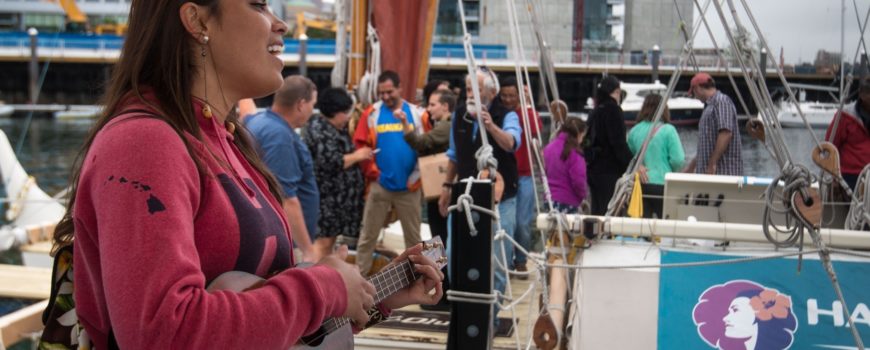
Legendary voyaging canoe Hōkūleʻa is continuing to visit communities in the New England area. The canoe was greeted by representatives from the Massachusett Tribe and a large crowd of residents when she arrived in Boston at Fan Pier on Saturday at 5:00 p.m. EST (11:00 a.m. HST). The Boston welcome ceremony also included performances by a Boston hula hālau, Samoan dancers and Native American dancers and drummers.

Hōkūleʻa is scheduled to stay in Boston for four days during which the crew will hold public canoe tours, meet with local Native American communities, schools and maritime groups. Today, the public will have an opportunity to meet the crew and learn more about Polynesian wayfinding, ocean protection and the Mālama Honua Worldwide Voyage during a Talk Story event hosted by the Harvard Graduate School of Design.

Prior to arriving in Boston, Hōkūleʻa spent three days in New Bedford, MA, where the crew conducted canoe tours and dockside activities. The canoe is scheduled to depart Boston on July 14, and then sail to Salem, MA.  


Help fund the Voyage as we sail the East Coast

Hōkūle‘a’s visit to the eastern United States is a historic milestone in her 40 years of voyaging.

Celebrate with us by pledging your support to the Mālama Honua Worldwide Voyage.
Crew Blog | Jesse Yonover: Wampanoag Pow Wow 

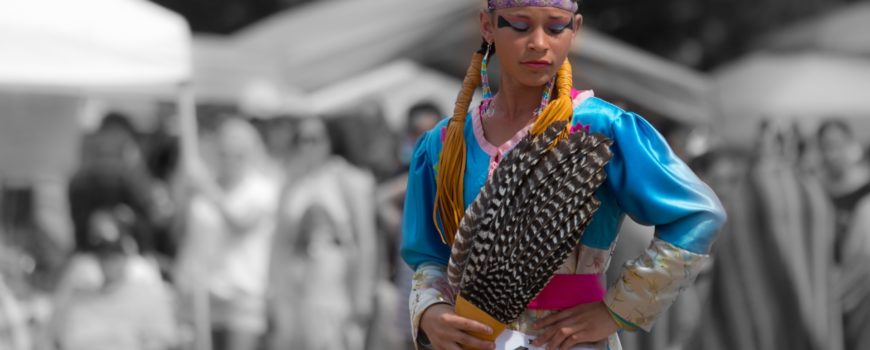
Beating drums and the unfamiliar chorus of Native American voices echo into the air. The sun moves slowly overhead as dried tobacco is thrown to the lone fire as an offering to the spirits. Men draped in eagle-feathered headdresses and deerskin fabric stomp the earth while women in delicately woven garments gracefully dance the same movements as their ancestors before them. Close your eyes and perhaps it was no different of a feeling than those experienced by the Wampanoag people over 10,000 years ago on these very same lands. However, today is a day that will always be remembered. Not because of the news articles or instagram posts, but because today a bond was forged between the people of Hawai’i and the Wampanoag Tribe of Mashpee. For the first time in history, a Hawaiian Flag was proudly raised next to the Wampanoag Flag at their annual Pow Wow that brings together Native American tribes from across the country to honor the culture and traditions of their ancestors.

When we look through time, it’s hard to comprehend the way that history has unraveled. The thousands upon thousands of years of human evolution that fostered magnificent cultures and ways of life juxtaposed by the conquests, the extinction, and the loss of many those very same cultures and practices. Today we are left with a hybrid society: One where the ancient and the modern must work together, for better or for worse. Tribal dances that go back millennia are driven by Native American chants amplified through a stereo system, while even the longest of celestial navigation voyages in some of the most remote stretches of the ocean are documented with digital cameras and broadcast through Facebook and blog posts. And though these ancient traditions may too have evolved, for better or for worse, they are still living breathing examples of how these cultures are alive.

And through it all, who could have predicted that the Wampanoag tribe would one day see people from the islands of Hawai’i take part in their sacred Pow Wow ceremony? And who from Hawai’i would have ever thought the day would come when their voyaging canoe Hōkūle’a would reach the shores of Cape Cod. Yet there we were, together. Not as strangers, but as family, seeming to fulfill a prophecy that perhaps won’t even be fully understood for decades to come.

For the crew, it was undoubtedly an experience that will never be forgotten. From the traditional garments, to the songs and dance, to the legendary fireball ceremony, it is something that will leave a lasting imprint on us all. The stories will be told time and time again. As the dust settles, what seems to linger is this constant thought: What if this is just the beginning of something big? As Hōkūle’a sails around the world connecting indigenous communities and urban cities alike, I can’t help but wonder if these could one day become the very seeds that help sew humanity back together. A gift to mankind from the heart of Hawai’i itself. In the words of elder Ramona Peters of the Wampanoag Nation, “In this day and age, we know that it can be confusing about what is meaningful, but this is. This gathering, this togetherness is historical and we will speak of it for generations to come.”


Help fund the Voyage as we sail the East Coast

Hōkūle‘a’s visit to the eastern United States is a historic milestone in her 40 years of voyaging.

Celebrate with us by pledging your support to the Mālama Honua Worldwide Voyage.
Crew Blog | Lurline McGregor: Mashpee Canoe Racing

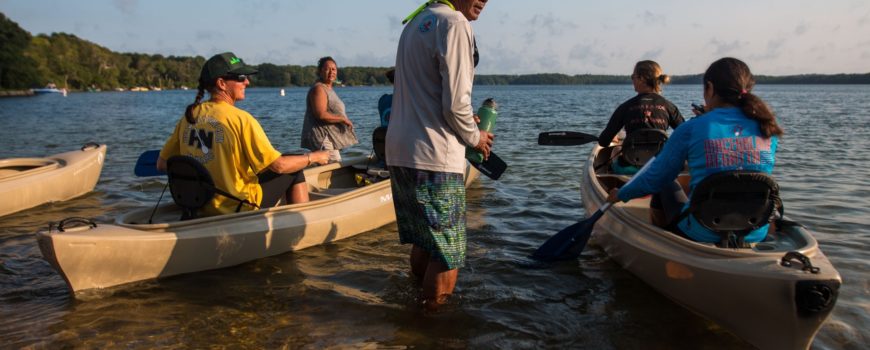
One of the events of the Mashpee Wampanoag pow wow this weekend was a canoe race.  Hōkūleʻa crewmembers were invited to participate, and since most of us are outrigger canoe paddlers and in pretty good paddling shape since it’s regatta season, we jumped at the chance to get up at 5:30 am to get on the water.

IMG_2174

The canoe race was in two-person canoes back and forth across Mashpee Lake.  When a canoe reached the far side of the lake, each paddler had to get out and take a quahog clam shell from a pile on the shore to carry back to the finish line to certify that you went the whole distance.  The race ended as soon as both paddlers from the canoe each gave their shells to the referee. The total distance was about 3 miles.  First the women raced, then the men.

IMG_2213

The Wampanoag paddlers were excited to have us race with them.  We teamed up with each other, Cat and Ka’iulani in one canoe and me and Heidi in another.  Besides us ,there were 3 other womens teams. We started out doing bumper boats until we were able to spread out and get the hang of steering.  I steered it like an outrigger canoe, which meant poking every once in awhile, which I tried to avoid since I didn’t want to miss too many strokes!  Not sure that was the correct technique for this canoe but it seemed to work and kept us in a relatively straight line. Cat and Ka’iu won the race in around 33 minutes, we were second. For our mens’ crews, Kaleo and Jesse came in first at around 29 minutes, Pete and Snake were second.  We all felt kind of badly that we won by such sizable margins and beat their champs, some of whom haven’t lost for years, but our native hosts assured us that we were an inspiration to them. I’m guessing that they will be talking about the Hawaiian paddlers for years to come.


Help fund the Voyage as we sail the East Coast

Hōkūle‘a’s visit to the eastern United States is a historic milestone in her 40 years of voyaging.

Celebrate with us by pledging your support to the Mālama Honua Worldwide Voyage.