Hikianalia Update | Oct 7, 2018: Ventura Arrival

By Hana Yoshihata  

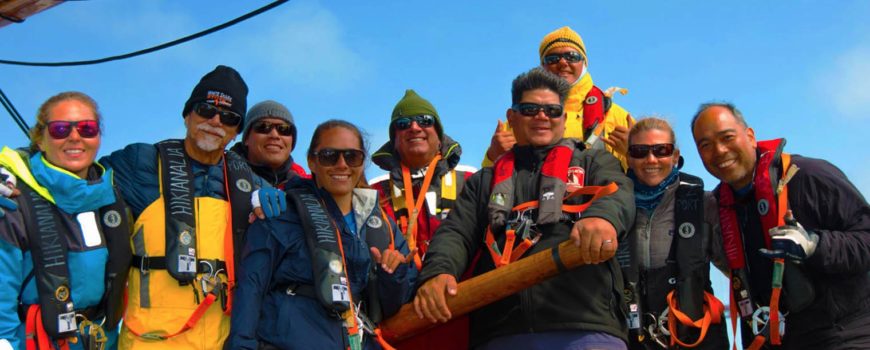
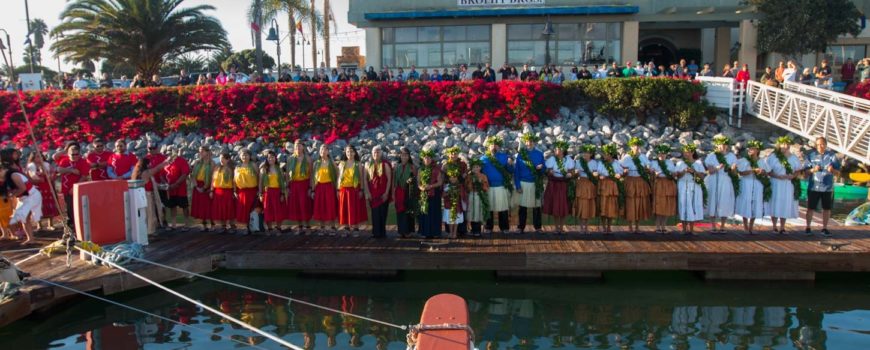
In the hours before dawn, Hikianalia and crew passed by Point Conception, California, where we blew our in honor of entering Chumash territory. After about two days of challenging swells, we passed into calmer waters and winds, and in the light of a waning moonrise, we arrived in Ventura Bay, awaiting the sunrise shortly after. Across the water, rising with the sun, came numerous outrigger canoes—a friendly sight, slipping across the swells to welcome us and guide us into port, where arrival ceremonies were about to begin.

Once docked, we announced our arrival and asked permission to disembark on this land, chanting Auē ua Hiti ē, and were welcomed in return by chant and song from members of the Chumash Nation, as well a as welcoming from Hālau Hula O Pualaninaʻaualiʻioha, Kumu Rona Koe (Camarillo) & Hula Hālau O Puananihaʻaheo, Kumu Sylvia Puananihaʻaheo Edgar (Ventura).

Adorned in lei, the crew was gifted Hula, as well as dance and songs of the Chumash Nation and a set of ceremonial gifts for each crewmember. The Hikianalia crew also gifted the Chumash with a traditional kahili on behalf of the Polynesian Voyaging Society.

This welcoming ceremony was truly special, as we not only made new bonds with indigenous peoples of this region, but also got to see firsthand how Hawaiʻi’s culture and people thrive not only in our archipelago, but throughout the world. The crew looks forward to connecting and reconnecting with these amazing communities in Ventura.
© 2018 Robert Schwemmer NOAA
© 2018 Polynesian Voyaging Society, Hana Yoshihata

Hikianalia Video Update | Oct 6, 2018: Ventura Arrival Update

VENTURA ARRIVAL UPDATE: Hikianalia Arrival & Welcome Ceremony in Ventura, CA has been pushed back to Sunday Oct 7, 8 a.m. – 10 a.m. Click here for more about the arrival event.

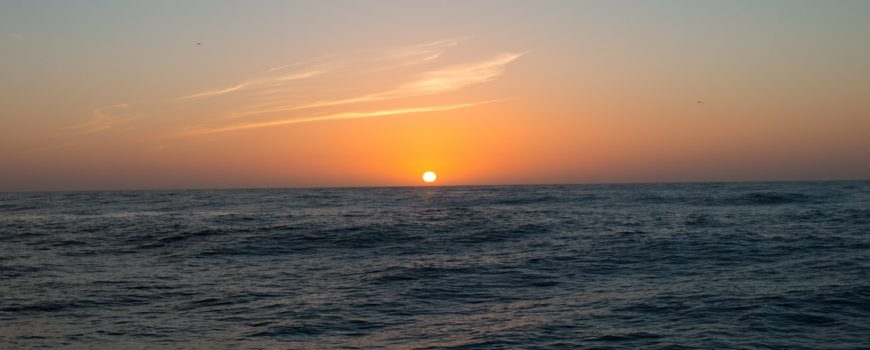
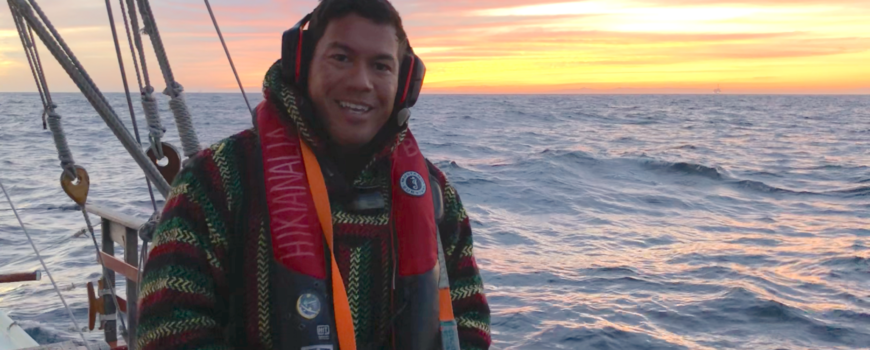
We’ve got Hikianalia leg two crewmember Matt Caires with us today reporting from the decks of Hikianalia. After challenging seas sailing down-swell around Point Conception, crewmembers enjoy a beautiful but cold sunrise as they make their way toward Ventura. The crew reports that they are 70 miles out and making steady progress toward port.

For more, including public events, check out the Hikianalia California Voyage page.

Hikianalia Video Update | Oct 1, 2018: Monterey Aquarium

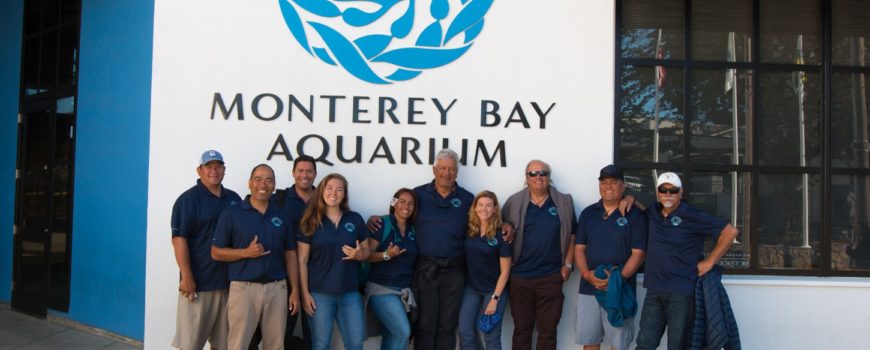
Aloha, we have a video update today from our very own Mariah Hugho who is our volunteer coordinator for the Polynesian Voyaging Society and a leg-two crewmember aboard Hikianalia. There is a Hawaii-Monterey meetup currently happening at the world-famous Monterey Bay Aquarium. The crew is learning from scientists about the aquariums efforts to mālama honua, conserve, our oceans–it’s a mission shared by our voyage, as well as by people and leadership of Hawaiʻi and California.

The good people at Monterey Bay Aquarium also arranged for the crew a special visit to a penguin named Rey, as well as a few albatross. For more, including public events, check out the Hikianalia California Voyage page.

Hikianalia Update | Sept 29, 2018: Monterey Arrival

Hikianalia sailed into Monterey Harbor earlier this week and received a ceremonial welcome yesterday from the Monterey community. During the stop in Monterey, the crew is making school visits and conducting public dockside canoe tours.

During yesterday’s welcome ceremony, the crew was welcomed by members of Ke Kai O ʻUhane Canoe Club with hula and an exchange of chants and gifts. The crew also was welcomed by the Muwekma Ohlone Nation, the indigenous community of Monterey, who honored the crew with songs of ocean and earth, and a presentation of healing herbs. Following the ceremony, hundreds of people from the Monterey community visited Hikianalia and the crew to learn about the mission of the Polynesian Voyaging Society and the California Voyage during dockside canoe tours.

Earlier in the week, the crew visited the Monterey Bay Charter School, which is recognized as an “Ocean Guardian” school, providing students and parents with a variety of opportunities to better local and global environments and sustainability, all the while encouraging the surrounding communities to do so as well. The crew made presentations to classes ranging from kindergarten to middle school and focused on topics such as plastics in the ocean and their effects on wildlife. The crew also held a presentation at the Middlebury Institute of International Studies.

Since arriving into San Francisco on Sept. 16, 2018, Hikianalia has made stops in Sausalito and Half Moon Bay. Following the stop in Monterey, the crew will head to Ventura County for stops at Ventura Harbor, Channel islands Harbor and Santa Cruz Island.

Want to visit the canoe and crew? Click here for upcoming events

Hikianalia Video Update | Sept 28, 2018: Manuel Mejia

Aloha from the dock in Monterey Bay where crewmembers from the Polynesian Voyaging Society are hosting tours of Hikianalia. With us today, we have Hikianalia crewmember Manuel Mejia, who works at the The Nature Conservancy on the island of Oʻahu.

The crew gave a visit this morning to students at Monterey Bay Charter School talking a about climate change, plastic pollution, overfishing. The school is an Ocean Guardian School for the fourth year running and doing their part to achieve zero-waste at their school and inspire others to mālama honua. If you’d like to meet the crew in California, check our schedule of events of our FacebookInstagram, and Twitter feeds!


Just what is it like to to be sailing the coast of California right now? You can get a feel of it from fellow-crewemember Hana Yoshihata’s recent blog and photo essay… her gallery below:

Hikianalia Crew Blog | Hana Yoshihata: Our Beloved Hikianalia and the Sea

By Hana Yoshihata  

On Sunday, September 23rd, Hikianalia set sail on the first coastal journey of Leg 2 of the Alahula Kai o Maleka California Voyage. After spending the first few days inside San Francisco Bay, all of our crewmembers were excited to pass under the Golden Gate Bridge and out into the Pacific.

These first few days alone have provided us a diversity of experiences. As a crew, we have shared and interacted with local communities providing outreach to hundreds including many students and youth. Fueled by aloha and a true excitement of getting to know our visitors/hosts, we can go on and on for the entire day, oftentimes without any breaks.

However meaningful our port stops are, it is very hard work. And now as we sail along the coast of California, I think I can speak for our crew about how grateful we are to share this moment together… that it is just us, our beloved Hikianalia, and the sea.

Over the years, I’ve come to know that this time on the water is crucial in helping me balance the whirlwinds of events and engagements we face while on land. Even if we are just at sea for a day, the rush and clutter of land begin to quiet, and we can start to settle into being part of the ocean–feeling the swells and wind, seeing the birds and whales and fish, and sensing the rhythm we have with one another and our canoe.

Even if just for a day, that time and space centers me and prepares me for our next port, the challenges it may bring, and all of the amazing experiences and connections we will build there. Our lives as crew are not always easy, but I believe that for every single thing that drains us, there will always be something to fill us back up again, both in the ocean and on land.

Photo Essay by Hana Yoshihata

© 2018 Polynesian Voyaging Society, Hana Yoshihata

Hikianalia Update | Sept 25-26, 2018

By Hana Yoshihata  

Sept 25 | Hikianalia Update: Aloha Half Moon & De Fierro ʻOhana

Today we hosted another round of canoe tours in Half Moon Bay, with a steady turnout all day long. Afterwards, the De Fierro ʻohana graciously hosted us for dinner again down at the waʻa.

Betsy De Fierro, a Kamehameha School alumni, shared that she is writing a mele for Hikianalia! She sang what she had so far, and we already know it will be a beautiful celebration of Hikianalia. After dinner, we joined members of the Half Moon Bay Yacht Club for a crew presentation, and then returned to the canoe to prep for departure from Half Moon Bay to Monterey. There are just a few hours of sleep to get before our 3 a.m. crew call.

Sept 26 | Hikianalia Update: The Compass

It was very cold when we all woke, and we quickly put the kettle on and dawned our foulies (foul weather sailing gear) for an extra layer of warmth. Despite a thick fog, the crew safely maneuvered Hikianalia away from the dock, through a series of breakwalls and out to sea. As I write this, we are currently approaching the North end of Monterey Bay.

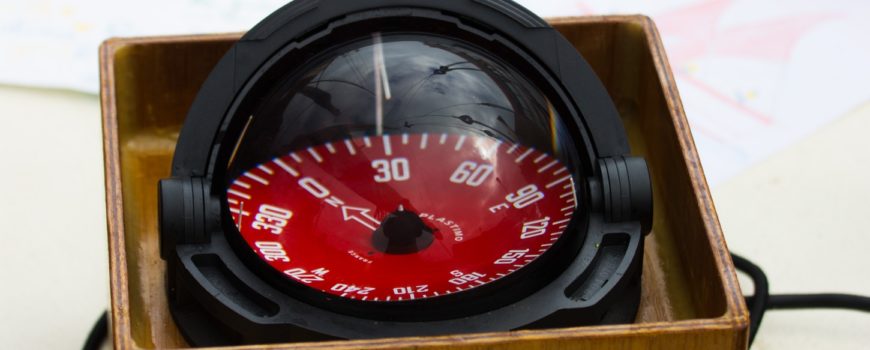
A thick blanket of fog obscured our horizon–visibility was extremely limited. While every crew from the Polynesian Voyaging Society is versed and confident in wayfinding, safety comes first… especially in unfamiliar territory during adverse conditions. In this instance, our crew practiced some traditional western navigation using a compass to hold a course. The compass was interesting to steer by in terms of how the subtlest changes or mistakes in direction can compound over long distances and take you way off your reference course.

The sail from Half Moon Bay to Monterey took us much longer than expected; winds were very light or nonexistent. We were originally estimated to get in around 7 p.m., but instead got in around 1:30 a.m. this morning. Because it was so late, we were unable to come into the dock, but instead had the help of Harbor Patrol to drop anchor a little further out, and hunkered down to sleep and rotate on anchor watch. We were having some trouble with the charging station in the media area of the hale, but Bob was able to check it out and get it working again for now.

Today, the crew was very tired from yesterday’s sail. We woke early to meet our harbor escorts at 7am to relocate to our dock, which went smoothly. After the canoe was safely docked, we gathered in the morning to have breakfast together in Monterey, and then returned to clean Hikianalia so she is ready for this coming week’s outreach. The overcast and fog persisted, but there were a few moments of sun and blue skies today, and the crew is hopeful that temperatures rise as we descend this beautiful coast.

 Mahalo and Aloha from Hikianalia and Crew!
Canoe Tour Photos from Sept 24, 2018, © 2018 Polynesian Voyaging Society, Hana Yoshihata

Polynesian Voyaging Canoe Hikianalia to Visit Ventura County Coast

Ventura Harbor/Channel Islands Harbor/ Channel Islands National Park
Free dockside canoe tours and crew presentations open to the public, Oct. 6-13

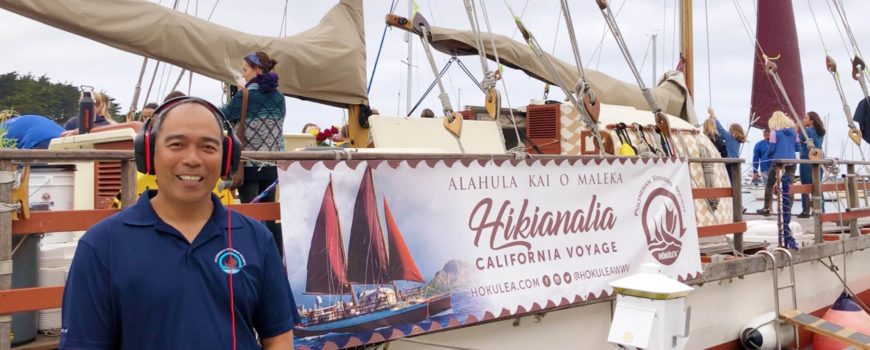
After a 2,800-mile voyage from Hawaiʻi to California using traditional non-instrument navigation, solar and wind-powered Polynesian voyaging canoe Hikianalia and her crew will sail into Ventura County Coast on Oct. 6, and will make stops in Ventura Harbor (Oct. 6-10), Channel Islands Harbor (Oct. 10-14) and the Channel Islands National Park – Santa Cruz Island (Oct. 14-16) (weather-permitting). The canoe made its first landfall at Half Moon Bay on Sept. 10, 2018, and held the first of its public engagements along the California coast in San Francisco on Sept. 16. During the stops in Ventura County, the crew will host a crew presentation and dockside canoe tours, which will give the public an opportunity to learn about traditional Polynesian voyaging and the mission of the Polynesian Voyaging Society’s Alahula Kai o Maleka Hikianalia California Voyage. See tentative events below:

[tribe_events_list category=”Ventura County Coast”]

After the one-week stop in Ventura County Coast, Hikianalia is scheduled to depart for Santa Cruz Island, one of the five islands which comprises the beautiful Channel Islands National Park. Below is a tentative port schedule for the California Voyage.

Tentative Hikianalia Port Schedule (subject to change)

  • Ventura Harbor/ Ventura Harbor Village – Oct. 6-10
  • Channel Islands Harbor – Oct. 10-14
  • Channel Islands National Park, Santa Cruz Island – Oct. 14-16
  • King Harbor (Los Angeles) – Oct. 17-22
  • Dana Point – Oct. 23-30
  • San Diego – Oct. 30-Nov. 5

The Alahula Kai o Maleka Hikianalia California Voyage is a continuation of the Polynesian Voyaging Society’s Mālama Honua campaign to inspire action toward an environmentally and culturally thriving world. The name of the voyage, Alahula Kai o Maleka, honors the “frequented pathway,” alahula, across the ocean between Hawaiʻi and California, kai o Maleka. Kai o Maleka, literally means “sea of America,” a traditional reference to the Pacific waterway connecting the Hawaiian Islands and the West Coast. Additional purposes of the voyage are to celebrate the Polynesian communities of California; connect, learn and share the Mālama Honua message with schools and communities; continue developing the next generation of voyaging captains, navigators and crewmembers; and to share the story of Hikianalia, a canoe that blends ancient wisdom and modern solutions to address the environmental and cultural issues of today.

Because the West Coast of the United States was not part of the Mālama Honua Worldwide Voyage, the Polynesian Voyaging Society and crew are looking forward to engaging with the California communities. While Hikanalia is sailing to California, Hōkūleʻa will remain in the Hawaiian Islands to complete the Mahalo, Hawaiʻi Sail.

About Hikanalia

Hikianalia, the wind- and solar-powered canoe built by the Okeanos Foundation for the Sea is the sister vessel of the famed Hōkūleʻa. Hikianalia is the Hawaiian name for the star Spica, which rises together with Hōkūleʻa (Arcturus) in Hawaiʻi. They are sister stars because they break the horizon together at the latitude of the Hawaiian islands. Launched on September 15, 2012, Hikianalia was designed specifically for the Mālama Honua Worldwide Voyage. The canoe started as an escort vessel to Hōkūleʻa and is now used as a floating classroom blending ancient wisdom with modern solutions. Hikianalia specializes in scientific exploration of marine resources and training for the next generation of voyagers. Values and behavior practiced on the deck of the canoe including how to conserve resources, care for our oceans and fellow crewmembers are shared as a model for how we can live sustainably on islands or anywhere in the world. She combines the latest ecological technology with the heritage of voyaging tradition: each of her hulls contains an electric motor powered by onboard photovoltaic panels that convert sunlight to electric propulsive energy. With a zero carbon footprint, her design supports the “Mālama Honua” (care for Island Earth) mission.