Black Friday & Beyond at PVS!

Just in time for the holidays, the Polynesian Voyaging Society is announcing new membership gifts for qualified supporters (eligible recipients must have US address), that include members’ only hat, pin and gift certificate for your choice of Olukai shoes. Of course, member decals, shirts and 20% discount at the PVS store are still perks included when you help support the legacy of Hōkūleʻa.

Hikianalia Update | Nov 17, 2018: Getting on the Water

By Starr Johnson

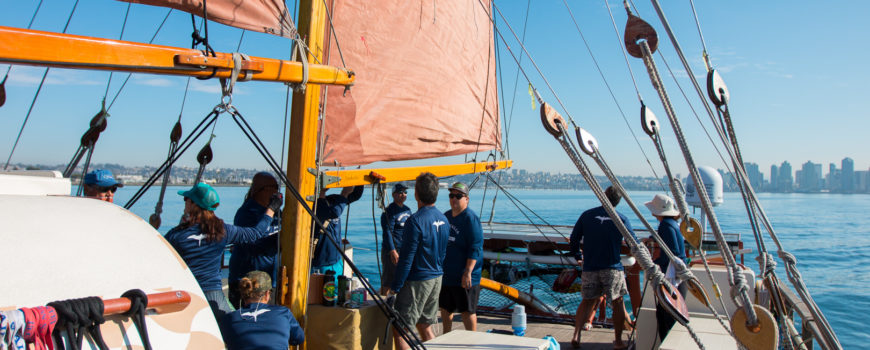
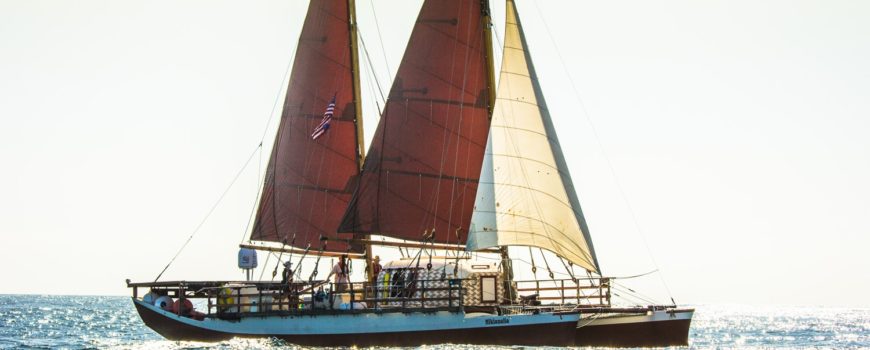
Today is Saturday, Nov 17, and our first day with the complete crew for Leg 4 of the “Alahula Kai o Maleka” voyage. Our Pwo Navigator, Bruce Blankenfeld arrived last night and today we enjoyed a training sail with literally hundreds of other vessels outside of Point Loma, San Diego.

All week, our hosts at the San Diego Maritime Museum have been asking if we could participate in a highly anticipated sailing event happening this weekend – the Star of India opening her sails for the first time in five years. The Star of India is a majestic, three-masted, full-rigged iron windjammer ship, built in 1863 on the Isle of Man, located in the Irish Sea. She spent most of her career sailing between Great Britain, India, and Aotearoa, but also spent a portion of her career transporting primarily sugar, coal, and lumber throughout the Pacific. For a portion of her life she sailed under the Kingdom of Hawaiʻi which is why our Hawaiian flag, is still flying on the foremast today. In total, she has sailed around the world 21 times!

Soon after 9am, we followed the Star of India, San Salvador and other beautiful and historic sailing vessels out to Point Loma where we enjoyed the blue skies, warm sun, and chilly winds. On both the starboard and port side we gawked at the aircraft carriers, a large NOAA ship, a submarine in drydock, as well as many sailing vessels heading out to enjoy the historic sail or to participate in an afternoon race. We were not only flanked by vessels, but also seals playing in the water and launching up onto the red and green channel marker boueys to sunbathe. While the other vessels went as far out as five miles beyond the point, our crew spent time opening, reefing, and closing sails. It was our first opportunity to train with our watch crews and watch captains lead by Moani Heimuli from Oʻahu, Kalani Kahalioumi from Moku o Keawe, and Moku Chandler from Kauaʻi.

After coming into port and later observing the process of docking a ship as large as the Star of India, we enjoyed a delicious vegetarian chili prepared by our legendary cook, Gary Yuen. Following dinner we completed the day with more training which was centered around Uncle Bruce’s wise words and the quote he shared by Louisa May Alcott, “I am not afraid of storms, for I’m learning how to sail my ship.” We are learning to sail our waʻa, by day and night, from California to Hawaiʻi, under the leadership and companionship of our kupuna, our waʻa, and our crew.

Hikianalia Update | Nov 15, 2018: Leg 4 Crew Has Arrived

By Shawn Mālia Kanaʻiaupuni

Itʻs Thursday, and the crew is humming along as we busily prepare for Hikianaliaʻs voyage home. After arriving late Tuesday night to San Diego, we headed straight to the canoe and started getting oriented to where she is docked after having traveled down the coast of California. Our excitement is palpable, shared energy that you can feel. We are all thrilled and honored to finally arrive after weeks of preparing for our upcoming journey across the deep blue Kanaloa to bring Hikianalia home again.

We sleep and eat on the canoe, getting ourselves sea-ready. The nights are chilly, but the sun quickly heats everything up throughout the day as we busily inventory food, sails, canoe supplies, water, safety and medical equipment, and more in preparation for the coming weeks at sea. Everyone was pre-assigned their duties before arriving. The last of Leg 3 crew, Michi and Hiapo, reviewed notes with us as they transitioned the canoe to our crew. Each bin and storage area is examined carefully and lists reconciled. Missing items will be purchased before we leave. Under the hot sun, everyone jumps in willingly as we organize our routines and carry out the duties we had planned for at home.

Iʻm so grateful to this stellar crew and to be a part of this unique sail. Itʻs a pivotal time for several new leaders including two “next gen” captains, Kaniela and Jason, and navigator, Haunani. Chef Gary is coaching Kauaiʻs own Leilani so she can pick up some of his awesome cooking style. A few other crew members will also be making their first deep sea voyage on this fabulous Leg 4. Our first meal is corn and turkey chowder, garlic fried chicken, rice and a huge salad (my contribution). This morning we had french toast, magically delicious omelettes with our coffee…and more salad.

Hikanalia floats peacefully, nestled alongside the ruins of a giant Soviet submarine, B-39. The Maritime Museum of San Diego is our gracious host. All around us are giant ships, in fact, the largest collection of historic sailing vessels in the world. Part of the Museum itself sits on the 1898 ferryboat, Berkeley, just down the dock from immense sailing vessels that regularly make cameo appearances as pirate ships in Hollywood movies. And, they still sail! We stare with mouths open at the Star of India, flying our own Hawaiian flag high above the tallest building in the area. Word on the street is that she sailed during the days of the Hawaiian kingdom and was once owned by Hawaiians in the late 1800s.

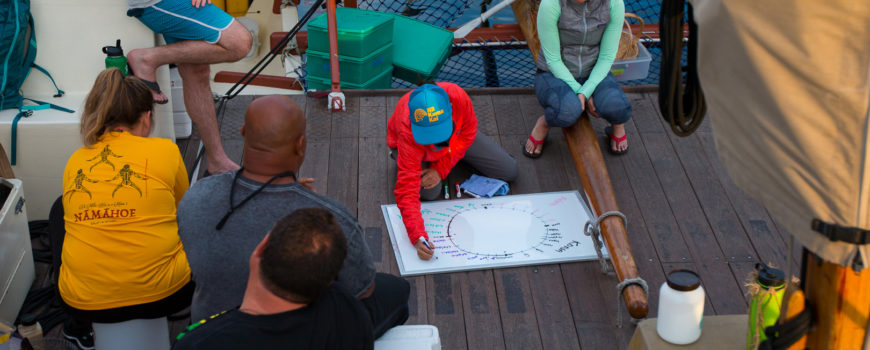
The days are bright, dry, and hot. Surrounded by big boats, we work and study the flight of the sun. Passersby stop and say hello every so often. Tonight we will wake up at the start and end of our watches to study the stars, 6pm-10pm, 10pm-2am, and I will be paying particular attention on my watch times from 2am-6am. We’ve been doing nav training with Haunani. For the most part, weʻll be sailing ʻāina/la kona, 16 deg south of komohana, hikina at our backs, weʻll see Hōkūpaʻa on on our starboard side. The first celestial bodies visible each night will be planets, Saturn and Mars, Venus in the morning, near Hikianalia, which happens to be my birth star. Hikianalia and Hōkūleʻa will both be rising in the morning. We all have researched the constellation of our birth stars and memorized the stars that reveal them.

I canʻt wait to get out to sea, close your eyes and imagine our red sails high on the rippling, shimmering blue ocean, wind whipping with no land in sight, fiery sunsets and golden yellow sunrises…until we reach ka pae ʻāina Hawaiʻi.

Signing off for now, mahalo a me ke aloha,

Shawn Mālia Kanaʻiaupuni

Crew Blog | Andrea Buckman: San Juan Capistrano Hot Springs

Crew blog by Andrea Buckman

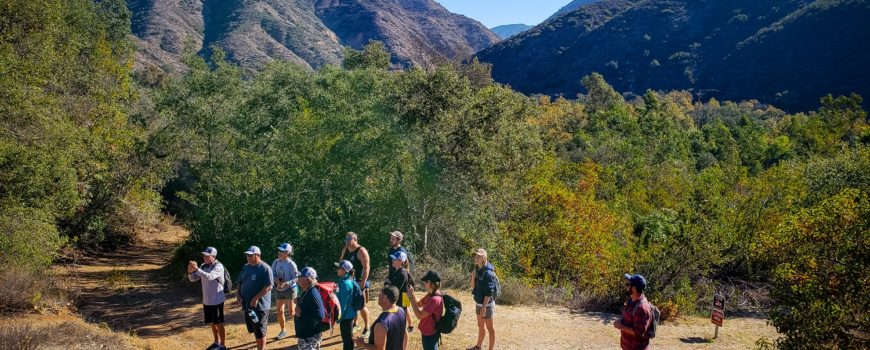
As we piled into trucks early one morning, our crew was excited to break away from the coast to explore new territory in the mountains of Southern California. Our destination is Caspers Wilderness Park, an 8,000 acre protected wilderness preserve nestled among the river terraces and sandstone canyons of the western Santa Ana Mountains.

As we approached the dirt road, we were surprised to hear from our guides that in addition to an educational hike, we were being taken to the San Juan Capistrano Hot Springs. Although there have been numerous attempts to develop the area over the years, as evidenced by various ruins and relics, the area is still vastly open, natural and certainly beautiful.

We were in awe as the steam and bubbling water rose from the otherwise dusty, dry, earth. Hot springs, also called thermal springs, bubble to the surface with water at temperatures substantially higher than the air temperature of the surrounding region. Most hot springs discharge groundwater that is heated by shallow intrusions of magma (molten rock) in volcanic areas. In fact, our guides pointed out the remnants of volcanic peaks and magma chambers that had eroded to form the present mountain range surrounding us. We laughed and were relieved that the long, hot hike we were anticipating was turning out to be not as arduous as expected, since we still had a series of events to attend that evening.

Todayʻs trip was relevant for me and the work I do with the Leeward Haleakalā Watershed Restoration Partnership. I was interested to explore how the Ocean Institute at Dana Point‘s education team shares the importance of watershed protection, background on ways indigenous tribes use the local plant life, and how they preserve native flora and fauna. They also discussed their attempts to provide the public access to this unique, well-known site at levels that will not negatively impact the landscape.

We were guided to the site and along the trails by Claire, Chris, and Dan from Ocean Institute. They shared with us historic photos of the site, which provided important background on the trading routes and historical land uses in the area.

The region was also an important place for gathering plants like the yucca, which had a variety of valuable uses. Along the way we looked at game cameras used to capture the occasional mountain lion and more frequent trespassers that come to use the hot springs. The mountain lion populations have been isolated by roads that dissect and constrict their habitat, resulting in in-breeding and low population growth.

We learned how local indigenous tribes once utilized the native species found in the area. We also learned about mounting environmental pressures including wildfires, commercial development, trespassing, the spread of invasive species, and exploitation of special places–all of which are common globally including our home in Hawaiʻi.

After being graciously hosted by the Ocean Institute for seven days, it is evident that they are taking a leadership role in community and student education, and, in the process, promoting conservation of both the land and sea.

We departed San Diego with much gratitude for their generosity and exemplary education programs. we also left with visions for how we could improve outreach programs and facilities at the Polynesian Voyaging Society. I also feel honored to have been able to not only share our aloha with the community, but also to leave rejuvenated and even more inspired by the aloha given by the staff of the Ocean Institute, the local Hawaiian contingency, and the greater community at Dana Point.

The 5 Gyres Meetup

Crew Blog by Bree Irvin

Home of the man who sailed the Pacific on recycled trash

Hikianalia crewmembers had the good fortune of being hosted by 5 Gyres founder, Marcus Eriksen at his home in Culver City, CA this past week. Joining him was 5 Gyres Director, Belinda Waymouth, Lydia Ponce of the Condor tribe from native Incan Peru, Adventures in Waste and SoCal 350 Nonprofitʻs Co-founder Jessica Aldridge and Jeff Lassanske, and Whakapaingia, a native Maori who specializes in acroyoga.

To start us off, Lydia of the Condor Tribe welcomed us with a ceremony passing sage to the owner of the house and then gifted to us. She explained the sage is passed from the 4 directions to provide health and protection to us as we travel. Ending with an offering of tobacco to the earth in honor the native ancestors, the Tongva Tribe, natives to the Los Angeles area.

Just before lunch, Whakapaingia, provided support for crew members to stretch out through realignment with his practices in yoga to keep the mind and body healthy.

Marcus is a man of many talents and interests that is reflected by his eclectic home full of idiosyncrasies, from his travels, inspirations, and ways of repurposing or recycling items. His workshop is in the backyard, its large door swung open beckoning one to look inside. There are dinosaur fossils from his digs in Wyoming, a giant tyrannosaurus skull; elsewhere in the yard various sculptures and experiments including the fuselage of an old plane repurposed as a tree house.

His philosophy with art is in seeing reality versus how we perceive it. Most of his creative works involve recycled resources from plastic pelts found on the beach, or recycled aluminum, inspired to create awareness of the trash epidemic and live more consciously in repurposing single use items.

A pair of pants full of potting soil were hung from the shed. Marcus explains that it’s a way to “try to find ways to grow in anything and everything — like pants.” Indeed most these curious things demonstrate how we can get creative in giving old items or “trash” a second life. He lives fully sustainable, living plastic-free from no shower curtains to only bar soaps and composting disposable utensils.

Marcus stepped into the limelight when he launched a raft made from 15,000 recycled plastic bottles and started an epic journey into the Pacific to raise awareness of the plastic epidemic in our oceans. His expedition led him adrift 88 days from Southern California to Hawaiʻi with provisioning for only two months and spent a month eating fish jerky and peanut butter until hitting Hawai’i.

Jessica and Jeff had been hard at work too with their nonprofit, So Cal 350 Adventures In Waste, a coalition of individuals and groups from the Southern California area banding together to fight climate change. They hope to continue their vision towards equitable clean air and water for a stable climate through a fossil-fuel-free future. Empowering our Southern California communities to join together for environmental, social, and economic justice.

This experience was telling of both the scientific and artistic ways in which these organizations speak to the mālama honua mission by spreading awareness through art, science and empowering action to the City of Angels and beyond.

Hikianalia Arrives in San Diego

Mayor of San Diego Proclaims Oct. 30th Hikianalia Day

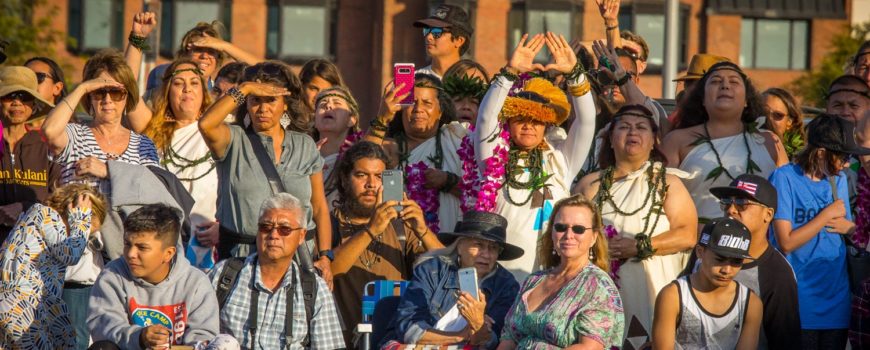
Hundreds of people welcomed Hikianalia as the canoe arrived at the Maritime Museum of San Diego yesterday afternoon at 4 p.m. (PST). The arrival ceremony included a cultural exchange between the Hikianalia Crew and the Kumeyaay Nation, welcome chants and hula from San Diego’s Hawaiian Community and the presentation of a proclamation from Mayor Kevin Faulconer declaring yesterday, Oct. 30, as “Hikianalia Day” in San Diego.

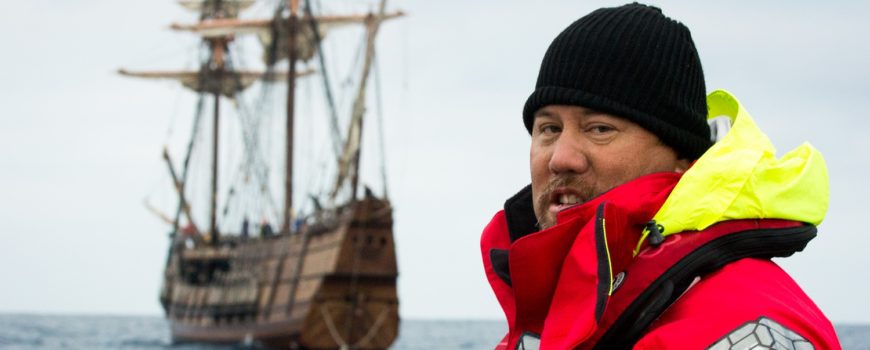
Hikianalia made her arrival yesterday escorted by 16th century Spanish galleon replica San Salvador. This unlikely meetup came about when unfavorable south winds were forecasted to waylay Hikianalia’s arrival to San Diego Bay. Hosts at the Maritime Museum of San Diego offered to assist by having one of its unique ships tow the canoe to Waterfront Park.

Hikianalia was also greeted by local outrigger canoe paddlers and members of the Kumeyaay Nation who were in traditional reed canoes called ha kwayo.

While in San Diego at the Maritime Museum, the crew of Hikianalia will conduct public canoe tours. Once the crew completes the public engagement in San Diego this weekend, they will begin preparations for the canoe to sail back to Hawaiʻi. The canoe is expected to depart San Diego on Nov. 15 and arrive back in Hawaiʻi by mid-December.

[tribe_events_list category=”San Diego”]

Hikianalia is in San Diego!

Free public events Nov 2-4 at Maritime Museum of San Diego

After a 2,800-mile voyage from Hawaiʻi to Northern California using traditional non-instrument navigation, solar and wind-powered voyaging canoe Hikianalia and her crew have been sailing down the coast of California and will be making a stop at Maritime Museum of San Diego from Oct. 30 until she departs for Hawaiʻi in early December. The canoe made its first landfall at Half Moon Bay on Sept. 10, 2018, and held the first of its public engagements along the California coast in San Francisco last month. During the stop in San Diego, the crew will host a public presentation and dockside canoe tours to share the history and legacy of Polynesian voyaging and the mission of the Polynesian Voyaging Society’s Alahula Kai o Maleka Hikianalia California Voyage. See events below (weather-permitting):

[tribe_events_list category=”San Diego”]

Below is a tentative port schedule for the California Voyage. Please check www.hokulea.com, Facebook, Instagram and Twitter for the latest updates:

Tentative Hikianalia Port Schedule (subject to change)

  • Redondo Beach, King Harbor (Los Angeles) – Oct. 17-22
  • Catalina Island – Oct. 22-23
  • Dana Point – Oct. 23-30
  • San Diego – Oct. 30-Nov.5

Hikianalia Update | Oct 30, 2018: San Salvador Tow

Our very own ʻIliahi Doo, watch captain aboard Polynesian voyaging canoe Hikianalia, is with us today for an extraordinary update

Two historic vessels meet off the coast of Southern California

Update by Todd Yamashita

In what can only be described as extraordinary, Polynesian voyaging canoe Hikianalia has met up with 16th century Spanish galleon replica San Salvador off the coast of San Diego. Crewmembers plan to sail both vessels side-by-side as a lead up to Hikianalia’s arrival ceremony later this afternoon.

San Salvador was the first European vessel to visit the west coast of North America. This unlikely meet up came about when unfavorable south winds were forecasted to waylay our arrival to San Diego Bay–our hosts at the Maritime Museum of San Diego offered to send help in the way of a tow using one of their many unique ships.

Crewmembers along with everyone at the Polynesian Voyaging Society would like to invite you and your family down to our free public welcome ceremony at the Waterfront Park in San Diego Bay today at 4 p.m.

We’ve also lineup of additional events this week including a crew presentation at Maritime Museum of San Diego’s Upper Deck on Fri, Nov 2, 6-7:30pm; Open-house canoe tours and hands-on outreach stations, Sat & Sun, Nov 3 & 4, 10am – 4pm. All events are included with general admission to the museum or, for free tickets, visit www.Hokulea.com/tickets