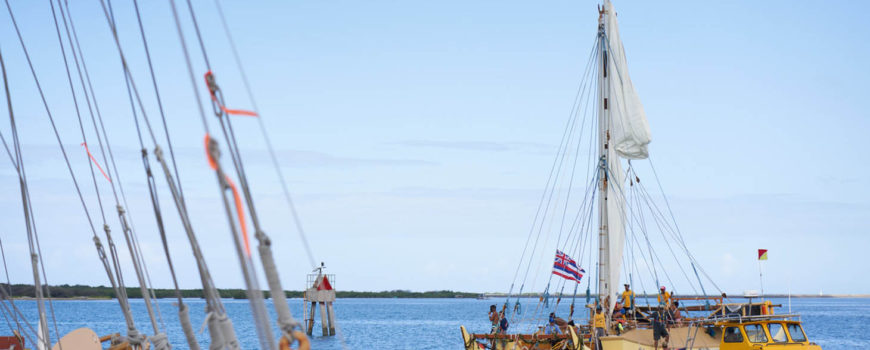
Voyaging is the Ultimate Ethnomathematics Laboratory

We love what our crewmembers are doing to better our shared planet. While we have featured the advanced work of crewmember Linda Furuto in the past, we’d like to call out a recent story in Brigham University Magazine highlighting Linda’s experiences both as a mathematician and Hōkūleʻa crewmember. Have a look at the following story by Brittany Karford Rogers:

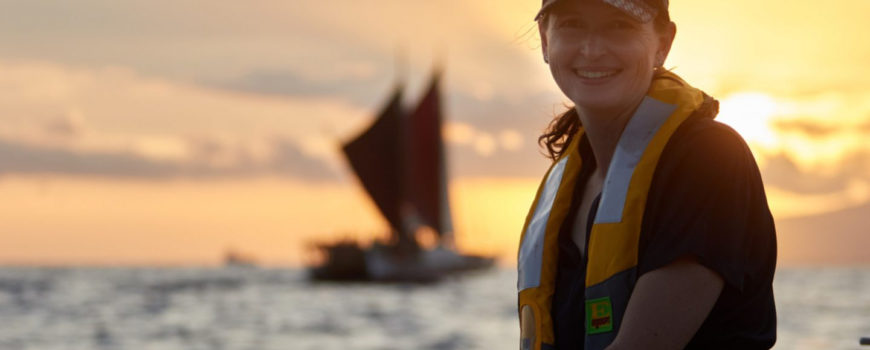
With the stars as her guide and math as her compass, a BYU alumna sails the world’s oceans to engage, empower, and educate

“There are nights like a planetarium,” says Linda H. L. Furuto (BA ’00). Nights that tuck the canoe in under a star-spangled blanket of black. She knows some 200 stars—and their dance across the dome—by heart.

“The night sky is our friend,” she continues; the stars tell the crew where they are, even when all they can see is ocean for miles.

“Did you see the movie Moana?” Furuto asks. The part where the heroine’s outstretched hand in the sky, forming an L, becomes a celestial ruler. Furuto does the same thing—“kind of.” Moana’s thumb should be resting on the horizon.

Sailing south from Hawai‘i, Furuto uses her hand to measure the angular height of Hōkūpa‘a—Polaris. The star reveals the canoe’s latitude; the farther south they go, the lower it sits in the sky. “When we can’t see Hōkūpa‘a anymore, we are at the equator.”

There is nothing, she says, that compares to crossing the equator by canoe for the first time.

“There were so many unknown variables,” Furuto recalls of her first deep-sea voyage onboard Hōkūle‘a, the Polynesian Voyaging Society’s (PVS) traditional double-hulled voyaging canoe. There is no GPS, no clock, no sextant, no motor onboard Hōkūle‘a. The 62-foot-long canoe is steered by paddle. Her name in Hawaiian means “Star of Gladness,” and her crew navigates relying solely on celestial bodies, ocean swells, currents, birds, and principles of mathematics.


Continue reading the full article “How Far She’ll Go” at: https://magazine.byu.edu/article/how-far-shell-go/

Continue Reading

Break Your Plastic Pattern – Protect Our Ocean

PVS volunteer and crewmember Cynthia McArthur, has been working closely with our friends over at Ocean Wise to help people connect on a personal level to the marine plastic problem impacting all of our oceans. Check out her video below and afterward, please visit the Ocean Wise post to see first hand, how you can get involved in ridding our seas of plastics.

The Science & Math of Sailing: High School Day Camp, Oʻahu

Attention students and parents: there’s a five day camp coming up where high school students will have the opportunity to learn about the use of math and science in sailing, and have the opportunity to apply those skills both on land and on the water!

Hosted by Honolulu Community College in partnership
with Polynesian Voyaging Society

October 7 – 11, 2019
Monday – Thursday: 9:00 AM – 4:30 PM
Friday: 9:00 AM – 8:00 PM

Details: Mandatory Orientation Session for Participants and Parents/Legal Guardians at The Marine Education Training Center:
Saturday, September 21, 2019 | 9:00 AM – 11:00 AM
Required documents will be emailed to you and will need to be submitted at the orientation session. If you and your camp participant are unable to make it to the orientation session, please be sure to email the required forms to honcet@hawaii.edu

Cost: $40 per participant

Where: Marine Education and Training Center (METC) on Sand Island
10 Sand Island Parkway
Honolulu, HI 96819

Target Audience: High School Students in Grades 9 – 12
Space is limited to 30 students—students MUST be able to swim!

Registration Information: Please call (808) 845-9296 and mention “Modeling Our Wa`a.”
Or email honcet@hawaii.edu for more information.
Registration will be open from August 28 – September 20, 2019.
Registration will be on a first-come, first-served basis.

Continue Reading

Voyager Lehua Kamalu Named MIT Fellows

We are excited to announce that our friends over at MIT have announced that PVS’s voyaging director Lehua Kamalu has been awarded Director’s Fellows. Congratulations Lehua!

The following announcement come from MIT:

This week, the Media Lab is adding members to the diverse collection of visionary innovators and leaders it calls the Director’s Fellows.

Now in its seventh year, the Director’s Fellows program links a vast array of creators, advocates, artists, scientists, educators, philosophers, and others to the Lab. The goal of the program is for the Fellows to get involved in the Lab’s work, bringing new perspectives, ideas, and knowledge to projects and initiatives.

Conversely, the Fellows spread insights, knowledge and work of the Lab out into the world, giving it exposure in spaces as varied as fashion, human rights and sports.

Please meet the Media Lab’s 2019 Directors Fellows:

Lehua Kamalu, an apprentice navigator and the voyaging director at the Polynesian Voyaging Society, researched and devised the sail plan for Hōkūleʻa, a double hulled canoe, as it circumnavigated the Earth from 2014 to 2018 on a voyage named “Malama Honua—to care for the Earth.” She sees the practice of deep-sea voyaging as a means to challenge the depth and quality of our individual relationships to the ocean, nature, and one another.

Jaylen Brown, an NBA basketball player for the Boston Celtics, has a wide range of interests, including history, finance, technology, and meditation. Considered an innovator by his peers, he entered the NBA draft in 2016 without an agent, and a year later, created a stir by pulling together a networking event for rookie players at the NBA Summer League, which was followed by a “Tech Hustle” event at the NBA All-Star Weekend that attracted venture capitalists, rap stars and corporate chieftains to help players understand investment.

Jan Fuller, a former senior digital forensics investigator for the Redmond Police Department in Washington state, began conducting forensic investigations of electronic devices in 2003, when one gigabyte was a lot of data. Currently, she’s pursuing projects aimed at improving law enforcement capabilities deployed against digital crimes and coaching and mentoring students interested in careers in digital forensics.

Kathy Jetñil-Kijiner, a poet of Marshall Islands ancestry, achieved international acclaim with her performance at the opening of the United Nations Climate Summit in New York in 2014. She has published a collection of poetry, Iep Jāltok: Poems from a Marshallese Daughter, and she directs a Marshall Islands-based nonprofit dedicated to empowering Marshallese youth to seek solutions to the environmental challenges their homeland faces.

Ayana Elizabeth Johnson, founder and chief executive of Ocean Collectiv, a consulting firm for conservation solutions, is a marine biologist and policy expert. She founded the Urban Ocean Lab, a think-tank focused on coastal cities, and has worked on ocean policy at the Environmental Protection Agency and the National Oceanic and Atmospheric Administration.

AiLun Ku, president and chief operating officer at The Opportunity Network, works to create spaces for first-generation high school and college students of color to enhance and improve their postsecondary and career readiness education. She trains partners to integrate culturally balanced, student-centered curriculum design with rigorous data-driven practices with the goal of influencing systems that have traditionally excluded young people of color from college and career opportunities.

Nonabah Lane, a member of the Navajo Nation, is a sustainability specialist and entrepreneur in environmental and culturally conscious business development, energy education, and tribal community commitment. She is a co-founder of Navajo Ethno-Agriculture, a farm that teaches Navajo culture through traditional farming and bilingual education and is active in promoting and developing tribal sustainable energy strategies.

Kate McCall-Kiley, co-founder and director at xD, an emerging technology lab within the U.S. Government, work to create new environments and mechanisms for behavior change while experimenting with different ways to productively challenge convention. She served as a White House Presidential Innovation Fellow for the Obama Administration, where she worked on projects including vote.gov, The Opportunity Project, worker.gov, BroadbandUSA, and Vice President Joe Biden’s Cancer Moonshot.

 Rodney Mullen, co-founder of one of the most dominant skateboarding companies in America, invented most of the tricks still in use in skateboarding today and holds two patents related to the sport’s equipment. He has pivoted to work in the open source community, where he finds many parallels between the creativity of skateboarders and hackers. He still skates two hours a day.

Elizabeth Pettit, executive director of Clínica Integral Almas in Álamos, Mexico, which works with remote Indigenous communities, is a physician. Medicine and work in rural public health is a second act: Dr. Pettit previously was a designer, creating specialty materials for art and architecture and for the film and entertainment industry.

Michael Tubbsmayor of Stockton, Calif., has received national attention for his ambitious progressive agenda, which includes securing $20 million to finance scholarships to triple the number of the city’s students entering and graduating from college and the country’s first universal basic income pilot project. He is the youngest mayor in the history of the country to represent a city with more than 100,000 residents and is Stockton’s first African-American mayor.

Learn more about all of the fellows from all seven cohorts at http://directorsfellows.media.mit.edu/.
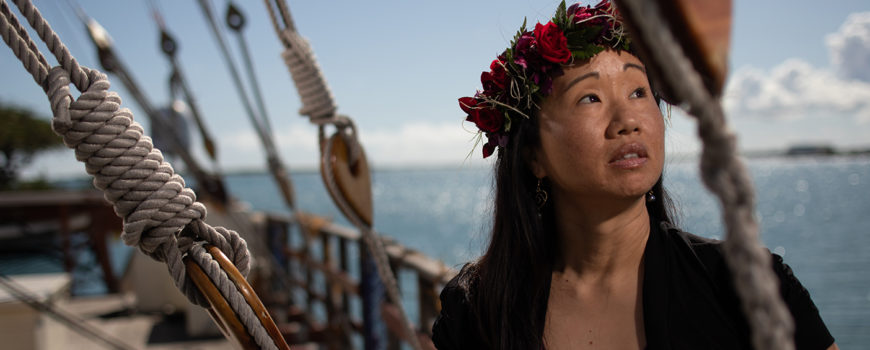
Ocean Voyaging Crew Training – Oʻahu

Great news for those of you interested in learning what it takes to become a Polynesian voyager – Honolulu Community College, in partnership with the Polynesian Voyaging Society, is announcing another round of crew training courses.

Program Mission: The mission of this program is to serve the community as a learning-centered, open door program providing technical training to meet the needs of those wanting to gain knowledge, skills and the hands-on opportunities when it comes to being a crew member on water vessels such as canoes (wa’a) and boats.

Program Description: The Ocean Voyaging Crew Training Program is centered on providing training on water vessels such as canoes and boats. Above all, understanding and following safety procedures and personal protective equipment knowledge for all aspects of being a crew member will be covered and highly stressed in all aspects of training.

Through taking the Ocean Voyaging Crew Training Program, students will be introduced to the history and foundations of voyaging, the importance of the wa’a, and the kuleana and roles each crew member will need to execute efficiently and safely, to the planning and execution of actual voyaging time on the ocean.

Instruction for the program will be held at the Marine Education and Training Center (METC) located on Sand Island, Keehi Lagoon, a state-of-the-art training facility which has classroom, laboratory and office space.

Please email honcet@hawaii.edu for more information about the program including dates and timing of the programs.

All Aboard the Mālama Honua Worldwide Voyage

The following post comes from our friend Margaret Miura, Ethnomathematics Graduate Certificate, Cohort #12

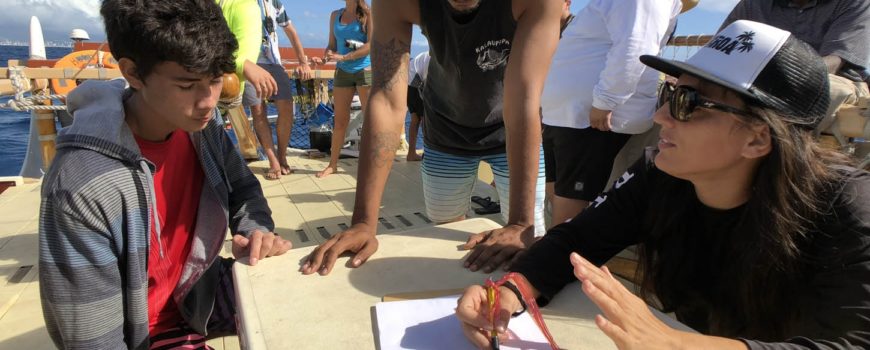
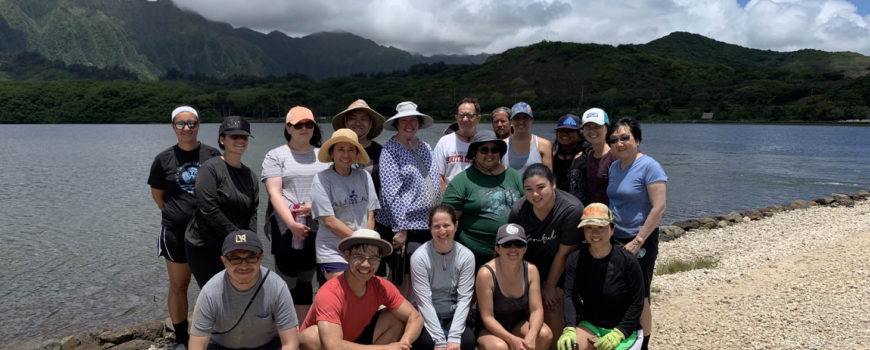
In July 2019, educators from Kahnawake, Canada; Juneau, Alaska; Tallahassee, Florida; Magnolia, Texas; San Diego and Los Angeles, California; and across the Hawaiian Islands gathered for the start of the 12th cohort of the annual ethnomathematics program at the University of Hawai‘i at Mānoa College of Education.

We began our voyage as strangers hailing from as far as 4,500 miles away and as close as my neighborhood of Pālolo Valley on O‘ahu. We spent a week immersed in the lo‘i kalo (taro patch) of Ho‘okua‘āina at Kapalai Farms, loko i‘a (fish pond) at Paepae o He‘eia, and learning the basics of sailing and wayfinding with the Polynesian Voyaging Society (PVS).

We ended our first week together on Hawai‘i Island (Maunakea, Keauhou Bird Conservation Center, and Hawai‘i Volcanoes National Park) connecting with one another by giving back and caring for the ‘āina (land) through service projects and hands-on learning. Ethnomathematics seeks “to understand mathematical knowing/doing…in the contexts of different interest groups, communities, peoples and nations” (D’Ambrosio, 2001, p. 8).

To me, ethnomathematics is solving everyday problems in your own language with the tools and knowledge handed down from generation to generation.

I chose this ethnomathematics program journey to better reach and teach students, yet found I am a part of something even bigger. In an article, Nainoa Thompson described how the overwhelming excitement of greeters literally sank the stern of Hōkūle‘a upon her maiden voyage to Tahiti. Like Hōkūle‘a, the classroom may be limited to how many students we can hold at a time, but the deck of Mālama Honua (“to care for our Earth”) movement is broad enough to hold the voyages of the world.

As educators, we begin our voyage in the classroom to launch students into the world. Our job is to provide a vessel students are clamoring to get on board because their eyes have been opened to the possibilities to connect to the world and make a difference. The ‘ike (knowledge) gained by the PVS set in motion, Mālama Honua, the metaphorical canoe big enough to hold anyone and everyone. We experienced this first-hand during our sail with PVS crew.

Joe Manfre, Hawaiʻi Department of Education (HIDOE) State Math Specialist, joined us on the sail and reflected, “I was already a believer in ethnomath. The ‘why’ was easy to buy into. Now, I understand how it can be put to use from the experience you provided. As we move to create more relevant learning experiences for our students, it’s obvious that this should play an integral part of what we offer them. Purposeful, authentic, place-based learning.”

Students, when provided lessons that build on their identity, culture, and history, become part of that legacy, ensure the knowledge is not lost, and shape the future. This ties directly into the HIDOE vision for our students to one day “contribute positively to our community and global society.” As educators, we seek to help students make connections with cultural practices and educational standards. Mahalo to all who came before and brought us to this point and to those who will continue the journey.

E kaupē aku nō i ka hoe a kō mai.

Put forward the paddle and draw it back. Go on with the task that is started and finish it (Pukui, 1983, #319).

Photos taken by Antonina Monkoski-Takamure

References

D’Ambrosio, U. (2001). Ethnomathematics. Rotterdam, Netherlands: Sense Publishers.

Hawaii Forest Institute. (2009-2016). Keauhou Bird Conservation Center Discovery Forest. Retrieved July 13, 2019 from https://www.hawaiiforestinstitute.org/

Hawaii State Department of Education. (n.d.) Student Learning. Retrieved July 13, 2019 from http://www.hawaiipublicschools.org/TeachingAndLearning/StudentLearning/Pages/home.aspx

Ho‘okua‘āina. (n.d.). Ho‘okua‘āina Rebuilding Lives from the Ground Up. Retrieved July 13, 2019, from https://www.hookuaaina.org

National Park Service. (October 25, 2018). Hawai‘i Volcanoes National Park. Retrieved July 13, 2019 from https://www.nps.gov/havo/planyourvisit/basicinfo.htm

Office of Maunakea Management. (2004-2019). OMKM. Retrieved July 13, 2019 from http://www.malamamaunakea.org/

Paepae o He‘eia. (2013) He‘eia Fishpond, He‘eia O‘ahu. Retrieved July 13, 2019 from https://paepaeoheeia.org/

Pukui, M. K. (1983). ‘Ōlelo No‘eau. Honolulu, Hawaii: Bishop Museum Press.

Thompson, N. (n.d.). Voyaging and the Revival of Culture and Heritage [Web log post]. Retrieved July 13, 2019, from http://archive.hokulea.com/ike/intro_ike.html

Mālama Waʻa Training Program – Oʻahu

Take advantage of introductory prices and learn how to care for voyaging canoes and small vessels of all types

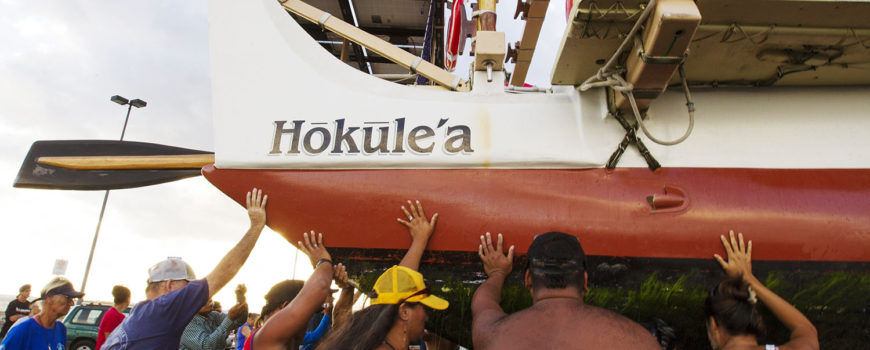
Several times a year, our voyaging community comes together to mālama our voyaging canoes so that they can continue to look good and sail safely. If you’ve ever been interested in joining in, but want to improve on your vessel upkeep and repair skills, our partners at Honolulu Community College have the perfect opportunity for you. Beginning in August and continuing through the winter, the Mālama Waʻa Training Program will offer several courses available to the public at discounted prices at the Marine and Education Training Center on Sand Island on Oʻahu.

Here’s more from Honolulu Community College:

Program Mission: The mission of this program is to serve the community as a learning-centered, open door program providing technical training to meet the needs of those wanting to gain knowledge, skills, and the hands-on opportunities working with small vessel fabrication and repair.

Program Learning Outcomes: Upon successful completion of the Malama Wa’a training program, students will be able to:

  • Perform tasks and best practices in accordance with the small vessel fabrication maintenance and repair industry.
  • Secure vessels, safely operate machinery and perform operations associated with dry-docking operations.
  • Operate and maintain standard woodshop stationary and portable tools; sharpen, tune, and use standard woodworking hand tools; true wood stock accurately, safely, and efficiently; construct shop fixtures and jigs; and, read, interpret and create blueprints.
  • Identify a variety of composite materials, formulate laminate schedules and demonstrate proficiency in laminating techniques, perform standard composite quality control tests, practice quality assurance and safety, and utilize the practical principles of composite-resin chemistry.
  • Perform pre-paint preparation and procedures, understand air compressor requirements, utilize common coating application systems, techniques and equipment, and understand and employ multi-component paint systems.
  • Present a systematic approach to surveying damaged vessels and be able to execute repairs.

Available Courses

To register – contact 808-845-9296

Deep Sea Voyaging Canoe Makaliʻi Arrives at Sand Island, Prepares for Voyage to Northwestern Hawaiian Islands

Makaliʻi’s Hanaunaola Voyage will be the first in modern times provisioned entirely from food grown, harvested, and prepared from Hawaiʻi

Deep sea voyaging canoe Makaliʻi arrived at Sand Island’s Marine Education Training Center (METC) this morning at 10:30 a.m. The canoe departed Kawaihae Harbor on June 7. The crew will spend the next couple of days preparing for a 10-day voyage to the Northwestern Hawaiian Islands of Nīhoa and Mokumanamana.

Makaliʻi’s Hanaunaola Voyage Preparations

The Voyage is made possible by a Department of Health and Human Services Administration for Children and Families grant for the Administration for Native Americans (ANA). Project Hanaunaola: Sustaining The Generations Through Voyaging is in the final year of a three-year grant with this 10-day voyage being the culminating event. This voyage to Mokumanamana is done in partnership with the Edith Kanakoaʻole Foundation, which has been conducting research about and at Mokumanamana for the past 14 years.

Makaliʻi’s crew will be making preparations for the voyage at METC from June 10-12. Their departure date is dependent on weather and finalization of preparations.

The voyage brings to practice two major objectives of the grant, which are 1) Train crew for leadership legacy, 2) Work with community to feed the canoe and become self sustainable

All photos © 2019 John Bilderback

About Makaliʻi

Nā Kālai Waʻa (NKW) has been offering educational experiences to our community since the birth of Makaliʻi in 1995. Programs, reflect the NKW vision statement, “He waʻa he moku, he moku he waʻa” (the canoe is an island, the island is a canoe). The curriculum is holistic and focuses on the relationship of all elements from the most fertile upland slopes to the deepest parts of our ocean. Through this pedagogy, programs focus on the individual’s development and contribution to their own communities. As kumu (teacher) and crew, NKW recognizes the strengths of each haumāna (students) and helps them develop those strengths both as individuals and as part of their community. Another important component of NKWʻs educational pedagogy is family learning. NKW builds canoes and programs that build communities. When families engage in a program together, learning often continues after the family has left the program to return home.

Through the years NKW has found that the canoe is the perfect educational platform to engage learners, both local and international, in basic academics, especially math and sciences. These STEM programs are perfectly married to the cultural aspects of voyaging so well that often students don’t even realize that they are performing tasks from simple measurements and conversions of units to complicated physics formulas that determine speed. When our learners see the direct application of these STEM and other academic skills in a cultural setting, it is easy for them to see the relevance to their everyday lives as well.