Hōkūleʻa Update | March 23, 2016

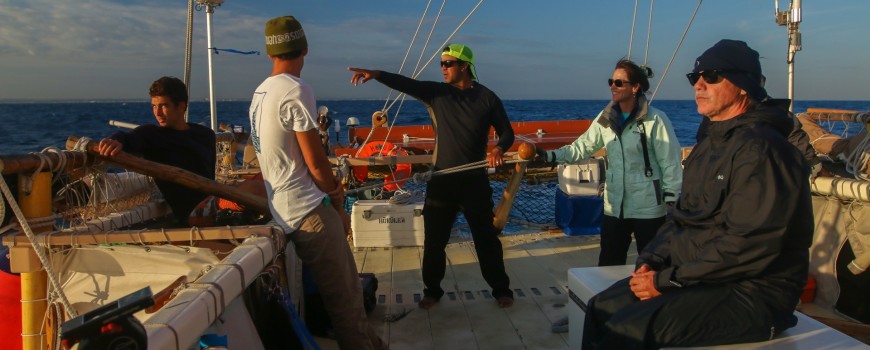
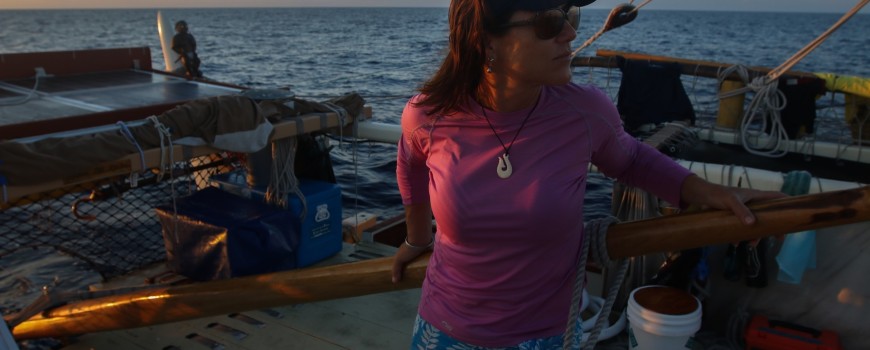
Aloha mai kākou, my name is Kamaki Worthington, and Iʻm on board Hōkūleʻa on Leg 18 of the Worldwide Voyage. We just departed Cuba, an amazing experience there and now heading to Florida, about 45 miles off the coast. Weather today is a little mix of some sun and clouds, big and small seas. So we’re just going to deal with it. And no task is too menial for crewmembers from doing dishes or scrubbing the deck. So that’s how we Mālama Hawaiʻi, and go check us out on Hokulea.com. Aloha!


More than Adventure

Beyond a daring expedition, the Worldwide Voyage is quite possibly the most important mission that Hawaiʻi has ever attempted. As people of Oceania, we are leading a campaign that gives voice to our ocean and planet by highlighting innovative solutions practiced by cultures around the planet.

We could not have begun this great journey without your support, nor can we continue to its completion.

Crew Blog | Todd Yamashita: Community of Cuban Art

Human teeth make for an interesting if not slightly creepy grin on what appears to be a well-sculpted life-sized bronze. If you look carefully however, the teeth are dentures and the statue is actually made from concrete, faux-finished to look like bronze.

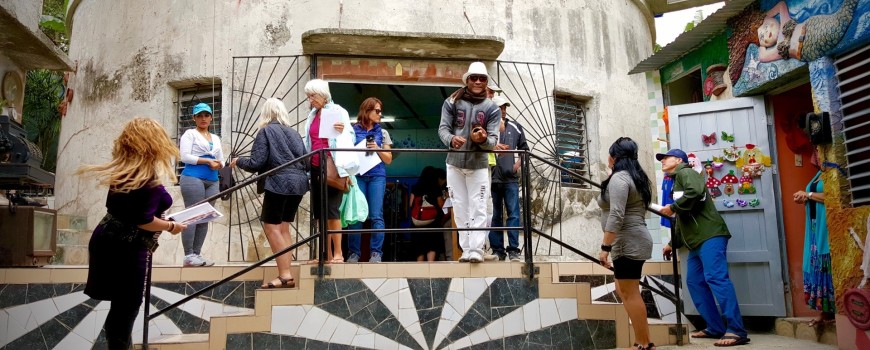
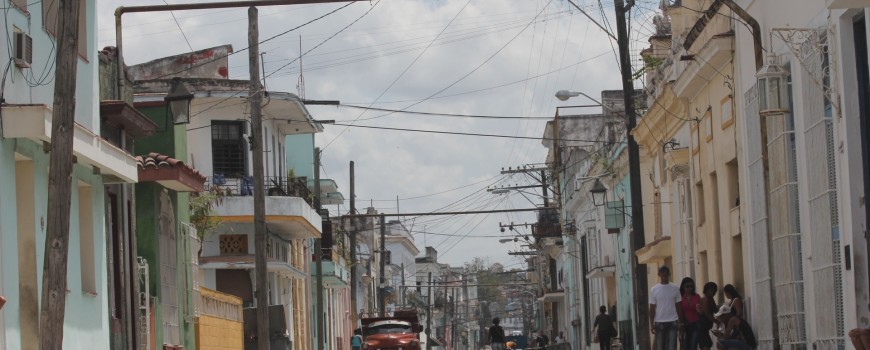
The sculpture is a cheerful juxtaposition to a community that might otherwise appear to be in decay. In fact, there is sculpture everywhere – a pair of owls welded together from discarded car parts, colorful murals that spill across walls and fences connecting neighboring homes, transforming adjacent blocks into an eclectic celebration of the arts.

Hōkūleʻa crewmembers are visiting Muraleando art center to discover how this humble community has been drawn together not only to beautify and lift its streets, but to teach art and music to its youth and neighbors. What was once a large defunct concrete water tank and trash heap, has been transformed into a sculpted labyrinth of walkways, gardens, a dance and performance area, gallery and stores – mālama honua with a creative touch.

“When love and intelligence come together they can create a true masterpiece,” said Victor Rodrigues Sanchez, our host who is a ceramicist, English language teacher and writer for the center. Indeed this place is a masterpiece. Sanchez is in his 60’s and he wears a permanent grin as he describes the efforts of his comrades to work with the Cuban government to create the center.

“Trust in the right hands can become art,” he explained. Years ago the group petitioned skeptical authorities to handover the derelict property. They started with the large water tank – clearing it from trash, cutting out windows and an entry way, and fortifying its ceiling strong enough to hold a couple hundred people including a live band dancing audience. Today there are around 200 similar art communities throughout Cuba and according to Sanchez, this one has been recognized as the most successful.

Perhaps the success directly correlates to the group’s depth of creativity: every creation here has a uniques story behind it. Crewmembers who sat atop a sculpted bench were told of a hundred year old woman who frequented the boulder from whence the seat was made. Neighbors would find her there late at night. When asked why she was there, she’d always replied that she was waiting for her lover. “This was saying to us, you’re never too old love, and we remember this when we sit here,” said Sanchez.

And the false teeth in that statue? A neighbor had donated them and insisted they’d be used somehow. By implementing neighborhood stories like these into art, the center keeps its volunteers engaged. In fact, there were about two dozen people working on various projects during our time there and Sanchez explained that even the most complex project takes a matter of months, if not weeks to complete.

Crewmembers and others from our Hawaii-based group were treated to live music on the rooftop of the tank. Performers played instruments, some of which were crafted from scrap metal, while vocalists engaged the audience to partake in salsa dancing. Later our group met with resident artists and purchased original paintings, photos and jewelry. 50% of all proceeds generated by artists go back toward the center’s buildout, programming and supplies.  They do extremely well considering there aren’t any other forms of granting or support from the private sector or Cuban government.

Many from our group discussed how communities in Hawaii and the states might benefit from similar types of projects. Wyland, our group’s most notable artist, sketched a turtle and signed it to commemorate our visit. Crewmembers also performed an oli mahalo and presented donations and gifts. We explained the meaning of mālama honua and while the words for them were new, it was obvious their practice of caring for our island earth was remarkable and hopeful.  We thanked and praised Sanchez and the other friendly volunteers and artists for the inspirational work our Cuban hosts had accomplished.


More than Adventure

Beyond a daring expedition, the Worldwide Voyage is quite possibly the most important mission that Hawaiʻi has ever attempted. As people of Oceania, we are leading a campaign that gives voice to our ocean and planet by highlighting innovative solutions practiced by cultures around the planet.

We could not have begun this great journey without your support, nor can we continue to its completion.

Crew Blog | Austin Kino: Viviero a La Mar

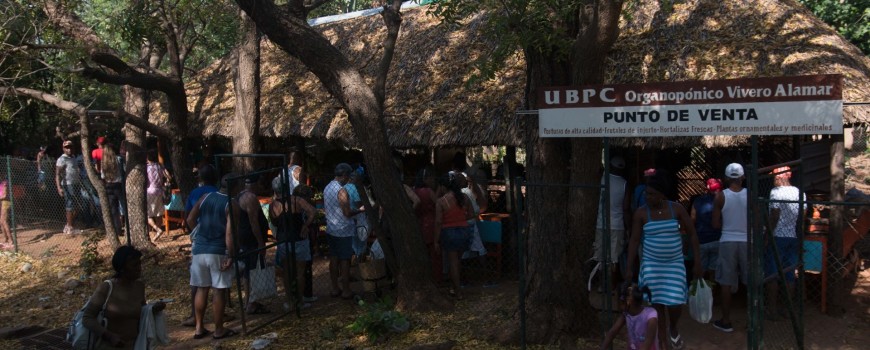
On March 19th , 2016 the crew of Hōkūle’a spent their first official day exploring Cuba. With an early morning pickup from the Ernest Hemmingway Marina, crewmembers had their first opportunity to drive through the city and take in all of the new sights and sounds of a typical Cuban morning rush. Our first stop for the morning was going to be an urban garden named Viviero a La Mar.  Upon our arrival to the community it was obvious that our destination was the morning hub of activity with local residents arriving to buy their organic fruits and vegetables directly from the market located at the edge of the farms perimeter.

IMG_6412

Our host was a woman by the name of Isis Salcines who is a second-generation farmer whose father started Viviero a La Mar in 1991. In response to the peak oil crisis that took place in the nineties, Cuban residents needed to find a creative solution to provision their diets with fresh food that would not require extensive transportation. The solution became the urban garden model where community members like Mr. Salcines could be given up 29 hectares of land from the government to use for food production.

IMG_6439

To this day the principal mission of Viviero a La Mar is to provide organic food and medicinal plants to the community and in doing so change the image of a farmer within the public’s perception. Isis shares with us the challenges of getting the next generation in Cuba to take an interest in the agriculture industry. With a variety of incentives to up and coming farmers that include a free five year education program, a weekly supply of food from the farm, and even free hair cuts for the men and pedicures for the woman the goal is to “make farming sexy” for the next generation to ensure the future of the urban garden model as a staple in every community.

IMG_6606

Similar to the situation in Hawaiʻi, Isis was sad to report that currently 80% of the food in Cuba is imported. The bulk of the imports however, are products that are not traditionally a part of the Cuban diet such as wheat products like rice and bread. “ To gain food sovereignty we need to change the Cuban diet and mindset away from a colonized mindset back to an agriculturally based country”. With the rising threat of GMO companies taking an interest in Cuba, community farmers like Isis are working hard to preserve the knowledge of organic farming to remain self-reliant. Even in the realm of healthcare Viviero a La Mar enlists the help of its oldest employee. At the age of 86 this farmer is perhaps one of the last on the farm with the knowledge of how to prepare and prescribe naturopathic medicine directly from the farm to the people of the community.

IMG_6593

Following a beautiful walking tour of the farm and learning from Isis about the many challenges and opportunities for the future of Cuba´s organic food production, the most powerful moment for the crew took place as we presented Isis and her most senior employee with a makana (gift) that included a signed photograph of Hōkūle´a and a peace blanket made by school children in Hawaiʻi. It was the first time Isis saw a photograph of Hōkūleʻa, and it was apparent that she instantly understood who we were as a group and the link between Hawaiʻi and Cuba that we had hoped to make. Overwhelmed by tears she translated to an older farmer what he was looking at in the picture and our shared mission of learning how to better stewards of our island earth. The older farmer lifted his hands above his head to make two thumbs up and in beautiful Spanish invigoratingly shared his hopes for a future of peace. Although the crew could not understand everything he said, I believe everyone that was in his presence knew that he was a treasure to his community as a living embodiment of Mālama Honua.


More than Adventure

Beyond a daring expedition, the Worldwide Voyage is quite possibly the most important mission that Hawaiʻi has ever attempted. As people of Oceania, we are leading a campaign that gives voice to our ocean and planet by highlighting innovative solutions practiced by cultures around the planet.

We could not have begun this great journey without your support, nor can we continue to its completion.

Crew Blog | Michelle Knoetgen: The Canoe is a Classroom

:

On Saturday, March 18, Hōkūleʻa Captain and Pwo Navigator Bruce Blankenfield held crew training for Leg 19 of the Mālama Honua Worldwide Voyage at Hui Nalu O Hawaii, a historic canoe club founded by Duke Kahanamoku and others in 1908.

Leg_19_Crew_Training_March19

Crew training began with Pule Hoʻomaikaʻi, a prayer of gratitude that asks for protection and enlightenment, followed by Mele Kāhea, a chant which requests permission from a host before entering their space, and is often practiced from the deck of the canoe upon entering a new port. Leg 19 anticipates three arrival ceremonies that will include Hawaiian and Native American protocol.

Just before singing Oli Mahalo, Captain Bruce reminded the crew that we are grateful to the teachers before us: the beach boys and the paddlers who have protected and passed down their knowledge of canoes and their love of the ocean.

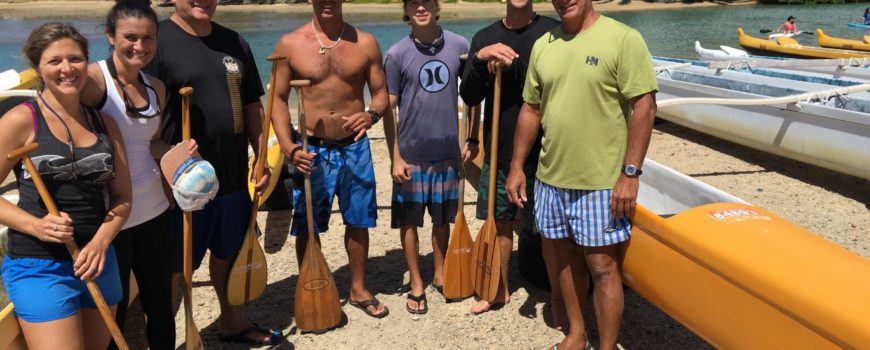
While crew members paddled Nā Mamo O Paoa, a six-man outrigger canoe, around the waters of Hawaii Kai, they focused on steering and stopping in order to simulate the experience of bringing Hōkūleʻa through the Atlantic Ocean’s Intracoastal Waterways (ICW).

Captain Bruce, along with experienced watermen Kaniela Lyman-Mersereau and Duane DeSoto, taught other crew members the nuances of steering from the back of the canoe, including finding a focal point, anticipating wind, and reading the ocean swells in order to keep the canoe on a straight course. Another important skill they got a feel for was stopping the canoe with their paddles, in preparation for the need to stop Hōkūleʻa.

Crewmembers practiced teamwork and communication as they paddled together, switching positions regularly so that everyone got chances to steer, lead, and count off, just as they will share responsibilities and work closely as a team on and off the canoe from Cape Canaveral, FL to Yorktown, VA.

Mahalo for reading! Continue to follow the voyage at http://www.hokulea.com/.


More than Adventure

Beyond a daring expedition, the Worldwide Voyage is quite possibly the most important mission that Hawaiʻi has ever attempted. As people of Oceania, we are leading a campaign that gives voice to our ocean and planet by highlighting innovative solutions practiced by cultures around the planet.

We could not have begun this great journey without your support, nor can we continue to its completion.

Hōkūleʻa Update | March 22, 2016

Aloha, this is Kālepa Baybayan on board the sailing canoe Hōkūleʻa. We are in Havana, Cuba. We arrived here five days ago. It has been a thoroughly incredibly learning journey for the crew of the Hōkūleʻa and our escort vessel Gershon II. We have learned a lot about this community by visiting an enterprising organic farm where they are trying to grow food to sustain the community here. We visited the canoe museum where we learned about how these islands here in the Caribbean Ocean have come to be settled. And that is a pretty engaging story. We visited Old Havana Town and went to the canon firing ceremony last night. But we have been starting out very early in the morning and returning late at night. So the crew has had their fill of Cuba, and now we push off to Key West, Florida and we’ll be back in the USA by tomorrow evening. From on board the Hōkūleʻa, this is Kālepa Baybayan wishing you all a very pleasant day, and don’t forget to follow us on Hokulea.com.


More than Adventure

Beyond a daring expedition, the Worldwide Voyage is quite possibly the most important mission that Hawaiʻi has ever attempted. As people of Oceania, we are leading a campaign that gives voice to our ocean and planet by highlighting innovative solutions practiced by cultures around the planet.

We could not have begun this great journey without your support, nor can we continue to its completion.

Crew Blog | Shawn Malia Kanaʻiaupuni: Hōkūleʻa Goes to Cuba

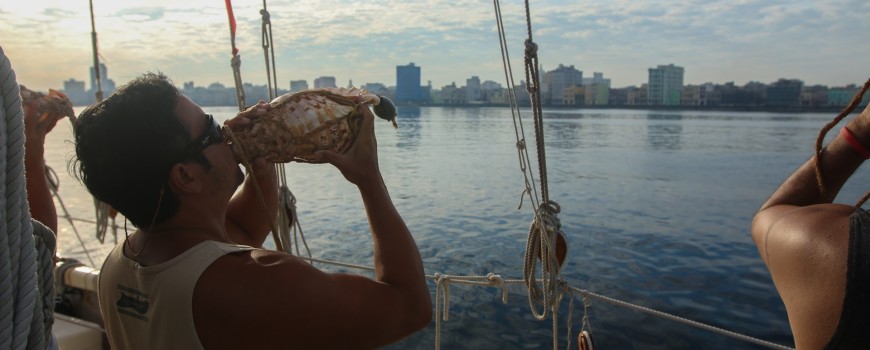
As we sailed past the immense stone fort of Castillo del Morro, the entire Habana skyline came into view, shining brilliantly in the morning sun. The entire crew gathered as the pū sounded, announcing the arrival of Hōkūleʻa. Elegant buildings and archways that had seen better days stared back silently, colored white, pink and blue. Near us, a few dark silhouettes dotted the ocean against the sun here and there, solitary fishermen beginning their day’s work. Unlike other ports that we’ve sailed into, there were remarkably few boats, only our canoe and a very occasional fishing boat going by. Arriving to Habana, Cuba felt surreal after the long days at sea. We crew members wondered aloud to each other, “we really are in Cuba today.” Suddenly we heard shouts, and “aloha Hōkūleʻa” floated thinly across the water from a small group of tiny little figures in the distance along the long seawall stretching in front of the city. Our friends from Hawaii had gotten up early to welcome us, having traveled to Cuba to learn and be a part of mālama honua in Cuba.

IMG_6417

Making our way to Marina Hemmingway, we travel down a long canal past boats from many countries, Canada, Germany, the United Kingdom, France, and more. We fly the flags of Cuba, Hawaii, and the U.S. A group gathers for the welcoming protocol, giving us a chance to share our oli and in return, we are presented with an AfroCuban song of friendship. We see 1950s cars passing on the roads behind the marina, Fords, Chevys, and Oldsmobiles. It’s like being on a set of an old time movie, but it’s real life with real families going by.

IMG_6792

The next two days are full of activities, including visiting a community farm that got its start during the “special period” when food was scarce and communal gardening a critical necessity. A local resident hosted a reception of music and mingling on a rooftop in old Habana. We met with local musical artists engaged in promoting cultural diversity, took a tour through the city, and visited a fifth generation family owned and operated tobacco farm. The drying barn smelled amazing.

IMG_6771

The people we’ve met are sincere and happy. Walking by, people seem reserved at first, but once any of us strikes up a conversation, whether in Spanish or English, they break into big smiles and return our aloha with effusive enthusiasm, somehow recognizing the island to island connection after hearing that we are from Hawaii.

20160318_171004

And the food is amazing. A traditional Cuban dinner includes chicken, shredded beef, pork, black beans and rice, malanga (taro), and a salad of shredded cabbage, cucumber, and tomato. We eat well!


More than Adventure

Beyond a daring expedition, the Worldwide Voyage is quite possibly the most important mission that Hawaiʻi has ever attempted. As people of Oceania, we are leading a campaign that gives voice to our ocean and planet by highlighting innovative solutions practiced by cultures around the planet.

We could not have begun this great journey without your support, nor can we continue to its completion.

Hōkūleʻa Arrives in Cuba

Hōkūleʻa, the legendary voyaging canoe from Hawaii internationally known for her pioneering travels, has reached another “first” in her Worldwide Voyage: arrival on the shores of Cuba. The vessel reached Havana on Friday at 7:30 a.m. local time, after traveling over a thousand nautical miles from the British Virgin Islands, where the canoe was most recently docked. 

IMG_6417

“Being part of this hardworking crew who just completed a historic sail to this island country in the Caribbean Sea is nothing short of amazing,” said Kālepa Baybayan, captain and pwo navigator. “We’re anticipating great learning experiences to emerge from our engagement with Cuba’s local community and customs. Our crew is also looking forward to sharing with Cuba’s residents Hōkūleʻa’s Mālama Honua message of taking care of our precious natural resources.”

IMG_6509

While in Cuba, the crew plans to visit Old Havana, a UNESCO World Heritage Site, and meet with ICAP (Cuban Institute for Friendship with the Peoples) about US-Cuban relations.   They also plan to meet with leaders of urban sustainability and marine conservation efforts in Cuba.


More than Adventure

Beyond a daring expedition, the Worldwide Voyage is quite possibly the most important mission that Hawaiʻi has ever attempted. As people of Oceania, we are leading a campaign that gives voice to our ocean and planet by highlighting innovative solutions practiced by cultures around the planet.

We could not have begun this great journey without your support, nor can we continue to its completion.

Crew Blog | Shawn Malia Kanaʻiaupuni: Heading to Cuba

Aloha mai kākou! As we cross the ocean on day 5 of Leg 18 of the Worldwide Voyage, we can see the faint outline of Cuba off in the distance about 25 miles away. It is about 90 miles south of the Florida Keys. The crew has been reading up on Cuba in preparation for our arrival. We’ve learned that Cuba is much larger than any of our Hawaiian islands, home to over 11 million people and spanning nearly 750 miles from east to west.

We are headed to the capital, Habana, on the northern coast of the western third of the island. It is the center of military, political and economic power. Hōkūleʻa will be hosted at the Marina Hemmingway in Habana. Most of the people in Cuba are mulatto, of mixed African and European descent, another third are white, and some 11 % are black. About 1% are Chinese, brought to Cuba to work as indentured laborers between 1853 and 1872 to fill shortages left by the end of African slavery. Culturally, we can expect to see a rich Afrocuban influence in music, religion, and art.

As in the British Virgin Islands, the language of Cuba’s first peoples, the Indigenous Taino-Arawak, is extinct, and in the case of Cuba, the indigenous people themselves suffered the same fate. Their lands were given to European colonizers and the people given to Europeans for mining and agricultural labor. Those who resisted were killed. After about 50 years, they too were largely extinct.

Today, nearly all Cubans speak only Spanish, which means our crew needs to bone up on our Spanish very quickly. We have a couple of crew members who speak the language fairly well and we are all working to get comfortable with everyday expressions, for example “gracias” (thank you), “por favor” (please) and “donde está el baño,” Spanish for where is the bathroom. Apparently, Cubans also use a lot of hand gestures when they speak, so we are pretty confident about finding ways to share our aloha and to communicate non-verbally if not verbally.

We’ve also been learning about Cuba’s past. Following a long history of colonization by Spain and subsequent invasions in 1898 and 1906 by the United States, Cubans developed a strong sense of national identity reinforced by the Revolution in 1959. A red flag with black letters mark the date in 1953 on July 26th, when Castro attacked army barracks at Moncada. The independence fighters lost and were put to death. Only one life was spared, that of Fidel Castro. This young lawyer gave an impassioned five hour speech at his trial, History will Absolve Me, which became the official date beginning the independence movement to free Cuba from its colonizers. Once Castro was released from jail, he and several supporters followed through and on January 1, 1959, Cuba became truly independent for the first time since it was colonized in 1511.

As a socialist country, Cuba centered itself on improving wellbeing and standards of living in an egalitarian society, including food, clothing, shelter, health, education, and work. It made significant strides in this goal. Before the socialist revolution, only 45 percent of the population had completed primary education, 9 percent secondary, and 4 percent higher education. But by 1988, those numbers were 100 percent, 85 percent, and 21 percent respectively. The percentage of income earned by those in the lowest salary bracket rose dramatically, as wealth was dramatically redistributed. Since the 1990s, economic issues have challenged these ideals, especially in the last 25 years. However, the Cuban people remain dedicated to their nation. They highly value social cohesion and emphasize collective rather than individual interests.

We are really looking forward to meeting some of the local poʻe and learning more about their perspectives and stories. Stay tuned for more coming soon.


More than Adventure

Beyond a daring expedition, the Worldwide Voyage is quite possibly the most important mission that Hawaiʻi has ever attempted. As people of Oceania, we are leading a campaign that gives voice to our ocean and planet by highlighting innovative solutions practiced by cultures around the planet.

We could not have begun this great journey without your support, nor can we continue to its completion.