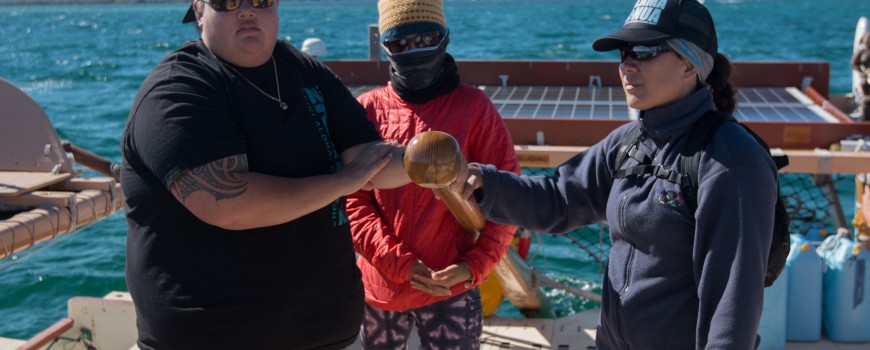
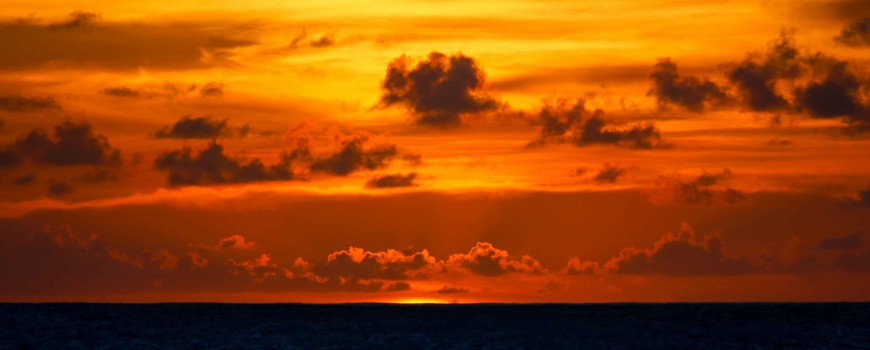
Aloha, this is Haunani Kane from the Hōkūleʻa crew. It is June 5th, and we have just left Minjerribah and we are making our way up towards Townsville. We had an awesome week with the Quandamooka ʻohana, and we would like to give a big mahalo (thanks) to all of them and the Queensland University research center and the Redland City Council. You can see here in the background that we are passing Moreton Island and making our way out of the bay. So continue to follow us at Hokulea.com
For the first time in her history, Hōkūleʻa crossed the Tasman Sea to Australia, successfully navigating across these unfamiliar waters. Hōkūleʻa sailed into the iconic Sydney Harbor and was welcomed to the country by the traditional owners of these lands. Crewmembers were eager to learn more about these people but their presence is almost invisible in this busy metropolis except for Redfern, the only aboriginal community in urban Sydney.
Shane Phillips, a Tribal Warrior Redfern Sydney Aboriginal Tribe leader said that, “This community was going from a place of, a sense of hopelessness for a long time. And that comes from grief, loss from disconnection, and dispossession. The only thing that can beat it is hope; Hope built with routine and built with strong aboriginal people pushing each other to understand their people and make everyone feel proud of who they are.”
Just like our navigators on the waʻa, Shane is a navigator in his community and the Tribal Warrior program that he runs has been a bright spot of hope.
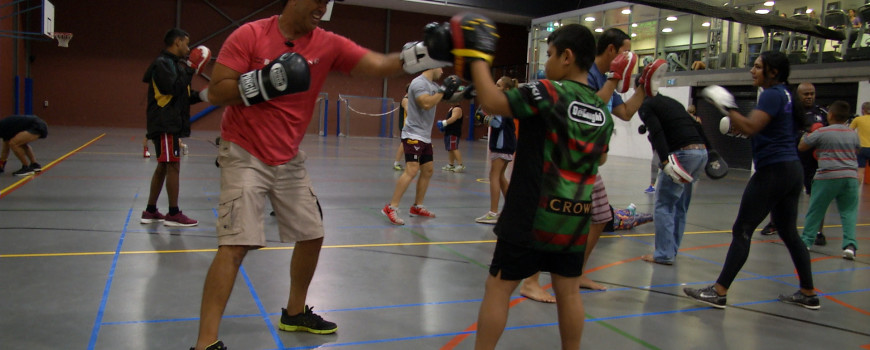
“This program here, that we’ve put together, came from a bunch of young boys from our community who were getting in trouble with robberies. And we had a really bad relationship with the police,” said Phillips. “What we did was put them in a routine program. So the mentors would pick them up, take them and train them with the police. After the first few weeks, the dynamics changed; we started to become friends. In the first few months, 82% dropped in robberies in this area. A simple fact is that these kids started to tell other people about the big things, the strong things about our people. They saw their own worth, and they started to get involved in getting back to learning.”
Crewmembers were invited to join the Tribal Warrior kids for their 6 AM program. For crewmember Kawika Crivello, the experience with this urban indigenous community offered insight for his own work with youth in his rural island community of Moloka’i.
“Being that I work with children, at-risk kids that we’ll be sharing what we do back home, what we ended up doing was having a two-hour hardcore workout.” said crewmember, Kawika Crivello.
Phillips said, “The boys did really well. They pushed themselves really hard and they were really good. They picked it up really quick, they came here to watch, and they couldn’t help themselves; they had to get involved.”
Crivello said, “What I saw today, from Shane, is that within his community, and after speaking to him, that he looked at his community and that he wanted to be part of this solution. He wanted to make a change. It confirmed that it’s important as a leader to have that relationship, to build that relationship with a child, to have that trust. And in order to do that, it takes a special someone to have that engage with the children, to have them, come out and give you their energy. That’s what I took, that he formed that relationship that base, that foundation. And after meeting him, I’m energized to take that home, to have that energy, to be that engaged with the kids. Ao it definitely inspired me.”
In return, the crewmembers inspired the youth with their voyage around the world and its message of Mālama Honua.
“We tell all the kids about thousands of years of strength. And then we talk about other nations, we talk about indigenous people all over the world,” said Phillips. “We saw the light come on here today with these children. And when they knew that it was another indigenous nation doing the circumnavigation through navigation, through nature, through currents and winds, they saw that connection. That connection is so important to us.”
Crivello noted, “When we go to these places on Hōkūleʻa, it is not just the literal things of mālama honua. It’s not just something that we put on a t-shirt, it is something that is action. It is something that we live, it is something that when we come off the waʻa, that we engage in, and that we truly live, and be active in our community, and that in itself is mālama honua, in what each of us can carry off the waʻa and into our communities, to put it into action.”
On the morning of July second, we joined the Quandamooka elders for morning tea at the local museum here on Minjerribah Island, also known as North Stradbroke Island, located across Moreton Bay from Brisbane on the Queensland Coast. What I did not know then, that I know now, is how significant the day was going to be and how thankful I am to have met the elders of the Quandamooka, the aboriginal people from the Moreton Bay area, who were willing to share their stories with us.
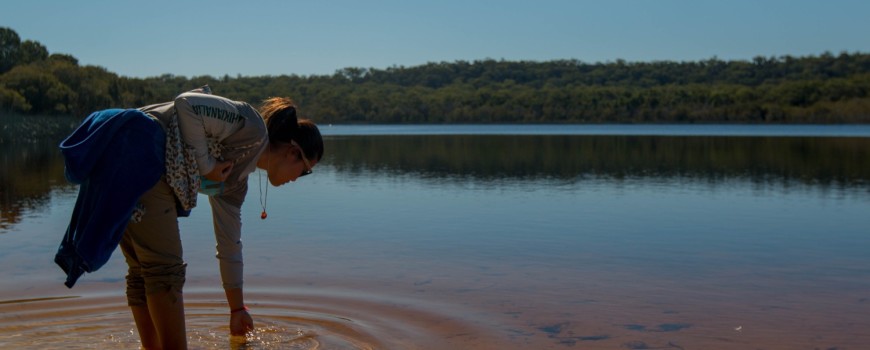
The very first place that Aunty Evelyn, one of the elders, took us to was Bummiera (Brown Lake). This is a culturally sacred place because it is the location where Kabool, the rainbow serpent resides. Aunty Evelyn then asked the spirits’ and ancestors’ permission for us to be at the lake. After we looked around for a little while and took in the beauty of the location, Aunty Evelyn had three pieces of artwork to share with us.
The very first one she shared with us was a drawing of a healthy gum tree. The photo symbolized the Quandamooka people before western contact. The tree was depicted as a very healthy, strong gum tree with strong roots to Mother Earth. Aunty Evelyn mentioned how people stand tall because they have healthy roots that are grounded in Mother Earth and also the importance of Quandamooka people and their relationship to the land. She mentioned how the birds and trees speak to the Quandamooka people about various activities such as fishing and how the people valued the connection that they have with the land and their environment.
The second drawing was of a gum tree without any leaves and some branches cut off. She explained to us that the drawing characterizes what happened when the Westerners came in contact with the indigenous people. The Quandamooka people were losing some of their characteristics, but still had firm roots to connect to Mother Earth. The emphasis here was that as long as the roots were firmly grounded, the tree would still hold strong, even if it lost some of the healthy characteristics. Similar to Hawai‘i, the indigenous people were banned from using their language and practicing their culture.
The last drawing that was shared with us was of young healthy gum trees. It symbolized how the children in the community were growing strong and learning about the culture that was once almost lost. It characterized how the forest will be healthy again because the children are growing and learning about their culture and history.
This is truly a story of hope that Aunty Evelyn shared with us. The Quandamooka people are resilient and the culture will survive and become stronger as they meet adversity. A quote that I have written down from the day is “find your roots that ground you down to Mother Earth, cause nobody can take that away from you.” It was truly a special day and I am honored to have been guided by the Quandamooka elders through their lands.
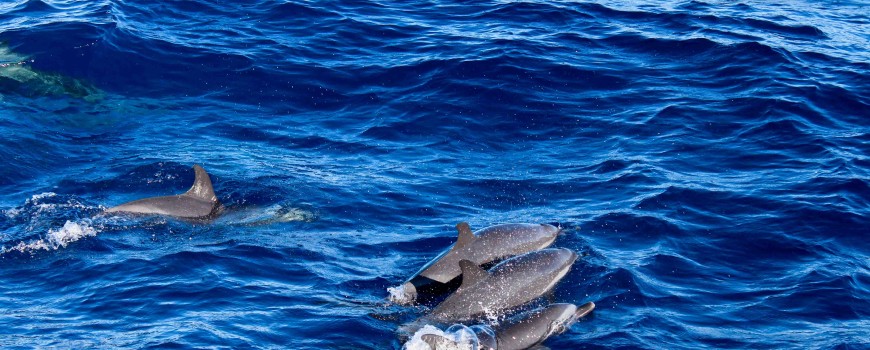
Our 2-6 am night watch was brightly lit by a full moon tonight. Our skies changed only briefly for a few squalls (rain showers) that brought welcomed wind. A “moonbow” on the east horizon about a half hour before a rip roaring red sunrise filled our skies. We paused to take in this small celestial wonder before swabbing (cleaning) the deck and making coffee for the crew who arose for breakfast. As we settle ourselves in for the usual morning routine of changing shift, cleaning up and helping prepare breakfast, Austin spotted a dolphin. The beauty and intelligence of this creature always makes one stop and watch. Our enthusiasm soared when we realized there were no less than 50 dolphins including their keiki racing around the wa’a. The dolphins seemed as thoroughly entertained by our presence as we were with theirs. Crewmembers joining from below deck were lulled out of their slumber by the sounds of the underwater dolphin chatter. Other crewmembers (safely) clipped themselves onto sheaths toward the bow of the wa’a so they could lean over and glean a closer look. Some crewmembers captured underwater images of the moment on GoPros. The dolphins eventually grew tired of our slow “swimming” wa’a and eventually broke off to continue on their journey. What a great moment.
We are about 7 degrees north latitude today. Despite a few squalls and moments of vessel movement reaching 8-10 knots, we have been in the doldrums, a band of ocean near the equator where current and wind are often calm, for the last 5 days. We are slowly working ourselves north to take advantage of the North Equatorial Current and the Northeast trade winds. It is only then that can we expect to increase the nautical miles covered per day to cover the less than 1000 miles remaining to reach Honolulu. We have become our own little world here on the wa’a. Through common vision, discipline, constant communication and a surrounding envelop of aloha, one can feel the ties that will bind us long after this journey. These ties have been made and fortified despite the usual barriers of race, ethnicity and income. PVS voyages are supposed to represent the process or journey one takes to understand one’s individual responsibility to care for and help sustain one’s own community in harmony and health. It will be interesting to see how each of us translates this into our individual daily lives once we return to land.
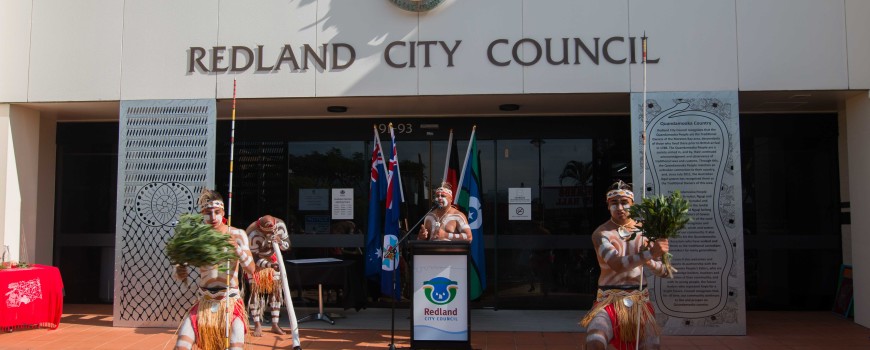
Aloha mai kākou, this is Hye Jung Kim, Hōkūleʻa crewmember coming from Redland City, Australia. Today is June 3, 2015. We just got through being part of an unveiling ceremony that acknowledges the Quandamooka people as the first people of the land. Back here you can see the plaques that were unveiled today. We want to thank the Quandamooka people for being so generous to us. Hōkūleʻa is currently docked in Minjerribah Island, which is also known as North Stradbroke Island. We are preparing the waʻa to depart on Friday. So thank you for hosting us Quandamooka People and also Redland City Council, and we want to extend our mahalo to organizing everything. Please continue to follow us on Hokulea.com. Aloha!
The Polynesian voyaging canoe Hikianalia is on a 2,400 mile journey from Aotearoa to Hawaiʻi. Crewmembers will be sending frequent updates so that educators and students can track her progress in conjunction with the Worldwide Voyage Tracking Map.
Time period: Sunrise
Speed: Average 5 knots. Low: 0, High: 10 knots
Direction: Nāleo Hoʻolua – ʻĀkau
Distance traveled along reference course: 58nm since sunset, 1,334nm total
Distance/ Direction from reference course: 22E – 15W = 8nm East of ʻĀkau line
Estimated position (Lat./Long.): 5º N
Wind direction/ strength: Lā Kona
Dominant swell direction/ height: Nāleo Malanai, the swell that saved us.
Clouds: 100 % sky coverage. Type: Nimbostratus.
Color of sky at sunrise/ sunset: Orange, pale yellow, blue
Night watch:
Stars used: None available the whole night
Other navigational clues: Jupiter and the Moon, thatʻs it.
Sun Dec./ House: 22º N ʻĀina Koʻolau
Moon Dec./ House: -17º Lā / ʻĀina Malanai border
Moon phase: Hoku
Notes: 6 hours of rain, 8pm-2am. Top speed 10 knots. After rain and wind dissipated, we shut down at 2am because we couldn’t see anything. First sighting of the moon at 4am at 16º+ altitude. Starting sailing again at 4:30am using the moon.
Time period: Noon (End of Jason Pattersonʻs 2nd 48-hour navigation watch)
Speed: 5 knots
Direction: ʻĀkau
Distance traveled along reference course: 30nm since sunrise, 1,364 total
Distance/ Direction from reference course: 8nm East of ʻĀkau line
Clouds: 60 % sky coverage. Type: Cumulus, cirrus, stratus, stratocumulus. The sky doesn’t look as ominous as it did yesterday, some bright blue patches, minor strength squalls.
Color of sky at sunrise/ sunset: Orange, pale yellow, blue
Other navigational clues: Wind
Sea life observed: Koʻaʻe ula
Sun Dec./ House: 22º N ʻĀina Koʻolau
Moon Dec./ House: -19º ʻĀina Malanai
Moon phase: Mahealani
Notes: A challenge does not begin to describe the last 24 hours. Wow, that was a test! I would really like to see Hokupaʻa.
I have the unique privilege to serve as a crewmember on the Gershon II to escort Hōkūleʻa from Aurere, Aotearoa to Brisbane, Australia. Before flying down to Auckland, I knew very little about this 50 ft steel cutter, other than the fact she had previously served as escort vessel during the 1995 Nā ʻOhana Holo Moana voyage (Hawaii – Rarotonga – Tautira – Nuku Hiva – Hawaiʻi) under the leadership of Captain Steve Kornberg.
Climbing aboard the Gershon II in Mangonui Harbor, I experienced déjà vu. It felt so familiar as I’ve done a few inter-island sails on storied escort boat Kama Hele. The resemblance shouldn’t have been a surprise: Alex Jakubenko had built both Kama Hele and the Gershon II for the specific demands of escorting the voyaging canoes. Yet I quickly saw the difference between these two boats as I got to know the crew. Kama Hele had become a PVS work horse, while the Gershon II is the floating home of Steve and his wife Cheryl.
Captain Steve had already logged 20 years of ocean crossings throughout the Pacific before meeting Cheryl. Over the following 20 years, Cheryl has been the first mate of the Gershon II, with countless blue water sails from Hawaiʻi to Tasmania, ranging from remote Polynesian atolls to New Zealand’s fjords and Rakiura (Stewart Island).
Joining us on this Aotearoa – Australia leg was another seasoned sailor, Terry Causey. Terry had also supported the 1995 Nā ʻOhana Holo Moana voyage as captain of the Goodwind, the escort vessel for the voyaging canoe Makali‘i. Terry brought along his college buddy Bill Harz, a geologist with exemplary dishwashing enthusiasm who provided endless comic relief during our Tasman Sea crossing.
I shared the 10 – 2 watch with Bob Engle, who knows the workings of the Gershon II from bow to stern. Since 1972, he’s been able to trade his woodworking skills in exchange for ocean time aboard various boats in Hawaiʻi. Moreover, his expertise in fishing and cooking has insured that he gets reinvited to sail. Since 2011, he has voyaged with Steve and Cheryl to Kiribati, Cook Islands, Samoa, Tonga, Fiji, Vanuatu, Solomon Islands, New Caledonia and New Zealand.
Because of all the weather delays, Terry and Bill had to return home to California before our sail to Sydney. Yet as serendipity would have it, on our second day in Coffs Harbour we bumped into Suzi Pearson, an English sailor who befriended Steve, Cheryl and Terry 32 years ago while she lived on the Big Island. They hadn’t seen or heard from her in the last 15 years, but fate reunited them as she coincidentally has a Tahiti Ketch in Coffs Harbour, where she has been residing for the past 8 years. It wasn’t hard for Steve to convince her to join us on the Gershon II for a few days and help us get to Sydney.
By the end of this leg, I will have spent about 6 weeks with the Gershon II and her crew. That may not be a lot of time on land, yet on the ocean it’s not the quantity but the quality of time spent together that creates such long-lasting ties. I now see the significance of our boat’s name. “Gershon” is a Biblical name, meaning “stranger in a foreign land, always to be treated as family”. I’m deeply honored to be “hānai‘d” by this crew of amazing individuals!
Photos by Miguel Castrence unless otherwise noted.
Today the crew got to tour Stradbroke Island with some of the native elders as our guides. We started by visiting Brown Lake or Burimma, which is very sacred to Quadamooka people. The elder Evelyn spoke to the crew about the struggle and survival of her people, which was a very familiar tale. Later we had lunch at the North point of the island, commonly know as The Point, which had very beautiful beaches and wild kangaroo roaming around. After that, we went to Dunwich State School where the crew gave a short presentation to the students and teachers followed by a question and answer session with Captain Bruce Blankenfeld. The school was then invited to visit and explore Hōkūleʻa. A small collective of crew also went to the Yulu-Burri-Ba Health Center, which is dedicated to native health. The day ended with a gorgeous sunset, which in turn gave birth to a chilly evening, currently around 52° Fahrenheit. The crew is happy and excited for this Australian adventure.