Native Oysters Return to Pearl Harbor

There is a new restoration effort to mālalma the waters of Puʻuloa (Pearl Harbor) using oysters.  

The U.S. Navy, O‘ahu Waterkeeper and the Pacific Aquaculture and Coastal Resources Center have seized on a novel approach using native oysters to mālama our waters here in Hawai’i. Polynesian Voyaging Society (PVS) master navigator Nainoa Thompson was at Pearl Harbor yesterday to help celebrate the kickoff of oyster restoration. Voyagers witnessed first hand the large-scale Billion Oyster Project in New York Harbor in partnership with Hudson Riverkeeper. At yesterday’s event, Nainoa spoke to the value of these partnerships in moving our planet forward. The native oyster project was also mentioned during Hōkūleʻa’s historic first sail into Pearl Harbor in February last year. 

The following comes from our friends at the U.S. Navy:

Native Oysters Take a Plunge Into Pearl Harbor

Joint Base Pearl Harbor-Hickam – The first native oysters have taken the plunge into their new home at Pearl Harbor. A ceremonial event yesterday morning on Ford Island. Earlier this year, the U.S. Navy, O‘ahu Waterkeeper and the Pacific Aquaculture and Coastal Resources Center (PACRC) at the University of Hawai‘i at Hilo joined forces to use native species of shellfish to improve water clarity and quality in the Pearl Harbor estuary.

Oyster spat have grown large enough for this opening event that included Hawaiian oli by local Hawaiian practitioners and an official welcome by Rear Admiral Brian Fort, commander of Navy Region Hawaii and Naval Surface Group Middle Pacific. Other key attendees included Polynesian Voyaging Society Master Navigator Nainoa Thompson and Waterkeeper Alliance President of the Board Robert F. Kennedy Jr.

The project, based on a partnership with O’ahu Waterkeepers and PACRC, plans to use two species of oyster native to Pearl Harbor: Dendostrea sandvicensis (Hawaiian Oyster) and Pinctada margaritifera (Black-lip Pearl Oyster). The project builds on the successful feasibility study conducted by the Department of Land and Natural Resources, Division of Aquatic Resources, using a nonnative species, Crassostrea gigas (known as the Pacific Oyster), as a tool to improve clarity and quality of waters within Pearl Harbor.

Native oysters filter between 20 and 45 gallons of water per day depending on their size, removing harmful pollutants including bacteria, heavy metals, oil, microplastics and sunscreen chemicals, improving water clarity and quality. “This project will further the Navy’s environmental stewardship activities in Pearl Harbor and hopefully lead to long-lasting positive effects on the harbor through sustained augmentation of oyster beds,” said Cory Campora, Navy’s natural resources manager.

The oysters produced by the project are for restoration only, not for consumption. Commercially farmed oysters in other near shore areas of Oʻahu are safe to eat because the waters they are grown in are regularly tested by the Hawaii State Department of Health (DOH).

Mahalo for the photos from our friends at the U.S. Navy

Background information on the restoration project itself:

A partnership is now working together to return native Hawaiian oysters to their namesake waters, Pearl Harbor. The Navy, O‘ahu Waterkeeper, and the Pacific Aquaculture and Coastal Resources Center (“PACRC”) at the University of Hawai‘i at Hilo are restoring native oysters to improve water clarity and quality in the waters of Pearl Harbor. Historically, Pearl Harbor’s waters were known as “Wai Momi” or “pearl waters.” Native oysters, and oyster reefs, were once abundant and an integral part of the marine ecosystem and local culture, recorded in history through Native Hawaiian chants, songs, and legends. Pearl Harbor is at the bottom of a drainage system from Aiea to Ewa, catching stormwater and other land-based contaminants. Oysters filter water, removing harmful pollutants including sediment, bacteria, heavy metals, PCBs, oil, microplastics, carbon, and nutrients from the water column.

Today, the Navy, O‘ahu Waterkeeper and PACRC are restoring native shellfish species in honor of their deep cultural significance and in hopes of replenishing these species for future generations. The project will use two species of shellfish native to Pearl Harbor: Dendostrea sandvicensis (Hawaiian Oyster) and Pinctada margaritifera (Black-Lipped Pearl Oyster). “The Navy is to be commended for undertaking this significant initiative while the native species are still thriving in small numbers within Navy waters,” stated Marian Phillipson, Program Director, O’ahu Waterkeepers. “Ultimately, it will be an achievement of our time to return a natural feature to the ecosystem which had been largely lost.”

“There are over 200 species of native bivalve shellfish in Hawaiian waters,” stated Dr. Maria Haws, Director of PACRC. “Many of the previously abundant species are now rare, so we have been working to develop hatchery production methods over the last ten years.” Notably, restoration oysters are not edible. Commercial oysters, which are grown under strict regulations for clean water, are safe to eat.

This initiative is modeled after several successful partnerships with Waterkeeper organizations on the East Coast involving the restoration of native oysters to improve water quality, including the Billion Oyster Project in New York Harbor. Under the direction of Board President, Robert F. Kennedy Jr., Waterkeeper Alliance is a global movement to protect water resources, currently uniting more than 340 Waterkeeper Organizations and Affiliates in over 40 countries. Their mission is fishable, swimmable, drinkable waters. The organization is committed to finding solutions to reduce land-based pollutants and improve water quality. For more information, please visit www.waterkeepershi.org

Returning to the Koa Forests After 30 Years

Native forest visit reaffirms Hawai‘i-Alaska kinship and shared commitment to ancestral knowledge and nature

As a precursor to the Ho‘oilina Conference, Kamehameha Schools (KS) and the Polynesian Voyaging Society (PVS) hosted Sealaska leaders on a day trip to Hawaiʻi Island yesterday to revisit KS’ Keawewai and its native forest on the upper slopes of Keauhou where almost 30 years earlier, Native Hawaiian and Alaskan leaders gathered in ceremony to promote the restoration of Hawai‘i’s declining koa forests.

The visit back in 1990 was to accept the precious gifts of two Sitka spruce logs from Sealaska to build the Hawaiʻiloa canoe, and to affirm a commitment to restore Hawai‘i’s threatened forests.

The purpose of yesterday’s visit was to remember, honor and celebrate those acts of kindness that have strengthened the bonds of kinship between Hawaiʻi and Alaska and helped restore this sacred environment.

Participants of yesterday’s trip to Hawaiʻi Island included KS CEO Jack Wong and Executive Cultural Officer Randie Fong; Sealaska Chair Joe Nelson, President and CEO Anthony Mallott, and former President and CEO Byron Mallott; and Hōkūle‘a crewmember and KS West Hawai‘i Regional Director Kaimana Barcarse. The Mallotts and Fong were both part of the first visit to the area 30 years ago. Other cultural leaders who were part of the 1990 visit were Alaskan Tlingit tribe elder Judson Brown, Pinky Thompson, Herb Kāne, canoe builders Wright Bowman Sr. and Wright Bowman Jr., and Nainoa Thompson.

“Continuing to build relationships with Hawaiians and other indigenous people is important to Sealaska,” Sealaska President and CEO Anthony Mallott said. “The Hawaiian and Tlingit, Haida and Tsimshian people have a deep connection as ocean and canoe people, who are deeply tied to their environment. Good relationships between indigenous people who have common histories can help advance common goals.”

Yesterday’s visit started with a stop at Kīlauea to offer chant and request permission to visit the sacred land of Keauhou. After arrival at the native forest, the group was able to witness the growth of the forest since 1990 – a result of KS’ koa reforestation efforts that involved students and the community. Each person then planted native plants pa‘iniu and ‘ōhāwai followed by prayer, chant and reflections from the group about the importance of working together in unity to protect nature, as well as the knowledge and traditions of our ancestors.

Then and now: Thirty years ago the group planted for the future. Now they are nurturing a shared commitment to ancestral knowledge and nature.

“We planted seedlings back in 1990 at a site we are visiting today. The purpose of this is to say we honor that act, and we celebrate the past, and as we are celebrating and remembering we are planting new seeds for the future,” Fong said.

Event photos below © 2019 Kamehameha Schools – mahalo!

About Hoʻoilina Conference
The Sealaska group is here along with other Alaska natives to attend Hoʻoilina: Empowering Our Traditions of Exploration, a three-day conference hosted by ʻAha Moananuiākea, a Pacific consortium sponsored by Kamehameha Schools that includes the Polynesian Voyaging Society (PVS), Bishop Museum, and the University of Hawai‘i System. The conference is a collaboration with Alaska Native leaders representing various tribal organizations, the university and public school systems, government offices, and cultural practitioners in Alaska. The Hoʻoilina Conference seeks to bring the Alaska and Hawai‘i communities together to share navigation and wayfinding traditions, celebrate the advancement of native language, envision a brighter future for the Pacific Ocean, and affirm how culture can heal indigenous communities in body, mind, and spirit. In preparation for Hōkūleʻa’s Moananuiākea Voyage (circumnavigation of the Pacific) that is scheduled to launch from Alaska in 2021, this conference will help to establish meaningful relationships and unite the Native Alaskan and Native Hawaiian communities as PVS embarks on this unprecedented voyage promoting social, cultural, and environmental revitalization throughout the Pacific. For more information visit http://bit.ly/Hooilina2019HI

Background
In 1989, the Native Hawaiian Culture and Arts Program, based at the Bishop Museum, and the Polynesian Voyaging Society (PVS) were unable to locate suitable koa trees to create a traditional Hawaiian voyaging canoe because Hawaiʻi’s forests were in decline. In 1990, Tlingit elder and then Sealaska Board Chair, the late Judson Brown, and then CEO of Sealaska Byron Mallott, gifted two Sitka spruce from Shelikof Island, Soda Bay, Prince of Wales Island with the belief that the Alaska and Hawaiʻi communities would forge a special bond and their descendants would be enriched, inspired and would carry their cultural legacies forward. The Sealaska, PVS and Hawai‘i relationship drew wide attention to the decline of Hawai‘i’s koa forests and led to the growth of the Koa Reforestation Program, a formal program whereby the Kamehameha Schools community and students made regular visitations up to the forest to stay for several days to focus on reforestation as well as cultural and spiritual growth. As a result, there are areas forested with koa today that are well on their way to generating tall healthy koa trees so that future generations may someday construct traditional canoes like Hawai‘iloa and Hōkūleʻa, but made with Hawai‘i’s own native koa timber.

About Sealaska
Sealaska was formed under the Alaska Native Claims Settlement Act of 1971 and is for-profit Alaska Native Corporation owned by more than 22,000 Tlingit, Haida, and Tsimshian shareholders. Sealaska’s purpose is to strengthen people culture and homelands and draw inspiration from a shared heritage to protect oceans, forests and people of Southeast Alaska.

About Polynesian Voyaging Society
The Polynesian Voyaging Society (PVS) was founded in 1973 on a legacy of Pacific Ocean exploration, seeking to perpetuate the art and science of traditional Polynesian voyaging and the spirit of exploration through experiential educational programs that inspire students and their communities to respect and care for themselves, one another, and their natural and cultural environments. For more information about the PVS and the Worldwide Voyage, visit www.hokulea.com or find us on Facebook, Twitter, Instagram, and YouTube.

About Kamehameha Schools
Founded in 1887 by the legacy of Princess Bernice Pauahi Bishop, Kamehameha Schools (KS) is a private, educational, charitable trust committed to improving the capability and well-being of the Native Hawaiian people through education. In 2015, KS embarked on a bold voyage that envisions, in one generation, a thriving lāhui where learners, grounded in Christian and Hawaiian values, achieve post-secondary educational success and become leaders who contribute to their communities both locally and globally. For more information, visit www.ksbe.edu and connect via Facebook and Instagram (@kamehamehaschools) and Twitter (@ksnews).

Sunset Sail for “Sir Hek”

UPDATE: Event photos added below compliments of John Bilderback:

All photos © 2019 John Bilderback

Polynesian Voyaging Society crew held a sunset sail on Hōkūleʻa and Hikianalia in honor of Māori navigator and waka builder Sir Hekenukumai Hector Busby, affectionately known as “Sir Hek,” who sadly passed away on May 11 in Aotearoa at the age of 86.

“Sir Hector Hekenukumaingaiwipuhipi Busby, pwo navigator, graduated by his teacher Mau Piailug, the great master canoe builder that pulled canoes from the native forests, has departed on his new, extraordinary great voyage that all great navigators do,” said Nainoa Thompson, pwo navigator and president of the Polynesian Voyaging Society.

The two canoes departed METC on Saturday, May 25, at 4:30 p.m. and sailed for a ceremonial flower scattering and time on the ocean for members of the voyaging community to share and reflect on the extraordinary work and legacy of Sir Hector.

“We all deeply feel his loss but we all have the chance to think back on the infinite amount of memories of how he enriched and strengthened each of our lives by the infinite amount of gifts he gave to so many,” said Thompson. “And to his family, in Aotearoa, from his family in Hawai’i we send all of our deepest love and aloha to all, as we celebrate the exceptional and extraordinary life that he lead, which enriched all of ours.”

To learn more about the life and legacy of Sir Hekenukumai “Hector” Busby and his special connection to Hawaiʻi’s voyaging community, please see the following links:

The story of Te Aurere:

Aurere Starcompass:

Kupe Waka Centre: Whare Wānanga Dedication (Dec. (3 min)

https://vimeo.com/cocreative/kupewakacentrev01

ʻAha Moananuiākea – Papa Hekenukumai, Guiding Kaumatua (6 min)

https://vimeo.com/cocreative/ahamoananuiakea

MOANANUIĀKEA Film Screening

There’s still time to get tickets – come and watch the show with us!

Regal Cinemas Kapolei Commons | Saturday May 11th 2019 | 10:30am | 12:30pm | 5:30

For this fundraising event, benefiting the Polynesian Voyaging Society, we present: MOANANUIĀKEA, a feature-length documentary about Hōkūleʻa’s most ambitious journey to date: the Mālama Honua Worldwide Voyage. We hope you can join us on Saturday, May 11, 2019 – Mahalo for your support!

Tickets available online until midnight May 10. Otherwise, ticket purchases available at the door.

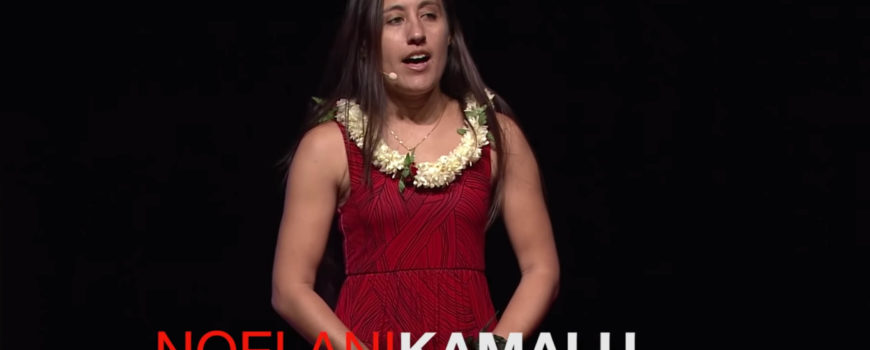
Aloha, It’s More Than Hello | Noelani Kamalu | TEDxBYU

The Polynesian Voyaging Society (PVS) is proud to share the following presentation by crewmember Noelani Kamalu who graced the stage at TEDxBYU. Noelani has been a PVS crewmember since 2009. She currently works for Kanu o Ka ʻĀina Charter School’s Ka Oha program and is very passionate about education. During the Mālama Honua Worldwide Voyage, she served as an educational specialist, and an apprentice navigator.

When presented with the opportunity to speak at TEDxBYU, Noelani embraced the opportunity to speak at her one hanau, about her heritage, and especially appreciated the support of her family both from Hawaiʻi and Utah. It took several drafts and trial runs to create the final product that Noelani said “ultimately came from the heart.”

The following comes fromTEDx:

Prior to the Hawaiian Renaissance in the 1970’s, Hawaiians were prohibited from speaking their language and participating in cultural traditions.

Noelani discusses the benefits that arise when individuals and communities embrace their heritage—for Hawaiians it means seizing the spirit of Aloha. Noelani Kamalu is a crew member of the historic voyaging canoe Hōkūleʻa. The canoe was built as a replica of an ancient Polynesian vessel during the second Hawaiian Renaissance-a time that saw the revitalization of Hawaiian culture and pride after decades of negative stereotypes.

Hōkūleʻa’s successful voyage to Tahiti in 1976 played a major role in reigniting cultural identity. Kamalu received her bachelor’s in Hawaiian language and has spent the last decade teaching at Hawaiian-focused charter schools. This talk was given at a TEDx event using the TED conference format but independently organized by a local community. Learn more at https://www.ted.com/tedx

Crew Blog | Michi Wong: Coming Home to Open Arms

Crew Blog by Michi Wong

Warm is the embrace of the Lānaʻi ʻOhana. We set sail on Sunday afternoon and arrived at Mānele Bay in the dark of early morn. They were there at dock to meet us a 1:30 a.m. Beginning with oli, honi, ti leaf lei, and a steaming hot bowl of sabao, we were immersed in Lānaʻi’s hospitality. From sun up to moon rise, our days were full; of canoe tours, star compass talks, knot tying instruction, rounds of iʻe stick games; of meals shared, eggs, spam, Portuguese sausage and rice, poi, venison, tripe stew, palusami, ube esayñada; of evenings of ʻolelo, families gathered, kanikapila, laughter and aloha.

Uncle Sol, Solomon Kahoʻohalahala, was our kumu and navigator. He gifted us with ʻolelo of Puʻu Pehe, where sweethearts shared an ill fated love, of Ahulapueo, where hula dancers walk on water, and of Kaunolū, where the ahu puaʻa spanned the breadth of the island, shore to shore. The sound of his kālaʻau hitting together pierced the night, his chant, Maunalei, told of ʻaha kea trees once so plentiful that the ʻaha kea blanketed the slopes and valleys with waxy leaves shimmering in the sun and wind.

Uncle Sol drove us down the winding, bumpy, dusty, unpaved red dirt road to Lelekawa Kahekili Kahililani, where sea cliffs loom 1,000 feet above the sea, where the water is deep and the aku and ahi run. We skittishly peered over the ledge where Hawaiians dove from the heights into the blue sea and their spirits soared. We cast our gaze across the horizon clear to the East and West, and followed the rocky point, a direction finder, south to Tahiti. Uncle Sol spoke softly of the uʻa ʻili, the light rain a blessing on the morning of their beloved grandmother Kumu Irene’s passing. She was 102 years old.

This was the last leg of the Mahalo, Hawaiʻi Sail, the last sail of the Mālama Honua Worldwide Voyage, destination home. Captain Archie Kalepa expressed our deep gratitude to the families of Lānaʻi, for sharing their island home, manaʻo and culture, and for welcoming Hōkūleʻa and her crew with open arms. He thanked them for bringing their keiki. Every child of Lānaʻi came to touch Hōkūleʻa, feel the wind, watch the stars lighting the sky and sea.

More photos of Hōkūleʻa crewmembers’ outreach on Lanaʻi: Mahalo Mariah Hugho for the photos

Photos of Hōkūleʻa’s sail to Lanaʻi courtesy of crewmember Mark Amundson

MOANANUIĀKEA Film Screening

Come and watch the show with us!

Regal Cinemas Kapolei Commons | Saturday May 11th 2019 | 10:30am | 12:30pm | 5:30

For this fundraising event, benefiting the Polynesian Voyaging Society, we present: MOANANUIĀKEA, a feature-length documentary about Hōkūleʻa’s most ambitious journey to date: the Mālama Honua Worldwide Voyage. We hope you can join us on Saturday, May 11, 2019 – Mahalo for your support!

Continue Reading

Google Celebrates Eddie Aikau’s 73rd Birthday

Today, Google has recognized the Hawaiʻi’s famed waterman, and Hōkūleʻa crewmember Eddie Aikau with original Doodle art on its main search page.

Eddie’s history with Hōkūleʻa is both celebrated and tragic. “I must tell you about Eddie, because he had, and still has, great influence on me; he’s one of my great teachers,” said master navigator Nainoa Thompson in an interview in the Kamehameha Journal of Education. 

“Eddie had this dream about finding islands the way our ancestors did. Whenever I feel down, I look at Eddie and I recall his dream. He was a great teacher. He was a lifeguard … he guarded life, and he lost his own, trying to guard ours. Eddie cared about others and took care of others,” said Nainoa.

“After Eddie’s death, we could have quit. But then Eddie wouldn’t have had his dream fulfilled. He was my spirit. He was saying to me, ‘Raise those islands.’

Here’s more from Google:

Today’s Doodle celebrates Eddie Aikau, big wave surfer, lifeguard, and enduring symbol of Hawaiian heritage. Born on the island of Maui on this day in 1946, Eddie moved to Oahu with his family in 1959 and went on to become the first lifeguard hired by Honolulu officials to work on the North Shore of the island.

Not a single life was lost while he served as a lifeguard at Waimea Bay, making some 500 rescues without the assistance of a jet ski or any modern equipment. Eddie was famous for making rescues even in surf that reached 30 feet high. His fearlessness went on to inspire the slogan “Eddie would go.”

Hailing from a surfing family, Eddie was one of the first native Hawaiians to win the prestigious Duke Kahanamoku Invitational Surfing Championship in 1977, just four years after his older brother Clyde, who was the very first. Aside from his distinguished surfing career, Eddie found other ways to represent the culture of his native island. In 1978, Eddie joined the crew of Hōkūleʻa, a historically accurate double-hulled canoe retracing the ancient Polynesian migration route to Hawaii. The vessel sprung a leak and capsized in rough waters. Eddie was last seen heroically paddling off on his surfboard towards the nearest island to seek help for the crew, who were later rescued by the U.S. Coast Guard.

Today, Eddie’s legacy lives on through the Eddie Aikau Foundation as well as the prestigious Eddie Aikau Invitational, which has seen some of big-wave surfing’s greatest names competing with maximum respect for the authenticity of surf culture.

Here’s to you, Eddie.