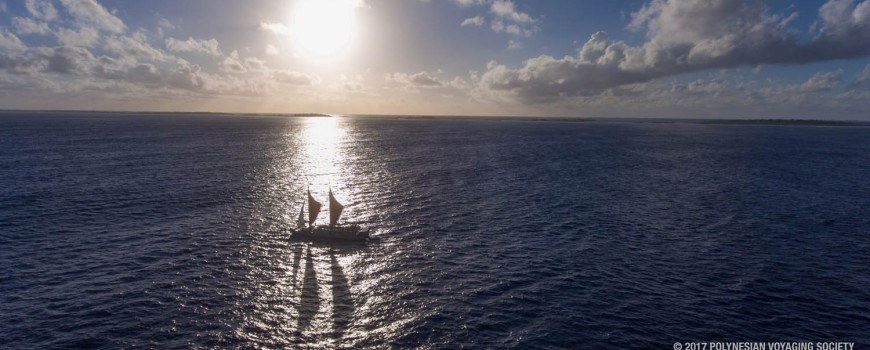
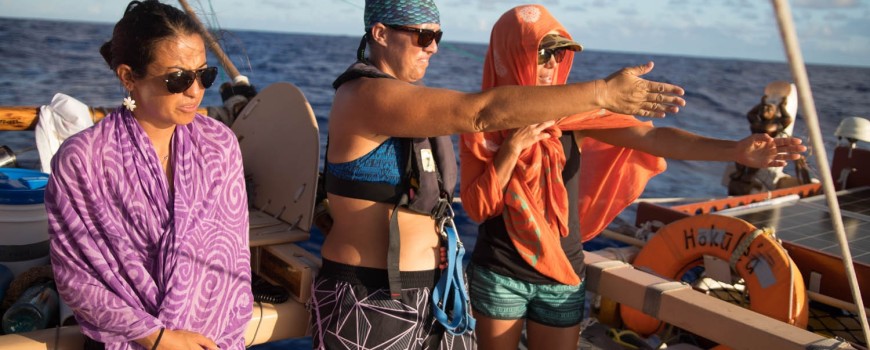
Crew Blog| Kekai Lee: I Belong to the Sea

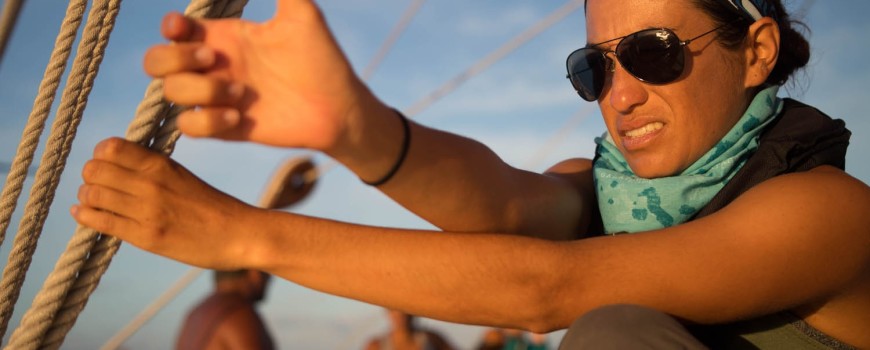
Kekaimalu LeeBlog by Hikianalia crewmember Kekaimalu Lee

Before departing Papaʻete, I asked Nainoa – “How did you feel your first time being lead navigator?”

The question came from my fear and nervousness, and his reply wasn’t very comforting. He expressed he was afraid for me IMG_4955because I don’t have the same support he did when he left, referring to his teacher, Papa Mau.

Nainoa shared a story about how he didn’t feel ready until Uncle Sam Kaʻai explained that everyone had a kuʻula (fishing marker or altar) in ancient times, except the navigator. Navigators don’t have kuʻula because they don’t belong to the land, they belong to the sea. The mountain is their kuʻula. He asked – where is your kuʻula?

I thought about this, while being tied to land in Tahiti for over a week. After all the meetings and goodbyes, we went back to the beach before departure, and it all become real to me. My wristwatch gives me the time of day so I can manage my crazy schedule, tying me to land and the things of the land. On the beach before departure, I took some time to do a personal ritual for going to sea – I walked to the water’s edge in Tautira, gave my watch to the crew, and asked them to put it away for me until we return home. At that moment, I picked the mountain in Tautira to be my kuʻula.

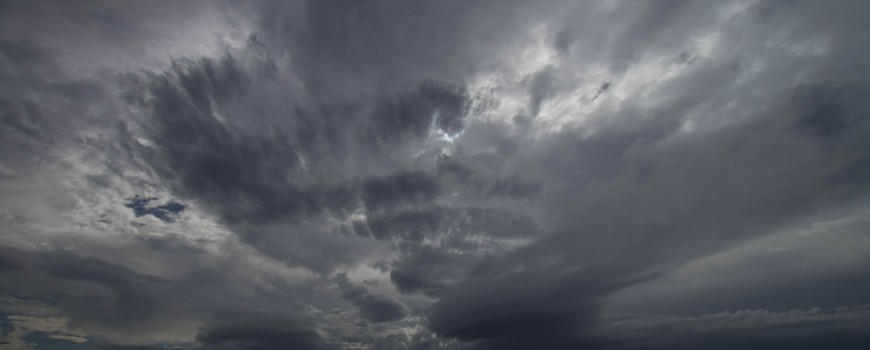
IMG_7258 (1)Then we get out to sea, and just get pounded for two days with squalls and black nights. We shut down the canoe, and I never felt so incompetent in my life. The other canoes kept going; I wondered if we were going to make it. We studied for months before leaving for Tahiti – knowing the sun, stars, swell, etc. is all the cognitive side of navigation; you can train for that. What do you do when the sky is black and the wind and swell have changed and roaring? It’s the instincts you can’t train for; you either have it or you don’t.

IMG_4970I spoke with Uncle Chadd Paishon before leaving for Tahiti to go over some questions that I had on the navigation. IMG_5038One of the things he told me will always stay with me. He said “Always know where home is.” I hold that lesson close to me; I always envision where home is, and never let that image slip from my mind.

At first the task seems daunting and hopeless – when the sky goes dark and you lose all signs from nature. But I am now enjoying the challenge and the opportunity for my sea legs to grow a little longer and learn from nature.

It is an honor to navigate the last leg home.


Homecoming - Save the Date - Banner Feb 17 Update

Hōkūle‘a Homecoming – Save the Date

We’ve got more details for you regarding Hōkūleʻa’s historic homecoming in June 2017! Click below to find out more:

Hōkūleʻa Nav Update| May 19-24, 2017

Leg 31 Navigation Updates


Day 3

24 hour nav update: May 19 6am to May 20 6am
Total distance travelled along reference course: 129 nmi, 12 mi of easting
(reference course starts at northern point of Tikehau at approx. 9am on May 19)

Average speed: Variable, between 5-6+ knots

Wind: Hikina, 15-20 knots, approaching 20+ in the squalls.

Heading: Nā Leo Koolau

Lee drift: half house

Swell: ʻĀina Koolau 6 ft, Hikina-Lā Malanai 4 ft

Course made: Haka-Nā Leo Koolau, so half a house of easting is made

Cloud coverage: less than 5% up until midnight. After midnight there were periods of 90-100% cloud coverage as we passed through multiple squalls. Venus, the moon, and the sun in the early morning were a blessing to be seen and were used to steer and double check our heading.


Day 5

24 hour nav update: May 21 6 am to May 22 6am

Total distance travelled along reference course: 407.5 nmi, 30 mi of easting
(reference course starts at northern point of Tikehau at approx. 9am on May 19)

Average speed: 5-7 knots

Wind: Lā Koolau-Hikina, 15-20 knots; by morning wind decreased to 12-15 knots. Wind-generated bubble streaks are becoming less visible. Wind direction was instead taken from the direction of the scallop texture on the water (wavelets).

Heading: Nā Leo Koʻolau

Lee drift: half house

Swell: ʻĀina-Noio Koʻolau 4 ft, Hikina-NE swell, which we think has been generated from a High in the NE has been a really helpful steering swell during the daytime. The east swell is slightly smaller but still present (3 ft).

Course made: Haka-Nā Leo Koʻolau, so half a house of easting was made throughout the 12 hour period (approx. 6 mi easting)

Cloud coverage: nearly clear skies throughout the night made it a lot easier than the past couple of nights to steer by the stars. At sunrise: approx. 15% cumulus, 10% cirrus. Cirrus clouds are thin and wispy, extending from the W-E direction.

Uncle Bruce shared with us a little bit about the clouds this morning, and how you look at the direction of the upper cloud development and then the swells which will tell you about the intensity of the weather change.

Wildlife: About an hour after sunrise Kawai and Uncle Bruce hooked a 40 lb ahi. The crew is stoked. During the day we saw about 3 different or maybe the same manu o kū fishing at about 250-300 nmi out from Tikehau. This was surprising to us but we were reminded that it’s not the individual man u oku that we look for, it’s the flocks or groups of manu that we should watch. We also saw a koaʻe kea checking out our lures, and a few boobies.


Day 6

24 hour nav update: May 22 6am to May 23 6am

Total distance travelled along reference course: 544.5 nmi, 39 mi of easting
(reference course starts at northern point of Tikehau at approx. 9am on May 19)

Average speed- variable due to slowing and changing speed for multiple squalls. On average, speed was 6 knots with a few hours of boosting speeds at 6.5-7 knots

Wind: Lā Koʻolau-Hikina, 15 knots. At sunrise the faint trails of bubbles and scallop shapes at the surface of the water were used to indicate the direction of the wind. It was a little more difficult than other days because the winds seemed to be fighting winds, making the surface of the water look like an agitated or prickly heʻe (Uncle Bruce’s description). The wind has switched slightly north from last night and yesterday.

Heading: Nā Leo-Koolau

Lee drift: half house

Swell: NE swell is still present but it appears to have dropped slightly in height — ʻĀina-Koʻolau 6 ft., Hikina secondary swell maybe 3 ft in height and more related to the wind.

Course made: Nā Leo Koʻolau, so a consistent half a house of easting is made.

We continue to see upper level cirrus clouds and lower level cumulus clouds. Cloud coverage has been minimal, about 30% max. Last night the sky was clear with 5-10% cloud coverage, a blessing for the navigators and steersman. This morning, cloud coverage was largely limited to the horizon and the upper level E to SW quadrants. Pōmai describes the cirrus clouds as wispy bird wings.

Wildlife: Shortly after the light had emptied from the sky at sunset, we were joined by a pod of naiʻa. As the naiʻa swam in between the manu, their paths were illuminated by phosphorescence. It was a magical moment!


Day 7

24 hour nav update: May 23 6am to May 24 6am

Total distance traveled along reference course: 677 nmi, 36 mi of easting
(reference course starts at northern point of Tikehau at approx. 9am on May 19)

Average speed- variable, about 6 knots throughout the day. The wind eased during the night, coupled with multiple squalls, decreasing average speed to 4 knots (3-5 knot range).

Wind: Lā Koʻolau-Hikina, 12 knots. Yesterday morning after sunrise, the fighting winds eased and switched more Hikina allowing for a Nā Leo heading to be steered (Haka-Nā Leo course made). Before sunset and throughout the night, a Haka course was steered.

Heading: Nā Leo Koʻolau prior to 6 pm, Haka Koʻolau after 6 pm

Lee drift: half house

Swell: NE, ʻĀina Koʻolau swell decreased to 3-4 ft this morning. Through the squalls, the roll of the canoe from the NE swell was used to tell us if we steered to far down. Minor SE swell is visible.

Course made: Nā Leo/Haka Koʻolau prior to 6 pm, Haka Koʻolau/ʻĀkau made after 6 pm.

Clouds: 60% cloud coverage after sunset. Initially only the western horizon was visible, allowing us to steer by setting stars. Later the eastern horizon opened and Manaiakalani and Pimoe were used to steer. 10 pm-1 am, 100% cloud coverage and multiple squalls. The sky opened up again but was patchy as Leo’s tail set, followed by Jupiter and Virgo.

Wildlife: A pod of dolphins again joined us after sunset. We hooked up but lost a good-sized marlin.


Homecoming - Save the Date - Banner Feb 17 Update

Hōkūle‘a Homecoming:
Event registration is live!

Join thousands of supporters and fans to welcome Hōkūleʻa home to Hawaiʻi in June 2017! Register now for the Mālama Honua Summit, reserve your tour aboard Hōkūleʻa, and RSVP for the Polynesian Voyaging Society benefit dinner.
Hōkūleʻa Update| May 23, 2017

Naalehu AnthonyBlog by Nāʻālehu Anthony

Aloha kākou,

We had another good day of sailing weather today. Winds are still less than 15 kts, but holding steady. The sun was out most of the day, with the end of the day bringing some clouds and patchy skies. We are still pinching east a bit, waiting for the wind to go a little more northeast as we work our way north. This morning in the early hours we had Venus and a sliver of the moon, with Mercury rising to join last just before sunrise. Breakfast was granola, banana, and peanut butter. Lunch today was burritos with fake meat and real avocado. The chefs are currently making dinner. They have strayed from the set menu and are working up a concoction that should result in a stir-fry of sorts. I saw some pumpkin, onion, garlic, spam, chicken, sweet potato and other assorted menu items pilfered from various day boxes to make up the meal. I believe there will be lup chong rice as well.

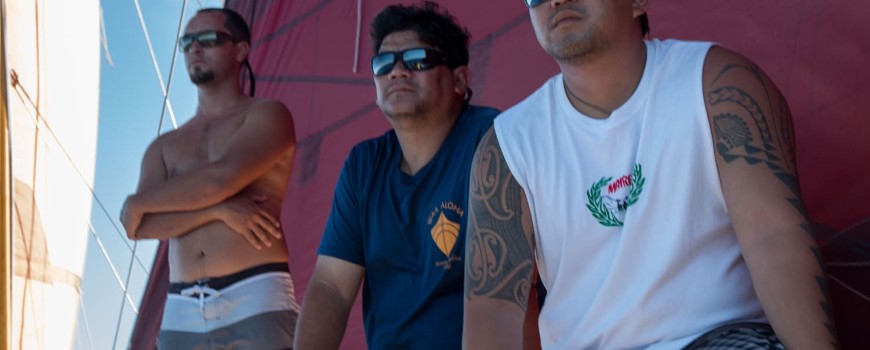
We are all in full voyage mode now, settling into a nice rhythm on the ocean. Our watches lead the cyclical flow of the day as we come up on watch for 4 hours and then we are off for 8. My watch is the 2-6 watch led by watch captain Kawai Hoe. It is decidedly the best watch of the three. For one thing, as I have mentioned on previous legs, the 2-6 watch gets to see every sunrise and every sunset. For another, the 2am to 6am time is when most everyone is asleep, save the navigator and the three of us on the deck. It’s a quiet time that allows us to reflect and be present in the space. I think this time is about as close as we get to what it must have been like all those years ago when canoes were the only form of transportation across the water. The sounds of the sails being filled by the wind are in concert with the rock of the canoe on the water. The canopy of stars above us tell the ancient stories, literally showing us the way home. All of this is as it was, so many centuries ago on those migratory voyages across these very same waters. What a blessing to be here tonight.

Pō malie everyone,
Nāʻālehu


Homecoming - Save the Date - Banner Feb 17 Update

Hōkūle‘a Homecoming:
Event registration is live!

Join thousands of supporters and fans to welcome Hōkūleʻa home to Hawaiʻi in June 2017! Register now for the Mālama Honua Summit, reserve your tour aboard Hōkūleʻa, and RSVP for the Polynesian Voyaging Society benefit dinner.

Hōkūleʻa Update| May 22, 2017

Naalehu AnthonyBlog by Nāʻālehu Anthony

Aloha all,

Today was a great day of sailing. We have pretty consistent trades and great weather from last night, which held for the conditions that we are seeing right now. Trades are lightening to sub-15 kts. We have more than 800 sq ft of sail area up to keep to our 5+ kts as we make our way to Hawaiʻi. At sunrise we were a little over 400 miles on our course and we are banking easting to where we are now about 30 miles east of our course line.

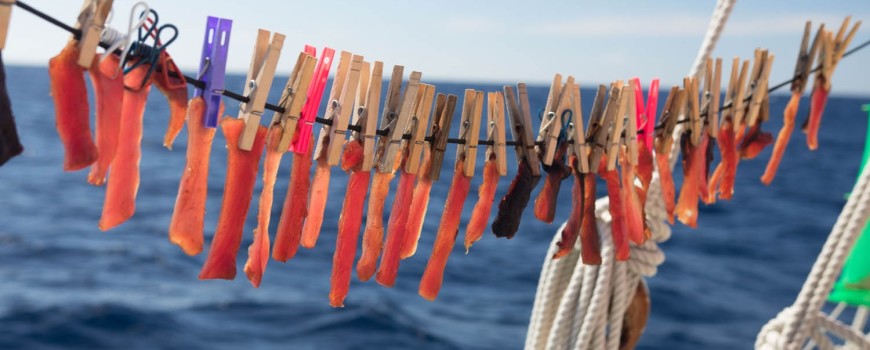
Today was action packed. Early this morning, before breakfast, the port fishing line went off and the snap of the fish was so powerful, it broke the line off of the swivel connected to the green cord that connects to the canoe. Bruce saw the fish and called it a big ahi. About 30 seconds later, the starboard line hit and buried deep. Kawai and Bruce landed the fish, a 49 pound ahi. The fish was plenty for us for the day. In fact too much – because we do not have any refrigeration, we either need to consume it, share it or dry it. In this case, we did all three.

Bruce and Kawai broke down the fish, letting nothing go to waste. The head, collar, and other parts went for the fish chowder for dinner. Haunani worked on the bones, which were scraped of all their meat for spicy ahi rolls. The main quarters were broken down for any number of other fish dishes, that for us included sashimi and fried ahi. The boys filled the drying rack, but there was still more — so now we have fish on our clotheslines and fish in pans all over the waʻa. Even after all that, we still had huge quarters to deal with, so Kealoha bagged some the fish, tied the bag to an empty water jug, and sent it to our travel companion, the Okeanos canoe, for them to enjoy.

All in all, a really enjoyable day, and a great lesson about what mālama means out here on this tiny floating honua.

Meticulous is the word I would use to describe how the fish was broken down. Nothing was wasted as the quarters were removed, and the translucent protein came to fill container after container. We only take what we can use and so the lines came in for the day. And whatever gift we are given, we honor with using it to the utmost for the crew AND for the collective that is out here sailing with us.

Our fish today was a gentle reminder of the fragility of this environment. Be it overfishing, climate change, or any of the other stresses that shift what we are experiencing as people of ocean or land, most will agree that our environment is shifting. The baseline for these stories seems to shift each decade or so to the point where I wonder if my kid’s kids will ever see a 49 pound ahi in the wild like this.

Maybe if we all adopt some principles of mālama honua – take only what you can use, share what you can, and make sure there are some left for tomorrow – they just might.

SB72,
Nāʻālehu


Homecoming - Save the Date - Banner Feb 17 Update

Hōkūle‘a Homecoming:
Event registration is live!

Join thousands of supporters and fans to welcome Hōkūleʻa home to Hawaiʻi in June 2017! Register now for the Mālama Honua Summit, reserve your tour aboard Hōkūleʻa, and RSVP for the Polynesian Voyaging Society benefit dinner.

Crew Blog| Nāʻālehu Anthony: Happy to See Venus

Happy to See Venus

Naalehu AnthonyBlog by Nāʻālehu Anthony

It’s interesting to me how the human body works. Every morning for the last three days I get up minutes before my 2 am watch. I lie there in the starboard 4 bunk listening to the voices on the watch to get a sense of what time it is. Wide awake, I stay in the bunk getting as much rest as I can before the long day ahead. It only takes a couple of minutes for the call from outside the canvas, “Lehu, time for your watch.” I don’t know how the body readjusts to the insanely early call time but it does. The first thing I do is listen some more to get a sense of the conditions outside. I can hear the water rushing by. I know we have speed on our floating island. I stick my foot out of the canvas to see if it’s raining. It isn’t but I know the wind is still blowing pretty hard to be going this fast.

Coming up on watch in the dark can be pretty intense. It’s like waking up in the middle of driving a racecar. Especially tonight. The moon is barely visible and so there is really no light on deck. Almost every star is shrouded in darkness of the deep plum clouds that persist all around us. Basically blind, our other senses take over. First, I need to shake off the tired so that I can get stable enough to stand as the deck pitches on two different axis as the waves fight for dominance in a couple of different directions. Next, I have to get a sense of how fast we are going and in what direction we are heading. At this point in my voyaging career I can guess pretty well as to the wind speed and canoe speed just by the feeling on my skin and the sounds that Hōkūleʻa makes. We’re moving quickly (for a canoe anyway) at 7 kts, plus a little more on the gusts of wind that boost us forward.

But unlike maintaining balance and estimating speed, direction takes a bit of doing. The navigation team has to take into account all the deviations that we make in steering so we all try our best to hold a really good and accurate line. Without any visual cues like planets or stars, we’re steering by the wind in the dark night. Mahina the moon glows through the clouds intermittently, but in between, no other stars are available. The telltales we attached to the rigging show us wind direction. Barely visible, we watch the wind and hug the canoe tight to what the wind will let us sail as we go through the night.

Slowly, patches of blue can be seen against the grainy black gray and sky. Below the moon glow, we can see that there’s another bit of light. Venus finally shows herself, right where we anticipated she would be if we are on the right course. The two navigators on the deck literally cheer when Venus appears. The dawn light follows not far behind, which then gives way to the sun, as the new day begins. We are all happy to see Venus.


Homecoming - Save the Date - Banner Feb 17 Update

Hōkūle‘a Homecoming:
Event registration is live!

Join thousands of supporters and fans to welcome Hōkūleʻa home to Hawaiʻi in June 2017! Register now for the Mālama Honua Summit, reserve your tour aboard Hōkūleʻa, and RSVP for the Polynesian Voyaging Society benefit dinner.

Hōkūleʻa Update| May 21, 2017

Naalehu AnthonyBlog by Nāʻālehu Anthony

Aloha kākou,

Conditions in the last 36 hours have been challenging and variable. The swell from the northeast has become the dominant swell in the area. Winds are 20-25 kts roughly east southeast. Frequent squalls in the area have forced us to bring sail area down dramatically, or hove to completely.

Just to give you a better idea of the conditions we are in – yesterday afternoon three of our crewmembers were up front changing a jib in the big swell. All three were secured in harnesses, two with inflatable vests that come with automatic water triggers. As the canoe slowed down, all three crew were completely submerged in the swell washing over the bow, and both harnesses deployed their inflatable vests. Everyone was safe and not in danger of washing overboard, but it shows the amount of water we are talking about with this swell. The current wave is big enough to hit the catwalk and splash moderate amounts of water on the deck. I am being very cautious in writing this update so as not to end up with a laptop full of water.

Yesterday was a pretty incredible day. We caught an ahi yesterday, marking the first fish of the trip. It was a small one, 23 inches, perfect for a lunch of fish head soup with long squash, followed by an epic dinner – saimin (broth made from scratch) and fresh fried Ahi. It was a welcomed meal to end a long cold day of sailing. In the late afternoon we saw three things that are pretty rare to witness. The first was one of the tallest squalls I’ve ever witnessed. The wind and rain in it were moderate, but it was perfectly formed and a couple thousand feet tall. It ran us right over. After that we saw a triple rainbow in the sky. I’ve never seen one before, in fact I didn’t know it existed, but there it was. The main rainbow looked like it cycled through its colors twice and there was a more faint rainbow above it. Finally, the lighting just before sunset was like nothing I have ever seen before. The sun was hidden behind clouds, but a lot of the sun’s light was still bouncing off the low clouds above us. Everything on board went golden brown with indirect light – it felt like stage lighting for theater. It made for pretty dramatic colors as the whole horizon was deep blue.

SB 72,
Nāʻālehu


Homecoming - Save the Date - Banner Feb 17 Update

Hōkūle‘a Homecoming:
Event registration is live!

Join thousands of supporters and fans to welcome Hōkūleʻa home to Hawaiʻi in June 2017! Register now for the Mālama Honua Summit, reserve your tour aboard Hōkūleʻa, and RSVP for the Polynesian Voyaging Society benefit dinner.

Hōkūleʻa Update| May 19, 2017

Naalehu AnthonyBlog by Nāʻālehu Anthony

Aloha kākou,

We sighted Tikehau early this morning.

At about 3 am we could see a light marking the southern tip of the atoll. We stayed at a slow 3-4 kts until sunrise when we could see all the land features that we had to avoid. It took us about 3 hours to sail by the whole atoll as we make our way in to deep water, with no more land to be seen until Hawaiʻi some 2200 miles from here. The wind has been really good, steady trades for this area, 15 kts from the east southeast. The sea state is pretty steady except for the occasional bump. Our sail set changes multiple times a day now, trying to maintain speed and an acceptable distance from our escort. As of this writing at sunset today, we are running #15 jib up front and #13 jib behind that in place of the main. Our mizzen is a #32A crab claw. The Southern Cross is behind us, and Orion just set. The moon will be rising in a few hours just in time for my watch.

From Tautira to Hawaiʻi, this journey will span over 2500 miles. Because the atoll of Tikehau is the last land that we will see and therefore our last exactly known location, it is the starting point on this trip for counting miles to go to Hawaiʻi. The 170 or so miles it took to get up to Tikehau from Tautira are no longer part of the equation of getting to Hawaiʻi. From this point our navigators have broken this into 4 distinct segments.

The first piece is 1,110 miles, taking us past the equator to about 3 degrees north latitude. Weʻll know we are at three degrees north because Hoku Paʻa – Polaris, the North Star – will be three degrees above the horizon. Our heading for these 1,110 miles will be as far east of north as the wind will allow us. We are currently making more easting (our team is calling it “money in the bank”) in anticipation that our wind will go more north, forcing us to head more west as we move along this path. We are currently 53 miles along this course line, so by morning we’ll have just under 1000 miles to go on this segment.

The second piece of our trip is through the ITZC or the Inter-tropical Convergence Zone. Most people call this the doldrums, where the winds in the southern and northern hemispheres can cancel each other out, making for very light wind conditions. There are stories about Hōkūleʻa waiting in the doldrums for more than 2 weeks for the wind to fill in. In 2014, however, when Hōkūleʻa sailed south to Tahiti, there were no doldrums and the entire 2500 miles took only 16 days. Needless to say we are hoping for those 360 miles to go quickly. Because of the variability in the potential for wind or no wind in this area, our plan is to sail directly north through this region.

Once we get to about 9 degrees north latitude, we will make our course a little west of north, giving up some of that easting to travel another 670 miles until we are at 20 degrees north latitude, the latitude of Hawaiʻi. This should set us up to be about 275 miles east of Hawaiʻi Island. From there we will turn west to look for the peaks of Mauna Kea and Mauna Loa that mark our destination.

Stay tuned for more navigation updates as our apprentice navigator, Haunani, will be adding in more detail to help articulate each of these segments of our journey home.

SB 72

Nāʻālehu


Homecoming - Save the Date - Banner Feb 17 Update

Hōkūle‘a Homecoming:
Event registration is live!

Join thousands of supporters and fans to welcome Hōkūleʻa home to Hawaiʻi in June 2017! Register now for the Mālama Honua Summit, reserve your tour aboard Hōkūleʻa, and RSVP for the Polynesian Voyaging Society benefit dinner.

Hōkūleʻa Update| May 18, 2017

Naalehu AnthonyBlog by Nāʻālehu Anthony

Aloha kākou,

Late this afternoon we sighted Makatea off of our starboard bow. This was a good first test for our navigation team getting dialed into sailing in this part of the world. Its was only 120 miles from our departure point, but it’s really a confidence boost and a good warm up test for this whole crew. We worked hard through the night with multiple sail changes to adjust our speed to match that of our escort vessel. Sunrise brought us the familiar dawn light and 360 degrees of horizon that many never get to see. Today was filled with little tasks to set our canoe on a favorable course without a lot of extra effort needed to balance on the steering blade.

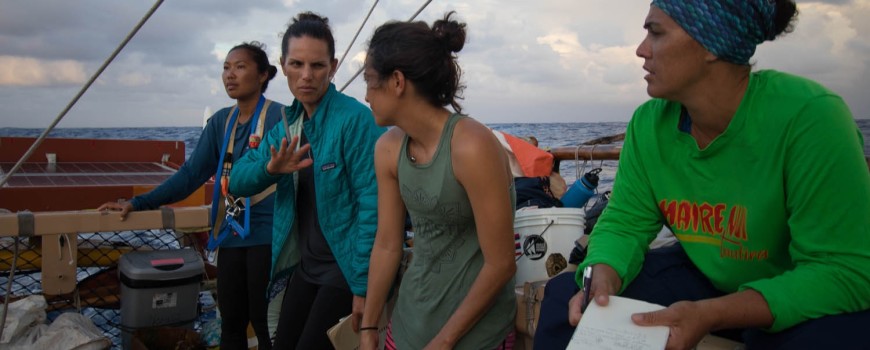
What’s really nice is the professionalism that this crew brings to the voyage. Everyone has a ton of miles on a variety of ocean-going vessels, and that experience is then honed to the likes of our captain, Pōmai. She has a great way about her in that she is a natural teacher. She is constantly quizzing us on the different protocols that we have to have committed to memory in case of emergency, and she gives praise when merited (and soft scolding when that’s merited too). But I think the best part is that she is so comfortable in this space. Pōmai takes it all in stride and keeps the cadence of everything we do matched to the cadence of our mama canoe. Her pilina with our navigator, Kaiʻulani, is great to witness. They are both from the same town of Waimea, Hawaiʻi as is apprentice navigator Pua. The three of them have been working for months with the rest of our nav team, Haunani and Kala, to get all the details and studying done for this particular leg of the voyage.

Navigation aside, the whole crew has used the last week and a half together to get to a place where even on this first sail day we can make it look and feel like we have been working together for a long time. We all know that we are privileged to be here and want to be our best selves to this journey.

SB 72,

Nāʻālehu


Homecoming - Save the Date - Banner Feb 17 Update

Hōkūle‘a Homecoming:
Event registration is live!

Join thousands of supporters and fans to welcome Hōkūleʻa home to Hawaiʻi in June 2017! Register now for the Mālama Honua Summit, reserve your tour aboard Hōkūleʻa, and RSVP for the Polynesian Voyaging Society benefit dinner.