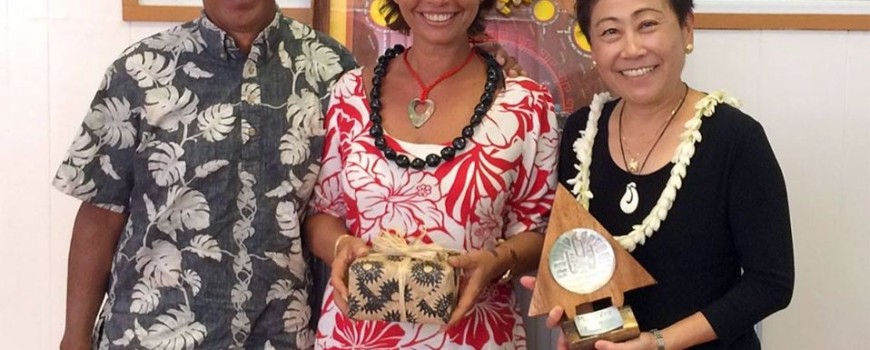
DOE Superintendent Matayoshi: Keeping the Promise

This blog is a repost of Hawai‘i State Department of Education Superintendent, Kathryn Matayoshi’s blog, Supt’s Corner: Keeping the Promise.

Four years ago, educational leaders from Hawai‘i’s K-12, early ed and post-secondary institutions pledged in a “Promise to Children” to accept the responsibility of Mālama Honua (caring for Island Earth) by empowering student agency to answer the pressing needs of a planet that is in crisis.

We believe that by inspiring children to explore, discover and learn about Island Earth, they will navigate the future of humanity toward vitality, renewal, and compassion.

“Hawai‘i is with us,” said master navigator Nainoa Thompson at the signing of the Promise.
And Hawai‘i is ready to be a voice for what comes next.

The Hōkūle‘a is nearing the end of its global journey to connect communities and help them rethink and engage with one another. Using the skills and knowledge of Polynesians from a millenium ago, who navigated with stars, sun, wind and current, the crews of the wa‘a showed us that solutions to many challenges are rooted in our understanding of the past, in the cultural practices that champion resource management and sustainability, in the kuleana that invigorates leaders and learners to step up and be responsible.

From Lunalilo Elementary to Kailua Intermediate to Kaimukī High, students and educators have answered the call by transforming their classrooms, campuses and community assets into living labs and canvases for deeper understanding of their kuleana, and connected with communities worldwide to share and learn from each other.

This week, I’m wrapping up a series of meetings in Raiatea while the Hōkūle‘a and Hikianalia are there to ensure our schools continue to collaborate with our Pacific Island ‘ohana, and to see that reflected in our educational outcomes.

We remember that this collaboration is not only about mālama for the ocean, air and land, but mālama for people. We remember the promise to navigate the future of humanity toward vitality, renewal, and compassion.

It is ingrained in the Hawai‘i DOE’s ends policy, Nā Hopena A‘o, to strengthen the sense of belonging, responsibility, excellence, aloha, total well-being, and Hawai‘i among all those who touch our K-12 system.

As we welcome home our beloved Hōkūle‘a, we write the next chapter in this essential story.


Homecoming - Save the Date - Banner Feb 17 Update

Hōkūle‘a Homecoming:
Event registration is live!

Join thousands of supporters and fans to welcome Hōkūleʻa home to Hawaiʻi in June 2017! Register now for the Mālama Honua Summit, reserve your tour aboard Hōkūleʻa, and RSVP for the Polynesian Voyaging Society benefit dinner.

Hōkūleʻa Greeted by Community of Mataiea

This week, Hōkūleʻa and Hikianalia visited Mataiea and were greeted by Alpha Tearii, mayor of Mataiea and minister of Marine and Land Resources, and with an overwhelming show of support by the community. In a grand welcoming ceremony, over 500 third graders and college students from Mairipehe Primary School, Nuutafaratea Primary School, Matairea Primary School, and Teva I Uta College celebrated the shared mālama honua vision of caring for the oceans and land for future generations in Tahitian, French and English.

It has been over 40 years since Hōkūleʻa first arrived in Mataiea, which is known for its rich cultural heritage and abundant in natural beauty. “They are doing a lot of really good things here and we are witness to that,” said Bruce Blankenfeld, pwo navigator of the Hōkūleʻa. “I see us coming back with future generations to engage, because that is what the voyage is about. It’s about discovering.”

The next day, following a community breakfast and coconut tree planting ceremony with local children, Hōkūleʻa and Hikianalia departed for Tautira on Tahiti’s south-east coast.

The sister canoes will continue to travel throughout Tahiti and Raiatea to engage with the local communities in ceremony and education outreach as they celebrate the close of the nearly four-year long journey. Soon, Hōkūleʻa and Hikianalia will be making their way back to Hawaiʻi together for a homecoming ceremony at Magic Island in June 2017.


Homecoming - Save the Date - Banner Feb 17 Update

Hōkūle‘a Homecoming:
Event registration is live!

Join thousands of supporters and fans to welcome Hōkūleʻa home to Hawaiʻi in June 2017! Register now for the Mālama Honua Summit, reserve your tour aboard Hōkūleʻa, and RSVP for the Polynesian Voyaging Society benefit dinner.

Crew Blog | Nāʻālehu Anthony: En Route

Naalehu AnthonyCrew Blog by Nāʻālehu Anthony

At 1300 HST on 06 May 2017, our voyaging crews met at Terminal 3 for this last international leg of the Worldwide Voyage. I am humbled to amongst the 31st crew to sail Hōkūle’a, bringing her home to Hawaiʻi after almost 40,000 nautical miles and three years of sailing around the planet in the name of Malama Honua. Now safely aboard our Hawaiian Airlines flight packed with all the gear we will need for our journey, we look forward to the tasks at hand as we head some 40 degrees to the south of us.

Reflecting on how far we have come after three continuous years of international sailing, I think about some of the things about voyaging that have strangely become commonplace, like the travel and production schedule. I walked out of the office yesterday like many other Fridays before this one – knowing that I would be gone for more than a month, but not feeling like it was such a big deal. On the voyaging side, we’re getting ready to cross 2500 miles of deep-ocean on a canoe without instruments – that is a big deal. On the documentation side, our offices at ʻŌiwiTV have had a steady stream of crew members inbound and outbound to various ports around the world, which has also been a big deal. We have been to places like Papeʻete and Maupiti and Cocos Keeling and Fernando de Noronha and many others I canʻt recall without prompting, somehow managing to find an internet connection on land or use our satellite on Hōkūle’a to share everything from updates to still photos to some of the most inspiring stories I have been witness to in my two decades as a filmmaker and storyteller.

But the inspirational stories and complicated mix of ancient and modern technology on this voyage are only a couple of dimensions of something much deeper and more complex. The mana of our canoe has been building for her 42 year journey – with each island pulled from the sea in the old way, without modern instruments like compass or GPS, we realize how important this voyage really is to helping the world understand the value of traditional knowledge, of protecting our ocean, of navigating towards a better future for our island home and Island Earth.

This, Hōkūleʻaʻs voyage home after circumnavigating the world, may be one of the most important landfalls to date, closing an amazing chapter in voyaging. Hundreds and thousands of people have worked tirelessly to bring us to this point, and after three years we are now on the eve of the completion of this Voyage. There were points along the way where we thought June 2017 seemed lifetimes away, and now that we are on this last leg it seems like it has flown by; whether time has moved fast or slow for us as crewmembers and supporters of this Voyage, one thing is for certain – we will miss it when it’s done. The friends and family from far away lands, the great laughs, the important lessons and the incredible time at sea are all present and on my mind right now, but most of all I can’t help but be humbled and thankful to Hōkūle’a for getting us “there” time and time again. I pray that she will guide us to our homeland once again.

SB 72,

Nāʻālehu


Homecoming - Save the Date - Banner Feb 17 Update

Hōkūle‘a Homecoming:
Event registration is live!

Join thousands of supporters and fans to welcome Hōkūleʻa home to Hawaiʻi in June 2017! Register now for the Mālama Honua Summit, reserve your tour aboard Hōkūleʻa, and RSVP for the Polynesian Voyaging Society benefit dinner.

PROJECT WAYFINDER Educator Training on Oʻahu

Summer 2017: Project Wayfinder is excited to announce a 4-day Educator Training in Hawaiʻi!

WHO, WHAT, WHERE, WHEN, WHY

Where: A 4-day educator training will be held on O’ahu at the University Lab School. (Here is a campus map pointing to University Building 3, more details on parking and room location will be included in later communications.)

When: July 24-July 27, 2017

What: Project Wayfinder will immerse administrators and teachers in their newly developed set of tools and resources from our Wayfinder Navigation Toolkit. This toolkit is inspired by the work of Polynesian Voyaging Society and the inspiration of Polynesian voyaging and navigation. But this is not a “how to” on voyaging – this will be a deeply immersive and transformative experience for educators, cultivating the tools we need to navigate through life. Click here to read more about the inspiration for this project in UC Berkeley’s Greater Good.

Who: The training is open to high school educators including advisory teachers, administrators, school leaders, and counselors and non-profit groups that work with high school students. They will not be accepting middle schools at this time, but are open to some college-aged program leaders. Priority will be given to Hawaiʻi schools, but mainland and international schools can apply. The training will be limited to 40 people. Schools are highly encouraged to apply with one or more people from their home institution. We only need one application per school/organization.

IMPORTANT DATES

April 10:  Application opens

June 1st:  Application closes

July 24-27:  Educator Training on O’ahu at University Lab School
Applicants will be accepted on a rolling basis. The summer program is limited to 30 educators. You are highly encouraged to send in your application as soon as it is ready + apply with another person from your school/organization. They will get back to all applicants within 10-14 days of receiving your application.

Program cost is $975 per person (not including room, board, or travel). They can offer a limited number of scholarships or partial scholarships applicable towards the program cost for school teams with demonstrable need, and encourage you to answer the questions about this at the bottom of the application page.

If any questions please email Project Wayfinder‘s Education Coordinator Sonia Doshi at doshisd@stanford.edu.

Continue Reading

Hōkūleʻa Moʻolelo: Nainoa Thompson and Simultaneous Setting Stars

sam_lowAfter Hōkūleʻa’s first successful voyage from Hawaiʻi to Tahiti in 1976, Nainoa Thompson flew to Tahiti to join the crew that would bring Hōkūleʻa back home. In the little village of Tautira, observing the stars as his ancestors would have done, he discovered the first clue to finding latitude – his place north or south on the planet. The following story is brought to us from the memories and research of Hōkūleʻa crewmember and documenter, Sam Low.


Hokulea Moolelo Graphic
After arriving in Papeete on June 4th, 1976, Hōkūle’a sailed south where she anchored for a time off the little village of Tautira. Here Nainoa spent many nights observing the sky. He had studied the stars in his grandmother’s yard or in the soccer field next to the Hui Nalu canoe house a little down the road. And often, he had cranked up a battered fifty-horsepower Evinrude and set to sea in a 16-foot skiff to observe

the sky as Mau Piailug would, surrounded by ocean.

“I slept on my boat all the time getting ready for the 1976 trip,” he remembers. “I anchored it outside Maunalua Bay and I would sleep in it with my star book and a little penlight. That’s how I learned the stars – a book and the night sky. Any amateur who wanted to learn the stars – that’s what he would do.”

Nainoa’s star book was written for children. Its title was simple – The Stars – and its author was H. A. Rey, famous in the world of children’s books for his Curious George series. On the first page of The Stars, Rey wrote two sentences that might have been composed especially for Nainoa: “If you know the stars, you are not easily lost. They tell you the time and direction on land, on sea, and in the air, and this can be valuable on many occasions.”

One night in Tautira, Nainoa walked down to the boat harbor where he had a good view of the sky. He observed the dark outline of mountain peaks descending to the sea – punctuated by upthrusting coconut palms at the shore. Soon the stars began to appear.

Nainoa paddle - Nainoa c. 1976 unknown“Where is the Centaur? Where is the Southern Cross?” he wondered. In Hawaii, just a few days ago, these constellations were high up in the sky, but here he found them low on the horizon. “I got to Tahiti and I said, ‘This sky looks different.’” Nainoa remembers. “The relationships that I built in my mind – the pictures in my mind that came from my observations in my grandmother’s cow pasture and the boat in Honolulu. Wait a minute! These things are different than in Hawaii.”

When Nainoa had traveled from Honolulu to Tautira, he had flown from 21 degrees north latitude across the equator to 18 degrees south and so his view of the sky changed dramatically. He could no longer see the North Star, for example, and the Southern Cross, low on the horizon from his grandmother’s cow pasture, was now very high in the sky.

“I was trying to map the sky as time passed and see what the sky looked like,” Nainoa remembers, thinking back to that time more than 40 years ago. “I was concentrating on stars in the southern part of the sky because I knew when I traveled north I would not see them again.”

Thirty-nine degrees of latitude to the south of Hawaii, this Tahitian sky presented new vistas. Many were puzzling to him, but none more so than what he saw just after dusk in the newly dark firmament. He searched for the stars Sirius and Mirzam in the Dog and Castor and Pollux in the Twins. Looking west, he watched Mirzam and Castor arc down to the horizon and set together. He checked his watch – six thirty-five PM. About twenty minutes later, Sirius and Pollux also arrived at the horizon together. Seeing new stars – that he expected – but seeing old familiar ones following different timetables to the horizon – that he did not expect.

“In Hawaii Mirzam sets first,” Nainoa explains, ”Sirius shortly thereafter. Maybe an hour later Castor sets, then Pollux.” But here was this strange thing, Mirzam and Castor setting at the same time followed shortly thereafter by Sirius and Pollux. “They didn’t do that in Hawaii. I was puzzled. Why did that happen? I knew the answer must be in the change in latitude but I didn’t understand why. I learned that the stars are different in Tahiti from Hawaii – that there’s a blueprint for the stars in Tahiti and another one for the stars in Hawaii. So I knew these were like signatures for the different places.”

On that night in 1976, when Nainoa was just 24 years old, he observed the sky as his ancestors would have done, holistically, without instruments and without much knowledge of western navigational knowledge, to find “signatures for different places” as he called them then. It was the first discovery in a long list of discoveries that would eventually lead to his ability to sail without instruments. Today he calls this observation “simultaneously setting stars” – and he teaches the new generation of navigators that when Mirzam and Castor or Sirius and Pollux set at the same time they have arrived at the latitude of Tahiti, 18 degrees south. Eventually he would find many simultaneously setting stars pairs – celestial stepping-stones – to guide wayfinders as they voyaged north or south on the planet.


HawaikidustjacketrightcoverThe above moʻolelo was written by Hōkūleʻa crewmember and documenter Sam Low, author of Hawaiki Rising, Hokule’a, Nainoa Thompson and the Hawaiian Renaissance.

Hōkūleʻa Moʻolelo: Tautira and Puaniho Tauotaha

sam_lowAs Hōkūleʻa returns to Tahiti on the last legs of her Worldwide Voyage, we take a moment to celebrate earlier voyages and the crew who helped her find her way. This moʻolelo, written by documenter Sam Low, takes us back to Hōkūleʻa’s first voyage to Tahiti and Nainoa Thompson’s first impressions of the Tahitian people.


Hokulea Moolelo Graphic
Hokule'a 1980 enroute TahitiAfter arriving in Papeete on June 4th, 1976, Hōkūleʻa sailed south where she anchored for a time off the little village of Tautira. Above the lagoon, tall, deeply eroded mountains rose like knife blades to form the Vaitepiha Valley that sliced inland, channeling a shallow river that snaked between the peaks. The mountain slopes were green with ferns. Small fishing skiffs were parked in lawns and outrigger canoes were drawn up by the Bureau du Maire near where village women washed brightly colored pareos of many designs and hung them to dry in the yard.

“It was like going back in time,” Snake Ah Hee recalls. “It was so quiet and peaceful and the people were so nice. The canoe builders all live in Tautira and they were all champion paddlers. They had fishing boats and fishing nets. It felt like the old days.”

Hōkūleʻa was moored close to shore with an anchor astern and the bow tied to a coconut tree. There was to be a party for the crew, but Nainoa worried about the canoe. “The current is strong,” he thought. “What if the anchor drags and we damage the canoe?” Captain Kapahulehua agreed that Nainoa could stay aboard on watch. The sun began to settle over the nearby mountains. The canoe bobbed serenely. Nainoa enjoyed the twilight solitude.

“Finally, the sun went down,” Nainoa recalls, “and I saw this little girl, maybe four years old, on the beach. She had a flower in her ear and she was waving to me to come on shore. She just kept waving. So I went on shore and she grabbed me with hands so small that she could just hold two of my fingers.”

Nainoa followed his tiny escort down the dirt road toward the village. She walked barefoot, he with flip-flops that made a slapping sound on the road. The distant music of ukulele swirled through the sweet aroma of vegetation cut by the sharp tang of frangipani and ginger growing alongside the road. The little girl led him on. Nainoa had to bend slightly to accommodate her stature. Even so, she occasionally lost her grip on his fingers and he bent lower still to find her comforting tiny hand. He was uncertain about leaving the canoe and more so about intruding on the gathering that loomed in the glow of gas lanterns in a house down the road.

“She led me into a house with a dirt floor,” he remembers. “They had the whole crew in there and they were feeding them shrimp and steak and all kinds of food.”

The Tahitian men wore bathing trunks and tee shirts, a few of them emblazoned with an image of Hōkūleʻa under full sail – gifts of the Polynesian Voyaging Society. The women wore flowing muumuus or draped pareos and they moved in and out of the kitchen with plates of rice, taro, kimchi, poisson cru, steaming pork, beef, or baked fish arrayed on breadfruit leaves. On the lawn in front of the house, a group of men sat on homemade wooden chairs and played instruments and sang. For Nainoa, it was like stepping back into a distant dream of Polynesia – the music, the Tahitian language flowing through the trees, the laughter of his fellow crewmembers, the food, the colorful pareos. Wally Froiseth sat between two powerfully built Tahitian men, their dark faces bent toward him as he told a story using a smattering of French and Tahitian he had learned sailing among the islands. The men made a place for Nainoa on a wooden bench drawn up to picnic tables. They embraced.

The house belonged to Puaniho Tauotaha, the grandfather of current Hōkūleʻa crewmember Maui Tauotaha. Puaniho was one of the village elders – a fisherman, canoe paddler, and canoe carver – a man of immense physical and spiritual strength.

“Puaniho had powerful eyes,” Nainoa remembers. “He was very strong, powerful. You could be in the canoe house and there might be laughter and singing and people talking but when Puaniho got up to speak there was complete silence. I didn’t know what he was saying but it felt like an oration. And if he wasn’t doing that he never said anything. When he coached the canoe paddlers he hardly said a word. He was an extremely quiet man. Very religious, very disciplined. He was the edge of the old times.”

The party continued deep into the night. Heaping dishes of food replaced depleted ones. Glasses were filled. “Like we were family,” Nainoa recalls. “I was overwhelmed by how much the village people gave when they had so little to give. Somebody would stand behind you and if your beer glass was half empty they would fill it. They didn’t have floors in their houses, much less beer and steak to share. I felt awkward, we didn’t deserve all this.”

Only when Captain Kapahulehua gave signs that it was time to leave did the Tahitian hosts rise from their chairs to say goodbye. Plates of food were placed in hands to be carried back to the canoe.

“For me, Tautira is a symbol of the kinds of values that are important,” Nainoa says. “I learned from the people of Tautira that there are other ways to measure wealth besides the things that you accumulate. The people of Tautira are extremely happy when they see that we are happy. When they give to you they feel rich themselves. That is what Tautira is all about.”


HawaikidustjacketrightcoverThe above moʻolelo was written by Hōkūleʻa crewmember and documenter Sam Low, author of Hawaiki Rising, Hokule’a, Nainoa Thompson and the Hawaiian Renaissance.
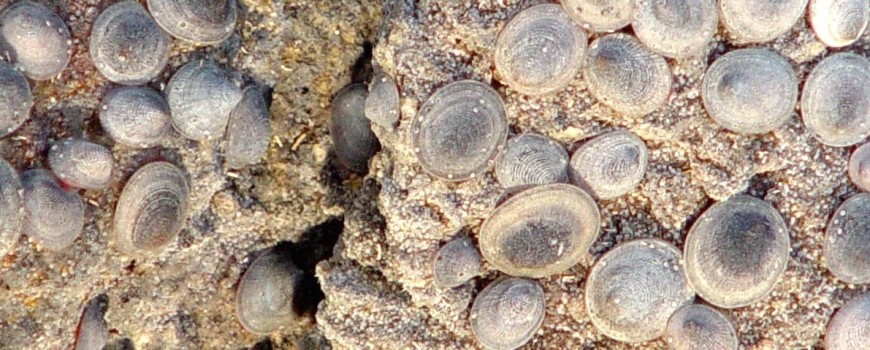
Update: OPIHI Citizen Science Project

UPDATE: New dates for volunteering! See dates below.
Are you interested in helping Hawai‘i teachers and students get outside and collect authentic scientific data? 
 

Be a volunteer science assistants to help on an OPIHI field trip!

What is OPIHI? 
OPIHI (Our Project In Hawai‘i’s Intertidal) is a citizen science project where middle and high school students survey Hawai‘i’s rocky intertidal. The intertidal is the area along the coast that is covered by water at high tide and exposed to air at low tide. OPIHI students gain valuable scientific skills while being involved in an authentic ongoing scientific research project. Some of the intertidal sites students and teachers are going to were surveyed the same way 10 years ago!

How can you help? 
In the next few months teachers statewide will be leading about 50 (!) OPIHI field trips. They would be very grateful for your help keeping their students on task while surveying algae and invertebrates in the intertidal. You do not have to be a marine biologist to be an OPIHI science assistant. It is more important that you are a science enthusiast
 
Here is a link to a flyer: https://tinyurl.com/OPIHI-AssistantInfo2017

Why else should you volunteer? 
The intertidal areas are beautiful (you get to be outside for a few hours!) and the students can teach you about a unique, often overlooked environment. Just as importantly, it will be fun! They are happy to provide you with a certificate documenting your volunteer hours on this project if needed. 

How do you sign up to volunteer? 
This is a link to their google doc to see intertidal locations, dates, and times of field trips: 
 

Write your name and email
 in one of the spaces highlighted in yellow on the right of the sheet under “science assistants”. The teacher will contact you a few days before the field trip with additional information (e.g., directions & more specific information on how to help!).
 
There are a lot of date and time options for field trips you can see via the above link! But, they are particularly interested in recruiting science assistants for the following trips (all in the mornings):  
O‘ahu
4/25 (Tuesday) Māʻili Beach
4/25 (Tuesday) ‘Ewa Beach
4/27 (Thursday) Turtle Bay
4/27 (Thursday) ‘Ewa Beach
Hawai‘i Island
4/26 (Wednesday) Kahalu‘u Bay
4/27 (Thursday) Onekahakaha
4/28 (Friday) Onekahakaha
5/5 (Friday) Wawaloli Beach Park (OTEC Beach)
5/24 (Wednesday) Wai‘ōpae
Kaua‘i
4/26 (Wednesday) Maha‘ulepu
4/28 (Friday) Waipouli Beach (Kapa‘a)
5/11 (Thursday) Salt Pond
5/19 (Friday) Salt Pond
Lānaʻi
4/25 (Tuesday) Hulopo‘e Beach
Maui
5/11 (Thursday) Keawakapu (Kihei)
Moloka‘i
5/10 (Wednesday) Kapukahehu Beach


OPIHI teachers and students appreciate your interest and hope you will be able to join them!


Questions on OPIHI? Email Joanna Philippoff at
philippo@hawaii.edu

Continue Reading

Classroom Connections: New Village School

“When we learned about Nainoa Thompson, the Hōkūleʻa crew and the mission of the Polynesian Voyaging Society, we knew we had found kindred souls…. Our school was grown to give opportunities to students to understand the past and the repercussions of behaviors that influence our present so they can navigate in a completely new way toward a future that has the agency to affect positively.”

The New Village School in Sausalito, California reached out to the PVS Education Team and Network to findnew_village1 out how they could get involved in sharing and supporting the message of Hōkūleʻa and Mālama Honua in their school and community. We learned so much about their amazing school, and asked if we could share with all of you. Please read on for the story they shared with us, and check out the New Village School Blog to see what other inspiring things are happening at the school.


If you have a story you want to share of a School, Organization or Community that is doing their part to live the values of Mālama Honua, encourage them to contact our Ed Team at education@pvshawaii.org.


newvillage2The New Village School, located in Sausalito, California is transforming education for children in the Bay Area. The New Village is more than a school; it’s an extended family community that “cultivates an atmosphere in which children can remain inquisitive and are allowed to become deeply capable and responsible (http://tnvs.org).” The School community strives to create an environment where everyone feels safe to be vulnerable, honest and authentic (http://tnvs.org).” The New Village School is a place where all community members — faculty and staff, parents and students, — feel responsible for everyone’s well-being and learn together. Children and adults engage in deep and meaningful relationships, and all the children Kindergarten through 8th grade interact in purposeful and intentional ways throughout the day. As a result, teachers are better able to help students in developing and flourishing as human beings.newvillage3

The School’s curriculum, inspired by the work of Rudolf Steiner, focuses on human development and meeting the needs of children who will grow up in a 21st century world. A very strong emphasis is placed on the relationships that exist within the school community, and how relationships can make learning truly meaningful. Students are encouraged to be and supported in becoming intrinsically motivated in their learning. Content is taught through integrated and interdisciplinary units and is embedded in real-life learning.newvillage4

One amazing aspect of their curriculum is the individual projects students work on starting in the 3rd grade. In the early years the project, students are given the necessary guidance and support to allow them to be successful. As they move through the program students are encouraged to take on more and more responsibility and seek out resources in the greater community. By the 8th grade, students are often able to initiate their individual project based on their own field of interest.

newvillage5

Another unique aspect of the New Village School is the Classroom Without Walls Program. Through this program, each child spends one day a week outside the classroom learning through hands-on exploration, inquiry, discovery and experience. Students engage in environmental science and service projects; visit local farms, gardens and ranches; travel to places of cultural and historical interest. During these weekly learning journeys, students also have opportunities to go kayaking, hiking, sailing and rock climbing. As one teacher put it, “We believe that school is an actual extension of home; school is a part of life and learning takes place everywhere (http://tnvs.org/akademeia/classroom_without_walls_program).”

The Classroom Without Walls Program helps the students to get to know their place and the natural phenomena that exist there. The students also learn to feel comfortable and capable in their bodies and in nature. The opportunities offered by the program also enable students to develop the skills and confidence they need to be engaged in the real world.newvillage6

The New Village School community is also committed to connecting with other schools and learning communities. This past year, the New Village School invited 8th graders and high school students from around the Bay Area to a two-day youth conference, Now Is The Time. During the conference, students engaged in conversations about empathy, understanding and compassion; what it means to be personally engaged in the world; authentic giving and service. With the help of local community experts, students developed personal action plans for themselves moving forward.

newvillage8The School’s teachers and leadership recently learned about Hōkūleʻa and the mission of the Worldwide Voyage, and was inspired to reach out and connect with the crew. “When we learned about Nainoa Thompson, the Hōkūleʻa crew and the mission of the Polynesian Voyaging Society, we knew we had found kindred souls” said Meinir Davies, head of the New Village School. “In a very deep sense, our school was grown to give opportunities to students to understand the past and the repercussions of behaviors that influence our present so they can navigate in a completely new way toward a future that has the agency to affect positively. With an awareness of our interdependence/inter-reliance newvillage7amongst all living beings, an absolute reverence for all living beings and by allowing ourselves to feel our compassion and connectedness as we steadfastly remain open and sensitive are, we believe, absolute requirements in order to be able to do this.”

Check out the New Village School Blog to see what other inspiring things are happening at the school. If you have a story you want to share of a School, Organization or Community that is doing their part to live the values of Mālama Honua, we encourage you to contact our Ed Team at education@pvshawaii.org.

Continue Reading