Hauʻoli Lā Mālama Honua!

Happy Earth Day!

20140517__Launch-METC_Clean_IMG_0080Today marks the 46th anniversary of Earth Day, which began on April 22,1970 when 20 million Americans took to the streets (and parks and beaches) coast-to-coast to demonstrate for a healthy, sustainable environment, and protest against the deterioration of the environment.  Earth Day has evolved into the largest observance in the world (besides religious holidays), and is celebrated by more than a billion people every year.  It is a day of action that helps to bring about positive changes in human behavior and influences policy changes to help care for our planet.

We believe that Every Day is Earth Day – help us Mālama Honua!

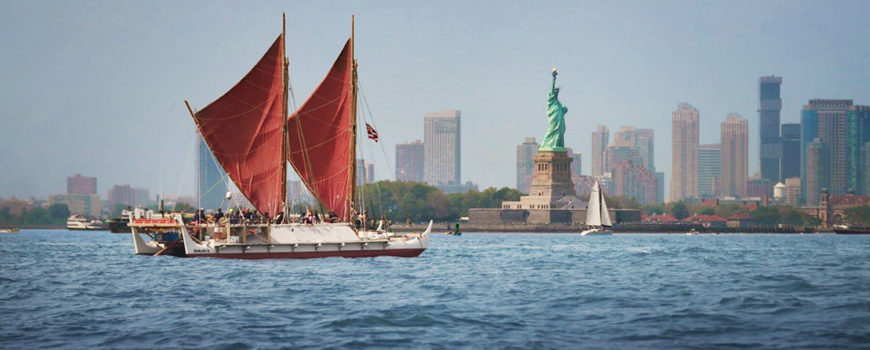
kokee planting crewThe focus of our Worldwide Voyage is to Mālama Honua, to take care for our Island Earth. We sail our voyaging canoe Hōkūleʻa using the stars, sun, and swells to guide us around the world, relying on signs from nature and ancient wisdom to guide us to each destination.  We are sailing the Earth’s oceans to visit and learn from those who are working to solve some of the greatest challenges we face in the world today. We are all responsible for the future health of our Island Earth, and the health of our people, lands, and oceans.

Meet the Mālama Honua Challenge!
aotearoa beach cleanupThe Polynesian Voyaging Society  is inviting youth, ages 5-18, to share ideas about how you and your school, home or community care for the Earth and ocean. Our planet faces many challenges; now is the time to be creative in our solutions.  We need your help to find ways to create a better planet for this and future generations – visit our Mālama Honua Challenge page on Hokulea.com for more information, and to submit your Challenge ideas.

http://www.hokulea.com/malama-honua-challenge/

Explore how students and community of Lānaʻi Mālama Honua!
Students and faculty of Lānaʻi High and Elementary School were inspired to create this song and video based on the lessons they learned and service projects they implemented in their community.  Listen and watch as they share all the ways they discovered they can mālama honua, and turned work into play!

To learn more about the lessons and projects that are documented in the video and song, and learn more about the kids and their teacher, please visit Mr. Glicksteinʻs blog: http://www.songsforabetterworld.com/#!blog/cg20/post/8539049651850149776

Learn more about Earth Day at: http://www.earthday.org/about/the-history-of-earth-day/#sthash.yeDIJBYB.dpuf


More than Adventure

Beyond a daring expedition, the Worldwide Voyage is quite possibly the most important mission that Hawaiʻi has ever attempted. As people of Oceania, we are leading a campaign that gives voice to our ocean and planet by highlighting innovative solutions practiced by cultures around the planet.

We could not have begun this great journey without your support, nor can we continue to its completion.

Hōkūleʻa passes near Cape Lookout National Seashore

As Hōkūleʻa and her crew move up the Intracoastal Waterway, they are passing through waters and coastlines that teach us valuable lessons about precious natural resources and how our environment changes over time.  This week, Hōkūleʻa passed inland of Core Banks, a series of barrier islands off the coast of North Carolina that comprise part of the Outer Banks and the National Park Service’s Cape Lookout National Seashore. Learn more about the wild horses, marine ecosystems and maritime history of Cape Lookout National Seashore as Hōkūleʻa passes by!

Cape Lookout is home to rich terrestrial and marine ecosystems.The waters surrounding the park are feeding grounds for marine mammals and sea turtles. Four sea turtle species – Loggerhead, Green, Kemp’s Ridley, and Leatherback – are sometimes seen feeding in area waters.

Many migratory bird species can be observed passing by the cape in the Fall and Spring and pelagic seabirds can be seen along the seashore when ocean storms drive them to seek the shelter of land. Birds are the most easily observed animals in the park. In Summer, a number of tern species, egrets, black skimmers, herons, piping plovers and other shorebirds nest within the park’s boundaries.

The cape is home to only a few land mammals, most notably the population of horses that became wild and adopted the cape as their home for the past few hundred years. Although salt and brackish water environments dominate the islands, a few fresh water habitats support tree frogs and Fowler’s toads. While diamond-back terrapins prefer the salt marsh areas, the grasslands are the preferred habitat for five-lined racerunner lizards and black racer snakes.

Cape Lookout, with its strong currents and shallow shoals, was a dangerous place for ships so in 1812, the cape’s first lighthouse was built in to warn sailors. The dangers of coastal North Carolina and other areas along the Atlantic coast were recognized shortly after colonial settlements were established in North America. At the turn of the 19th century, the state of North Carolina established “wreck districts” with commissioners, or venue masters, and local residents who assisted ships in distress. 3 life saving stations were built along the coast which is now Cape Lookout National Seashore. The ‘surfmen’ that operated these stations launched rescues of wrecked ships along the outer banks and ran drills to keep their lifesaving skills sharp.

To learn more about the Cape Lookout National Seashore’s rich ecology and history, visit their website. To learn more about how the National Park Service is celebrating their 100th birthday this year, visit their centennial website!


More than Adventure

Beyond a daring expedition, the Worldwide Voyage is quite possibly the most important mission that Hawaiʻi has ever attempted. As people of Oceania, we are leading a campaign that gives voice to our ocean and planet by highlighting innovative solutions practiced by cultures around the planet.

We could not have begun this great journey without your support, nor can we continue to its completion.
Kōkeʻe Area Restoration and Reforestation Project & Meeting the Nā Māhoe ʻOhana

Written by: Baylee Jackson

It was about a year and a half ago while sitting in the Department of Land and Natural Resources Division of Forestry and Wildlife office in Honolulu that I first got in touch with Ambyr U. Mokiao-Lee, the Outreach and Education Specialist on Kauaʻi. We were on a phone call to talk about various tree planting efforts in the state of Hawaiʻi to support the Propagate Peace Project, which is a Mālama Honua project to have the planting of one million trees dedicated in celebration of the Worldwide Voyage*. That day, we got a description of the Kōkeʻe reforestation project, and said that we would keep in touch, so we would know as the time came closer to planting when they would need volunteers. There were numerous phases and efforts that had to be completed prior to the outplanting phase of the project, and we would be standing by.

Fast forward to this month – I had the opportunity to travel to Kauaʻi with my former teacher Hye Jung Kim, and United States Forest Service scientist Cindy McArthur. We arrived at Kōkeʻe at 8:30 am and met up Ambyr U. Mokiao-Lee and other volunteers. After a briefing of the goal for the day, we headed in towards the section of Kōkeʻe where we would be outplanting. Kōkeʻe State Park lost an estimated 15,000 tons of trees in a series of three back to back fires during the Summer of 2012. Efforts are currently being made to restore the forest by planting koa trees in the scorched areas. On the day that I got to be a part of the reforestation effort, we planted 500 koa trees. This is a small amount compared to the 50,000 trees total that Ambyr and her crew will be planting over the months. Someday the barren land will be restored to its original condition flourishing with life.

US Forest Service Scientist Cindy McArthur said: “It is really exciting planting the same native tree species that are used to build traditional voyaging canoes. We hope these trees will continue to support ecological and cultural healing in Hawaii.” Mahalo to all the people who helped fund the trip and made it possible for me to mālama ʻāina on Kauaʻi. Mahalo to Ambyr and DoFAW for their continued effort in reforesting Kōkeʻe and for allowing us to take a small part in the overall effort.

After outplanting, Hōkūleʻa crewmember and artist Uncle Keala Kai hosted us at his house. Once we arrived at his house, we got a tour of all the amazing canoe paintings and sketches that Keala Kai has made. We were invited to the gathering of Nā Kālai Waʻa o Kauaʻi members and family at Uncle Dennis Chun’s house so we went over and spent the evening and enjoyed dinner with ʻohana waʻa members. Before departing to rest for the night, we promised to meet them in the morning to help do work on Nā Māhoe, Kauaʻi’s voyaging canoe.

The next day we had the amazing opportunity to work on Nā Māhoe before returning to Oʻah

u. The amount of work that the Nā Māhoe crew puts in to building the canoe was amazing to witness and I was honored to have the opportunity to help, even if it was only for a few hours.

Please join PVS at the next Mālama Honua Earth Month Service Project on April in Waimea Valley on Oʻahu 30, 2016!

*To learn more about the Propagate Peace Project and how you can dedicate a tree to the Worldwide Voyage, visit our page. If you have any further questions, please email Hye Jung Kim at hyejung@pvshawaii.org.

If you are interested in being part of the Kōkeʻe Restoration Project by volunteering to outplant, please contact Ambyr at ambyr.u.mokiao-lee@hawaii.gov


More than Adventure

Beyond a daring expedition, the Worldwide Voyage is quite possibly the most important mission that Hawaiʻi has ever attempted. As people of Oceania, we are leading a campaign that gives voice to our ocean and planet by highlighting innovative solutions practiced by cultures around the planet.

We could not have begun this great journey without your support, nor can we continue to its completion.

Learn more about Gray’s Reef as Hōkūleʻa passes by

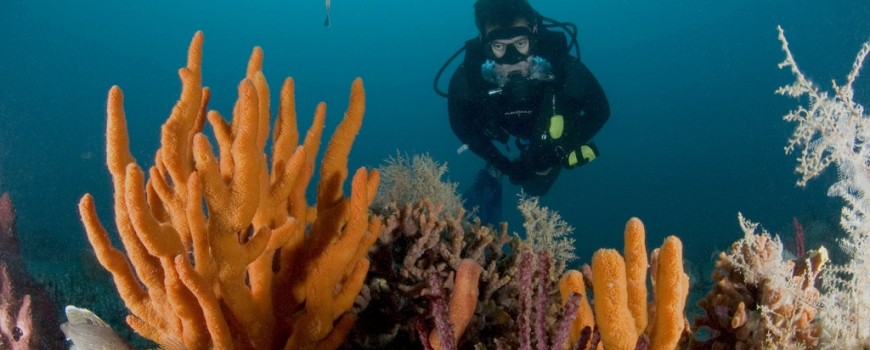
Diver conducting fish survey on Gray’s Reef with a variety of invertebrates in image including soft coral, finger sponge, and a few fish. Georgia, Gray’s Reef National Marine Sanctuary. Summer, 2006. Photographer: Greg McFall, Gray’s Reef NMS, NOS, NOAA.

As Hōkūleʻa and her crew move up the Intracoastal Waterway, they are passing through waters and coastlines that teach us valuable lessons about precious natural resources and how our environment changes over time.  Read more about the amazing history of Gray’s Reef off the coast of Georgia!

Did you know that reefs aren’t all made of coral?  The reefs we explore and protect here in Hawaiʻi are made when living coral larvae attach themselves to the sea floor and rocks, growing and spreading to form the magnificent habitats for marine life that we know and love.

Some reefs are formed in a completely different way, without living coral.  Those off the Atlantic Coast where Hōkūleʻa and her crew are currently traveling, like Gray’s Reef off the coast of Georgia, were formed millions of years ago when bits of shell, sand and mud traveled via rivers and ocean to the Atlantic Coast and “cemented” together with seawater to form sandstone.

Over the course of millions of years, sea level has changed dramatically in the area.  So much so that at one time (sometime between 2 million and 10,000 years ago, during the Pleistocene epoch), Gray’s Reef was actually above sea level – the Reef was exposed and became dry land!  Fossils such as mammoths have been found at the reef!

NOAA’s Gray’s Reef National Marine Sanctuary (GRNMS) is home to many marine species, including the threatened loggerhead sea turtle which forages and rests year-round at Gray’s Reef, and the highly endangered North Atlantic right whale (the reef is within the only known winter calving ground for this species).
The sanctuary encompasses 22 square miles off the Georgia coast. It is the only protected natural reef and one of a few natural marine protected areas in the Atlantic Ocean between Cape Hatteras, North Carolina and Cape Canaveral, Florida.

To read more about the Reef, please visit http://graysreef.noaa.gov/.

Check out some of the other reefs our crews have visited:

More than Adventure

Beyond a daring expedition, the Worldwide Voyage is quite possibly the most important mission that Hawaiʻi has ever attempted. As people of Oceania, we are leading a campaign that gives voice to our ocean and planet by highlighting innovative solutions practiced by cultures around the planet.

We could not have begun this great journey without your support, nor can we continue to its completion.

Upcoming Event: Waimea Valley Oʻahu Native Forest Restoration Project

Hye Jung Kim tree planting

Celebrate Earth Day with a visit to Waimea Valley on April 30th – volunteers will get in free!

We will be working with Waimea Valley Hiʻipaka LLC on a native forest restoration project in Waimea Valley on the North Shore of Oʻahu on April 30th from 9am-3pm. Volunteers can join anytime between 9am-3pm. Please bring water (at least 2 liters), lunch, rain gear (if you have), insect repellent, closed-toes shoes, sunscreen, hat, long pants, and long-sleeved shirt.

Please RSVP with this form.

There is a special project and hike for those who want a challenge – about a dozen physically-fit volunteers are required to hike 1-2 miles uphill to replant in a more restricted and sensitive area that day. If you are interested and selected for this smaller group, you will have to report to the visitors center promptly at 9am.

Contact Hye Jung Kim at hyejung@pvshawaii.org for any questions. See the event in our calendar for more information.

Waimea Valley logo


More than Adventure

Beyond a daring expedition, the Worldwide Voyage is quite possibly the most important mission that Hawaiʻi has ever attempted. As people of Oceania, we are leading a campaign that gives voice to our ocean and planet by highlighting innovative solutions practiced by cultures around the planet.

We could not have begun this great journey without your support, nor can we continue to its completion.
Upcoming Waʻa Talk in Kaimuki

Join the effort to connect classrooms at home in Hawai’i and around the globe with the Mālama Honua Worldwide Voyage at the upcoming Waʻa Talk at Kaimuki High School Library on April 27th at 3-6 pm.

In its second year, Waʻa Talks continues to support teachers, administrators, and communities that want to learn through the global journey of Hōkūleʻa and Hikianalia. Be a part of this intimate opportunity to strengthen community.

Wednesday April 27, 2016 at Kaimuki High School

3:00-4:00 pm Pre-Workshop

4:00-4:30 pm Refreshments and Entertainment

4:30 – 6:00 pm Workshop

Participants will engage in:

  • Workshop Sessions: Mele Mural at Kaimuki High School, Po’okela Academy at Castle High School, Hakipu’u Learning Center Public Charter School, Polynesian Voyaging Society: Mālama Honua Worldwide Voyage Update, Ala Wai Watershed Project: Stream Biodiversity and Water Quality Monitoring with Cory Yap and Education Partners Kaimuki HS, ʻIolani School and UH Manoa
  • Galleria: Featuring Kānehūnāmoku Voyaging Academy, Estria Foundation, Kaimuki 2 College, KUPU, I am a Scientist- Chaminade University of Honolulu (pending), Kōkua Hawaii Foundation (pending).

Free and open to K-12 teachers, administrators and education resources.

Register at http://bit.ly/1Ri5gwm

Pre-registration is strongly recommended. In the event of unforeseen changes, contacting you as soon as possible is very important. Mahalo!

Contact Manuwai Peters – mpeters@hawaiidoe.k12.hi.usWaa Talks Flyer_Spring2016

Hōkūleʻa’s Planned US East Coast Port Stops

As Hōkūleʻa sails around the world, we have been fortunate and honored to engage in once-in-a-lifetime opportunities for Hōkūleʻa, her crew, and our extended ʻohana to meet with families and friends along the US Eastern Seaboard. We have been welcomed by indigenous hosts, government officials and dignitaries, students and learners of all ages, exchanging cultural protocol and ideas about how the world is working to mālama our precious honua.

In the coming weeks, much of the crew’s time along the return south will be spent engaging with partners to learn and discover environmental and cultural stories of hope that will help us further the mission of mālama honua (caring for Island Earth). Our planned public engagements are limited, so there will not be a lot of lead time for canoe tours or other engagements, but when there is time for that during a port visit, we will post details as soon as possible on Hokulea.com and via social media.  Since our schedule is subject to change at the last minute due to weather and logistical issues, we encourage the public to check online frequently for the most immediate updates before heading out to visit the canoe.  We highly recommend following our live voyage tracking map, as it gives the most accurate location of the canoe up-to-the-minute. Some helpful steps and reminders about any prospective meet-up with the canoe and crew include:

Some helpful steps and reminders about any prospective meet-up with the canoe and crew include:

  • Please remember that our sail plan is a generalization that will change often. Use the Voyage Map (linked – lower on this page) to get a general idea of the regions Hōkūleʻa will be visiting, visit Hokulea.com and follow our social media channels to get the most updated information about the sail and engagement plans. If there is an engagement opportunity, please continue to be flexible – we are at the guidance and mercy of weather and environmental conditions at all times and events are sometimes canceled without notice.
  • Some of the ports and docks we moor at are private and do not allow public access. Do not assume access to the canoe is allowed unless it is a listed event.
  • Your gifts to the canoe and crew are welcomed. Please keep in mind that we do not have refrigeration or extra space for storage of bulky items or perishables. Lei, preserved snacks and foods, and other small gifts are appreciated. Donations are always welcome as we are a non-profit powered by donations and community support; donations are best made online from your phone, tablet or computer (linked).
  • Reference our Outreach Schedule (linked – lower on this page) to make general plans. Use confirmed events (linked – lower on this page) to make specific plans and check back often
  • Our social media channels including Facebook, Instagram and Twitter, often provided immediate event-related updates, so be sure to follow us.
  • When weather hampers canoe visits, it is sometimes replaced with an alternative outreach event or crew-meetup nearby – use social media to stay up-to-date
  • Umbrella, lawn chair, snacks and canteen are useful items to bring to our outdoor events.
  • If you’d like to offer transportation, lodging, or meals for our crew, please speak directly with the captain on-site.
  • Canoe access can be tricky depending on mooring – always take your time and ask for help when getting on and off of the canoe.
 *All dates and ports are subject to change and dependent on weather and safety conditions. Updated August 13, 2016.

– Oct 6: 2-6pm Public Canoe Tours, West Haverstraw, New York

[tribe_events_list category=”east-coast-united-states”]

Sample Content

Add some excitement to your FacebookInstagram, and Twitter feeds by connecting with Worldwide Voyage social media channels. And when you share the voyage with your community by reposting your favorite content, you are helping to sew a lei of like-minded people who will help save our oceans and Island Earth.

You can also share your own story of hope by tagging#MalamaHonua with posts that reflect stewardship of our ocean, environment and communities.


Help fund the Voyage as we sail the East Coast

Hōkūle‘a’s visit to the eastern United States is a historic milestone in her 40 years of voyaging. Celebrate with us by pledging your support to the Mālama Honua Worldwide Voyage.

National Museum of the American Indian Newsletter Features Hōkūleʻa

Screenshot 2016-03-11 11.26.04Hōkūleʻa and the Worldwide Voyage were featured in the Winter 2016 issue of the quarterly education newsletter of the National Museum of the American Indian (NMAI), a long-time supporter of PVS and one of the hosts of the Worldwide Voyage in Washington DC. The newsletter is widely spread to educators across the country and is also available online. Hōkūleʻa and PVS’s history are summarized for teachers to share with their students and her current plans to visit the DC area in May are mentioned with links to follow the voyage.

The newsletter also highlights the new NMAI exhibition, E Mau Ke Ea: The Sovereign Hawaiian Nation, which will be open from now until January 2017. The newsletter suggests celebrating Women’s History Month with students using materials on Queen Liliʻuokalani. NMAI provided information about and links to help find K-12 resources, such as children’s book Eddie Wen’ Go by crewmember Marion Lyman-Mersereau and documentary VOYAGE: Ola I Ke Au A Kanaloa, to support teachers and students in better understanding Hawaiian sovereignty and independence, and in learning about the resurgence of traditional Hawaiian knowledge and values.

As Hōkūleʻa nears her first touch of the continental US in the Worldwide Voyage, it is exciting to have information about the canoe and the voyage broadly distributed to teachers and students across the country in this publication and others, including the February edition of Scholastic’s Geography Spin.


Happy Birthday, Hōkūleʻa!

Help us celebrate Hōkūleʻa’s 41st birthday by becoming a member, or gifting membership to another!

On March 8, the iconic deep-sea voyaging canoe Hōkūleʻa celebrates her 41st birthday! Our master navigators use the stars, waves, wind, and birds to find their way, following in the wake of their ancestors. Hōkūleʻa has journeyed more than 150,000 miles over the past 41 years, and a new generation of navigators is sailing around the world to explore how people and communities are working to Mālama Honua – care for our Island Earth.  We need your support to keep us voyaging – please visit www.hokulea.com/donate/ to help.