Crew Blog | Shawn Malia Kanaʻiaupuni: Science and Education on Tortola Island, British Virgin Islands

Today, the crew left Saba Rock by ferry, crossing the beautiful Caribbean ocean to Virgin Gorda. From there we took a van around windy roads up through the mountain overlooking vast expanses of incredible turquoise ocean and white beaches. This blog is also a bit circuitous, because I need to talk about science, a bit about educational approaches, and, most importantly, about our visit with the fabulous students at a local school. First, I am so drawn in by the colors of this Caribbean ocean. What gives it such mesmerizing hues? There are a few reasons that I’ve been able to research, first, the Caribbean is very shallow compared to the Atlantic or the Pacific ocean, and it has very white sand, which reflects the sunlight more brightly creating the distinct blue color. Also, there is less iron in the Caribbean waters. Algae grows with iron in the water and colder waters permit more iron to release into the ocean. Finally, according to NASA, light absorption is what colors the water. Sunlight, composed of electro-magnetic radiation ranging in color from red to blue, is scattered by particles suspended in the water. The shorter blue wavelengths scatter more effectively and are absorbed less rapidly than the longer red and orange wavelengths. Seawater appears blue for about 100 feet under the surface, then becomes black with the absence of light. In essence, sunlight brightens the water, accounting for the vividly colored Caribbean Sea. By contrast, the Red Sea is red because it contains algae that release reddish-brown pigments; the Yellow Sea is yellow because rivers fill it with mud; and the Black Sea is black because it is essentially landlocked, resulting in little oxygen except near the surface and a bottom filled with hydrogen sulfide.

Continuing our story, the van arrived in Spanish Town and we took another ferry across another beautiful expanse of sea to the island of Tortola. From there we were escorted by generous resident hosts, Aragorn Dick-Read and John Frederick, to a school on the outskirts of the main town called Cedar International School, an International Baccalaureate school. What’s an IB school? Well, IB students are responsible for their own learning, choosing topics and devising their own projects, while teachers act more as supervisors or mentors than sources of facts. All around the world, IB schools emphasize research and encourage students to learn from their peers, with students actively critiquing one another’s work. Beyond preparing students for critical thinking and college-level work, the full IB program calls for students to express themselves through writing, requires community service, and aims “to develop inquiring, knowledgeable and caring young people who help to create a better and more peaceful world through intercultural understanding and respect.” For audiences at home in pae ‘aina Hawaii, do you know of any IB schools in Hawaii (hint: there are at least three)?

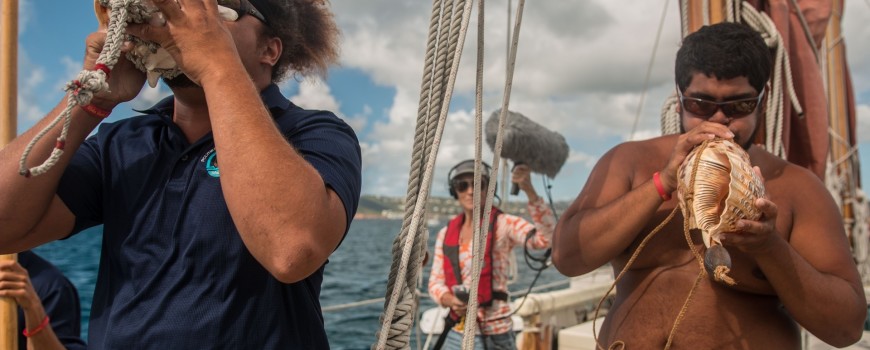
Nearly all students grades 1 through 7 gathered very quickly in a central, open air assembly room under colorful, fluttering flags from around the world covering the ceiling. They brought in chairs for the older students and rugs for the little ones. Captain Kālepa kicked off the presentation by asking the students to do three things: First, SMILE (and he checked for big smiles all around); second, LISTEN, because we’d be sharing some important information with them; and third, LEARN, because he had a quick test for them at the end of the presentation. Heads immediately perked up and all students responded with huge enthusiasm to learning several Hawaiian words, including aloha (giving a huge shout out to the camera for everyone back home at Hawai’i), mālama honua, Hōkūleʻa and mahalo. Anakala Kawika followed up sharing what it was like to sail using photos about the most recent journey from Brazil. Near the end, the students were thrilled to see the WWV video from around the world about stories of hope in caring for island earth and each other. During a robust Q&A session, we could sense the island connections and ‘ike in these students by the sophistication of their questions. Many of the students were sailors and ocean conservationists themselves. We also learned that the school served students of about 40 different nationalities. Just like home! By the end of our short time with them, we felt a deep sense of kindred spirits connected by mālama honua. I mua!


Happy Birthday, Hōkūleʻa!

Help us celebrate Hōkūleʻa’s 41st birthday by becoming a member, or gifting membership to another!

On March 8, the iconic deep-sea voyaging canoe Hōkūleʻa celebrates her 41st birthday! Our master navigators use the stars, waves, wind, and birds to find their way, following in the wake of their ancestors. Hōkūleʻa has journeyed more than 150,000 miles over the past 41 years, and a new generation of navigators is sailing around the world to explore how people and communities are working to Mālama Honua – care for our Island Earth.  We need your support to keep us voyaging – please visit www.hokulea.com/donate/ to help.
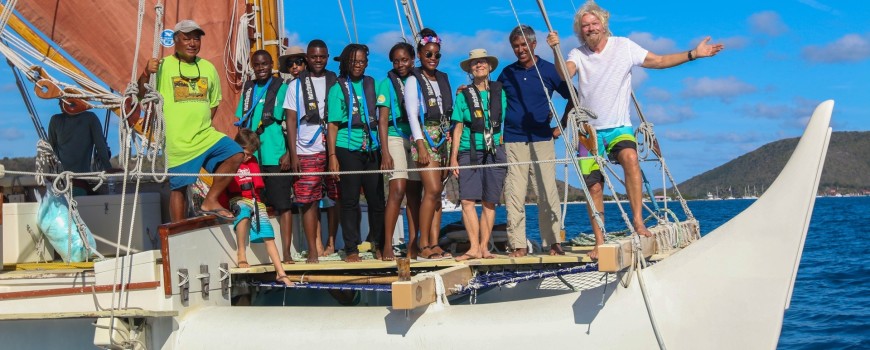
Sir Richard Branson Welcomes Hōkūleʻa

ARVE error: Mode: lazyload not available (ARVE Pro not active?), switching to normal mode

Hōkūleʻa made a special stop and visited The Branson Estate on Moskito Island, which is owned by Sir Richard Branson, founder of the Virgin Group. 

IMG_5775

Branson greeted master navigator Nainoa Thompson and the crew as the canoe arrived on March 5, 2016.  The visit gave Branson and Thompson an opportunity to share their respective efforts and thoughts about ocean conservation.  During the visit, Thompson also honoured Branson as a Great Navigator of Island Earth in recognition for his contribution to the Earth and mankind and for his lifetime achievement of making the world a better place. During the Mālama Honua Worldwide Voyage, Thompson has been seeking out the Earth’s great navigators and has honored leaders such His Holiness Dalai Lama and Archbishop Desmond Tutu.

During the two day visit at Moskito Island, the crew was hosted at a welcome gathering and were able to explore the island’s pristine beaches. 

“On behalf of the Polynesian Voyaging Society and the Worldwide Voyage, it was an honor to bring Hokulea to Moskito Island while we are sailing through the Caribbean,” said Thompson.  “We were able to learn more about Sir Richard Branson’s work to conserve the Caribbean and hear how the region is becoming a leader in ocean conservation and sustainability,” he added.

Sir Richard Branson, Virgin Group Founder, said: “The Hōkūleʻa, just like our ocean, is majestic and performs remarkably so it’s good to see she is sailing around the world urging citizens of our planet to care of our oceans. 

“Caribbean islands emit less than 1% of total global greenhouse gases, but with rising sea levels and extreme weather events, they are bearing the brunt of climate change. I truly believe the small islands in the Caribbean can be global leaders in ocean conservation and sustainability. By working together we can act as a test bed to demonstrate and scale innovative, clean energy solutions.” 

IMG_5744

 While on Moskito Island, the crew also hosted Branson, community members and students from the environmental club of Lavity Stoutt Community College on a sail on Hōkūleʻa.

Both Branson and Thompson are members of the Ocean Elders, an independent group of global leaders focused on the protection of the ocean.


Happy Birthday, Hōkūleʻa!

Help us celebrate Hōkūleʻa’s 41st birthday by becoming a member, or gifting membership to another!

On March 8, the iconic deep-sea voyaging canoe Hōkūleʻa celebrates her 41st birthday! Our master navigators use the stars, waves, wind, and birds to find their way, following in the wake of their ancestors. Hōkūleʻa has journeyed more than 150,000 miles over the past 41 years, and a new generation of navigators is sailing around the world to explore how people and communities are working to Mālama Honua – care for our Island Earth.  We need your support to keep us voyaging – please visit www.hokulea.com/donate/ to help.

Crew Blog | Heidi Guth: Mahalo St. John National Park

While Hōkūleʻa strives to be a model of island sustainability and the importance of all types of knowledge and learning, in many ways so do the island and coastal places that Hōkūleʻa visits.  For example, St. John, V.I., holds 3,000 years of human history, much of which is just being recognized in this new century; its isolated location, small size and lack of fresh water force its residents to be innovative, live sustainably and care for each other; and a government entity currently protects approximately 2/3 of its lands and surrounding oceans.

IMG_7767

As Hōkūleʻa celebrates her 41st birthday, the U.S. National Park Service (NPS) celebrates its 100th.  The first National Park visited by Hōkūleʻa during the 2016 NPS Centennial was the Virgin Islands National Park, which was established 60 years ago.  The Park protects the majority of the dry and submerged lands on St. John, is a UNESCO Biosphere Reserve (an internationally recognized example of biodiversity conservation that balances sustainable resource use), and in 2001 incorporated almost 13,000 acres of additional surrounding waters in the Virgin Islands Coral Reef National Monument. 

Educating locals and visitors alike on how to protect our coral reefs.

The Caribbean holds lacy purple and gold sea fans waving in currents, multiple species of brightly colored sponges, and corals not seen in Hawaiʻi, such as elkhorn, staghorn and brain coral – looking remarkably like their names.  St. John’s varied, technicolor marine life was ravaged in past decades by coral bleaching from the earth’s rising temperatures.  Smaller scale bleaching events continue to impact the once pristine reefs, but they have shown remarkable resilience and recovery in part through their protection, and are being studied to assist in future reef recoveries around the world.  The diverse reef fish are stunning to snorkel among, but even if the Park allowed for more than bait fishing and limited conch, spiny lobster and whelk (turban shell) hunting, the reef fish are mainly inedible because of ciguatera, so they are numerous, curious and friendly.  Native mangroves create protected nurseries for many sea creatures and ideal hunting grounds for myriad migratory and permanent bird populations, ranging from pelicans on the outer edges to wading herons, paddling ducks and swooping hawks.

IMG_6450

In an unprecedented effort to improve and maintain the interconnected ecosystems of the reefs and sea grass beds that have been impacted by decades of heavy anchor use, including anchor chains sweeping across the seabeds and scouring them as anchored vessels swung with the wind, the NPS began installing moorings in the early 2000s.  This year, just before Hōkūleʻa arrived in St. John from Natal, Brazil, the park became “anchorless.”  Three small areas are allotted for vessels longer than 125 feet to anchor in deep waters with completely sandy bottoms.  Even dinghies, for which the Park provides tethers, cannot anchor, and the more than 200 moorings available within the Park require only a nominal overnight fee to cover the cost of maintaining the moorings.  This is an example being set for other significant marine protected sites around the world.

Moorings are first come first serve here. Not to worry because there are more than enough in this protected bay.

Meanwhile, the cultural history of the submerged and dry lands lands of St. John extends back more than 3,000 years, with much of that history being uncovered archaeologically within the past 30 years and in the Park.  When I was growing up on St. John in the 1980s, we were taught that peaceful Arawaks paddled up the Caribbean island chain from South America and were ultimately killed by the more aggressive Caribs (for which Caribbean and cannibalism were named).  The Caribs were then killed by warfare and European diseases soon after Christopher Columbus’s arrival in 1492, when he named the Virgin Islands for St. Ursula’s 11,000 virgins (because of all the fertile, mainly unpopulated islands and islets).

IMG_6563-3

Now, in major part because of archeological digs at Cinnamon Bay, in the Park, we know that the first indigenous peoples were the Taíno (meaning, “good people”), who are canoe people who were sometimes aggressive toward the Spanish, carved petroglyphs near the only semi-permanent pool of collectible rainwater in St. John, created functional and artistic pottery, survived mainly on seafood, and gave us such words as barbeque, canoe, hurricane, maize and papaya.  Carib people did come later with some violence and were largely decimated by Spanish steel and germs.  However, some Taíno and Carib peoples continue to live in parts of the Caribbean, and many Virgin Islanders are coming to be recognized as indigenous to their islands now that genetic testing is being done and oral histories are finally being recognized.  A bill heard in the V.I. legislature just this week seeks to provide the first formal recognition of the indigenous peoples, their heritage and their homelands.

IMG_6309

Not until 1718 did the Danes begin settling and farming St. John, using slaves from western Africa.  The treatment of these slaves, who terraced the small, very hilly islands and cultivated sugar cane and cotton, was ferocious, with quick capital punishment and constant replacements brought in from Africa by overloaded and disease-ridden ships.  A proud part of St. John’s heritage was the successful 1733 overthrow by the slaves – with the call to arms raised by the sound of the Tutu, or queen conch horn (pu).  Descendants of those original slaves, who we grew up knowing as the native population of the V.I., continue to be proud that theirs was the first successful slave rebellion in the New World and that they remained free from oppression for more than 6 months, until French troops from Martinique violently re-subjugated them.  Full emancipation did not come until 1848, and in 1917, the U.S. purchased the V.I. from Denmark to create a naval submarine base in St. Thomas for WWI access to Europe and Africa.

Austin Kino sharing some ʻike on navigation with our gracious hosts from the National Park Service.

Mahalo nui loa to the National Park Service for their hospitality to Hōkūleʻa and our crews, and for the education they provided to us.  A Park boat helped bring us into the NPS headquarters dock in Cruz Bay Creek, St. John.  The Park let us stay there for our entire stay, which enabled us to safely re-provision and prepare the canoe and next crew for the current leg of the Mālama Honua voyage, as well as allowed for easy access to Hōkūleʻa for school children, St. John community members and Park visitors from around the world.  Mahalo to Julius E. Sprauve School, Gifft Hill School and the St. John Christian Academy for their interest in our voyage, message and culture, and for enabling their students access to the waʻa during school hours.  We hosted hundreds of enthusiastic and curious people, and the Park maintenance, interpretive, enforcement and administrative staff hosted us with grace and kindness.

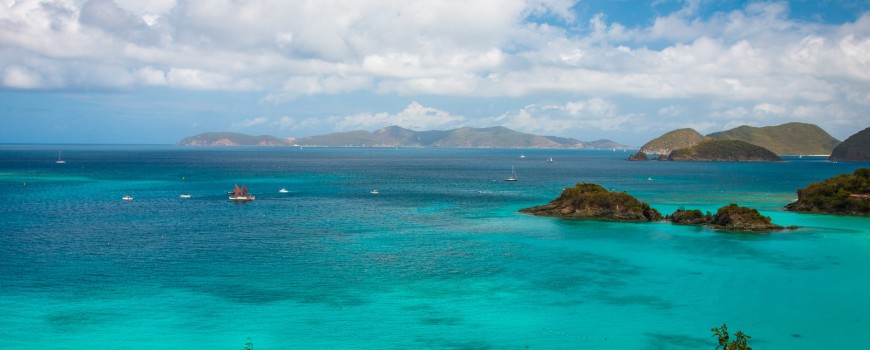
The very goregous Trunk Bay. Home of Leg 17 crew member Heidi Guth.

The Audubon Society of St. John also sponsored an island tour for the crew, replete with NPS interpreter.  We saw about a third of the land portion of the Park, visited the archaeological site and museum in Cinnamon Bay and walked through the remains of the Annaburg sugar plantation, helping to bring the history of this small, isolated and sustainable island to life.  The Friends of St. John National Park, which helps raise and provide private funding to the Park also provided the crew with hospitality, information and many courtesies.

IMG_6246

As Hōkūleʻa again enters U.S. waters in coming weeks, she and her crews will continue to visit a series of National Parks during their centennial.  We will learn how these parks and their staff work to preserve and provide access to invaluable cultural and natural history and resources.  Mahalo nui for the introduction, St. John!


Happy Birthday, Hōkūleʻa!

Help us celebrate Hōkūleʻa’s 41st birthday by becoming a member, or gifting membership to another!

On March 8, the iconic deep-sea voyaging canoe Hōkūleʻa celebrates her 41st birthday! Our master navigators use the stars, waves, wind, and birds to find their way, following in the wake of their ancestors. Hōkūleʻa has journeyed more than 150,000 miles over the past 41 years, and a new generation of navigators is sailing around the world to explore how people and communities are working to Mālama Honua – care for our Island Earth.  We need your support to keep us voyaging – please visit www.hokulea.com/donate/ to help.

Crew Blog | Eric Co: Everyone Knows You’re Here

Virgin Gorda is one of many tiny islands that comprise the British Virgin Islands. But just off shore is an even smaller one no bigger than an acre in size, a resort sitting on its entirety. Called Saba Rock, it is a bastion of aloha in an otherwise very new landscape.  This is because it’s owner, John McManus, is from Hawaii. He flew all the way from home to greet us, and in true aloha spirit he and his staff have hosted us with more kindness and generosity than could ever be hoped for.

IMG_3714

For the past few days this place has been home for us.  A comforting dock from which to explore this new location.  As far as the eye can see, this ocean is dotted with what can only be assumed is one of the most impressive collections of modern-day vessels anywhere.  Wherever you look you find some of the largest, sleekest, most technologically-advanced yachts, catamarans, and sailing vessels in the world.  And nestled amongst them all, delivered only by the elements and guided only by its heritage, sits a small, simple, unpowered traditional sailing canoe from Hawaii.

At dock, Hōkūleʻa certainly looks out of place.  But one commonality we all share here is that we are venturers of the sea.  And word has spread quickly of our stay.  Hundreds of visitors have come to visit Hōkūleʻa in the short time since we have arrived, many in wonder at a worldwide voyage with a mission of worldwide implications.  Compared to the high-powered boats around us, a double hulled sailing canoe finding itself two thirds around the world with no motors was enough to leave some in disbelief.  Still others were amazed at her spartan amenities and foreign lashing.

IMG_4399

Yet we also met some who have followed the voyage closely online, taking the time to understand our purpose, and become fully aware of just how important Hōkūleʻa is to Hawaii.  And we have discovered that Hōkūleʻa and her current mission are now also important to people even as far as this.  “Everyone in the British Virgin Islands knows you’re here, and we’re all very proud of and impressed with what you’re doing” said one visitor today.

IMG_4441

It is night now, and the moonless sky is littered with floating lights.  Only these are not stars. They are far too bright, large and close. They are anchor lights peering watchful from atop the thousands of boats around us. From the darkness of Hōkūleʻa’s deck these lights look like we are in a city, or perhaps a stadium.

And in their gaze we float.


Happy Birthday, Hōkūleʻa!

Help us celebrate Hōkūleʻa’s 41st birthday by becoming a member, or gifting membership to another!

On March 8, the iconic deep-sea voyaging canoe Hōkūleʻa celebrates her 41st birthday! Our master navigators use the stars, waves, wind, and birds to find their way, following in the wake of their ancestors. Hōkūleʻa has journeyed more than 150,000 miles over the past 41 years, and a new generation of navigators is sailing around the world to explore how people and communities are working to Mālama Honua – care for our Island Earth.  We need your support to keep us voyaging – please visit www.hokulea.com/donate/ to help.

Hōkūleʻa Update | Around the World in One Canoe

TRANSCIPT

LOURDES GARCIA-NAVARRO, HOST:

Relying on only sails for power, a Polynesian sailing canoe, which left Hawaii two years ago, has docked in the U.S. Virgin Islands. But it’s not your typical canoe. It’s 62 feet, double-hulled. Using the stars for a compass, the canoe is on a three-year journey circling the earth. Stephanie Guyer-Stevens reports.

UNIDENTIFIED MAN #1: Aloha.

UNIDENTIFIED MEN: Aloha.

UNIDENTIFIED MAN #1: We’re here.

STEPHANIE GUYER-STEVENS, BYLINE: As the Hokule’a eased into port on St. John, Captain Kalepa Baybayan was beaming about the trip. I ask him what this is all about.

KALEPA BAYBAYAN: Sharing the legacy of voyaging the exploration that embodies the spirit of the oceanic people who settled the Pacific.

GUYER-STEVENS: The Hokule’a left Hawaii in 2014, sailing west. Life for the 12 people aboard this canoe is really about living with the elements. Here’s crew member Justin Ah Chong.

JUSTIN AH CHONG: You’re just in it. You ride it out. You see the storm coming, you either throw on all your foul weather gear and prepare for it or you strip down and throw on the soap and prepare for a freshwater rinse.

GUYER-STEVENS: The deck is flat. There’s no cabin. The bunks are just body-width, running down either side of the deck. They’re covered by a thin sheet of canvas. Kelly Tam Sing says even sleeping is an adventure.

KELLY TAM SING: Water’s actually flowing underneath your bunk in the hold where you’re sleeping, and you feel like you’re on this carnival ride. And I just remember just laughing, just laughing and laughing and laughing.

GUYER-STEVENS: For the first time in almost two years, the canoe is back in U.S. waters. It’s heading next to the British Virgin Islands then on to Cuba. It’s scheduled to arrive in New York City on June 8 to celebrate World Oceans Day at the United Nations. Captain Baybayan says it’s been fun, but there has been one challenge sailing this Polynesian voyaging canoe around the world.

BAYBAYAN: Only thing that’s pretty tough for me is that I’m away from my family quite a bit. Yeah, my wife just asked me, when the hell are you coming home?

GUYER-STEVENS: The crew’s expected to return to Hawaii next year.

UNIDENTIFIED MEN: (Singing in foreign language).

GUYER-STEVENS: For NPR News, I’m Stephanie Guyer-Stevens on St. John, U.S. Virgin Islands.

UNIDENTIFIED MEN: (Singing in foreign language).


Happy Birthday, Hōkūleʻa!

Help us celebrate Hōkūleʻa’s 41st birthday by becoming a member, or gifting membership to another!

On March 8, the iconic deep-sea voyaging canoe Hōkūleʻa celebrates her 41st birthday! Our master navigators use the stars, waves, wind, and birds to find their way, following in the wake of their ancestors. Hōkūleʻa has journeyed more than 150,000 miles over the past 41 years, and a new generation of navigators is sailing around the world to explore how people and communities are working to Mālama Honua – care for our Island Earth.  We need your support to keep us voyaging – please visit www.hokulea.com/donate/ to help.

Happy 41st Birthday, Hōkūleʻa!

On March 8, the iconic deep-sea voyaging canoe Hōkūleʻa celebrates her 41st birthday!

Our master navigators use the stars, waves, winds, and birds to find their way, following in the wake of their ancestors. Hōkūleʻa has journeyed more than 150,000 miles over the past 41 years, and a new generation of navigators is sailing around the world to explore how people and communities are working to Mālama Honua – care for our Island Earth. 

We need your support to keep us voyaging – please visit www.hokulea.com/donate/ to help.

Happy Birthday Hōkūleʻa message from pwo navigator Kālepa Baybayan


He lā kupaianaha kēia no Hōkūle’a – Today is an amazing day for Hōkūleʻa

He lā kupaianaha kēia no Hōkūle’a, no ka poʻe Hawai’i, a no ka po’e a mākou e kipa ana.  Kanahākūmākahi makahiki aku nei, ua hānau ‘ia he wa’a, a ma o ia hānau ‘ana i ala hou ai ka mauli o ka po’e Hawai’i.  I ka lā ‘ewalu o Malaki, i ka makahiki 1975, ua lana mua ʻo Hōkūle’a ma Hakipu’u, ma O’ahu.  Ma muli o ia ho’olana ‘ana, a me kekahi mau hana kupaianaha a’e o ia wā, ua ho’okumu hou ‘ia ka ha’aheo o ka Hawai’i.  Ma muli o ua mau mea, ua hele au i ke kula kaiapuni i ku’u wā e kamali’i ana, a ua a’o au i ka ‘ōlelo a me nā mea Hawai’i.  No laila, nui ko’u aloha a mahalo no ka wa’a ʻo Hōkūle’a, a me nā po’e i ‘ike i ke ko’iko’i a ke kupaianaha o ia wa’a.   He kanahākūmākahi makahiki o ko Hōkūle’a mālama ‘ana iā kākou ma ka moana a me ka ‘āina, a mau nō kona a’o ‘ana iā kākou i ko kākou kuleana ma kēia honua nei.  Ma o Hōkūleʻa mākou i huakaʻi hele ai he kaukani a ʻoi mile a i kipa ai i nā ʻāina a kanaka mai ʻō a ʻō. He wahi hoʻomanaʻo kēia no ka mana kupaianaha o Hōkūleʻa i hoʻohuipū mai ai iā kākou ma kēia mokupuni Honua nei he hoʻokahi ʻohana like.

Today is a special day for Hōkūleʻa, for the people of Hawai’i, and the people of the world that we visit. Forty one years ago, a wa’a (canoe) was born, and consequently, the people of Hawai’i were reborn.  On March 8, 1975, Hōkūleʻa was first launched at Hakipu’u, on O’ahu.  As a result of her launching, and other important events during that time, the pride of many Hawaiians was reinvigorated.  Because of that time, I had the privilege of attending a Hawaiian immersion school when I was young and learning to both speak Hawaiian and about being Hawaiian.  So, I have a deep aloha and appreciation for Hōkūleʻa, and her first courageous crewmembers who were able to understand the importance of her. Sailing on Hōkūleʻa has been a lifelong dream of mine, so I cherish every moment that I am able to spend with her.  Forty one years later, Hōkūleʻa continues to care for us, both on and off the wa’a, and continues to teach us more about both who we are and what our place is in this world.  She has carried us thousands of miles from home, yet her presence and her mana seems to resonate with people all over the world who embrace Hōkūleʻa and her crew like family, which reinforces the idea that home is not so far because we are all home on this island Earth that we share.  


Crossing North

After a 20-month sojourn in oceans south of the equator, Hōkūleʻa has returned to the northern hemisphere in the blue waters of the Atlantic. Please, help celebrate our crew by supporting their journey.

Continue Reading

Hōkūleʻa Update | March 4, 2016 PM

Aloha from the deck of Hōkūleʻa. Today, we are leaving St. John, U.S. Virgin Islands as you can see. We have been here for almost a week, and we had a chance to speak at schools and interact with the community and the people. Itʻs hard for us to leave. We form relationships that will last a lifetime, but now itʻs time to move on as we go to Moskito Island and visit with Richard Branson and spend the day there. After that, we will continue onto Havana, Cuba and Florida. To perpetuate and pass on the message of mālama honua and aloha. So please follow us at Hokulea.com. From the Hōkūleʻa crew, mahalo for all the prayers, protection, aloha, and mana. Aloha and a hui hou!.


Crossing North

After a 20-month sojourn in oceans south of the equator, Hōkūleʻa has returned to the northern hemisphere in the blue waters of the Atlantic. Please, help celebrate our crew by supporting their journey.

Hōkūleʻa Update | March 4, 2016

After spending five days at St. John, USVI, their first Caribbean touchpoint, traditional voyaging canoe Hokulea set sail again this morning for its next destination: the neighboring British Virgin Islands. The crew left the US Virgin Islands at 2:00 p.m. (Friday, 8:00 a.m. HST). The current leg of the Worldwide Voyage highlights the first time that the legendary sailing vessel is visiting the Caribbean.

Heidi's home: Trunk Bay

“You have this gem of a place on the planet that has these amazing islands, these amazing coral reefs, and we call it the Caribbean,” said Nainoa Thompson, president of the Polynesian Voyaging Society. “(Voyaging to the Caribbean) is just another extraordinarily rich opportunity to go to a place in the world on our own terms-strengthened by our culture, carried by our voyaging canoe, and with the (outstanding) kind of leadership and crewmembers we have.” 

The stop at the British Virgin Islands gives a chance for Hokulea to handle any customs requirements while on international waters, and continue her Caribbean journey. From the British Virgin Islands, Hokulea and her crew will continue the Malama Honua Worldwide Voyage and stop in several ports in the Caribbean including Cuba before sailing north and visiting cities along the East Coast of the United States. She is scheduled to arrive in New York City by June 8, 2016 to be part of the United Nations’ World Oceans Day.


Crossing North

After a 20-month sojourn in oceans south of the equator, Hōkūleʻa has returned to the northern hemisphere in the blue waters of the Atlantic. Please, help celebrate our crew by supporting their journey.