Hōkūleʻa Update | October 24, 2016: Moani Heimuli

Moani Heimuli By Moani Keala Heimuli

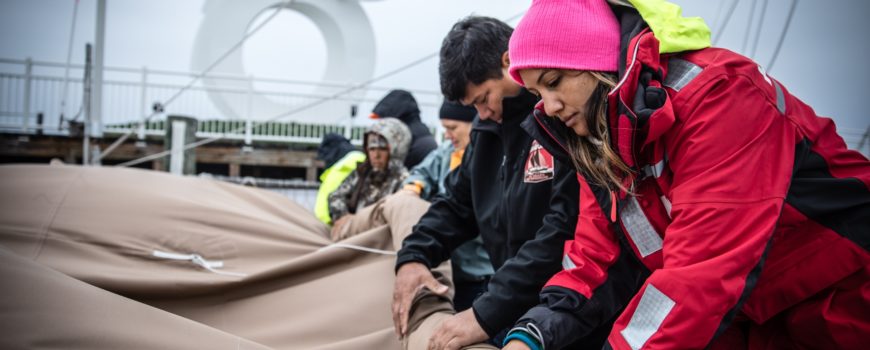
image1 (2)Here at dry dock we are making steady headway on our work. We are checking off more and more items from the to-do list. Lately, we’ve been having some very cool weather – in the mornings it’s in the low 50’s and heating up to low 70’s. So far, we’ve had only one day of rain but luckily not until later in the day when we were pau hana.

Today, Dr. Ben Tamura arrived to mālama the medical supplies. We are looking forward to the painters coming in this week as well as Kaleo Wong. We’ve also had some volunteers come by and help us. John and Georgia helped to sand the hulls and the wet decks, and they also sanded all the donuts and some of the wood pieces that received a coat of epoxy. Another volunteer, Duane, was here all weekend working with us. He met the canoe when she arrived in DC and also helped the crew out when the canoe was in Annapolis.

image4

image5

Until the next time.

Mālama,
Moani H.


Hōkūleʻa’s Dry Dock Fundraiser

Every year since embarking on the Worldwide Voyage in 2014, Hōkūleʻa has taken several weeks of downtime annually to ensure she is safe, seaworthy and beautiful for the thousands of nautical miles that lay ahead.

Please help fund Hōkūleʻa’s 2016 dry dock efforts.

Continue Reading

Classroom Connections | Model Waʻa

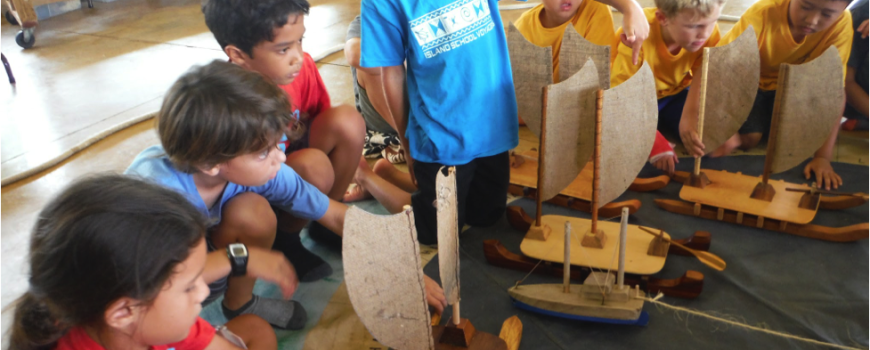
Over the last 4 years, educators across the state have been working hard to develop lessons, activities and other curriculum that classroom teachers can use to connect students to theme of Mālama Honua and the Worldwide Voyage (WWV). Some of these lessons have been a significant part of the community outreach engagements in ports of call, helping to engage students all over the world in the Voyage. One of the most popular activities used in outreach invites children of all ages to build 3-D model waʻa (canoes) and then use them to explore the star compass and other concepts of celestial navigation.model waa2

The model waʻa used in the activity, including those that are traveling with Hōkūleʻa , were actually handcrafted by inmates at Kauaʻi Community Correctional Center (KCCC) with wood donated from various local businesses. The miniature crab claw sails that accompany each waʻa are made from either donated burlap or brown paper. Since 2013, students all over the world have assembled more than 3,000 miniature voyaging waʻa. Some have also been given away as makana (gifts) to show our appreciation in various ports of call.

model waa3The Model Waʻa activity was originally developed by Capt. Steve Soltysik, Kauaʻi resident and educator, who has also served as a crewmember on the WWV. Captain Steve has been sharing his love for the ocean with Kauaʻi fourth-graders for many years now, through maritime classes where students work in teams to build larger model-versions of voyaging canoes. Once the waʻa are built, students actually put the canoes in small kiddie pools and learn the basics of steering, paddling, weight distribution and water safety.

model waa4

model waaIn preparation for the WWV, Captain Steve expanded his waʻa lesson to include a basic introduction to the Hawaiian Star Compass used for navigation onboard Hōkūleʻa and Hikianalia. Once the model canoes are built, students then use them to explore the Star Compass, and hopefully begin to develop a sense of place and direction. Once they have a basic understanding of how to use the Star Compass, students then use the model waʻa to to demonstrate their understanding, pointing them towards the ‘house’, or direction, that Hōkūleʻa’s navigators use to find Tahiti. More recently, Captain Steve further developed his Star Compass activity to introduce students to some of the foreign languages crewmembers would encounter along the WWV.model waa5

Any teachers interested in using any of these lessons with students can email Steve directly at stevenakauai@yahoo.com. You can find additional resources developed by educators for the WWV on the Hokulea.com Learning Center website.


Ready to try out any of these lessons or resources? Email us at education@pvshawaii.org to share with us what you do with this content – we would love to see pictures and student reflections that we can share on social media and our website!

Doing another kind of project to mālama your community? Share Your Mālama Honua Story with us!

Are your students still in the beginning stages of identifying a problem they would like to try and solve? Don’t forget to check out the Mālama Honua Challenge and share your ideas about work that can be done in the future!

Continue Reading

Hōkūleʻa Departs Haverstraw, NY

After severe weather delays due to Hurricane Matthew, Hōkūleʻa departed Haverstraw, NY late at night on Monday, October 10th, for the Chesapeake Bay. The decision to delay the departure was made out of an abundance of precaution and concern for the crew and the iconic sailing vessel. The crew and canoe remain safe and undamaged after the storm conditions.

“The Worldwide Voyage is a dangerous thing to do,” said Nainoa Thompson, pwo navigator and President of the Polynesian Voyaging Society. “There’s a lot of risk, and at the top of the list are hurricanes. You just don’t go in them. Now that the hurricane risk is out of the way, we’re going to head south slowly and wait for the wind to drop.”

Hōkūleʻa is expected to arrive for dry dock in Virginia on October 15, 2016 and she will remain there until early November. Hōkūleʻa’s last dry dock was in Cape Town, South Africa and this next dry dock will be the last major one for the voyage.


Help fund the Voyage as we sail the East Coast

Hōkūle‘a’s visit to the eastern United States is a historic milestone in her 40 years of voyaging.

Celebrate with us by pledging your support to the Mālama Honua Worldwide Voyage.

Hōkūleʻa Update | October 12, 2016: Kula Barbieto

Leg 24 crewmember Kula Barbieto gives an update on Hōkūleʻa’s location and sail plan for the next couple of days on their way to Virginia.


Help fund the Voyage as we sail the East Coast

Hōkūle‘a’s visit to the eastern United States is a historic milestone in her 40 years of voyaging.

Celebrate with us by pledging your support to the Mālama Honua Worldwide Voyage.

Huakaʻi to Kahoʻolawe

by Hye Jung Kim and Kailee Jackson

Polynesian Voyaging Society’s Youth Leadership Initiative, Nā Kelamoku, had the opportunity to access Kahoʻolawe with the Protect Kahoʻolawe ʻOhana (PKO). The huakaʻi (voyage) consisted of various hikes, service opportunities, and invaluable memories. Nā Kelamoku had the opportunity to learn from various members of PKO and also interact with the other groups that were on island; but just as importantly, this huakaʻi brought our Nā Kelamoku group together in ways that words cannot describe.

The history of Kahoʻolawe is a complicated and tragic. The island was taken for military purposes in 1941 and used as bombing and target practice. The Protect Kahoʻolawe ʻOhana led the protest to stop the bombing and return the island to its cultural purpose and legacy. This long process resulted in arrests and imprisonment, but in October of 1990 the military was directed to discontinue the use of the island for military purposes. For more information on the history and also ways to help the organization, please check out PKO’s website.

Mahalo nui loa (thank you very much) for the kua (leaders) who made this trip memorable for our youth crew, Kylee & Kekaulike Mar for inviting and organizing this huakaʻi, Protect Kahoʻolawe ʻOhana for their endless efforts in restoring the island, and Saltchuk for sponsoring Nā Kelamoku.

Here is a day documented through the eyes of one of our Nā Kelamoku crew members, Kailee Jackson:

Day 3 on Island, Hike to Moaʻula Iki

We awoke to the blowing of the pū and got ready for a full day of hiking. It was before sunrise, so we were able to see the amazing stars and the Milky Way. Our group met at the top of a rocky cliff that overlooked the ocean and Maui. Before beginning our long journey, we said a pule (prayer), asking for a safe trip. We then began our twelve mile hike from Hakioawa to Moaʻula Iki.

About half an hour into the hike, the sun began to rise over the peak of Haleakalā, so we all chanted E Ala E and helped the sun to rise high into the sky.

After hiking a few more hours, we reached Moaʻula Iki. We got to see the Navigator’s Chair. In ancient days as well as modern training, this is a place to study the stars, currents, winds and waves. On a clear day, you are able to see Oʻahu, Molokaʻi, Lānaʻi, Maui, and Hawaiʻi and the various channels. PKO, Nā Kelamoku, and other volunteers removed their shoes to really feel the deep connection with the ‘āina. We sang E Ho Mai and asked for permission to enter the sacred place. When we reached the Navigator’s Chair we were able to see most of the island as this was one of the highest peaks on island. It was so peaceful and inspirational to be at a place where many brilliant voyagers and navigators have studied and practiced one of their most amazing skills, wayfinding and sailing by the stars and ocean conditions.

We hiked back down the peak and ate lunch in a small hale. After resting for a while, we continued our journey to a rain shrine. Some of us offered hoʻokupu to the Hawaiian god, Kāne, asking for the blessing of rain. Once the ceremonies were completed, we continued to hike back down to our camp. Along the way, we saw some of PKO’s vegetation efforts and our steps we had built the day before. The view along the hike was incredible, the blue ocean glistened in the bright sun and we were able to see all of Maui and some of Hawaiʻi. Then within a few minutes, thick, grey rain clouds would surround us and open up their blessings of rain. This process continued throughout the whole day.

After about nine and a half hours, we made it back to our camp. The long, tiring hike was well worth the trek because we were able to experience amazing views, hear meaningful stories, and we were able to really feel the mana and feel a deep connection with the ‘āina. We worked together to make a ʻono (delicious) dinner and we talked story for the rest of the night. We shared our life-changing experiences on Kahoʻolawe and thanked the kua for the amazing opportunity and experience.

Nā Kelamoku decided to pack up our tent and spend our last night on Kahoʻolawe on the beach, where a sky full of bright stars greeted us. One of Hōkūleʻaʻs crew members and apprentice navigators, Jason Patterson, talked story with us for a while and showed us the different groups of stars used to navigate. It was amazing how many stars and planets we were able to see when there was no light pollution.

The next day was another early morning. We cleaned up the camp and jumped on a boat back to Maui. Kahoʻolawe was truly an amazing, once in a lifetime experience and Nā Kelamoku hopes to be given the opportunity to visit the island again.


Help fund the Voyage as we sail the East Coast

Hōkūle‘a’s visit to the eastern United States is a historic milestone in her 40 years of voyaging.

Celebrate with us by pledging your support to the Mālama Honua Worldwide Voyage.

Continue Reading

OPIHI Teacher PD Opportunity

OPIHI

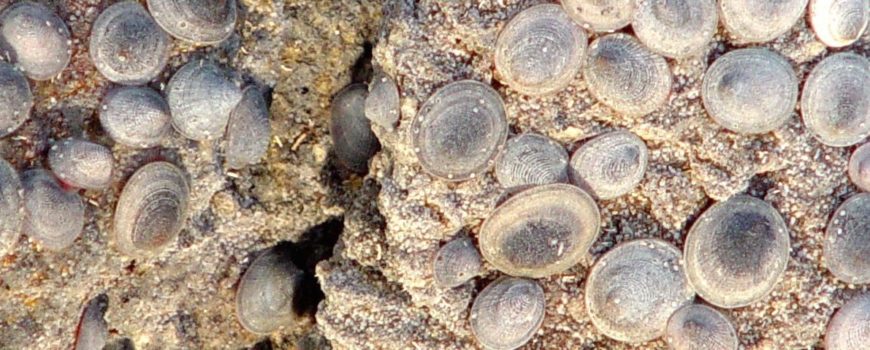
The University of Hawai‘i Curriculum Research and Development Group (CRDG) is recruiting secondary STEM teachers from across Hawai‘i for a citizen science professional development opportunity called Our Project In Hawai‘i’s Intertidal (OPIHI). In OPIHI, teachers and students will be immersed in rigorous, authentic, scientific research monitoring rocky intertidal areas.
Benefitsopihirecruitmentflyer_2016-2017
As an OPIHI teacher, you will:
  • learn from and with scientists,
  • be eligible to receive a stipend ($150) and class supplies, and
  • have the option of earning 3 PDE3 credits (for DOE teachers).

Reimbursement for bus transportation to a field study site is available. OPIHI is aligned to NGSS.

Join the Movement!
Last spring, 31 teachers and ~600 students surveyed 24 intertidal areas statewide! As a result of participating in OPIHI, teachers commented that their students had more appreciation for the nature of science. For example, one teachers said: “My students had a real-life experience, not a canned one. They learned and acted like scientists.”
Logistics
There will be OPIHI PD sessions on O‘ahu, Kaua‘i, Maui, and Hawai‘i Islands. Travel support is available for teachers from Moloka‘i and Lana‘i.
Additional information, including OPIHI PD dates, are on the attached flyer. 
 
opihirecruitmentflyer_2016-2017_2The OPIHI application due date is October 31st
Although OPIHI is an aquatic-focused program, CRDG thinks teachers in all STEM subjects will find the workshop content can be successfully integrated into their curriculum.
Questions?
Please let Joanna Philippoff know if you have any questions, CRDG hopes you consider applying to this unique program!

Doing another kind of project to mālama your community? Share Your Mālama Honua Story with us!

Are your students still in the beginning stages of identifying a problem they would like to try and solve? Don’t forget to check out the Mālama Honua Challenge and share your ideas about work that can be done in the future!

Continue Reading

Crew Blog | Kaipo Kīʻaha: Coldest Day Since May

On the coldest day on Hōkūleʻa since May, the Leg 24 crew gets ready to head south.

Kaipo KiahaBy: Kaipo Kīʻaha

Today marked our seventh day of Leg 24, however we have been at Haverstraw Marina the whole time. Weather, especially Hurricane Matthew in the south, has delayed our departure significantly. Tomorrow afternoon, there is a very small window of time where the winds could start to slack. If the conditions are good enough, we will take that window. The current plan is to depart Haverstraw, New York and head south. Captain Bob and Nainoa are confident in our crew that we can safely move Hōkūleʻa down the Hudson River at night.

If we leave Haverstraw in the afternoon, we should arrive in the Sandy Hook Bay at dawn on Tuesday, which is about 50-60 nautical miles south of where we are now. Preferably we would not anchor there, because it is an unprotected anchorage exposed to the cold northerly winds. But we will if absolutely necessary. Today, winds were blowing at 40 knots with 50 knot gusts, which is definitely not ideal. We are now looking for a sustained window of 15-20 knot winds, which is best for moving the waʻa (canoe) through the rough and cold Atlantic waters. After leaving Sandy Hook, we will pass Atlantic City in the daylight hours and if we decide to, we will continue south to Cape May Tuesday night. If it is too treacherous, we will seek shelter at Atlantic City. One of the primary concerns is the safety of Hōkūleʻa’s ecort boat, Julie’s Cat, and her crew. Hōkūleʻa can handle the 40-50 knot winds, with 2-3 knot currents, but Julie’s Cat cannot.

We have had multiple weather challenges on this leg. Originally supposed to stop at the Newport Marina in New York City, the Leg 23 crew ended up stopping in Haverstraw, where the Leg 24 crew took over and has been staying for the last week. Hurricane Matthew, which pummeled Florida and South Carolina, was the biggest concern. On top of Matthew, a cold front out of the northeast has reached us today dropping the temperature into the 30s. Today is the coldest day on Hōkūleʻa since May!

For the health and safety of the crew, we are staying in a hotel in Spring Valley tonight, to get adequate rest in order to be fully prepared to move the waʻa tomorrow. Once we begin moving, we have until October 16 to reach Newport News in Virginia, where Hōkūleʻa will dry dock, spending 3 weeks for routine repair and maintenance. Because of permits and arrangements with a crane and a tow truck to pull Hōkūleʻa out of the water for this dry dock, we have a hard deadline to arrive at Newport News at that time. To meet that deadline, we will be moving Hōkūleʻa every day until the end of our leg.

We have spent a lot of time readying both the canoe and ourselves, as well as exploring the city and going on multiple learning journeys, to strengthen our bond as a crew. As we have cared for each other on land, it is even more important to do the same once we head out to sea. At our crew meeting tonight, Nainoa said, “Our job is to get the canoe home, for the keiki of Hawaiʻi.” Remembering this goal will help us endure the bitter cold weather and howling winds, as we make the weeklong voyage down the East Coast.


Help fund the Voyage as we sail the East Coast

Hōkūle‘a’s visit to the eastern United States is a historic milestone in her 40 years of voyaging.

Celebrate with us by pledging your support to the Mālama Honua Worldwide Voyage.

Classroom Connections | Lake Champlain Watershed

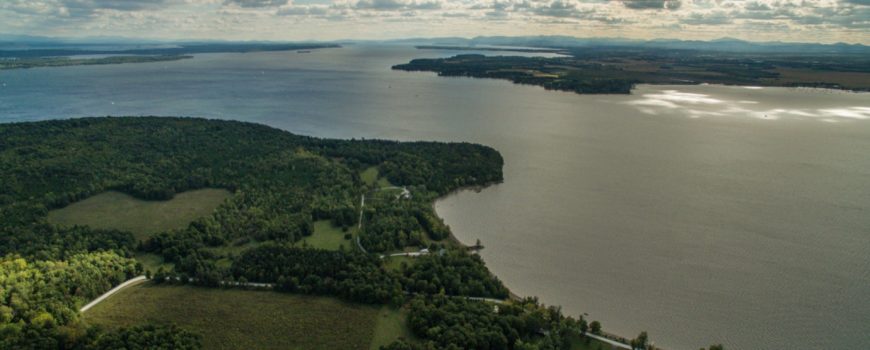
Hōkūleʻa and the crew recently sailed through Lake Champlain, a lake that has 587 miles of coastline spanning two states and two countries! The lake drains north from Whitehall, New York to the outlet at the Richelieu River in Quebec.  From there, the water flows into the St. Lawrence River and eventually into the Atlantic Ocean at the Gulf of Saint Lawrence (http://www.uvm.edu/watershed/watersheds).

Compared to other larger glacial lakes in the United States, like the Great Lakes, Lake Champlain is unique because of its depth, width and watershed size. A watershed is a geographic area within which all water, sediments, and dissolved substances drain into the same river or water body.  Watersheds can range in size from a small pond near the top of a hill to the Mississippi River and the minor and major tributaries that drain into it. There are often many smaller watersheds also known as “sub-basins” within larger watersheds (http://www.dec.ny.gov/lands/48369.html).

dji_0015

The Lake Champlain Watershed (8,234 square miles) drains the area between the Adirondack Mountains in northeastern New York State and the Green Mountains in northwestern Vermont.  Over 90% of the water that flows to the lake comes from the surrounding sub-basins. The ratio of the area covered by Lake Champlain to the area of its sub-basins is 1:18, while the Great Lakes have a ratio of 1:2.

Like the Hudson River estuary, the Lake Champlain Watershed is protected and stewarded by various groups that come together across state and, in the case of Lake Champlain, country lines.  The Lake Champlain Basin Program (LCBP) is a Congressionally-designated initiative to restore and protect Lake Champlain and its surrounding watershed. The program brings together government, private, and community-based organizations from New York, Vermont, and Québec to coordinate and fund efforts that address challenges of toxic pollution, invasive species, and climate change, or that benefit the Basin’s water quality, biodiversity, environment, and cultural resources.  The LCBP also offers programs for students and educators and curriculum materials.

One of LCBP partners, the Champlain Basin Education Initiative (CBEI), is a consortium of environmental and place-based education groups that serve the Lake Champlain Basin.   CBEI provides workshops, led by local experts, on topics such as climate change, water quality, cultural heritage, and natural resources. They also developed WatershED Matters, a website that serves as a gathering place for educators in the Champlain basin, offering a variety of curriculum and classroom resources.  Another partner, the UVM Watershed Alliance, works to increase awareness and knowledge of watershed issues in Vermont youth. UVM WA also provides curricula, equipment, and instructors to schools and youth groups participating in our programs, as well as support and guidance to teachers who wish to integrate watershed education into their current curriculum.

dji_0006Watersheds are a great way to integrate a variety of subject areas into a single lesson or complete unit. In Hawaiʻi, the ahupuaʻa provides a unique opportunity to learn about the nature of watersheds, as well as how to look at them from a conservation and resource management standpoint.   The University of Hawaiʻi at Hilo PRISM curriculum has standards-based lessons on the ahupuaʻa for both 1st and 5th grade teachers.  This lesson, developed by a teacher at Farrington High School, is designed to begin the development of a sense of place for students by giving them a spatial sense of their location in a watershed and the world, and to help students further develop the sense of cultural connection to a place.

There are many organizations in Hawaiʻi that also support educators in bringing watershed education to students.  The Three Mountain Alliance is the largest watershed partnership in Hawaiʻi. With 10 partners, the overall goal of the Three Mountain Alliance is to sustain the multiple ecosystem benefits of the three mountains of Kīlauea, Mauna Loa, and Hualālai by responsibly managing its watershed areas, native habitats and species, historical, cultural, and socio-economic resources for all who benefit from the continued health of the three mountains (http://threemountainalliance.org).  They provide education and outreach to the community, as well as resources and trainings to teachers.The Moanalua Garden Foundation has standards-based resources for elementary and middle school level teachers that cover a variety of topics. The Hawaii Association of Watershed Partnership (HAWP) and The Nature Conservancy also provide resources for teachers to use both inside and outside of the classroom.


Ready to try out any of these lessons or resources? Email us at education@pvshawaii.org to share with us what you do with this content – we would love to see pictures and student reflections that we can share on social media and our website!

Doing another kind of project to mālama your community? Share Your Mālama Honua Story with us!

Are your students still in the beginning stages of identifying a problem they would like to try and solve? Don’t forget to check out the Mālama Honua Challenge and share your ideas about work that can be done in the future!

Continue Reading