Hōkūleʻa Update | December 19-24, 2016

Leg 26 has departed Miami, sailing across the Gulf of Mexico, headed for Panama. Below are updates from various crewmembers on their progress and life aboard Hōkūleʻa.

December 19

Blog by Brad Wong

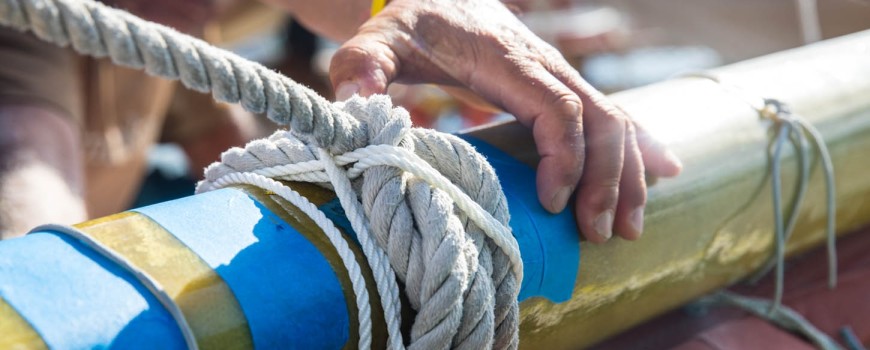
Leg 26 crew continued to make our way towards Key West today, getting some good sail practice in while being towed by Julie’s Cat.  Captain Bruce had us drop the back rig to retie the sail to the boom.  The crew is in great spirits, the weather has been gorgeous, and we are all getting used to the watch rotations and getting into a rhythm.

We arrived in Key West around 5p and were greeted by several ʻiwa soaring above, always a good sign for us on Hōkūleʻa. The crew will stay in Key West for the next day to reunite with the Gershon crew and to make final preparations for the longer journey, which is expected to take another 10 days to Colon, Panama.

December 20
Hōkūleʻa and crew just departed Key West.  We are currently making our way out through the channel under tow of Gershon II, which will take over for Julie’s Cat as Hōkūleʻa’s escort in the open ocean.  Everyone is healthy, in good spirits, and ready to start our run down to Panama.
December 21
Yesterday, leaving Key West was an eventful day and the update was short. Here, are a few more details on the departure from US and coastal sailing.
Blog by Duane DeSoto

Our morning began with an excited and anxious crew buzzing around Hōkūleʻa prepping for Gershon II’s arrival. A quick tow out of the harbor and we could begin sailing the Gulf Stream for Panama. Key West was our last opportunity to contact family for the next 10 days or so. Christmas will pass and possibly New Years as well. Phone calls and text were quietly going out, wishing loved ones a Merry Christmas.

The winds were great for our departure, 10-15 knots North of East and the sky is scattered with a few clouds. What a blessed day for all of us. Miami and Key West were fun but today’s start is what most of us were looking forward to. Open Ocean.

A radio check came through from Gershon II announcing her approach. “Finally”, for some of us. Departure strategy for our final moment in the U.S. was laid out by captain Bruce Blankenfeld. Keep it simple. We hooked up a short tow to our newly refashioned front cleat, Honolua. An aloha ‘oe to the many moored sailing vessels festively decorated with Christmas lights.

It was about 10am as we passed these enormous cruise-liners full of holiday tourists. Soon after we entered the main channel leading to the Gulf of Mexico. Hõkūleʻa’s last rendezvous with Florida was warm, pleasant and memorable.  More importantly, Hõkūleʻa’s visit to the East Coast of the United States of America will impact the lives of future generations in Hawaiʻi.

Mālama Honua has and will be the reminder of how Hawaiian Culture has the key practices for a balanced future. Being pono with our food, ʻāina, resouces, and most importantly our people. As we grow closer to each other and our ʻāina, the need for balance and sustainability becomes more apparent. Are we listening?

Hõkūleʻa brought back long lost voyaging traditions in the 70ʻs with crewmembers who are now considered visionaries and foundation setters. 41 years later Hõkūleʻa represents native intelligence and science that will bring environmental and social issues into harmony. The constant evolution of each generation with the guidance of our kupuna’s ways has brought about the next generation of strong, confident, and educated keiki.

Love for land, knowledge, and a “say” in Hawaiʻi’s future is becoming common amongst our young leaders. Keiki are embracing their kuleana and Hõkūleʻa has been pivotal in this shift in our society. Her impact is constantly growing.

Hõkūleʻa’s stops along the World Wide Voyage are now directly connected to Hawaiʻi. Keiki now have connectivity to global iconic locations as a result of her fantastic journey. Polynesian celestial navigation has left the Pacific Ocean and ventured to the Tasman Sea, Indian and Atlantic Ocean.

Today Captain Bruce asked us to remove our watches and make sure we don’t have access to telling time. The beginning of celestial navigation has arrived. The winds, waves, sun, moon and stars are now our main source of time, speed and direction as Key West slowly disappeared behind us. Cuba sits to our South and Florida to our North, while we head west.

As we welcome the night, the moon is already slightly raised. Fishing lines are brought in empty for the evening and the stars shine bright with a few clouds. Each watch crew works in sync with our captain and navigator. Smooth quick sailing as the 10-15 knot East-North-East wind carries us quietly through the night. All are in anticipation of the first glimpse of Cuba.

December 22
Blog by Duane DeSoto

Today we sail west with a 10-15 knot wind coming out of the ENE. Swells are minimal making ideal sailings conditions. We follow along the north coast of Cuba all day and see very little sign of people on land. Aside from 2 small fires on the coast, no sign of people can be found. This is especially apparent at night, not a single light on shore.

Cuba’s silhouette of small mountains accompany us as we average 6 knots with an opposing 1 knot current.  We maintain a 20 mile distance between the shore and Hōkūleʻa during our 100-120 mile duration today.

Each watch has adjusted well to their time shifts working smoothly together. Jokes and stories are told while nicknames are being created. On board we have the pleasure of sailing with the rare, never before seen Hana Bear. Doc needed to remind Hana Bear he was already repeating 2/3 of his jokes. LOL

For most of the day we had 2 white birds on board. They were friendly enough to allow the more niele crewmembers a chance to pet them.  By their own accord they wanted to connect with certain crew anyway – One landing on Brad’s head and another landing on uncle Bruce’s hand. Friendly little stowaways.

Awesome day with 2 crab claws in the air, clear sunny skies during the day and bright shining stars at night.

December 23
Blog by Duane DeSoto
Uncle Bruce broke our voyage up into several different stages or phases, the first phase being the sail from Miami down to Key West.  Phase 2 of our voyage, from Key West to the western most tip of Cuba, ended early this morning as we reached that far end of Cuba. Unlike earlier, Cubaʻs defined silhouette is no longer visible at this distance but we know low lands and shallow waters are just south of us. Preparation for our jibe south begins with shifting of sheet lines and a different jib.

Phase 3 is upon us as we head straight south and take the ENE wind on our port stern now.  The wind is our only constant today. This morning started out beautiful and sunny but was soon interrupted by a big rain cloud that swooped down upon us. This change of weather caused the winds to vary a little and we got a much-needed fresh water rinse.

Soon enough the rain disappeared and we were back to our perfect sailing conditions with our 10-15 knot ENE wind. The sea grew a little sending 6-8 foot swells our way. This made for a nice little sway in Hōkūleʻa’s hips.

The evening came quick as did the end to part 3 of our journey. We sailed far enough south and now need to head east to get back under the belly of Cuba. It’s going to be a beautiful night.

December 24
Blog by Wallace Wong
It’s a blustery morning on the Caribbean as we head into a dark cloud on the horizon.  The moon watches and smiles above us as that cloud disappears and Orion slowly settles into Komohana.  Our spirits are high as we get closer to our destination.

Today is Christmas Eve aboard the Hōkūleʻa and the morning chatter for first watch is what’s on the menu for tonight.  Bruce is hanging the fishing hooks out with care in hopes that our menu will soon be filled with gifts from the sea.  The Eve was a surprise for many as we slowly lose track of the days aboard the waʻa.  Sunrise, sunsets and a universe of stars are what our days consist of.  Across this vast ocean we watch seabirds, huge ships and the distant silhouette of Cuba.  Our focus is on Hōkūleʻa and our youth.  Our newer and younger crewmembers are doing such an amazing job on this leg and they are learning and sharing their expertise with everyone.

At home our ʻohana are always on our minds when we sail, especially during this time of the year with the traditional family gatherings during Christmas and New Years that we will be missing.  We will forever keep them in our hearts as we gather with our ʻohana wa’a on board Hōkūleʻa on this beautiful evening at sea.  We will be sharing stories, songs and laughter as we celebrate the birth of Jesus with peace, love and goodwill.

From our ʻohana wa’a to yours,
we wish you a Mele Kalikimaka.


Help fund the Voyage as we sail the East Coast

Hōkūle‘a’s visit to the eastern United States is a historic milestone in her 40 years of voyaging.

Celebrate with us by pledging your support to the Mālama Honua Worldwide Voyage.

Hōkūle‘a at Shake-A-Leg in Miami

Miami, Florida is one of many stops Hōkūleʻa is making while on its way home to Hawaiʻi. While there, the crew has been graciously hosted by an organization with a unique and inspiring mission.

“We’re all water. Eighty percent of our body is made of water. So I think there is just a natural attraction to it.  For the majority of people with disabilities, and kids, they don’t have access to it,” said Harry Horgan, President and Co-Founder of Shake-A-Leg Miami, where Hōkūleʻa spent a couple weeks at the end of her east coast voyage.
“Right now we’re in Miami Florida, at Shake-A-Leg marina, and they have a very important mission,” said watch captain Kawika Crivello.
“Shake-A-Leg Miami is a nonprofit organization, who uses the marine environment to expose individuals with disabilities to the water,” said Kiandra Rhaney, Program Director at Shake-A-Leg Miami.  She continued, “We have kids with autism, kids with down syndrome, kids with a physical disability, and they’re all doing the same activity.  They’re all going on the boats, going on the same outriggers, so they get to experience life without a dis-ability.  They all have abilities.”
Over a hundred kids from the Shake-A-Leg Miami programs toured Hōkūleʻa during our time there.  Kawika Crivello, who gave several of the tours, said, “Meeting all the kids today, it really brought joy to our canoe and our crew members.  It’s the little things that sometimes we take for granted. Being here today with kids helps put things in perspective. So we, as crew members of Hōkūleʻa, will take those stories back home.  We want to share them.  They’re beautiful stories, and they made us feel honored to be in their presence.”
“We’re on a journey similar to what you’re doing,” said Harry Horgan.  “We’re going to different ports of call, to provide a little hope and inspiration and introduce people to the ocean. So they can experience what we’re able to experience.  By us getting them out on the ocean, they’re being inspired and that’s really what we’re about, is to inspire people to believe in themselves and to go after their dreams.”


Help fund the Voyage as we sail the East Coast

Hōkūle‘a’s visit to the eastern United States is a historic milestone in her 40 years of voyaging.

Celebrate with us by pledging your support to the Mālama Honua Worldwide Voyage.

Hōkūleʻa Update | December 17, 2016

Blog by Brad Wong

For the past two days the Leg 26 crew has been continuing preparations for their voyage to Panama. Crew have begun to make their bunks feel like home and get familiar with the locations of all necessary canoe gear. A few lashings and repairs were made as well. Yesterday, the 16th, the crew met up with Nā Kelamoku, the Polynesian Voyaging Society’s Youth Leadership group who came to Miami to do outreach and learn as much as they could from local organizations studying the environment.

Both groups had an awesome opportunity to visit National Oceanic and Atmospheric Administration’s (NOAA) National Hurricane Center and Weather Service here in Miami, and heard from local experts how they keep track of weather and forecast storms as well as their collaborations with the Central Pacific Hurricane Center based in Honolulu. These are the guys that supply Hōkūleʻa and her crew with all the weather forecasts that we use to make our sail plans, so it was a treat to meet some of them and see first hand how they do what they do!  The crew also got a first hand weather update for the next few days, which looks favorable for departure on Sunday the 18th.

The crew would like to send aloha to all our friends and ʻohana, and are looking forward to getting on the open ocean! Mahalo for the support and continue to follow us at hokulea.com!


Help fund the Voyage as we sail the East Coast

Hōkūle‘a’s visit to the eastern United States is a historic milestone in her 40 years of voyaging.

Celebrate with us by pledging your support to the Mālama Honua Worldwide Voyage.
Hōkūleʻa Update | December 18, 2016

Blog by Brad Wong

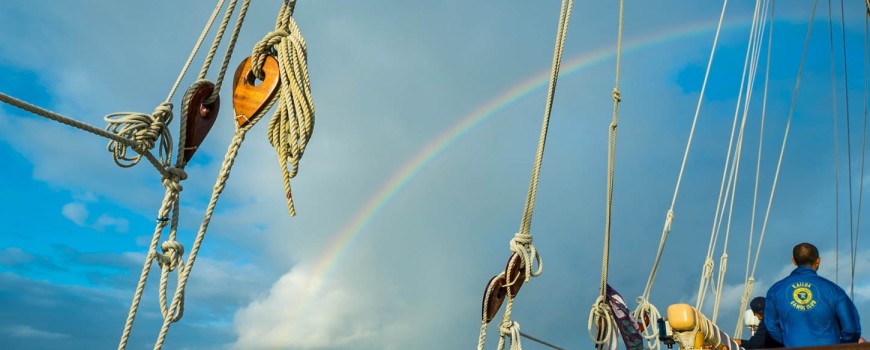
Early in the morning, around 8am, we left Coconut Grove, Miami on our way to Key West. A small group of local canoe paddlers, the hui at Shake-A-Leg Marina, and Nā Kelamoku sent us off as Julie’s Cat pulled us off the dock. After our oli mahalo, an ānuenue (rainbow) and an ʻiwa (Frigate bird) appeared out of nowhere behind us, an amazing blessing and one of those special moments that Hōkūleʻa always seems to bring.

The day was spent getting everyone’s sea legs under them and adjusting the standing rigging. The crew has gotten along extremely well, laughing, playing music, and cooking together.

We arrived offshore of Islamorada at around 530pm and are now currently anchored outside Islamorada along the Florida Keys and will stay here for the night. The stars are brilliantly dotting the sky which prompted ʻAnakala Bruce to give a quick star lesson to those interested. We await the morning to make our way to Key West and to meet up with the Gershon who we haven’t seen since Hōkūleʻa’s first pass through Florida. More excitement to come. Pō mālie.


Help fund the Voyage as we sail the East Coast

Hōkūle‘a’s visit to the eastern United States is a historic milestone in her 40 years of voyaging.

Celebrate with us by pledging your support to the Mālama Honua Worldwide Voyage.
Hōkūleʻa Update | December 5-8, 2016

After arriving in Miami, crewmembers prepare Hōkūle‘a for departure on Leg 26 from Miami to Panama. Crewmember Kaipo Kīʻaha faithfully documents the crew’s work, the weather and more.

Day 25 & 26: December 5 & 6

We started off Monday, December 5, by lowering the main spar and boom and retying on the upper halyards, because a part of the line was chafed. Keeping all our lines in working shape is a top priority on the canoe.

After that, we unloaded the dinghy, which has been dubbed the “Lamona Cruza” after Uncle Lamona Shintani the dinghy driver for Leg 25. The motor and dinghy were hauled out with a crane and we cleaned it off and deflated it so it can be shipped home on the container.

The next day, Tuesday, December 5, we spent cleaning the canoe, specifically the insides of the hulls under the hatch covers and the wet decks.

Moani, Shantell, and Tamiko completed the bulk of the food and supplies shopping. We were generously given a room to use by Shake-A-Leg Marina to stage all our food boxes and have a space to pack everything in.

Day 27 & 28: December 7 & 8

Wednesday, December 7 was spent organizing and packing our food supplies and putting them in the green boxes, organizing them by day.  We unloaded the gear from the escort boat as well to prep to load onto the container.  We were visited by Jim, who is a paraplegic with a prosthetic leg, and he shared his story with the crew. In the evening, we walked into the town at Coconut Grove and Captain Kalepa took some of us to a French restaurant.

Thursday, December 8, was a busy day with canoe tours and loading work. The beginning of the day started with the arrival of a Matson container, inside which we loaded some of the gear from the canoe and the escort boat to be shipped back home.

After that, some students in the Shake-A-Leg Miami program toured Hōkūle‘a. These special needs kids are able to experience the water through various marine programs that Shake-A-Leg offers for them, so they were excited to be on board our voyaging canoe. Our crewmembers were even able to lift some of the kids who had wheelchairs on board so they could see everything too.

The last task of the day was loading the food and water in the hulls. Right as we were finishing up it started raining, so we scrubbed the deck, and then took shelter under our awning where Wayne and Keala cooked us some warm spaghetti.

It’s supposed to rain off and on tonight and then as the cold front passes by the temperature will drop because of winds out of the north.


Help fund the Voyage as we sail the East Coast

Hōkūle‘a’s visit to the eastern United States is a historic milestone in her 40 years of voyaging.

Celebrate with us by pledging your support to the Mālama Honua Worldwide Voyage.

Hawaiʻi Youth Sustainability Challenge

Hawaiʻi students and teachers are invited to participate in the Hawaiʻi Youth Sustainability Challenge (HYSC), an initiative to inspire all youth to be intentionally engaged around our environment to become leaders and stewards of Hawaiʻi. The HYSC will provide students with the opportunity to apply for mini-grants to plan, design, prototype, and test their own small scale innovative and creative sustainability ideas and projects for their schools and communities. HYSC projects must be student-driven, Hawaiʻi specific, and with the potential to be scaled up for a larger impact project addressing the following:
1) Change you want to see in your school or community to support Hawaiʻi’s goal of achieving a sustainable future
2) Your environmental passions and desire for environmental education
3) Your motivation to make change for your school and community

Use the KHF Mini-Grant online application portal to get started!

HYSC Application Details:

  • Deadline for the HYSC Mini-Grant application is JANUARY 29, 2017. No applications will be accepted after this date.
  • HYSC mini-grants range from $150 – $1,000 per project application. (No more than $1,000 will be awarded per school.)
  • Awarded applicants will have checks made payable to and mailed directly to their schools, with 10% held until all project reporting documentation is received.
  • Hawaiʻi K-12 public, private, and charter schools are eligible to apply.
  • HYSC applications should be completed and submitted by student lead with the help of a teacher advisor. (Exceptions will be made for younger grade levels).

HYSC Applicants can submit their project ideas in the following ways:

  • Individually Powered Projects – One (1) student and one (1) teacher advisor working together
  • Group Powered Projects – Multiple students working together with one (1) student leader and one (1) teacher advisor. More than one teacher may collaborate on a project, but there should be one lead teacher advisor
  • School Collaboration Powered Projects – Two (2) or more schools are allowed and encouraged to collaborate on projects. There should be one (1) student leader and one (1) teacher advisor. More than one teacher may collaborate on a project, but there should be one lead teacher advisor

* HYSC Mini-Grants are to be used to purchase supplies or services for planning, designing, prototyping, and testing projects which inspire students and the local community to better connect with nature and take care of Hawaiʻi and its natural resources.

Screenshot 2016-12-14 11.52.13

Continue Reading

Crew Blog|Kālepa Bayabayan: Leg 25 Mahalo

Written by Kālepa Baybayan

Tuesday, December 6, 2016

A quiet warm south wind blows over the stern of Hōkūleʻa, lifting the canoe as we silently rock back and forth on the floating dock we are secured to. We arrived in Miami Saturday afternoon at 4p and are now stationed at Shake-A-Leg Marina, which specializes in programming for youth and adults with disabilities. Theirs is an inspiring story of caring for members of their community who would otherwise be denied participation in at-sea sailing activities. Shake-A-Leg is managed Harry Hogan, President and Co-Founder of this amazing non-profit that is hosting Hōkūleʻa’s stay at their Miami marina for free for our entire 2-week visit.

Leg 25 was a stark contrast in weather, hurricane damage, and immigration enforcement. The crew departed Hawaiʻi November 9th, the day after the national elections; glum was the look on the faces of the crew. We arrived to very cool weather with temperatures in the 30˚F range, with ice on the deck of the canoe in the morning during our first weekend. We began our 1,110-mile march south from Norfolk, Virginia on Monday, November 14th, making 16 ports of calls that included stops in North Carolina, South Carolina, Georgia, and Florida. With 16 stops along the way there are 16 opportunities for countless mishaps to occur, but the crew handled each stop with professionalism and competent seamanship.

When we got to the southern border of South Carolina, the evidence of the effects of Hurricane Matthew were all too obvious. Wrecked docks, marinas, washed ashore or sunken yachts lined the Inter Coastal Waterway (ICW) along the route we traveled through South Carolina, Georgia, and northern Florida.

When we began the trip there were relatively few other vessels on the water. Whatever vessels we did encounter along the way were all heading south like us, towards warmer weather. The weather began warming once we hit northern Florida, and we could finally remove the layers of warm clothing we had been wearing.

For the last 3-days of the trip we were either boarded or stopped by the US Coast Guard, US Border Patrol, or Marine Police who thought the canoe was a raft of illegal immigrants. The last stoppage demonstrated the full weight of the enforcement services as a helicopter circled overhead, police cars looked upon us from shore with flashing lights, and 4 enforcement boats surrounded the canoe and escort vessel. After a 20-minute stop in which the canoe provided documents of being a US flagged vessel and proof of citizenship, the crews were released and the agents explained that they were experiencing a wave of illegal immigrants entering the US from the Bahamas.

Even with the events of the last 3-days of the voyage, the Leg 25 crew experienced the friendship and generosity of the many communities we were privileged to visit. We were hosted by Bobby Puakea, son of famous “Uncle Bobby Puakea”, of canoe building and paddling fame, in Norfolk, Virginia where he is employed by the Defense Department. He along with his ‘ohana and friends put on a Hawaiian-style dinner for the crews as an appropriate send-off the night before we departed. In West Palm Beach, we were hosted by a couple of the most generous souls we have met on the Mālama Honua Worldwide Voyage. Elizabeth Dowdle and Raphael Clemente carry the spirit of community and hospitality of the warm southern Florida city that is privileged to have them as residents. A final thank you to Paula and Ronald Hamelik, and Heather Harvey, who greeted the crew in Miami with therapeutic lomi massages – your act of kindness is much appreciated.

The 3-member team aboard the tow vessel Julie Cat did most of the “heavy lifting” for this leg down the ICW. Staffed by Captain Kalau Spencer, Pilot Randy Rickard, and Terry Hee, they navigated the ICW using three different technologies – an onboard Chart Plotter, a handheld GPS, and a Depth Recorder. In trying circumstances and unfamiliar waters, we are safely at dock in Miami under their expert seamanship.

Our Logistics Team, lead by Moani Hemuli in Florida and Heidi Guth from Hawaiʻi kept us on a record 20-day, 1,110 mile march south. The crew is now preparing the vessel for Leg 26, which will take Hōkūleʻa from Miami through the Panama Canal. They are packing and loading food, conducting final maintenance, manifesting, and going through checklists. I have been blessed to have a crew that listens well, learns together, and follows instructions. Every trip is a new event for me, and I have been very fortunate in the rich and positive experience the journey has provided me. It is with a heartfelt mahalo that I extend my appreciation to each of you:

Crew Leg 25
Kalau Spencer, Captain Julie Cat
Randy Rickard, Pilot
Terry Hee, Julie Cat
Moani Hemuli, Land Waʻa
Snake AhHee, Watch Captain
Kawika Crivello, Watch Captain
Tamiko Fernelius, Cook
Shantell Ching, Quarter Master
Keala Kai, Canoe Operations
Zane Havens, Canoe Operations
Wayne Washburn, Canoe Operations
Lamona Shintani, Auxiliary Power
Jackie Meggs, Education Coordinator
Kaipo Kiaha, Media Specialist

Mahalo a nui loa,
Kālepa Baybayan
Captain, Hōkūleʻa


Help fund the Voyage as we sail the East Coast

Hōkūle‘a’s visit to the eastern United States is a historic milestone in her 40 years of voyaging.

Celebrate with us by pledging your support to the Mālama Honua Worldwide Voyage.