Hikianalia Report: October 20, 6:33 AM HST: the wind dropped, sails flopping around, moving at 1.5 to 2 knots

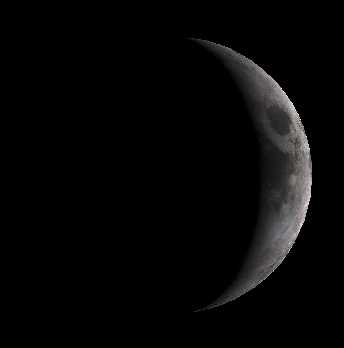
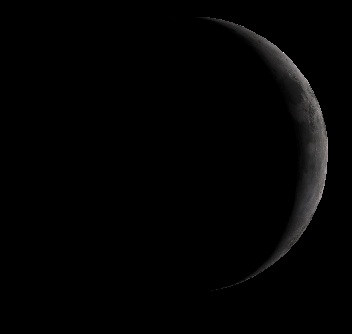
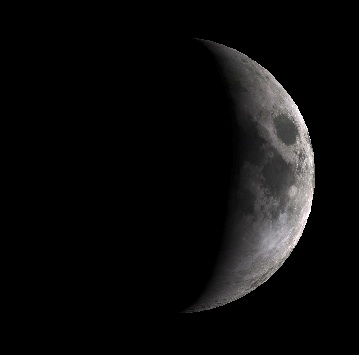
Last night was overcast.  There were absolutely no stars to steer by and only the faintest glimpse of the moon now and again. Our course was 060° or NE by E. We started the night at 4 knots, then the wind dropped to almost nil, until we were flopping around at 1.5 to 2 knots.

Sail Data

  • time:  2012-10-20 16:33 UTC/GMT (06:33 HST Oct 20)
  • position: 30 degrees 25.2 minutes S 154 degrees 20.9 minutes W [Miles from Tahiti: 937 = 814 nautical miles].
  • course: 060 degrees True, currently
  • speed: 4.0 knots
  • weather: currently clearing, 40 percent scattered cloud cover with some high cirrus and low cumulous clouds on the horizon
  • wind: SW 3-8 knots and slowly increasing
  • sea state: SW swell 8-10 feet, NW swell is 2-4 feet, and a wind chop of 1 feet and building
  • vessel and crew condition:  all ok (Faafaite also)

Education Data

  • Celestial Observations, Navigation Stars, Planets and Moon Phases:   During the 6 pm to 10 pm watch, we were able to steer mainly with the sails. The rig was balanced very nicely after we shook the reefs out of the main and mizzen sails and replaced the working jib with the genoa.  There were absolutely no stars to steer by and only the faintest glimpse of the moon now and again. During the 10 pm to 2 am, and the 2 am to 6 am watch, we also had stars to steer by, and very little to no wind.
  • Animal Life: None noted.
  • Sea Birds and Sea Life: None observed.
  • Marine Debris: None observed overnight.

Resources

Wayfinding and Astronomy

Weather

Sea Life/Canoe Life

Continue Reading

Hikianalia Report: October 19, 6:00 PM HST: in the Horse Latitudes, heading NE by E with stronger than expected winds

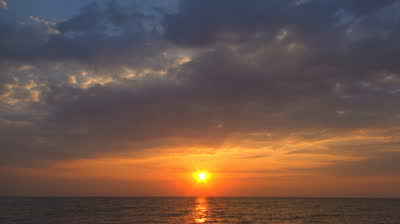
Hikianalia is still making good progress due to stronger than expected winds.  Backing winds (meaning “moving counterclockwise around the compass”) have allowed us to adjust our course about twenty degrees more northerly.  Forecasted wind shifts over the next several days look promising for our run up through the Australs to Tahiti – we hope they are accurate!  Both canoes are doing well and the crews are learning a lot in addition to enjoying the voyage.  We especially enjoyed a gorgeous sunset tonight, complete with green flash, with Faafaite silhouetted perfectly on the blazing orange Sun.

Sail Data

  • time:  2012-10-20 04:00 UTC/GMT (18:00 HST Oct 19)
  • position: 30 degrees 44.2 minutes S 154 degrees 52.7 minutes W
  • course: 055 degrees True (backing winds from NNW to NW are allowing us to pinch a little more northward, as we had hoped)
  • speed: 5 knots
  • weather: overcast, light rain
  • wind: backing to NW, 10 to 15 knots, comes and goes
  • sea state: NW swells 6 to 8 feet, SE swells 6 to 8 feet, NE swells 2 to 4 feet, wind chop N and NW
  • vessel and crew condition:  all ok (Faafaite also)

Education Data

  • Celestial Observations, Navigation Stars, Planets and Moon Phases:   Sun only.  Today, we again steered principally by the wind and swells.
  • Animal Life: None observed today.
  • Sea Birds and Sea Life: Few today.
  • Marine Debris: None seen today.

Resources

Wayfinding and Astronomy

Weather

Sea Life/Canoe Life

Continue Reading

Hikianalia Report: October 19, 6:00 AM HST: “heading north toward the Australs …”


Moving along well.  We are entering phase two of the voyage; we will start heading north toward the Australs (Tubuai Islands).

Sail Data

  • time: 2012-10-19 05:50 UTC/GMT (05:50 HST Oct 19)
  • position: 31 degrees 12.6 minutes S 156 degrees 03.3 minutes W
  • course: 070 degrees True through the night
  • speed: Average 7.5 knots
  • weather: clear half of the night,10 –2 watch, clouded with passing
  • cumulus clouds, air dry and cool
  • wind: NW 15 to 25 knots
  • sea state: SW swell diminished to 6-8 feet, NW swell is also 6-8 feet, and more of a northerly wind chop
  • vessel and crew condition: all ok (Faafaite also)

Education Data


  • Celestial Observations, Navigation Stars, Planets and Moon Phases:

Our heading for much of the night was Aina Koolau.  The 6 to 10 watch steered toward the east almost exclusively while facing back towards the west.  Most of our steering was done using the setting Moon and Lehuakona (Antares) in Kamakaunuiamaui (Scorpio).  When clouds obscured that part of the sky, we looked over the starboard beam and steered by Kealiiokonaikalewa (Canopus).

We also used the kū moon (see Hawaiian Lunar Month), which was shining bright for the beginning part of the night in the constellation Scorpio.  At times, clouds covered the moon, but the glow could still be seen on the water.

Click on Star Chart to Enlarge. (Sky Image from SkyGazer 4.5, Carina Software)

Orion was once again used as it rose for much of the 10pm-2am watch.

Patchy clouds kept covering our steering stars during the 2 am to 6 am watch, so we alternated between using Kamaile Mua and Kamaile Hope to the south, Venus to the east, and Aries to the north.

  • Animal Life: None noted.
  • Sea Birds and Sea Life: An albatross greeted the bow of the canoe at sunrise. Marine Debris: None observed overnight.

Resources

Wayfinding and Astronomy

Weather

Sea Life/Canoe Life

Continue Reading

Hikianalia Report: October 18, 6:00 PM HST: with better than expected winds, approaching 155° W

Click on the map to enlarge it. The farther east Hikianalia and Faafaite go, the better the point of sail in the southeast trade winds they will encounter after turning north toward Tahiti. (Click here for an explanation of point of sail.)

Hikianalia is making good progress due to stronger than expected winds.  We are again running parallel to the reference course, about 57 nautical miles south of that line.  We hope to reach our next phase line, 155 degrees West, tomorrow, where we will decide whether to turn north for Tubuai and Tahiti or continue eastward.  We will have to turn north at some point and face the possibility of lighter or contrary winds – the question is “when”?

Sail Data

  • time:: 2012-10-19 04:00 UTC/GMT (18:00 HST Oct 18)
  • position:  31 degrees 37.0 minutes S 157 degrees 31.4 minutes W
  • course: 075 degrees True (favorable wind shift has allowed us to parallel our reference course)
  • speed: 7.5 knots
  • weather: mostly clear, dry, cold, will be clear tonight for stars, local cumulus
  • wind: NW 10 to 15 knots
  • sea state: SW swells 10 feet (diminishing), NW swells 6 to 8 feet (building)
  • vessel and crew condition: all ok (Faafaite also)

Education Data

Determining the direction of ocean swells from celestial bodies allows the navigator to hold a course even when celestial bodies are not visible during the day. (See “Holding a Course“.)
  • Celestial Observations, Navigation Stars, Planets and Moon Phases: sun only.  Today, we again steered principally by the wind and swells.
  • Animal Life: None observed today.
  • Sea Birds and Sea Life: Albatross, the piebald shearwater-like bird and other hunting seabirds continue to fish near the canoe.
  • Marine Debris: None seen today.

Resources

Wayfinding and Astronomy

Weather

Sea Life/Canoe Life

Continue Reading

Questions from 4th graders at Kalaheo Elementary School on Kaua’i

Aloha to all the students and faculty and staff at Kalaheo Elementary School. My name is Chris Baird, and I grew up in Waimea.  My mom lives in Kalaheo.  I am also a teacher.  It is an honor to be in touch with you. In fact, I know some of your teachers: Ms.Lori and Mr. Clyde.

1.  What's it like to sail in that type of canoe?

It is a real honor to be sailing on Hikianalia.  There are 14 of us on the canoe.  It is a little different from our Hokulea.  It is has more modern features, but it is still a sailing canoe.  You need to get used to living in a small place with 13 other people.  We listen to a lot of stories and really get to know each other.

2.  What sights have you seen along the way?

This canoe was built in Auckland, New Zealand, so we got to fly to New Zealand and spend some time preparing for our voyage.  It was very cold and windy.  We had to bring warm clothes and bundle up.  Now that we are on the ocean, we see a lot of beautiful sunrises and sunsets.  We saw a huge Fin Whale that surfaced really close to the canoe, and we have seen common dolphins at night a couple times, and shark fins during the day.  We see a lot of seabirds.  At night we get to see millions of stars and constellations.  Clouds are used to determine which direction the wind will be coming from.

3.   What are some of the sailing supplies you brought with you?

We all packed A LOT of warm clothing.  We have sleeping bags.  We have raingear that hopefully keeps us dry.  We also brought boots and slippers.  Before we left, we loaded all our food on board.  The food for each day is packed in plastic tubs and stored below near our bunks. We also loaded 75, 5-gallon water containers that are spread throughout the hulls of the canoe.  We also have extra sails and ropes and anchors.

4.  What's the fastest speed of your canoe?

The fastest we have gone so far is between 16 and 17 knots.   The canoe can go faster.  Knots are a measurement used at sea, similar to miles per hour. Our speed is determined by the winds.  We have two electric motors to run propellers that are used when we leave and come into port.

5.   How do you catch fish? How do you cook it?

We set out hand lines with lures on them.  So far we have caught an Ono and a small Ahi.  We have propane burners that we cook on.  Gary is our cook, and he is the BEST!  Fresh fish is such a treat.  We have had fish soup and sashimi and fried fish.  Yummy!!!!

6.  What kinds of food do you eat?

We have a lot of soups, chowders, curries, rice, fruits and vegetables. We have taro, squashes, spaghetti and pasta.  Gary made musubis yesterday!!!  We have a lot of canned tuna and salmon.  We also have Oreos and pudding!!!  We drink water, Tang and coffee, tea and cocoa.

7.  What problems have you had on the boat?

We have been very fortunate so far and haven’t had any major problems. The wind has been really awesome so far.  The weather has been great.

8. How did you get picked to go on the voyage?

All of the crew has gone through a lot of training prior to sailing.  We have spent a lot of time in classroom studies, working during drydock and training sails.  The Captain selects most of the crew.  We are all honored to be here.

9. What do you sleep in?

On this canoe there are 14 bunks, with seven bunks in each hull. You need to climb down a ladder into the hull, change clothes and then climb up into your bunk.  The Captain sleeps in the Hale up on deck.

Thank you for your interest. Please send more questions.

Continue Reading

Hikianalia Report: October 18, 11:55 AM HST: good wind and speed, a welcoming pod of dolphins


Bruce was telling a story about dolphins he had seen on a different voyage.  Right after that and just as we were about to break into the 159° Longitude from the 160’s, a pod of dolphins appeared alongside the canoe.  A nice welcoming hō‘ailona (sign) …

Sail Data

  • time: 2012-10-18 16:05 UTC/GMT (06:05 HST Oct 18)
  • position: 31 degrees 59.4 minutes S 159 degrees 26.3 minutes W
  • course: 075 degrees True through the night
  • speed: 7.0 knots
  • weather: air dry and cold, beautiful
  • wind: NW 10 to 15 knots
  • sea state: SW swell down a bit to 10-15 feet, and a NW swell at 3-4 feet
  • vessel and crew condition: all ok (Faafaite also)

Education Data

  • Celestial Observations, Navigation Stars, Planets and Moon Phases:

The 6 to 10 watch steered by the setting Moon, Lehuakona (Antares) in Kamakaunuiamaui (Scorpio) and Kealiiokonaikalewa (Canopus).

From the 10 to 2 watch, most of our steering for the first few hours of the watch was done while facing back towards the west.  Our heading for the night was near the border of La/Aina Koolau.  We used the star Kaus Australis within the constellation Sagittarius keeping it down the middle of our canoe.  After a while, Bruce had us use the star Nunki, also in Sagittarius, keeping it in the middle, as the constellation began to set.  We then used the southern cross, (which we can no longer see the full constellation upside down anymore as we are heading more north) keeping it just to the aft of our beam for the rest of the watch. Orion was also in a perfect position at this time to steer by.

From 2 am to about 5 am, the sky steadily filled with clouds, opening up again just before sunrise.  We used Puana, then Regulus, and then Venus to the East, Kamaile Mua and Kamaile Hope to the South, Jupiter to the North, and K   hut to the West. The sun rose beautifully at the end of our watch, providing us with a clear mark as Venus began to fade.

  • Sea Birds and Sea Life:  At the end of the 10pm-2am watch, Bruce was telling a story about dolphins he had seen on a different voyage.  Right after that and just as we were about to break into the 159° Longitude from the 160’s, a pod of dolphins appeared alongside the canoe.  A nice welcoming hoailona. At the end of the 2 to 6 watch, a black seabird – perhaps a shearwater – crossed our bow, headed toward the sunrise.
  • Marine Debris: None observed overnight.

Resources

Continue Reading

October 17: Blog from David Komine / A Night to Remember

Going into our 9th day of sailing, we all have been blessed with a great crew and favorable conditions.  Everyone is finding their groove while under sail, as we all have acclimated to both our canoe and climate conditions.  What was once new and different is now familiar and routine.  The cold wind we only feel on the highest mountains at home is now the norm.

Our voyage started out with a mellow introduction as the winds and seas were very light, allowing us to get a gentle feel of Hikianalia.  The first few days were great, but the forecast was for a front to move in and change everything.

On day 5, conditions changed dramatically as the predicted front began to hammer away at us to the point where our sails were fully reefed or had to be dropped.  We were sailing at a reach to hold course, which was hard on Hiki.  The pounding built up all day and through the night.  As the hours passed, a banging and cracking noise we had never heard before got louder and louder to the point where it sounded like someone was pounding the hulls with a baseball bat and like beams were breaking apart.  There was an unspoken concern on everyone’s expression, but at 2 am there was nothing we could do about it.  The canoe was holding together, and no water was breaching the hulls.

The banging was so loud at our bunks that I went up to the captain’s hale on the deck and lay on the floor to try and get some rest, as my watch started at 0600 hours.  I needed sleep, and after 45 minutes I remembered I had a pair of earplugs in my gear bag.  I went back down to my bunk and found them, along with the Father Damien pendant my wife had given to me for luck and safe passage.  The thought of limping to Tahiti wore on me, but the earplugs did the trick as I fell asleep quickly after putting them in.

I went up on deck early to start my watch and waited for first light.  I wanted to see with my own eyes what was causing all the noise.  Visions of planks and line dragging in the water between the hulls crossed my mind, and I was willing to bet that was the problem.  I hooked my safety line onto the jack line and hung over the forward deck to get an upside down view of what I didn’t want to see.  What I saw was a total shock and surprise to me.

Nothing!  Absolutely nothing.

I hung there for about 5 minutes, expecting to see something slam against the hull, but it all looked rock solid.

After reporting back to Bruce and the crew what I saw, we came to the conclusion that the minute twisting and flexing of the new canoe’s iakos against the gunwales and deck planks caused a loud cracking and banging noise that is magnified within the hulls.  When we later sailed hard downwind, there was almost no noise at all.

It was a pleasant relief to all of us that Hikianalia was sound, and a reminder that the ocean can make any vessel speak clearly to you.

Continue Reading

Hikianalia Report: October 17, 6:00 AM HST: another starry night … with the Milky Way and Magellanic clouds clearly visible

Steering was stellar all night, by all watches. The 2 am to 6 am watch was very clear, with the Milky Way and Magellanic clouds clearly visible.

Magellanic clouds are bright patches appearing in the sky in the southern hemisphere. They are two irregular dwarf galaxies. (Image and text from Wikipedia.)

Sail Data

  • time: 2012-10-17 16:00 UTC/GMT (06:00 HST Oct 17)
  • position: 32 degrees 12.5 minutes S 161 degrees 56.0 minutes W
  • course: 090 degrees True through the night
  • speed: 4.0 knots
  • weather: air dry and cool
  • wind: SW 5 to 10 knots
  • sea state: swells from the SW built slowly to 15-20 feet
  • vessel and crew condition: all ok (Faafaite also)

Education Data:

  • Celestial Observations, Navigation Stars, Planets and Moon Phases:

Last night was the best opportunity to steer by the stars that the 6 to 10 pm watch has had on this voyage.  We have had mostly cloudy evenings, but last night was open and clear, especially behind us to Komohana (the west).  To our southwest were Kamakaunuiamaui (Scorpius), which currently surrounds the transient planet Mars, and Pimoe (Sagittarius).  To our northwest was the Navigator’s Triangle of Piraetea (Deneb), Keoe (Vega) and Humu (Altair).  We had so many stars to steer by, any course errors were clearly our own fault!  The Hilo moon was the merest possible sliver, but the dark side of the moon was clearly visible.  We had several long lasting, strong, bright shooting stars.  Kaleo Wong pointed out Corona Australis to us.

For the 10 pm to 2 am watch, our heading for the night was due east towards Hikina.  Canopus was on our port side to the south, and we used it off of one of our benches again.  Orion was used putting the belt on the side of the mast.  As clouds passed through, the glow of Jupiter on the water was extremely bright, so we used that for a while as well.

Finally the north pointers Sheratan and Metallah were kept on our beam when they stood upright indicating north.

“Sheratan and Metallah lined up above due north.” Sheratan is the second bright star from the top, above due north; Metallah is the relatively bright star below it, between Sharatan and the horizon. The brightest star in the graphic, just to the east (right) of north is Almach. (See Meridian Pointers to North)

The 2 am to 6 am watch started very clear, with the Milky Way and Magellanic clouds clearly visible. We kept the due east heading, with A‘a (Sirius) directly to the starboard of the mast.  After less than an hour, the clouds came in and swallowed the sky.

  • Animal Life: Nothing sighted overnight.
  • Sea Birds and Sea Life: None noted.
  • Marine Debris: None observed overnight.
  • Progress Report: The crew did really well.

Resources

Continue Reading