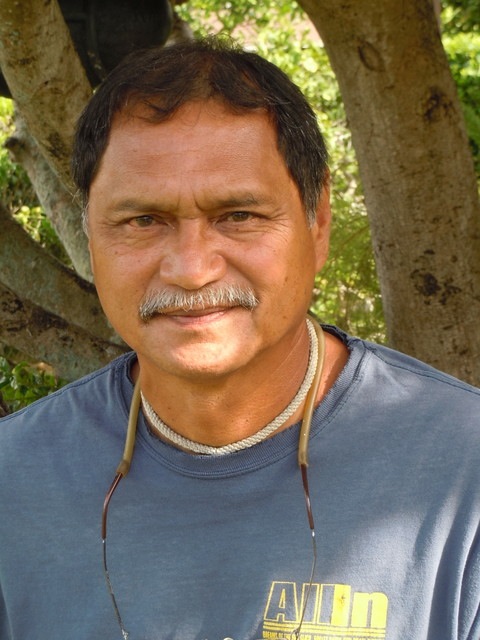
October 16: Blog from Kaleo Wong

Aloha hou mai ka moana nui a Kila,

Here we are about a thousand miles into our voyage, and the cold Aotearoa air is still accompanying us. For an outsider looking in, one would think it’s because we only gained about 4 degrees of latitude from where we started. However, after further thought and insight it becomes apparent that there is in fact another possibility. It could be the mana of Tongariro, the kii/kupuna gifted Hikianalia by Ngati Tuwharetoa, and/or Aotearoa itself and the Ngati Tuwharetoa people traveling with us in wind form, ensuring that Tongariro is well cared for and maintains a physical connection to his home. This type of traveling wind is not uncommon for us Hawaiians, as this is yet another affirmation of our mookuauhau and our moolelo including Laamaomao, Keaomelemele, Hiiaka-i-ka-poli-o-pele, and the moolelo of Ka Makani Kaili Aloha (the love snatching wind) of Kipahulu, Maui, just to name a few.

Either way, the wind and the air is chilly, similar to the top of our tall sacred mountain Mauna o Wakea, back home in Hawaii. For the general reader of this blog, it may be best to communicate how the air feels through describing what clothes we wear to stay warm. Both day and night, we are covered from head to toe. On an average day, most people have at least 2 long sleeve layers on top, 2 long pants on bottom, a beanie, socks, and boots. By night, we normally up the layers to 4 layers on top, and 3 on bottom, beanie, socks, boots, gloves, scarf, etc. Even under clear blue skies, as today, the air and wind are cold, keeping us wrapped up in our warm clothes. We have been fortunate that we have not yet gone thru any substantial rain squalls that would make us even colder.

Gary Yuen, our chef extraordinaire, is a big help keeping us warm through his remarkable soups, curries, and whatever creations he comes up with. Coffee and hot cocoa put us through the frosty nights, as we warm our souls with old stories, jokes, and good conversation.
Continue Reading

Hikianalia Report: October 16, 7:00 PM HST, keep sailing east or head northeast toward Tubuai?

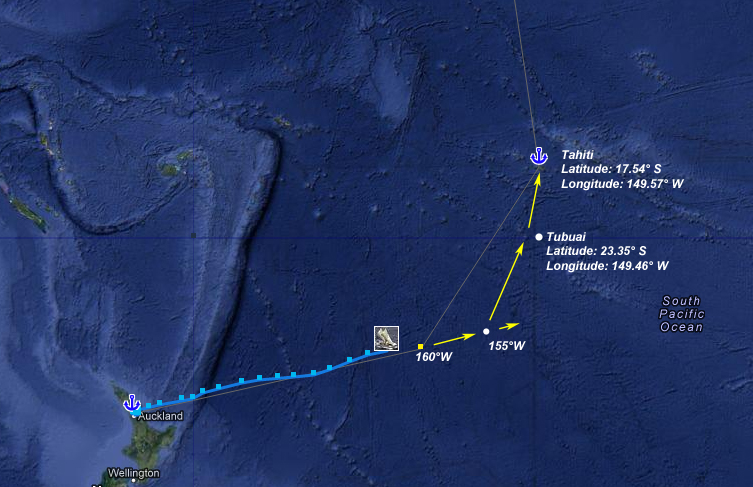
Phase one of our voyage to Tahiti will end at longitude 160 degrees west, which we are rapidly approaching. Phase two is reaching more northward to the island of Tubuai. But the current weather forecasts indicate that we should press on eastward until about longitude 155 degrees west. When we get there, Captain and navigator Bruce Blankenfeld will make a serious assessment of whether to bear for Tubuai or gain more easting. Both canoes and crews are thriving under unbelievably good sailing conditions.

More easting with the westerlies now will make it easier for the canoes to reach Tahiti in the easterly winds to the north. (Click on the image to enlarge it. From the Hikianalia Tracking Map.

Sail Data

  • time: 2012-10-17 05:00 UTC/GMT (19:00 HST Oct 16)
  • position: 32 degrees 12.1 minutes S 162 degrees 57.9 minutes W
  • course: 090 degrees True (backing winds have driven us down from the reference course a little)
  • speed: 5 to 6  knots
  • weather: dry, cold, will be clear tonight for stars, mid-level clouds burning off, local cumulus
  • wind: south of west, 10 to 15 knots
  • sea state: SW swells building to 8 to 10 feet, W swells 8 to 10 feet, N swells down to 2 to 3 feet
  • vessel and crew condition:  all ok (Faafaite also)

Education Data:

  • Celestial Observations, Navigation Stars, Planets and Moon Phases: sun only.  Today, we again steered principally by the wind.  The wind backed south of west, causing our course to drop down to due east. This is fine as we need to stay south to avoid a large high pressure area to our north that could slow us dramatically or even stall us out.
  • Animal Life: Nothing to report today.
  • Sea Birds and Sea Life: Albatross, the beautiful piebald shearwater-like bird and other hunting seabirds continue to cruise in arcs around the canoe.
  • Marine Debris: None seen today.

Resources

Continue Reading

Hikianalia Report: October 16, 6:00 AM HST, clear skies, starry night …

With clear skies and good stars, the steersmen had golden opportunities to practice holding a course and everyone is making big improvements daily.  We had all the stars and the planets available.  The canoe was surfing at top speeds of 15 knots on a regular basis and doing really well. Her performance in a following sea is kindly to a large degree.

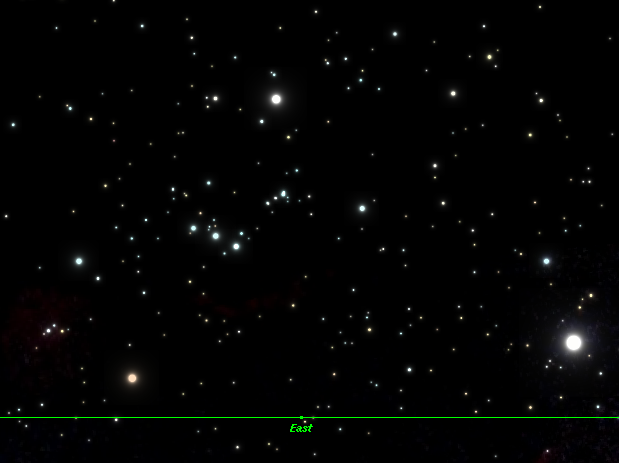
Orion and Sirius Rising in the East

Sail Data

  • time: 2012-10-16 16:00 UTC/GMT (06:00 HST Oct 16)
  • position: 32 degrees 28.1 minutes S 164 degrees 37.8 minutes W
  • course: 075 degrees True through the night
  • speed: 8.0 knots
  • weather: clear most of the night with passing cumulous clouds, air dry and cool
  • wind: W 10 to 20 knots
  • sea state: W swell 8 to 10 feet, NW swell 6 to 8 feet, N swell 4 to 6 feet
  • vessel and crew condition: all ok (Faafaite also)

Education Data:

  •  Lots of stars throughout the night making it easy to steer.  Our heading for the night was the border of Aina/La Koolau.  Early on, Alpha and Beta centauri were used off of our man overboard pole. Then we used the star Menkar off the port manu and Canopus (Ke alii o kona I ka lewa) off the front of the bench on the starboard side.  As the 10pm-2am watch went on, Hamal was used off of one of the shrouds and different stars were used off the port manu and also the mast as the sky moved in a northerly direction.  Those stars included Makalii, Kapuahi (Aldeberan), the planet Jupiter, and finally all the stars in the constellation Orion. From 2 to 6 am, we steered by Puana, A‘a Kahiki, Regulus, Venus to the east; Kamaile Mua and Kamaile Hope to the south; Fomalhaut and Grus in the west; and Jupiter and Makali‘i to the north.
  • Animal Life: A squid was found on the back ama side of canoe.
  • Sea Birds and Sea Life: Fewer are seen this far out to sea in this area.
  • Marine Debris: None observed overnight.

Resources

Continue Reading

Hikianalia Report: October 15, 7:15 PM HST, lightening winds, diminishing seas, warmer night, beautiful sunset … and outrageous brownies

Today was a very nice day weather-wise, except for a brief light rain squall.  The sun was out all day, but as it was not clear, it never got truly warm.  There is still a cold nip to the air, but right now it’s warmer than last night.  We’ve been reeling off the eastward miles under these excellent conditions, which are a real blessing and a gift.  We plan to carry on through the night with both the main and the mizzen sails full open and flying the genoa.

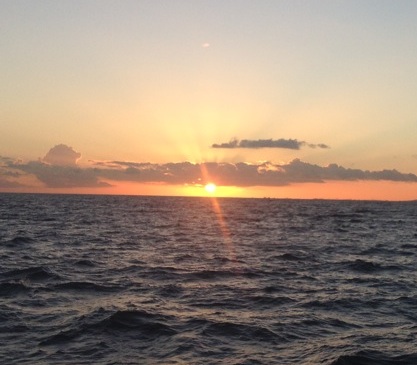
The seas are lying down slowly all around us and the sailing and steering are very comfortable. The skies to the south and west are clear already and there’s a beautiful horizon and sunset all around. Sadly, those lovely sights foretell lessening winds and potentially slower progress. Special thanks to Lita Blankenfeld for the outrageous brownies – the crew is still smacking their lips!  Mahalo nui!

As Hikianalia and Faafaite sail  into the subtropical high pressure belt around 30° S, the winds are lightening. The belt, nicknamed the Horse Latitudes and the calms are Capricorn in the southern hemisphere, average light winds mixed with calm and warm, dry weather.

Sail Data

  • time: 2012-10-16 05:15 UTC/GMT (19:15 HST Oct 15)
  • position: 32 degrees 59.0 minutes S 166 degrees 17.0 minutes W
  • course: 075 degrees True
  • speed: 8.5  knots
  • weather: mostly clear, with thin mid-level veil of clouds
  • wind: west, 10 to 20 knots, has lightened through the afternoon
  • sea state: sea has diminished to W swells 6 to 8 feet, NW swells 4 to 6 feet, N swells 4 to 6 feet
  • vessel and crew condition:  all ok (Faafaite also)

Education Data:

  •  Celestial Observations, Navigation Stars, Planets and Moon Phases: sun only.  Today, we again steered principally by the wind.  The wind backed to the west a little allowing us to return to our desired course of 075 degrees True.
  • Animal Life: Nothing after the wonderful fin whale encounter reported this morning.
  • Sea Birds and Sea Life: An albatross is soaring around near us as this is being typed.
  • Marine Debris: None seen today.

Resources

Continue Reading

Hikianalia Report: October 15, 6:30 AM HST, a large baleen whale spent several minutes cruising with Hikianalia

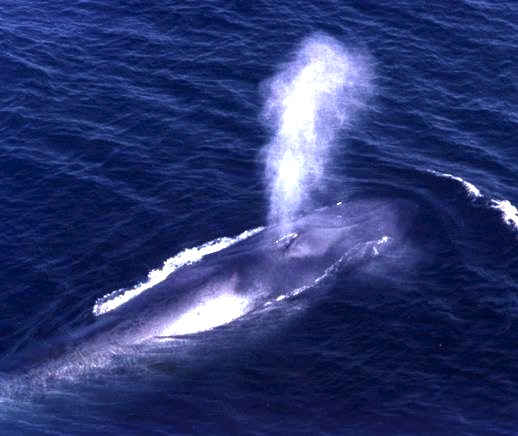
The highlight of the morning was a large baleen whale that spent several minutes cruising with Hikianalia.  It first showed itself by a “blow” off the starboard bow, followed by a great “tail shot” as it dove only about 10 meters in front of the bow.  Then it (or a companion?) seemed to tail us off the port quarter for a while, showing several nice “blows” near the stern.


We made a steady 6.5 knots through the night.  At 7 am, we raised the mizzen sail, so both big sails are fully open – no reefs are in place.  And we raised our largest foresail, the genoa.  We changed our course to 060 degrees True and are making 9 to 10 knots.  The large swells on our stern are making the helmsman’s job on the steering hoe particularly critical.  He must keep the genoa on the verge of “luffing” (flopping due to not being full of wind) to keep us on course.  But, he must also be aware of large swells called “paddle-snappers”.  He (or she) must get the hoe up out of the water when the powerful swell reaches the canoe and then dig it quickly back in to stay on course.  It is a real team effort with steersmen switching out at intervals and, when not on the helm, watching for “paddle-snappers” off the stern so as to warn, “Paddle up.”

Sail Data

  • time: 2012-10-15 16:30 UTC/GMT (06:30 HST Oct 15)
  • position: 33 degrees 36.2 minutes S 168 degrees 02.0 minutes W
  • course: 075 degrees True through the night, change to 060 degrees True at sunrise
  • speed: 9.0 knots
  • weather: partially overcast, medium and high clouds, patches trying to clear
  • wind: W 10 to 20 knots
  • sea state: W swell 8 to 10 feet, NW swell 6 to 8 feet, N swell 4 to 6 feet
  • vessel and crew condition: all ok (Faafaite also)

Education Data:

  • Celestial Observations, Navigation Stars, Planets and Moon Phases:  To start off the night, we headed in the direction of La Koolau.  On the 6 pm to 10 pm watch, no stars were useful, so we steered primarily by the wind and swells, but also were aided by the Global Positioning System (GPS).  This voyage is being navigated using a combination of traditional and modern methods.  There are several concerns that cause us to supplement traditional with modern techniques:  we are delivering a new vessel, crew members must return to jobs within a reasonable time and there is no primary objective to prove academic theories on this particular trip.  We are doing lots of star training, but when no stars are available, we do use GPS to aid in keeping the best course. The 10 pm – 2 am watch had more stars to work with.  Antares (Lehua Kona) was used early in the watch, keeping it on one of the shrouds.  Alpha Centauri (Kamaile Hope) was also used on the clew of the mizzen for a short while.    At our current position of 33 degrees south, Jupiter rises at a steep angle heading northward, so we used it on various points off of our port side when it rose later in the watch.  Orion and the stars of Ka Hei Hei O Na Keiki was the last constellation we used over the last hour of the watch, keeping it mostly in front of us or a little to the left of the mast.  On the 2 am to 6 am watch, we continued to use GPS to confirm our heading, because the clouds continued to fill the sky. We were able to use Puana at the start of the watch to keep us headed East, and later we alternated between Jupiter on the port (to the North) and Kamaile Nui and Kamaile Hope (Alpha and Beta Centauri) on the starboard (to the South).  By the last quarter of the watch, only Jupiter to the North continued to occasionally be visible.
  • Animal Life:  Another tiny ika (squid) was found on deck this morning.  But the highlight of the morning was a large baleen whale that spent several minutes cruising with Hikianalia.  It first showed itself by a “blow” off the starboard bow, followed by a great “tail shot” as it dove only about 10 meters in front of the bow.  Then it (or a companion?) seemed to tail us off the port quarter for a while, showing several nice “blows” near the stern.
  •  Sea Birds and Sea Life: Fewer are seen this far out to sea in this area.  There is one beautiful bird, a great low-level soarer that we would love to identify.  It is a striking piebald black and white on both the top and under sides.  It looks like a type of shearwater.
  • Marine Debris: None observed overnight.

Resources

Continue Reading

Hikianalia Report: October 14, 7:20 PM HST, Sailing “wing on wing,” directly downwind at 7-11 knots

Today, we spent most of the day “wing on wing”, meaning that our two large sails, the main and the mizzen, were deployed one to each side, like the wings of a butterfly. This is a beautiful point of sail for going directly downwind, but it requires great concentration and touch by the steersmen. Many of our crew had never experienced this skill before, so it was a great training and learning opportunity. This “dead downhill” run let us reel off mile after mile to the east at good speed, 7 to 11 knots all day. Once, for a few seconds, we even surfed at 14 knots! At midday, the wind was about 25 knots, but it has slackened to about 15 knots at sunset.

August 5, 2011: Vaka Moana sailing Wing on Wing into San Francisco Bay
© 2012 Mark Hofmann / Oceanic Nature Film Productions, 2011. From Latitude 38 blog.

Hikianalia’s construction settling pains seem to have mostly sorted themselves out and there is much less creaking, groaning and popping to disturb off-duty slumberers.  It was nice, easy sailing all day – the sun was warm but the wind had a definite nip to it.  Although the wind at our position is westerly, it is part of a low-pressure system, which circulates in a clockwise direction in the Southern Hemisphere, unlike at home.  So, much of the air passing over the canoe originated in the Antarctic.  No one is freezing, but lots of layering of clothing is going on.

Faafaite is sailing off to our port (left side).  We have developed into a nice pattern of sailing as a team, there to support each other.

Sail Data

  • time: 2012-10-15 05:20 UTC/GMT (19:20 HST Oct 14)
  • position: 33 degrees 55.5 minutes S 169 degrees 22.9 minutes W
  • course: 075 degrees True
  • speed: 7.5  knots
  • weather: mostly overcast, mid-level veil (remains of a low pressure system south of us), light rain squalls nearby – not threatening
  • wind: west, 15 to 20 knots, has lightened through the afternoon
  • sea state: W swells 8 to 12 feet, SW swells 8 to12 feet, NW swells 6 to 8 feet
  • vessel and crew condition:  all ok (Faafaite also)

Education Data:

  • Celestial Observations, Navigation Stars, Planets and Moon Phases: sun only.  Today, we steered principally by the wind, which determined our course. Because of the wind, our best course was 090 degrees True rather than 075 degrees True, which we had been holding for days.
  • Animal Life: None observed.  No fish today.
  • Sea Birds and Sea Life: Only a few birds today, some flying and some bobbing around on the sea.

Resources

Continue Reading

October 15: Blog from Heidi Kai Guth aboard Hikianalia (October 14, 2012)

We are starting to get into our sailing rhythms, some of which are weather dependent (when to shower and do laundry — both with buckets of seawater) and some of which are watch dependent.

Our crew has been grouped into three watches of four people each who are assigned to be on deck and responsible during the morning and evening hours of 6-10, 10-2, and 2-6. You sleep when you can and work when you are up, whether it is your watch or not… helping with changing or reefing sails, prepping for meals, cleaning, etc.

Those of us who have voyaged before recognize the rhythms in life at sea, and also find differences between Hikianalia and Hōkūle‘a, as well as in the waters of the southern Pacific.

Some of the differences are superficial, such as the below-deck, flushable toilet in the starboard stern of Hikianalia (instead of the directly overboard method of Hōkūle‘a) and the below-deck galley in the port stern of Hikianalia (instead of the on-deck galley box of Hōkūle‘a).

Some differences are literally deeper, such as the bunks that are in the hulls, but also below deck on Hikianalia. You have to open a hatch cover, climb down stairs and then climb up to a bunk. When the hatch covers are all closed, the holds are pitch black and sound like an underwater cave. Sleeping to the sound of the ocean rushing past your bunk is the same, but Hikianalia’s bunks are also sealed up top, instead of covered by canvas, so one can hear the ocean trickling above one’s head as well. Many of us have reached up, expecting to find leaks pouring in, but all remains dry.

Another new sound from within the bunks is that of the dagger boards thrumming as they help us hold our course, instead of Hōkūle‘a’s side sweeps. The vibrations magnify the sound and feel of a surfboard’s skegs gripping a wave.

What’s outside the hulls is different for most of us as well (although we welcomed a familiar albacore for dinner last night).

An occasional albatross will dip its wings as it soars around and past us. Small groups of new-to-us seabirds sit in groups or alone, bobbing on the swells, sometimes dipping their beaks to snack from schools of little fish below them.

We’ve seen some floating seaweed patches, and a mysterious series of yellow foam. We started seeing the lines of foam a couple days out of Auckland. Sometimes they were in long wind lines and sometimes in big, solitary patches.  After a couple days, the foam became more constant, and we decided to investigate.

One person would act as a spotter from about mid-canoe, and another person would be in the stern with one of our trusty buckets with a long, knotted rope tied as a handle. When the spotter would call out and point, the bucket handler would toss out the bucket trying to scoop some of the foam. We finally captured some and found it not to be debris or current lines of foam, but floating rocks. They were bobbing lines of gray pumice that had been yellowed by algae. One nickel-sized rock carried a live barnacle and another batch (ranging from pea- to quarter-sized) included a half-inch-long, green shrimp.

We had read about the underwater volcano that had erupted in the Kermadecs a couple months ago, spewing pumice to the ocean’s surface, and apparently we had happened upon some of that volcanic debris that had floated approximately 200 miles south to our little canoe.

How wonderful to find this ocean still defined by nature instead of by human debris: floating rocks and soaring albatrosses.

As Maka says, the 14 of us are so fortunate to be the ones out of the entire planet’s population given this opportunity to partake in Hikianalia’s maiden voyage. Mahalo nui loa for this gift.

Continue Reading

Hikianalia Report: October 14, 6:44 AM HST, smooth sailing, gentle steering, settling in to Hikianalia

With the lighter winds and seas settling, it was a night of smooth sailing, with relatively easy, gentle steering.  We are making good progress on a good line to the east.  We are “latitude sailing” due east to set ourselves up for the final reach northward toward Tubuai and Tahiti.  If we tried to make a direct course for Tahiti, we would risk entering the center of a high-pressure area to our north that would certainly slow us, and might becalm us completely for some time.

At this latitude, the water and air are certainly cooler than the tropics we are used to, but it is manageable, moreso because we have had warmer northerly and westerly winds.  Should southerlies bring cold Antarctic air our way, even more layers of clothing would be required.  For the moment, we are all cool but fine.  We can see a band of weather approaching from the rear (Komohana or west) associated with the passing of a front and the first small rain squall just passed.

Salthouse Boat Builders delivered a fine, well-built vessel, but, the crew is enjoying our chance to customize her during this voyage.  Using PVS’ unique experience voyaging over the past 37 years, we are able to tailor Hikianalia to our operations.  The crew is constantly making little changes and improvements, mostly for safety, but also to make her user-friendlier.  Handholds have been added at strategic points.  Cleats and rings have been moved out of walkways.  Reflective tape has been added in front of toe-stubbers and drop-offs for night safety.  We are moving stowage to improve balance.  All of this activity reflects the  crew’s desire to learn and to be active participants.  We all come out here seeking to learn and experience this wonderful opportunity.  The Captain has said that everyone is standing watches well.  Techniques, especially steering, are improving day by day.

It is appropriate to remember that there are 14 lucky persons on board sailing, but it took the efforts of hundreds to enable and support the voyage.  One particular segment of the larger crew back home spent well over a year planning the logistics – especially the food plan – that are so vital to any voyage.  They developed a food plan based on nutritional value, stowability and weight, shelf life, etc.  The task was not easy and they did a remarkable job. So did those members of the crew who took on the kuleana of last-minute provisioning in Aotearoa, prepping and stowing the galley under the leadership of watch captain Kealoha Hoe.

Most of our food is dried, with some canned goods.  We leave port with some fresh produce, which lasts, according to the item, from two weeks to the whole voyage.  The last link in the food chain is the cook.  We are lucky to have long-time Hokule’a sailor and cook, Gary Yuen, handling the cooking for this crew.  Imagine preparing three meals a day, plus snacks, for 14 hungry sailors, in a rocking-rolling-bucking, closet-sized enclosure. We all say Gary is the most important member of the crew!

Gary

All of this is the perfect example of the old saying, “It takes an ahupua’a to launch a canoe”, remaining true today.

Launching Hikianalia in Aotearoa and sailing her home has also afforded us an opportunity to test and learn procedures that will be challenging during the Worldwide Voyage.  We will be visiting many countries unfamiliar to us. Their laws and regulations will vary greatly regarding biosecurity of what can be brought into their countries.  Customs, immigration, air travel, lodging, transportation, reprovisioning – all on a scope we have never encountered before – are going to be challenging and require the efforts of many back home.

Another wonderful learning opportunity on this voyage is the presence aboard of Magnus Danbolt. Magnus has been associated with the Te Mana O Te Moana (TMTM) voyage for the past three years. Their voyage was carried out by seven “vakas”, as they called them, very similar to Hikianalia. They traveled between 30 to 40,000 nautical miles, a remarkable distance in such a short span of years. Magnus was captain of Hine Moana and tasked with coordinating the fleet of seven vessels, therefore, their “admiral.”

It is safe to say no one on Earth knows more about sailing this family of Salthouse vaka moana than Magnus.  It has long been a mark of good seamanship and deep-sea voyaging to seek local knowledge when entering unfamiliar waters.  That’s the role Magnus is fulfilling for us.  He is invaluable in answering all our questions and providing us with lessons learned from the TMTM voyage.  In addition, Magnus is an unbelievable sailor and mariner, a trained and experienced marine biologist (specializing in cetaceans), a complete gentleman and one of the nicest people you could hope to meet.  It is a wonderful gift to have him aboard.

Sail Data

  • time: 2012-10-14 16:44 UTC/GMT (06:44 HST Oct 14)
  • position: 34 degrees 07.3 minutes S 171 degrees 07.6 minutes W
  • course: 090 degrees True
  • speed: 7.0 knots
  • weather: mostly low overcast, patches trying to clear; light squalls in the area
  • wind: N of W, 15 to 20 knots
  • sea state: NW swell 6 to 8 feet, W swell 4 to 6 feet, NE swell 3 to 4 feet
  • vessel and crew condition: all ok (Faafaite also)

Education Data:

  • Celestial Observations, Navigation Stars, Planets and Moon Phases: To help keep our course on Hikina (east), the 6 pm to10 pm watch steered by keeping Hanaiakamalama (the Southern Cross) and Kamailehope and Kamailemua (Alpha and Beta Centauri) on the back edge of the mizzen boom.  The 10 pm-2 am watch, used various stars throughout the night.  The main stars and constellations used were Hanaiakamalama as it pointed straight up and down showing us south. Kakuhihewa (Scheat) and Keawe (Markab), part of Ka Lupe O Kawelo (the great square of Pegasus), were to our north and showed us north when they pointed straight up and down.  We also used the other two main stars in Ka Lupe O Kawelo, Manokalanipo (Alpheratz) and Pi’ilani (Algenib).  As Orion (in Ka Hei Hei O Na Keiki) was rising, we used Mintaka and most of the whole constellation to maintain course as clouds covered the sky from time to time.  The 2 –6 am watch used those same stars as well as A’a (Sirius) and the planet Jupiter.
  • Animal Life:  A tiny ika (squid) was found on deck this morning.
  • Sea Birds and Sea Life: Fewer are seen this far out to sea in this area.
  • Marine Debris: None observed overnight.

Resources

Continue Reading