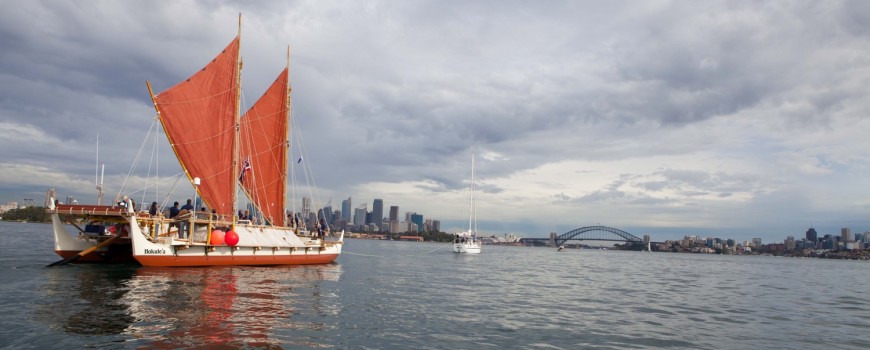
Crew Blog | Michelle Knoetgen: A Taste of Voyaging

Steering Hikianalia by a blue moon which lit up the entire Friday night sky, we pounded across the Kaʻiwi Channel through winds recorded at 35-45 knots. Hikianalia was rocking upwind, with at least half of the crew experiencing some form of seasickness. “That’s about as rough as it gets,” said Captain Bob Perkins. As a new crew, we learned to mālama (care for) one another and revere nature as our guide.

The crew for this sail was composed of students of voyaging who ranged in age from college freshman to seasoned instructors, led by experienced PVS crewmembers Captain Bob Perkins (Director of METC), Watch Captains Adam Jenkins, Kekaimalu Lee, and Ben Dumaran Jr., and the wisdom of Keli Takenaga and Darienne Kaʻimi Dey.

Kekaimalu Lee and Darienne Dey, both students of traditional Polynesian navigation, helped the crew locate Lānaʻi, but the strong winds kept us from being able to anchor. After hours of tacking, Captain Bob made the call to head back to Oʻahu, calmly reporting, “The winds aren’t with us.” It was a difficult decision to make since the island was in sight all day—we were so close—but safety is always the primary concern and Captain Bob did not want to risk dropping anchor in ʻi’s waters after dark. We put into practice the mantra, “the canoe is your mother; the captain is your father” and trusted the wisdom of both.

The sailors were split up into three watches: 10-2; 2-6; and 6-10 (A.M. and P.M.). As a member of the 6-10 watch, a highlight for me was the watch after Captain Bob made the call to turn homeward. Hikianalia picked up a nice wind; we swiftly sailed away from the cliffs of Lānaʻi, past Molokai, and back into the Channel. We were treated to a pink, orange, and purple sunset on the ocean horizon, which gave way to stars peering through the sky in familiar formations, including Hokupaʻa (North Star), as the nearly full moon glowed yellow-orange behind us.

According to Kalikolehua Lance, a senior at the University of Hawaiʻi at Mānoa majoring in both Meteorology and Hawaiian Language, we were primarily heading in the house of the star compass ‘Āina Hoʻolua, where constellations such as Na Kuhikuhi (The Pointers) could direct our course. Although Saturday’s moon was waning, it was still bright and enormous, so the 6-10 watch used the moon to steer until we spotted Makapuʻu Lighthouse off of the southern point of Oʻahu.

Captain Bob made the call for “all hands on deck” around midnight on Saturday when we anchored in Waikīkī. After successfully anchoring, most of the crew was then able to get some rest. Sunday morning was productive with three hours of cleaning the canoe and talking story while waiting off-shore for a tow into Keehi Channel. We were greeted by Kānehunamoku Voyaging Academy’s Ilima Choy, who paddled up alongside Hikianalia and welcomed us with oli.

This hopeful group of voyagers-in-training will continue to spread the message of mālama honua through community and educational outreach wherever the wind takes us.


Please help keep us sailing for future generations. All contributions make a difference for our voyage. Mahalo nui loa!

Continue Reading

Crew Blog | Chad Wiggins: The romance of sailing is gone

The Polynesian voyaging canoe Hikianalia is on a journey to the Papahānaumokuākea Marine National Monument in the Northwestern Hawaiian Islands. Crewmembers will be sending frequent updates so that educators and students can track her progress in conjunction with the Worldwide Voyage Tracking Map


“The romance of sailing is gone.” Those words, our captain and navigator Kaleo Wong said, are what “Uncle” Bruce Blankenfeld had shared with his crew during a particularly difficult stretch of seas. Kaleo imparted them to us, as another crew dealing with one situation for which even the most weatherly sailing ships are inadequately designed – no wind.

The sixteen of us have been becalmed for 24 hours, ghosting on an occasional breath of air and a favorable current for a rendezvous with the National Oceanic and Atmospheric Administration (NOAA) research ship Searcher off Lehua Island near Ni‘ihau.

We are sailing on Hikianalia as a part of the Main Hawaiian Islands voyage through a partnership between the Polynesian Voyaging Society, The Nature Conservancy, Office of Hawaiian Affairs, ʻOiwi Television, and NOAA with community leaders, crew, and scientists.

Behind us, twenty-five miles of blue culminates in the valleys of Makua, Makaha, and Wai‘anae. Three hundred miles ahead lays Nihoa, an uninhabited island that is part of Papahānaumokuākea Marine National Monument – a World Heritage site encompassing 140,000 square miles of ocean. Nihoa has some of the most powerful and significant spiritual connections in the Pacific as well as natural treasures including coral reefs teeming with fish where man is just another link in the food chain, surrounded by marine predators and thousands of nesting seabirds.

For now, we can only imagine Nihoa rising from the horizon, as we gaze over the rail of Hikianalia at floating plankton and jellyfish placidly bobbing on the glassy sea. In eleven days, some of these same jellies will wash ashore at Waikiki, following their inevitable lunar rhythm. Like them, we are bound to return in a week and half – with or without the data from Nihoa we are seeking to record.

For a scientist who studies nature, it is humbling to be fully at her mercy. Although time to think and write these words is bought at a cost, Kaleo reminds us of the concept of hoʻomanawanui, “patience,” or, literally, to “make more time” – to commit to something for the long term. For our friends and family and careers and obligations and the things that make our heart sing we are constantly making time, but in this moment of rare calm I find a deeper meaning in the quiet reflection we find in this rare and truly calm weather in the middle of a typically rough open ocean channel between O‘ahu and Kaua‘i. We know our intended destination.

We are trained, able-bodied, and capable, but without wind we cannot sail. But we know our destination and our purpose and our navigator knows the sea and sky so well that, when the wind blows, we can reach her – even if she blows against us. Sometimes life is like that. We can tolerate and accept situations that are not aligned with our vision, until something comes and tests our resolve. At those times we may move quickly toward our destination, or we may chart a new course, or if we are not prepared we may be lost.

We strive to care for nature in Hawai‘i because we love her – so that we can know her forever – see her, feel her, hear, smell, and taste her – connect with her. Our journey is to mālama, to care for what we have been given, and unlike the small crew of this canoe dancing gently in a glassy sea, we are all on this journey together to care for our home on the land that rises from the deep.

Continue Reading

Hikianalia Homecoming: Update #3 – Arrival Plans

Update #3:  The arrival ceremony  has been confirmed for 5 p.m. Tuesday, June 16 – public invited. 

Hikianalia is nearing home shores after over a year of sailing throughout the Pacific Ocean. Crewmembers are expected to arrive in Honolulu on Tuesday, June 16 weather dependent. The public is invited to help celebrate the return of crewmembers, which include apprentice navigators who are using traditional non-instrument wayfinding techniques to guide Hikianalia home.

Hikianalia departed 21 days ago from Tahiti, coming through the doldrums to a critical juncture for these young apprentice navigators. Austin Kino, Jason Patterson and Kekaimalu Lee will be called upon by their teachers, including the leg’s lead navigator Cat Fuller, to make a series of crucial determinations in the next few days.

“Last night, we had a really clear night. We were able to measure the Southern Cross and Hokupaʻa (North Star), and we came to the consensus that we were right about 18°-18.5° North latitude, which would put us in the latitude around South Point (Hawaii Island). So we feel like we are in Hawaiian waters,” said Patterson.

“The decision that we are faced with today is when to make our turn to go straight west and to go looking for the islands. We have a couple of really skilled crewmembers onboard like Uncle Snake Ah Hee who knows what to look for and can teach us what to look for to search for the islands.”

The homecoming celebration is planned for Tuesday, June 16 at 5 p.m.* at the Marine Education and Training Center at 10 Sand Island Parkway, Honolulu. (* Note that the expected arrival date continues to be weather dependent and attendees are urged to follow the tracking map on Hokulea.com or follow us on social media @hokuleawwv for the latest updates).

Hikianalia is returning home to Hawai‘i to bring the education promise of the voyage back to the local community. Hikianalia will sail throughout the state, hosted by the leaders of the ‘ohana wa‘a (voyaging community) on each neighbor island, to provide experiential learning opportunities to teachers and students over the course of the next year. Hikianalia will then sail the west coast of the United States before reuniting with Hōkūleʻa in South America to finish the worldwide voyage together.

To track the progress of Hikianalia in her final days before reaching Honolulu, visit: www.hokulea.com/track-the-voyage


Please help keep us sailing for future generations. All contributions make a difference for our voyage. Mahalo nui loa!
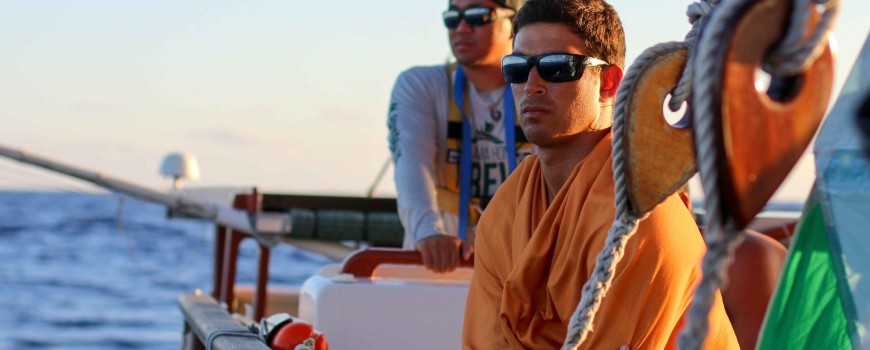

A New Generation of Navigators Pulls Hawai‘i from the Sea

As the sun began to light the sky this morning, a faint outline of Hawai‘i’s archipelago rose from the sea as Hikianalia approached from the Southeast after sunset last night. This land sighting holds many meanings for the three apprentice navigators aboard who have been applying their knowledge of traditional non-instrument navigation to guide Hikianalia home from Tahiti. It carries the elation of homecoming, relief from the rigor and responsibly of navigating, and a coming of age where years of preparation are met with the challenges of the open ocean.

“So far, this navigational experience has been quite challenging,” said Austin Kino, who has been sailing with PVS for 10 years, as he stood on Hikianalia’s bow last week enveloped by the grey cloud cover of the doldrums. “Nature is not giving us the clues that sometimes we need.” The band of calm winds and heavy cloud cover near the equator, dubbed the doldrums by sailors, is notorious for stalling voyages.

Through this area, Austin and his fellow apprentice navigators Kekaimalu Lee and Jason Patterson had to rely on their observation of the ocean swells for direction. The three of them also drew on the depth of knowledge held by the experienced crewmembers aboard, including the leg’s lead navigator Cat Fuller.

“Some days we have no sun, and no moon to navigate by and no stars. We got a little bit lost and our confidence was down,” said Kekaimalu who has been dedicated to teaching voyaging to new students and crewmembers back in Honolulu. “So when the sun finally came out, and we finally started going in the right direction it felt really good.” Despite the challenges this voyage has posed to them, the three apprentice navigators remained patient, positive and humble.

A few days ago, they emerged from the doldrums heading north.

The pivotal moment, after sailing north from Tahiti for nearly the entire voyage, is the decision to turn west in search of land. On June 10, Jason, Kekaimalu and Austin made their turn in search of Hawai‘i based on their approximation of the canoe’s latitude.

“Last night, we had a really clear night. We were able to measure the Southern Cross and Hokupaʻa (North Star), and we came to the consensus that we were right about 18°-18.5° North latitude, which would put us in the latitude around South Point (Hawaiʻi Island). So we feel like we are in Hawaiian waters.”

Then, last night, crewmembers sighted the lights of Hilo and were able to see Hawaiʻi Island early this morning.

“For me it’s been a little surreal so far,” said Kekaimalu. “Last night we could only see light and this morning we finally got to view the island. It was an amazing feeling after 25 days to finally pull land out of the sea. It still hasn’t really sunk in yet but I know it will in the next few days.”

A growing expertise, hard-earned through years of observation, and the guidance of mentors onboard, helped to lead them back to Hawai‘i.

“It’s been really important for us to work as a team,” said Cat. “Each one of us has had something to teach and something to learn. It’s been a great experience to have the four of us together and we’re are glad to be home.”

“We have a couple of really skilled crewmembers on board like Uncle Snake Ah Hee who knows what to look for and can teach us what to look for to search for the islands,” said Austin.

Hikianalia crewmembers will sail on to O‘ahu, where they will be met by friends, family and supporters. The gathering is planned for Tuesday, June 16 at 5 p.m. at the Marine Education and Training Center on Sand Island weather permitting, and the public is welcome to attend.

The return marks the beginning of a new journey within the Mālama Honua Worldwide Voyage. Hikianalia will sail throughout the state in the coming year, providing experiential learning opportunities for students and teachers, drawing on the technical abilities of the canoe and the emerging generation of navigators eager to support the expansion of the voyaging education that they received from their mentors.

Austin, Kekaimalu and Jason complete this voyage in the wake of many navigators before them, hoping to lead the way for more to follow. “I would like to see more children interested in sailing and navigation. I would like to see more schools including these traditional methods with our modern tools of today to help children find clarity, amidst enjoying the natural world,” said Austin.

“So far this navigational experience has been the most challenging thing I’ve ever undertaken and because of that it’s really an honor and a privilege to be part of a journey that’s so profound,” said Jason.

Click here to follow the voyagers as they continue toward Honolulu. 


Please help keep us sailing for future generations. All contributions make a difference for our voyage. Mahalo nui loa!
Livestream: Great Barrier Reef

Sunday June 14, 2015 from 2:30-3:30pm HST (10:30-11:30am June 15, 2015 AEST)

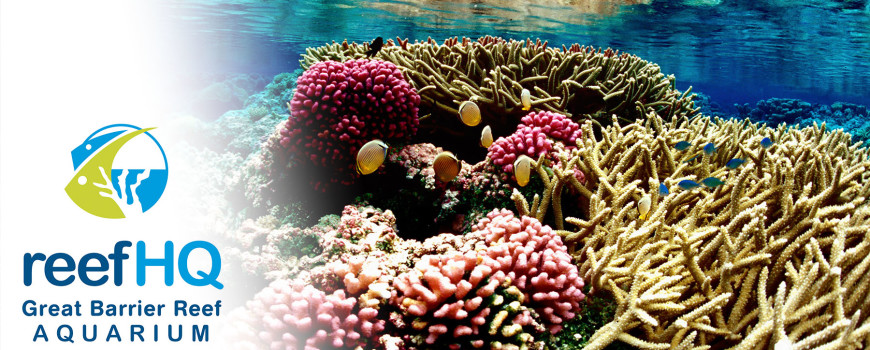
Join the Hōkūleʻa Crew as we explore the Great Barrier Reef at Reef HQ.  The Great Barrier Reef Marine Park is one of the richest, most complex and diverse ecosystems in the world.  Reef HQ Aquarium is the National Reef Education Centre for the Great Barrier Reef Marine Park Authority, and the amazing host of the Underwater Virtual Field Trip.  Join us on here to explore the Great Barrier Reef live, and listen in as Hōkūleʻa crewmembers and Reef HQ scientists bring students from Hawaii and Aotearoa on a live tour of the Great Barrier Reef.


Please help keep us sailing for future generations. All contributions make a difference for our voyage. Mahalo nui loa!
Hōkūleʻa Arrives in Sydney

hokulea0020SYDNEY, AUSTRALIA – Hōkūleʻa and her crewmembers sailed into iconic Sydney Harbor yesterday, the latest port on her Worldwide Voyage that began in Honolulu last May. They were greeted at the dock by international dignitaries, aboriginal elders, leaders in ocean conservation and members of the local community eager to welcome the canoe to Sydney.
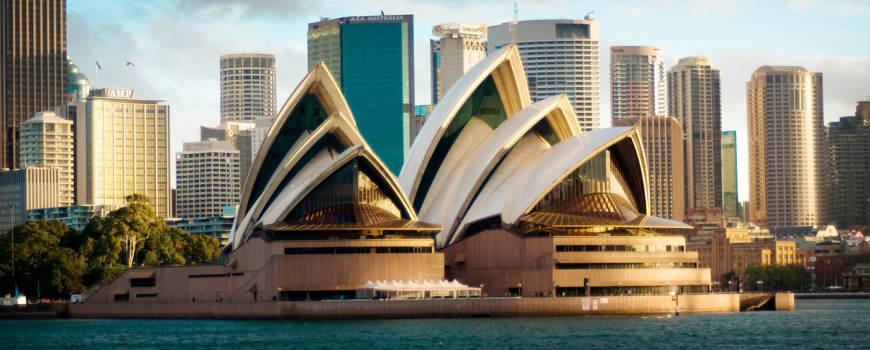
The canoe arrived from Coffs Harbor, her first landfall in Australia, after sailing approximately 1200 nautical miles from New Zealand through daunting weather conditions. Hālau Mōhala ʻIlima from Kailua, Oahu was at the harbor to greet Hōkūleʻa upon arrival with traditional ʻoli (chant) and hula.

“We’re very proud of Hōkūleʻa’s sailing accomplishments and tenacity on this leg, and are humbled that our ancestors continue to watch over us on this trip,” said Bruce Blankenfeld, Hōkūleʻa captain and pwo navigator. “Traditional means of wayfinding, which involve relying heavily on natural elements for direction, remain as our guides on this sail.” Blankenfeld will be presenting on traditional navigation and the Worldwide Voyage at the Australian Museum on May 20.

Throughout their time in Australia, crewmembers are seeking out local stories of hope to learn more about Australia’s leading work in environmental and ocean stewardship. Crew will share Hawaiian voyaging practices and values with the community, including working collaboratively to carefully steward natural resources, and take guidance from our natural surroundings. The canoe will sail from Sydney to Darwin, visiting significant environmental and cultural sites before sailing on to Indonesia, Madagascar, and South Africa.

Livestream: Hōkūleʻa’s Sydney Arrival

Join us live when Hawaiian voyaging canoe Hōkūleʻa and her crew make landfall in Sydney, Australia. Voyagers on this portion of the 47,000 nautical-mile Worldwide Voyage will meet and exchange with one of the oldest cultures in the world, and discover and celebrate stories of hope from Australia.

Live-streaming anticipated to begin at the following time. Please check back for updates based on weather and follow us on FacebookInstagram, and Twitter for the most up-to-date information on this landing:

  • 11 a.m. Tuesday, May 18 – AEST (Sydney time)
  • 3 p.m. Monday, May 17  – HST (Hawaii time)

To learn more about the Australian leg of the Worldwide Voyage, click here.


[event_rocket_list category=”australia”]

Ka Hoʻokele ʻAna – Navigation

Activity at a Glance:
Students will start off with an imagery activity in an attempt to bring the outside environment into the classroom. They will learn and see visuals that will take them through a day in the life of a navigator. Group movement activities to teach and reinforce the four cardinal directions will be a highlight of the lesson.

Grade 4  |   Time: 1 hour   |  Curriculum Download

Developed by Kamehameha Schools

Continue Reading