Hōkūleʻa Video Update | January 30, 2017

Hōkūleʻa crewmember, Mark Ellis gives us an update from Leg 27, Galapagos Islands. Students from James B. Castle High School, Hālau Kū Māna Public Charter School and Kamehameha Schools joined scientists on island for a learning journey.


Homecoming__-_Save_the_Date_-_Banner

Hōkūle‘a Homecoming – Save the Date

Sign up for updates and be the first to know as we continue to detail homecoming festivities during the week of Hōkūleʻa’s homecoming
on June 17, 2017!

Continue Reading

A Stirring Message in Recognition of Kahoʻolawe Efforts

Protect Kaho‘olawe ‘Ohana is celebrating 40 years of Aloha ʻĀina. From aboard the deck of Hōkūleʻa, currently in the Galapagos Islands, master navigator Nainoa Thompson and students from Hawaiʻi deliver a special message honoring Kaho‘olawe and her many supporters.

About Protect Kaho’olawe ‘Ohana 

The Protect Kaho’olawe ‘Ohana is a grassroots organization dedicated to the island of Kaho‘olawe and the principles of Aloha ‘Āina throughout Hawai‘i. In their work to heal Kaho‘olawe, they strengthen relationships with the land and pay respect to the spirits of the land. On other Hawaiian islands, they work to protect the natural and cultural resources of ancestral lands.

Learn more about Protect Kaho’olawe ‘Ohana on their website and Facebook page.

Hawaiʻi Students Connect Live with Hōkūleʻa Crewmembers

Screen Shot 2017-01-30 at 4.20.36 PM

While Hōkūleʻa makes her way around the globe, crewmembers are finding ways to engage our children here in Hawaiʻi. The following post is from Mālama Honua Public Charter School whose first and second graders recently connected live with Hōkūleʻa voyagers Nainoa Thompson, Billy Richards and Jenna Ishii. It explains how connecting with our elders and with nature can build our appreciation for the environment and help inspire us to become effective stewards of Island Earth. 

We are the first and second grade students from Mālama Honua Public Charter School. We were happy and excited to have a google hangout with Uncle Billy and Kumu Jenna while they sailed across the ocean on Hōkūleʻa. It was nice to hear about what they have been doing on the waʻa and to ask them questions about things we have been learning in class.

One navigator skill our class has been learning about is environmental awareness. We have been learning to be environmentally aware by observing, appreciating and developing a growth mindset. We wanted to know, what lessons got easier every time crewmembers sailed and which lessons are still difficult. We were thrilled when Uncle Nainoa joined in to answer this question. He told us that the more you are out looking at nature and taking time to kilo (observe) the more ʻike (knowledge) you will gain about the ocean, wind, birds, stars, sun, atmosphere, and sea life. We learned from Uncle Nainoa that we need to see, listen, and hear from nature to build our understanding of and appreciation for nature.

Screen Shot 2017-01-30 at 4.46.03 PM

For the past three weeks we have been reflecting on the ʻolelo noʻeau; “nānā i ke kumu” (look to the source). We asked Uncle Billy and Kumu Jenna about how they nānā i ke kumu. Uncle Billy shared that Hōkūleʻa is a source of inspiration. He also shared that the ocean is a source of life and breath; Papa Mau and Uncle Nainoa are sources of knowledge, and that we can be a source of life to each other to help get things done. Mahiʻai Wolfgramm said, “hearing about Uncle Billyʻs connection to the ʻolelo noʻeau made me think about how my actions can be a source of life to someone else.”

We enjoyed learning from crew members and seeing all the fun things they were up to on the waʻa, like how they baked the cake using the stars as a timer, and seeing Uncle Billy hanging off the side of the waʻa! Mahalo for letting us join in on this awesome Google Hangout.

~ Papa Mahina Keiki”

About Mālama Honua Public Charter School
Mālama Honua Public Charter School (MHPCS) prepares children to be community leaders and environmental stewards for our island home and the world. MHPCS prepares students to navigate their many voyages through life, drawing on a blend of indigenous and global knowledge to create positive solutions for the environmental and social challenges that their generation is facing. Students gain science, math, reading, art, and music skills through hands-on experiences in the community that help them identify ways they can mālama — care for — the world around them. For more information about MHPCS, visit malamahonuapcs.org.


Homecoming__-_Save_the_Date_-_Banner

Hōkūle‘a Homecoming – Save the Date

Sign up for updates and be the first to know as we continue to detail homecoming festivities during the week of Hōkūleʻa’s homecoming
on June 17, 2017!

Hōkūleʻa Arrives in the Galapagos Islands

Polynesian voyaging canoe Hōkūleʻa arrived yesterday at Puerto Ayora, the capital city of Santa Cruz Island in the Galapagos Islands. The crew will be joined by a contingent of teachers and students from Hawaiʻi as well as representatives from The Nature Conservancy and Conservation International for an educational visit to the UNESCO World Heritage Marine Site. During their stay, the crew and participating schools will engage in activities to further their understanding of the area’s fragile ecosystem and how its preservation aligns with the Worldwide Voyage’s Mālama Honua mission.

Screen Shot 2017-01-30 at 2.10.00 PMSituated in the Pacific Ocean more than 600 miles from the coast of Ecuador, the Galapagos Islands and the surrounding marine reserve have been called a unique “living museum and showcase of evolution.” Similar to Hawaiʻi, the Galapagos Islands is an isolated volcanic archipelago known for its endemic species and rich biodiversity. The location became famous after naturalist Charles Darwin visited in 1835 to study the area’s rare animal species which led to his theory of evolution by natural selection.

This stop on the Mālama Honua Worldwide Voyage will be an opportunity for the voyage mission crew to learn about the Galapagos Islands’ conservation management and environmental sustainability efforts while bringing attention to science, evolution and the importance of protecting the earth’s most fragile resources.

Educators and students from Halau Ku Mana Public Charter School, Kamehameha Schools, and James B. Castle High School will all be present throughout Hōkūleʻa’s stay in the Galapagos. Groups will engage in a series of land tours, dives, and a hoike event, or final presentation, to showcase their scientific findings and share the potential impacts the learning from this visit could have on education in Hawaiʻi. The learning journey will include visits to the Charles Darwin Research Center and the Tomas de Berlanga School, which focuses on developing a sense of stewardship in its students for the society and environment in which they live. The school was launched in 1994 by a group of Galapagos residents who believed that improved education was a prerequisite to a more sustainable Galapagos. They sought to launch an educational model that could serve as a showcase of best practices and as a future training ground for educators from other schools on the islands.

After the Galapagos Islands, Hōkūleʻa will continue on her voyage to Rapa Nui and French Polynesia for further community outreach and opportunities to share the Mālama Honua message. In June 2017, Hōkūleʻa will make her long-awaited return to the Hawaiian Islands with a historic homecoming ceremony at Magic Island.


Homecoming__-_Save_the_Date_-_Banner

Hōkūle‘a Homecoming – Save the Date

Sign up for updates and be the first to know as we continue to detail homecoming festivities during the week of Hōkūleʻa’s homecoming
on June 17, 2017!

Hōkūleʻa Update | Jan 20, 2017

The deck of Hōkūleʻa is dark except for the occasional headlamp. Overhead, a canopy of stars stretch into the distance, impossibly brighter than what could have been seen at our most recent port of Balboa, Panama. In the darkness comes the distinct, warm sounds of Kaʻauʻs guitar and the voice of Uncle Billy. Itʻs the perfect end to another day.

Since our departure from Panama yesterday afternoon, the crew has gradually adjusted to life at sea – finding our footings, familiarizing ourselves with the myriad of lines, and learning as much as we can from more experienced crewmembers. The fishing lines were put out, and within a couple of hours we landed a small mahimahi that Uncle Archie made into a soup. We were also blessed with winds strong enough to drop the tow from Gershon shortly after sunset. We then spent the night managing the waʻa, excited to be sailing at an average of 5 knots. These winds lasted until mid-day today when we decided to pick up tow again to ensure that we reach Galapagos on schedule.

All crewmembers are doing well, and we send a mahalo to all at home who are watching over us.

SB 72, Bryson Hoe


Homecoming__-_Save_the_Date_-_Banner

Hōkūle‘a Homecoming – Save the Date

Sign up for updates and be the first to know as we continue to detail homecoming festivities during the week of Hōkūleʻa’s homecoming
on June 17, 2017!

Continue Reading

Crew Blog | ʻAulani Wilhelm: Eastern Tropical Pacific Seascape

aulani wilhelmBy ʻAulani Wilhelm

The smell of bacon and butter greeted me this morning as I emerged from the makeshift cabin that we each are extremely fortunate to call home when aboard Hōkūleʻa. Those on the 6-to-10 watch were at the sweep adeptly steering Hōkūleʻa in a SSW direction, guided by Mark Ellis, one of the navigators on board.

DSC04792He estimated that by that time, we had traveled approximately 125 miles over night since leaving port in Balboa. I had been on the earlier 10-to-2 watch crew, lucky to steer during a clear, star filled night with both the north star at our stern and the half full moon to our port side to guide us through most of our shift. This crew was steering during the day, with squirrely clouds, inconsistent wind, and no land to guide their way. They were relying on a rising sun and setting moon, neither of which are the most accurate indicators as they move overhead. When I started my watch, the sun was rising, the clouds kept changing and the wind kept shifting. Steering was much trickier than it had been the night before with a reliable northern star.

The deep blue-green waters of Panama continue to carry us toward Malpelo, a tiny volcanic island off shore of Columbia which we hope to reach in 2 days. We are privileged to be sailing in a geography referred to as the Eastern Tropical Pacific Seascape (ETPS) covering 750,000 square miles across the marine domains of 4 countries, Costa Rica, Panama, Columbia, and Ecuador.

ETPS Area Map

The seascape links a network of marine managed areas including protected area, fisheries management areas, important migratory routes for threatened and endangered species like the Blue Whale, and critical nesting and breeding areas for seabirds and turtles, including the critically endangered leatherback. The pelagic waters between these areas are some of the world’s best tuna grounds. Simply put, this seascape is one of the most biologically rich and diverse places on the planet, driven by the convergence of unique underwater mountain chains and nutrient rich, cold water from the Southern Ocean delivered by the Humboldt current.

It is for these reasons, and many more, that ETPS is also home to a close cluster of four global marine treasures –Cocos Island National Park (Costa Rica), Coiba National Park (Panama), Malpelo Flora and Fauna Sanctuary (Columbia), and the Galapagos Islands (Ecuador) – recognized by the United Nations’ Education, Science and Cultural Organization (UNESCO) as World Heritage sites.

Many of our Mālama Honua partners like National Geographic, Mission Blue, and Conservation International work in this region to deliver ground breaking science, effective models of conservation, and visibility to the importance of protecting these globally important waters from over-exploitation and climate change.

DSC04737Despite all the amazing things that make this one of the world’s most extraordinary and more resilient parts of our global oceans, it faces significant challenges. Last night as we sailed, Nainoa asked me, “What are the main challenges facing this place? What are the lessons
that can help the rest of the world navigate?”

My first instinct was to rattle off the list of conservation challenges – illegal, unreported and unregulated fishing; climate change; pollution etc. – the many things plaguing all of our oceans.

But those aren’t the problems, they are the symptoms of deeper issues we face… symptoms of human beings increasingly becoming separated from nature, of short-term thinking, of privileging economic gain over ecological and human health which leave a vastly inequitable reality and future both people and the planet.

Luckily, ETPS has a fighting chance more than most places of buffering the many assaults our oceans face, thanks to its natural abundance and the many protections and other conservation efforts already underway. For example, last fall the presidents of Columbia, Costa Rica and
Ecuador together committed to expand the commitments to this special area, including the commitment to expand, create or deepen protections within their respective marine parks. (Read more about this incredible commitment here: Conservation International Blog)

Why did they do it? Because they each understood that ocean conservation isn’t only about protecting species, it’s about ensuring the future economic well-being and health for their people. These actions make oceans part of national development approaches that will help feed and improve the livelihoods of millions of their citizens. It is this kind of leadership and shared understanding about the importance of protecting our oceans that is required if we are to
change course toward reversing the current trend of decline.

aerialThat’s what this tiny canoe and the extraordinary community of people and organizations it has encountered along this voyage are trying to do – connect and grow a global community of people who each, in their own walks of life, will make better decisions big and small, on behalf
of both people and nature.

DSC04978The winds have been challenging today – we have had to adjust our course many times to travel downwind and remain focused on our destination. These lessons from sailing hold true for protecting our oceans. The first step, however, is being clear about our destination.

ʻAulani is a crewmember and Senior Vice-President for Oceans at Conservation International


Homecoming__-_Save_the_Date_-_Banner

Hōkūle‘a Homecoming – Save the Date

Sign up for updates and be the first to know as we continue to detail homecoming festivities during the week of Hōkūleʻa’s homecoming
on June 17, 2017!
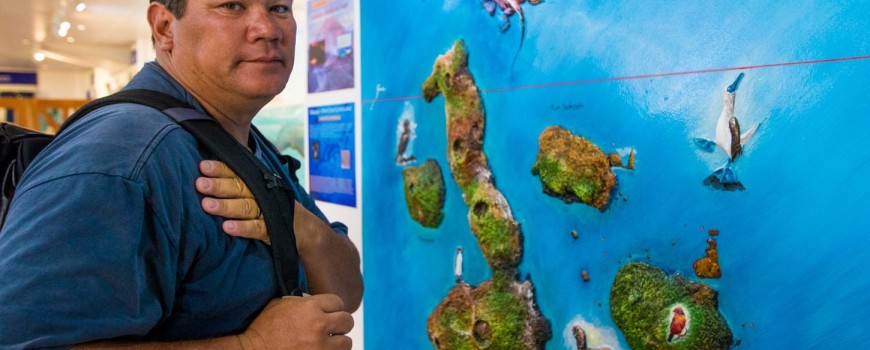
Hōkūleʻa Completes Transit Through Panama Canal and Returns to Pacific Waters

After two days of transit through the Panama Canal, iconic voyaging canoe Hōkūleʻa reached the Panama city of Balboa on Wednesday at 2:54 p.m. EST. The canoe went through three sets of locks on the man-made waterway and returned to Pacific waters for the first time in nearly two years. Because Hōkūleʻa has no engines, and because of the turbulence and currents within the canal, the canoe was safely towed by a powerful work vessel – DWS Linda – through the canal.

Crewmembers moored the double-hulled canoe at Balboa Yacht Club and will remain docked in Balboa for about seven days. From Balboa, Hōkūleʻa will depart for the Galapagos Islands, a sail that is expected to take approximately 10 days.

While in Balboa, Hōkūleʻa crew will engage with several indigenous organizations and leaders of the Panamanian community. Crewmembers will also use their time in Balboa to provision the vessel for her upcoming sail to the Galapagos Islands and then Rapa Nui, ensuring she is in exceptional condition for the remainder of her voyage home to the Hawaiian Islands.

Click here to download a PDF of this media update.


Homecoming__-_Save_the_Date_-_Banner

Hōkūle‘a Homecoming – Save the Date

Sign up for updates and be the first to know as we continue to detail homecoming festivities during the week of Hōkūleʻa’s homecoming
on June 17, 2017!
2016 Worldwide Voyage Recap

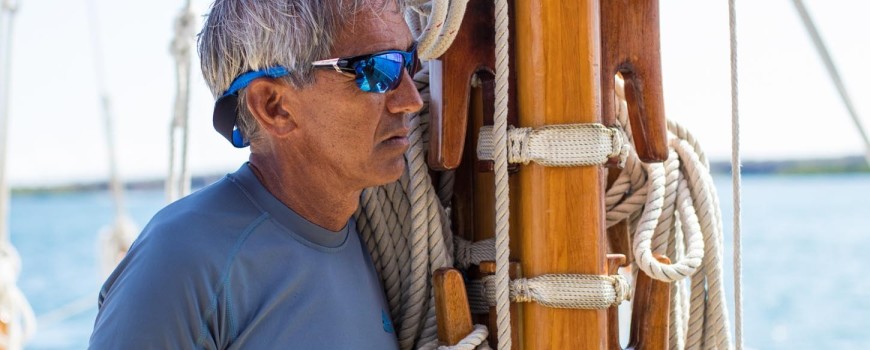
As Hōkūleʻa and crew make their historic crossing through the Panama Canal, we take a look back on an amazing and eventful 2016 that took us from South Africa to the East Coast of North America.

In the third year of the Mālama Honua Worldwide Voyage, we departed South Africa and crossed the vast Atlantic to Brazil on the South American continent. Crewmembers continued on to the Caribbean where they were hosted by Richard Branson and later explored Cuba. Highlights on the East Coast of the United States, include stops in New York and a visit to the United Nations that put Hōkūleʻa front and center in the global discussion to save our oceans.

As Hōkūleʻa sails into 2017, she’ll reunite with the Pacific for the first time in nearly 18 months and make stops in the Galapagos Islands, Rapa Nui and French Polynesia before sailing back for the celebratory homecoming at Magic Island, Honolulu in June of 2017.


Hōkūle‘a Homecoming – Save the Date

Sign up for updates and be the first to know as we continue to detail

homecoming festivities that will include multiple events!