Crew Blog | Ryan Hanohano: Make Ready

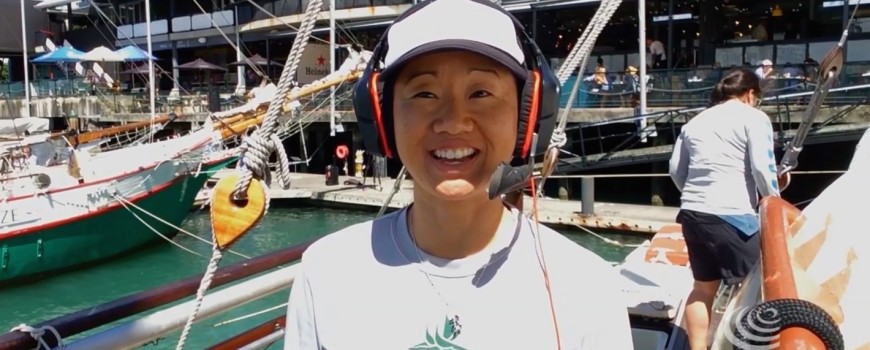
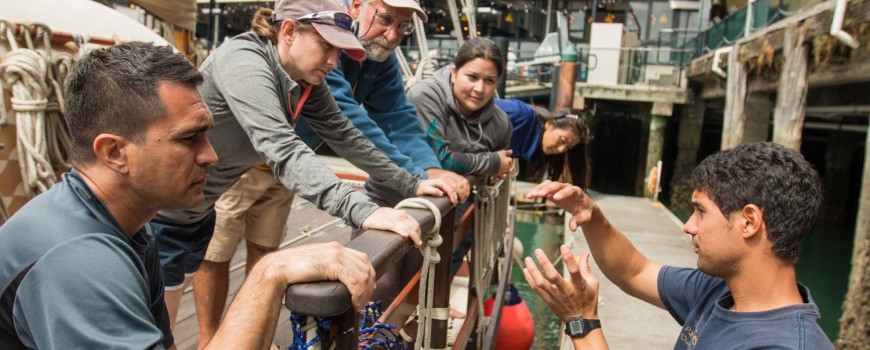
I was just here in Aotearoa a few months ago helping to bring Hōkūleʻa and Hikianalia from Samoa as a crewmember on the Worldwide Voyage. Though I’ve been sailing since 2011, it was my first time as watch captain onboard Hikianalia. I didn’t think I would find myself back in Aotearoa so soon.IMG_2090Pulling lines, raising jibs, setting sails, and steering the waʻa are things that come easy for me. But now that I’m back on the waʻa, more is required. When I got the call to join this leg of the voyage, I was told that my kuleana would be canoe coordination. I knew I had the skills to do the job, but I was still a bit nervous about being in a leadership position.

So I had to “make ready” myself.

We were told that our captain would not arrive to Aotearoa until a week after we landed. In the meantime, there was a list of things that needed to be done to mālama Hikianalia and to help the current crew familiarize or refamiliarize themselves with the canoe before a sail under the direction of a local captain and ʻohana waʻa friend from Aotearoa.IMG_2057You could imagine the pressure I felt knowing that I would be relied on heavily to make sure that all the provisions would be ready for Hikianalia: the sails, rope, safety gear, radio, power, and crew. Here I was, a mere crewmember, now challenged with the task of helping my fellow crewmembers ready ourselves and the canoe for a sail. Again, I had to “make ready” myself so that I could give the best support to my ʻohana waʻa.

Like any crewmember, my kuleana is never done. I was presented with another challenge that enabled me to think of other ways and perspectives on how we “make ready”. In this portion of the voyage, I’ve been asked to oversee a lot of what happens on the waʻa and to participate in some of the education outreach. So I learned many new things about Hikianalia in order to help with canoe tours and educational activities on the waʻa herself. Speaking is not one of my biggest strengths. In fact, it’s probably one of my weakest traits. But growth happens when opportunities are given to us that require us to stretch beyond what we already know.IMG_2120The Worldwide Voyage is not just about the canoes sailing around the world. I’m learning that this journey is also about developing leadership – leaders of the canoe, leaders of education, leaders of cultural protocol, and much more who are seen and unseen. I am grateful for this learning opportunity and time of growth. Hikianalia is clean, provisioned and cared for by a ready crew. I look forward to the upcoming sails with our captain who has just arrived.


Learn more about our crewmembers and the Mālama Honua Worldwide Voyage. Visit us and join our global movement towards a more sustainable Island Earth.
Crew Blog | Tara O’Neill: What a Great Problem!

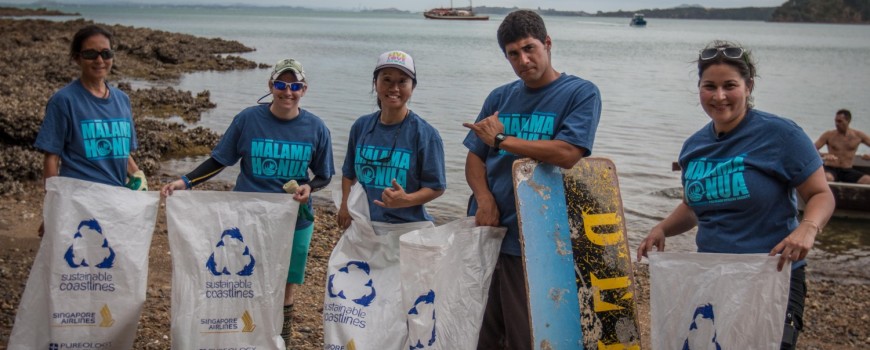
Known today for its many wineries, olive groves and beautiful beaches, Waiheke Island is a popular vacation destination. As crew of the Worldwide Voyage, we decided to sail to Waiheke Island for another interesting experience – to take part in a coastline clean up sponsored by Sustainable Coastlines New Zealand (a sister organization to Sustainable Coastlines Oʻahu). Waiheke Island, originally named Te Motu-arai-roa, ‘the long sheltering island’, is about 12 miles off the coast of Auckland – but a world apart.

IMG_2160

Our journey to Waiheke Island began with an early morning crew call and readying Hikianalia to set sail. This was the first sail for the new crew and excitement was high. For three days, we had been cleaning, prepping and organizing logistics for our time here in Aotearoa. This crisp morning was finally the time to sail. Each leg of the Worldwide Voyage is unique because of the crew, sailing conditions, and destinations. Likewise, the focus of this crew is a little different.

Rather than braving the open oceans as the crews before us have, we are spending the month doing a series of day sails and community outreach activities – canoe tours, dockside lessons, school visits, etc. – to share the message of mālama honua and mahalo our gracious Aotearoa hosts. The Waiheke Island coastline clean up was the first of many community-based events we are honoured to be part of this month.

As part of their effort to bring attention to the growing amount of plastics and other trash in our oceans, Sustainable Coastlines New Zealand has organized hundreds of volunteers, throughout the week to walk the islands coastline and pick up trash. Participants range from individual sailors, school groups, corporate sponsors and generally concerned citizens – all looking to do what they can to mālama honua.

IMG_2485

Following a gentle three hour sail, we anchored off the coast of Waiheke Island and were greeted by Sam Judd, the director of Sustainable Coastlines New Zealand and Kahi Pacarro from Sustainable Coastlines Oʻahu. We had not planned on seeing Kahi, or even knew he was in Aotearoa, but seeing representatives from both Sustainable Coastlines New Zealand and Oʻahu together in this place was a good reminder of how small our world really is and that our local concerns are global issues.

After all the introductions and a little talk story over lunch, we were given some “sacks” (trash bags) and work gloves and were shuttled from the canoe to a rocky, at times cliff-like, section of the Waiheke Island shoreline.

IMG_2509

Even before we got on land, the captain of the shuttle boat pointed out an abandoned car tire and warned us that this was likely the first of many we would see. When we hit land, my fellow crewmember Ryan Hanohano went to collect the tire and deliver it to the shuttle boat. Our quest for trash had begun! Armed with our sacks and work gloves, the crew divided into pairs and eagerly set out on the hunt for trash – a hunt that would be much harder than I expected.

First, let me say that any amounts of plastics and other trash we find on our coastlines are too much. These plastics don’t ever truly go away. Besides making otherwise beautiful places look trashy, they find their way into our oceans, then into the ocean food chain and back into our bodies. That plastic cup you used today for five minutes and threw away will be on this earth longer than you will. And in time, that same plastic is likely to come back to you as part of your fish dinner. With that said, I must admit, for this beach clean up I found myself in a very odd space – I was disappointed to not find more trash!!

IMG_2539

Crew were literally scaling mountain sides in our excitement to grab a plastic board stuck in the root of a tree, or yelled “luck!!!” when someone found a potato chip bag. We wanted so much to contribute to this mālama honua effort that we hoped to fill bags and bags with all kinds of trash. With pride, we commented to each other that if this beach clean up were at one of our home beaches, we would have collected five bags of trash rather than the five or six pieces that were in each of our bags by the end of this clean up.

This mindset carried on with us until about a mile half into our hike. It was then that we realized that this experience was great “problem” – to do a beach clean up where there is relatively little to clean up.

Rather than being frustrated that we would not return to the shuttle boat as the heroes who collected heaps of trash, this beach clean up became a moment of hope. This experience was proof that the great work that organizations like Sustainable Coastlines New Zealand are doing is paying off. We, collectively, can make a difference! As the canoes sail around the world and connect our collective efforts to support a more sustainable planet, I hope to get to take part in many more beach clean up days where there is very little to clean up.

IMG_2596


Learn more about our crewmembers and the Mālama Honua Worldwide Voyage. Visit us and join our global movement towards a more sustainable Island Earth.

Update | March 4, 2015

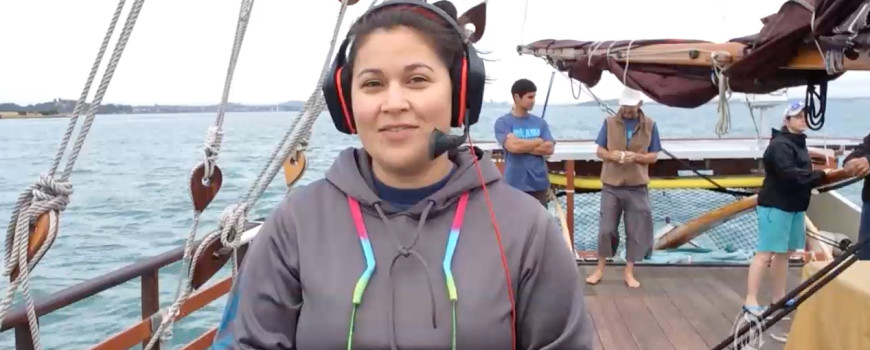
Aloha! This is Barbara Blake coming to you live from the deck of Hikianalia. We just left Auckland Harbor, and we are heading to Waiheke Island where we’re going to meet up with Sustainable Coastlines, New Zealand and do some mālama honua by cleaning some of the beaches. I am looking forward to know some of the local folks and see how they mālama honua in Aotearoa. It has been a little chilly, but our hearts are definitely warm knowing that we will be meeting up with them and getting to visit to see how they mālama honua. It has been a great journey so far, and we’re looking forward to the rest of the journey and getting to know people and the connections we’ve made so far and continue to build these relationships across the world and here in Aotearoa so we can continue to mālama honua. Don’t forget to visit Hokulea.com to share with everyone how you mālama honua at home.


Continue to follow the Mālama Honua Worldwide Voyage by visiting us online and joining our global movement towards a more sustainable Island Earth.

Continue Reading

Update | March 2, 2015

Kia ora! This is Linda Furuto coming to you from the deck of Hikianalia. We are docked outside the Maritime Museum in Auckland, Aotearoa. Our hearts are filled with so much gratitude for the opportunity to be here. From the shores of Hawaiʻi to Aotearoa, we believe that education is the future for our world, and through mālama honua, caring for our Island Earth, we’ll be able to touch the shores, the schools, the minds, and hearts of our young children in the next generation.

On that note, I have a couple updates for you. The crew that is currently here on Hikianalia are educators from across Hawaiʻi, from Kauaʻi to Hawaiʻi Island to Alaska. This month, we’re going to be engaging in a whole month of educational outreach from canoe tours with schools and principals, to community days, which is what we will be doing this coming Saturday at the Maritime Museum. We will have star compass demonstrations, outreach stations, science experiments, and informational booths about life on the canoe and land as well. The other part of our ʻohana is working on Hōkūleʻa in drydock and making sure Hōkūleʻa is ready to go from Aotearoa to Australia next month. Mahalo nui for all of your love and aloha and for all the different ways that you mālama honua. We invite you to track and follow the Worldwide Voyage at Hokulea.com. Aloha!


Continue to follow the Mālama Honua Worldwide Voyage by visiting us online and joining our global movement towards a more sustainable Island Earth.

Continue Reading

Update | February 27, 2015

Today, today, today, what a beautiful wonderful day!!!

Our body clocks are set, and we are in a rhythm. Like a good song that is slow to start, and then hits you all at once and you find yourself jamming. A song so addicting you’ve got it on repeat and memorized all the words. Well that’s how our days are.

Slowly, one by one we wake up and get ready and drive down to the landing at Okahu Bay. Then all at once, we start jamming on Hōkūleʻa.

Uncle Bruce and Naiʻa letting the dust fly as they sand the forward spreaders. Jason and Nakua tackling all the sanding in the aft section on Hōkūleʻa. Uncle Kalau working between the hulls on the mast and spars sanding all he chafed areas to be sealed again with epoxy. As for myself, I was laying down all the primer on the pieces that have been sanded by the guys. Then Rua, a Maori man who we first met when the waʻa were in Opua, came down and put his mana into Hōkūleʻa by sanding the ʻiako caps.

Losing track of time, we look around, and there’s no one else working around us. We pack it up and stow our tools, and call it a day around 5:30pm. But we know that tomorrow is coming, and it’s going be another good one. We got one awesome rhythm going, and I don’t ever want to take this song off repeat because waʻa is a lifestyle.

Have a Great Day!!
Moani H.


Continue to follow the Mālama Honua Worldwide Voyage by visiting us online and joining our global movement towards a more sustainable Island Earth.

Continue Reading

Ask the Crew | February 26, 2015

Periodically, we highlight the most original questions from our community of Worldwide Voyage followers and ask our crewmembers to share their answers.

Ask the Crew | Kālepa Baybayan: How historically accurate is the rigging on the Hōkūleʻa? 

Aloha, I’m Kālepa Baybayan, and I’m on board Hikianalia. Today’s question comes from David from Norwich University, and it’s an excellent question: How historically accurate is the rigging on Hōkūleʻa and is there evidence that deadeyes and certain knots were used aboard historic voyaging canoes? We don’t know how historically accurate the rigging is on board Hōkūleʻa. Hōkūleʻa is a modern day replica, and it comes from a western style of rigging vessels. It’s because there were no traditional voyaging canoes, of the deep sea nature, when Hōkūleʻa was built. So we just have to go from what was familiar to us. The deadeye system is a western vessle-type system, it may have been on traditional canoes though. We don’t know, we don’t have any evidance of that. Know this though, with a simple rigged up canoe as prehistoric voyagers had, they were able to sail the vast Pacific Ocean. They probably got to South America, that’s how the sweet potato got there. Excellent question, we don’t know, again, we don’t know what traditionally rigged vessles looked like, because we weren’t alive during the historic period. Thank you for your question, David. Tell us how you mālama honua and enjoy the voyage on Hokulea.com A hui hou.


Ask the Crew | Vernon Ansdell: How does the medical officer help the crew with sea sickness? 

Aloha, Dr. Vernon Ansdell on board the Hōkūleʻa, we have a question today from Vance who’s from Wilmington, North Carolina. His question is, “what does the medical officer do to help crew suffering from sea sickness and/or fatigue?” Well Vance, the key thing is to be prepared. Like with most things, when you’re sailing being prepared is really important, so be well-hydrated before you get on the canoe and set sail. Be well hydrated, have a positive attitude to the voyage coming up. We have a lot of medicines we can also use and for people who are really worried about it and have got seasick before, I think the medicines are a good idea. We have all sorts of medicines, we have pills that you can take, we have patches that go behind your ear, we have gum that you can chew, we have ginger that you can suck on or chew. Ginger is good, it’s a natural medicine that you can take and that supplements all these other things. The problem is a lot of these medicines that we use do have side effects so not something that you would want to use for everybody. When you’re on the canoe, or you’re at sea and you feel something coming on, it’s a good idea to look into the distance and focus on the horizon. Avoid doing little tasks in front of you like reading or preparing food, or looking at anything close. Fix on the horizon and the good news is that, in a day or two, however bad it is, it’s going to get better and then you can actually enjoy the sailing. So mahalo Vance for your question, please share your mālama honua and continue to follow the voyage on Hokulea.com. Mahalo.


Ask the Crew | Nakua Konohia-Lind: How is New Zealand food different from Hawa’i? 

Aloha, this is Nakua Kohohia-Lind on board Hōkūleʻa. So we have a question today from Alohi of Kamehameha Schools Hawaiʻi campus. The question is, “is the food from New Zealand different from the food in served at ceremonies in Hawaiʻi?” So Alohi, awesome question, during this leg, I was a chef on board, and I was fortunate enough to be able to sail from Hawaiʻi to Tahiti on the first leg, on Hikianalia. During that voyage, we were able to drop a lot of weight, myself included. In New Zealand, you know, our ʻohana here really made sure we didn’t come skinny, so they fed us real good. So they always fed us food from the ocean, so they always had kena, which is similar to vana, in Hawaiʻi. They also have something called pawa, which is similar to our opihi, and they also have their mussels, which New Zealand is well-known for, and it is one of the best, so the mussels are amazing. And also they have lamb here which is usually cooked in an imu, they also allow us to use some pork and a little bit of beef. But it’s mostly land, and it’s mostly food from the ocean, so they’re really about the land food here, they’re really about the really eating off the land here, so it’s all good food and we all did not loose any weight. So mahalo for supporting us on this voyage, Alohi. Thank you for the awesome question, and please show us how you mālama honua and continue to follow us on Hokulea.com mahalo and aloha.


Periodically, we highlight the most original Ask-the-Crew questions and ask our crewmembers to share their answers with a video response. Check out more Ask-the-Crew responses here. Want to submit a question? Ask the crew by clicking here.

Update | February 26, 2015

Aloha, this is Moani Hemuli with your Hōkūleʻa drydock update. Today is Thursday, February 26, 2015, and we are here in beautiful Okahu Bay at the landing for Hōkūleʻa’s drydock. Today we continued to paint the railings, the navigation platforms, and forward spreaders. Tomorrow we will continue to work on the pola, resanding and also laying down new paint for the pola. We’d like to send out a big mahalo to International Paints for all the paint supplied to us. We could not have done it without you guys. Hōkūleʻa looks so much better now. Continue to support us at Hokulea.com. Mahalo!


Continue to follow the Mālama Honua Worldwide Voyage by visiting us online and joining our global movement towards a more sustainable Island Earth.
Continue Reading

Ask the Crew | February 25, 2015

Periodically, we highlight the most original questions from our community of Worldwide Voyage followers and ask our crewmembers to share their answers.

Ask the Crew | Kalepa Baybayan: Where is the line between modern and traditional tools? 

Aloha my name is Kālepa Baybayan and we have a question from Shauna from the University of Nevada, Las Vegas. The question is, “now that present day technologies have become such a critical part in today’s society, where do you draw the line between modern instruments of navigation and the traditional?” Well, our two canoes, Hōkūleʻa which is much older than our newer canoe, Hikianalia, being that it has a long history, will always be navigated using traditional methods. Hikianalia, because it’s an escort vessel will be navigated both traditionally, and will have at its availability GPS tracking just to make sure that the voyage is safely conducted. It’s a lot simpler to navigate traditionally without instruments because the whole sky is the compass, rather than looking at the little bubble of the magnetic compass. You just look around you to find your bearings. That’s a very good question. Both canoes have got different missions, again, Hōkūleʻa will always be navigating traditionally, without instruments, Hikianalia will be both navigated without instruments and it will have modern day tracking, in assistance to Hōkūleʻa. Anyway, good question, and I invite you to mālama honua share your ways of mālamaing honua and and follow the voyage on Hokulea.com Thank you.


Ask the Crew | Nakua Konohia-Lind: What do you treasure most about meeting new people? 

Aloha, this is Nakua Kohohia-Lind on board Hōkūleʻa. We have been asked this question by Pumehana of Ka Waihona o Ka Naʻauao Public Charter School. The question is, “what do we as a crew treasure most, interacting with different people, from different countries?” So what I treasure most when interacting with people from different countries is the culture connecting and being able to share the Hawaiian culture with the Tahitian culture or the Maori culture. It’s amazing. So being able to take back the Maori culture to Hawaiʻi and show the kids back home how they do things in their everyday life or like how Tahitians do things in their everyday life. So we just look forward to sharing culture and interacting with people we meet and also making international friendships, international connections and being able to stay connected with the friends from around the world. Mahalo Pumehana for the awesome question, and we would like to see how you mālama honua. Thank you for supporting us, please keep supporting us and following us on Hokulea.com, mahalo and aloha.


Ask the Crew | Nakua Konohia-Lind: What is the most common fish caught on board? 

Aloha, this is Nakua Kohohia-Lind onboard Hōkūleʻa. We were asked this question by Cooper of Punahou School. The question is, “what are the most common fish we catch on board Hōkūleʻa, and whether we use a fishing poll or a hand-line?” So Cooper, the most common fish we catch around New Zealand has been tuna, the native fish, Kahawai, which is native to New Zealand. Also, a fish known to Maori’s as King Fish but to Hawaiians as Kamanu, the rainbow runner. What we do is we take the line out here. We don’t usually use fishing polls. The reason is because it’s a little messy and we have less maintenance if we don’t have a fishing pole because we have to maintain the reels and maintain the pole itself. So we usually start off in the morning by throwing our lines out with a lure, and we hope that Kanaloa provides and gives us some good fish, some good feed for the day, and usually we bring the lines back up before sunset. Usually when sun rises, we throw it out and when the sun sets we bring it in because we don’t want to be dealing with fishing lines during the night, because it’s a little difficult and safety precautions, safety wise, that’s not a good thing to be doing during the night. Pretty much this whole area here is where we fish, and this is pretty much where all the magic happens. So mahalo for the question, Cooper and thank you for supporting our voyage and please continue to support us at Hokulea.com and please show us how you mālama honua, mahalo and aloha.


Periodically, we highlight the most original Ask-the-Crew questions and ask our crewmembers to share their answers with a video response. Check out more Ask-the-Crew responses here. Want to submit a question? Ask the crew by clicking here.