Hōkūleʻa sets sail for the Galapagos

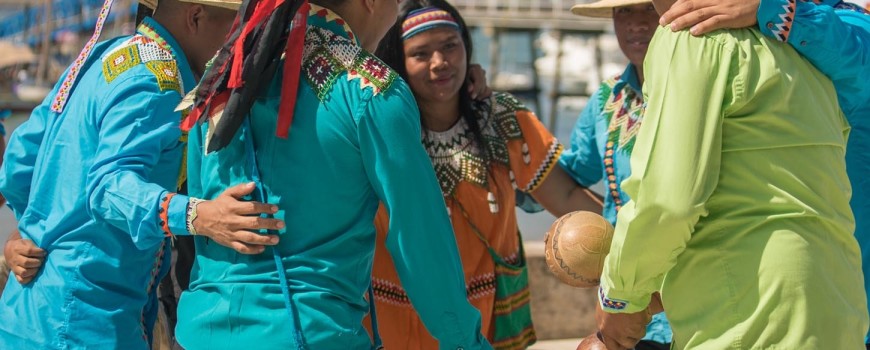
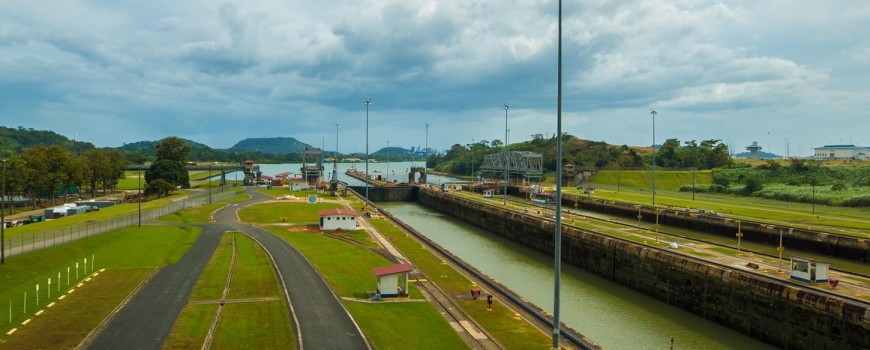
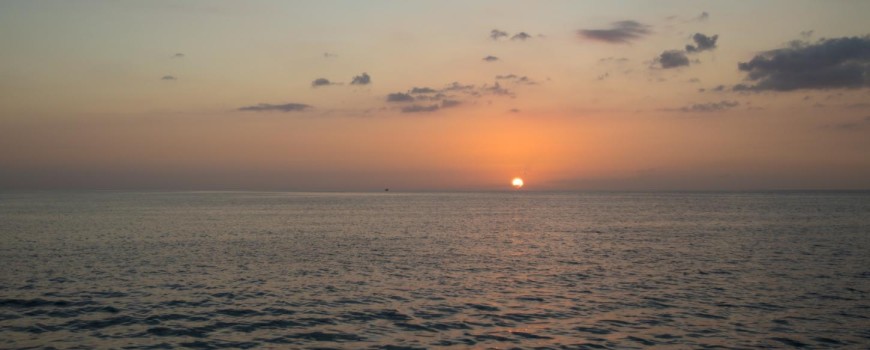
Hōkūleʻa departed Balboa, Panama yesterday and began her sail to the Galapagos Islands. After making a momentous crossing of the Panama Canal, crews spent several days engaging in a cross-cultural engagement with indigenous groups and sharing the meaning of the Mālama Honua Worldwide Voyage sponsored by Hawaiian Airlines. Hokulea’s voyage to the Galapagos will take approximately 10 days.

“Hōkūleʻa is back in Pacific waters after nearly two years and the Galapagos will be the first Pacific islands we will visit on this journey home,” said Nainoa Thompson, president of Polynesian Voyaging Society. “The Galapagos Islands will be an important mission stop where we will celebrate their sustainability efforts, identify parallels with Hawaiʻi and bring attention to science, evolution and protecting the earth’s most fragile natural resources,” added Thompson.

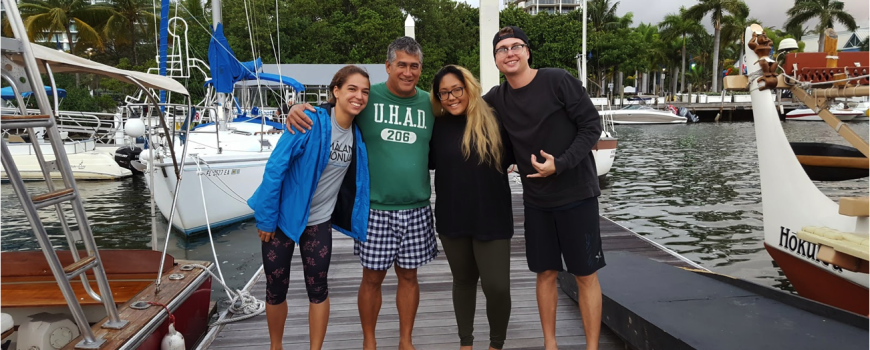
A contingent of students and teachers from Castle High School, Kamehameha Schools and Hālau Kū Māna will be traveling to the Galapagos to work with the crew of Hokulea. Students will join the crewmembers on their engagements and take part on an unparalleled educational journey in this UNESCO World Heritage Marine site.

Hokulea will stay approximately in the Galapagos for approximately one week before setting sail for Rapa Nui.


Homecoming__-_Save_the_Date_-_Banner

Hōkūle‘a Homecoming – Save the Date

Sign up for updates and be the first to know as we continue to detail homecoming festivities during the week of Hōkūleʻa’s homecoming
on June 17, 2017!

Balboa Students Meet Hōkūleʻa

While Hōkūleʻa and crew were in Balboa, Panama, re-provisioning and preparing for Leg 27’s departure to the Galapagos, Ecuador, the canoe was visited by a group of students from The Metropolitan School of Panama. Below are two of the students’ reflections on their visit with the Polynesian voyaging canoe and their activity to build a pre-Colombian maritime bamboo raft replica.

“Building the Raft”

by Sergio U., Grade 8, The Metropolitan School of Panama
When I arrived to the dock on Saturday, to put our raft in the water, I saw the Hokulea for the first time. From as far as I was, it looked a tiny bit bigger than our raft. I wondered how can they sail around the world with that boat, because it looked like it had nothing on it, just a mast. I wanted to go check it out. I was convinced that our raft was going to float, because friends, family, and I, had been working on that raft for over 30 full hours. We started on a Thursday with no school to cut the bamboo and we stayed from 9:00 AM to around 3:00 PM cutting and bringing the bamboo pieces up to the house.On the following Friday after school, I continued to cut the bamboo, and when we finished bringing them up, but now with a car. Saturday and Sunday, we cleaned them up, cut them how they should be cut, and started building the actual raft. The next weekend, we finished the raft, and took it to a lake. There we could use it, and play around and it was then after all of that work that we knew it was going to float for sure. When I first got in the Hokulea, it was huge, well not huge, but bigger than I expected. It had a big space in the center to be, beds at the sides, and even a stove. It was then I realized why they are able to sail around the world. Making a raft has made me understand the meaning of the Hokulea, and what their message is saying.

“Learning about the Hōkūleʻa”

by Camila A., Grade 8, The Metropolitan School of Panama

At The Metropolitan School of Panama in Humanities class we learned about the Hokulea. We learned about the Polynesians and the routes that where first sailed to Tahiti in 1976. We were taught about how the Hokulea uses the natural resources, just like hundreds of years ago, instead of the technology we know of today. They use the stars, the sun, the waves, the wind and a map. It’s propulsions are the paddles and the sail. The Hokulea has had its ups and downs, we know about Eddie Aikau and how he left on a surfboard to get help when the canoe flipped and he was lost at sea. We discovered that the Hokulea is the first to bring back the Polynesian navigation, and have read about the Polynesian Triangle. I think that learning about this journey and the Hokulea is important to understand the real meaning of exploring, discovering something that can change someone’s life, the process of building, preparing and planning, taking the risk and engaging young people to take on the amazing adventure. Its important to preserve and enjoy the environment, and it makes people encouraged and influenced to follow the steps of the people who are part of the Hokulea. Visiting the Hokulea is something I will never forget, I loved every moment of it and really learned the beautiful meaning behind it. It made me want to be part of the journey as well, It was a different feeling, I couldn’t believe I was in a canoe that was 42 years old and has sailed the world. It meant a lot to be standing on the Hokulea, and talking to the amazing crew members. Visiting the Hokulea helped my peers and I gain a deeper understanding on the Hokulea’s true purpose and meaning.


Homecoming__-_Save_the_Date_-_Banner

Hōkūle‘a Homecoming – Save the Date

Sign up for updates and be the first to know as we continue to detail homecoming festivities during the week of Hōkūleʻa’s homecoming
on June 17, 2017!

Crew Blog | Shawn Mālia Kanaʻiaupuni: Provisioning

Provisioning for a Long Sea Journey – Some of the Nuts and Bolts in a Day’s Work

Blog by Shawn Mālia Kanaʻiaupuni

Today is MLK day and it starts with a 5am crew call. Our Leg 27 crew said aloha to our brothers and sisters on Leg 26 just a couple of days ago. We mahalo them for their incredible service in carrying the messages and values of mālama honua from Miami to Panamā and for bringing our treasured Hōkūleʻa back to the Pacific Ocean for the first time in several years. They left Hōkūleʻa clean and well-organized for us, for which we are tremendously grateful.

For the transitioning crew of Leg 27, time is flying by before we depart to Galapagos. Weʻve accomplished much. The first order of business today is loading our provisions onto the canoe. Shopping earlier for provisions was a whole story in itself, involving cleaning out entire shelves of stock at the local grocery and walking out with four fully loaded shopping carts. The list included things like 37 cans of peaches, 42 cans of pears, 28 boxes of milk, endless pounds of nuts — cashews, almonds, mixed nuts — and what seemed like a million cartons of saltines. We even purchased some of that super healthy stuff that crewmembers love – yes, you guessed it, spam. And rice. Lots of rice!

shopping panama IMG_2582

Once the shopping was done, five of the crew spent a full day carefully packing these supplies into boxes with proper rations for thirteen crewmembers. The food has to last a long time, palatable to many different people on board, easy to cook in a small galley, packaged to make as little waste as possible, not too heavy (glass, liquids), and so on. The food packing list is sent ahead, built from a lot of experience gathered over the past 26 legs of this voyage around the world, including favorites from Hawaiʻi that must be hand carried for each leg, like li hing mui and other items. After packing, we labelled the boxes with blue tape numbered for each day at sea. That day was busy also for the rest of the crew, who stayed on the canoe, filling the 74 five gallon water jugs and loading them back on the canoe. They also made sure all the equipment and electricity were in good order, checking sails, and so on.

This morning, we begin early while still dark to avoid the sticky, sweaty heat and foot traffic on the pier at the Balboa Yacht Club. Itʻs a busy pier filled with local workers transporting carts of wares and various supplies in addition to sailors, visitors, and a dog who is clearly the boss. Back at our lodging, we pile 78 boxes of provisions on to carts and roll them precariously in the darkness out the driveway, bumping across the parking lot, down a small rutted incline full of potholes and onto the long wooden pier toward the canoe. Although we can see the waʻa docked off the pier, it is a long way down to sea level when the tide is low and during the day, we usually have to take a water taxi to reach her. This early in the morning, however, the tide lifts the floating dock quite a few feet. If we take advantage of the tide change, we can more efficiently load provisions in less time without using water taxis by handing them down to crew standing on the dock 8 or 9 feet below. We roll to the end of the pier and lift the boxes one by one off the side of the pier down to our tallest crew member who can almost reach the edge of the pier at this time of day. The dock is worn, tipping and swaying, bolts clanking as the crew pass heavy boxes to each other from the pier, down the dock, and haul them aboard Hōkūleʻa.

Carts unloaded, all hands jump on deck and get down into the deep hulls to load the provisions into the cargo area below each bunk. Paired in teams, we complete the job within a couple more efficient hours of work. We now have food and water packed in the canoe for most of the next two legs of the voyage.

Ready for the next activity, we quickly unload the rescue surfboard from the stern of the waʻa and carry it back with us to our lodging for training. After fueling up with a quick breakfast, we meet poolside to start rescue training with Archie Kalepa. We swim some laps to warm up and then focus seriously on learning what to do if someone falls overboard and needs to be rescued in the water. We all know that our crew is a family while at sea on Hōkūleʻa. Taking care of each other is THE number one job that we each have. So, each of us takes a turn at being rescued and being the rescuer of someone conscious and of someone unconscious. It feels awesome to have practiced this, especially knowing that an actual situation would be quite different, depending on makani and kai conditions, the speed of the canoe, where the escort boat is, the equipment functioning, and many other variables. Clearly some of our crew are experts, and at the same time, itʻs critically important that we all know what to do in a rescue situation. I make a quick mental list about who among us would be great rescue swimmers if something were to happen and feel grateful for having such an amazing crew with whom to sail on this precious canoe.

Following crew training, we prep the sails for departure on Wednesday, eat lunch, and get ready for students from the Metropolitan School of Panamá to visit the canoe at 1pm. Our day is just getting rolling!

IMG_7526 (1)Todays visiting students are already part of our ʻohana. They are from a world class international baccalaureate school nearby. They have their own educational story about blending traditional and contemporary science, one inspired by our Native Hawaiian moʻolelo. For example, after reading about Hōkūleʻa and her journey, a group of these motivated students and their kumu made a plan to build a bamboo raft based on the design of the rafts originally built and used by the natives of this region. And then they accomplished exactly that. They researched, gathered materials for, and built the bamboo raft, bringing her to the same marina and putting up the sail for the first time in honor of Hōkūleʻa’s arrival to their country. What a powerful story!IMG_7552

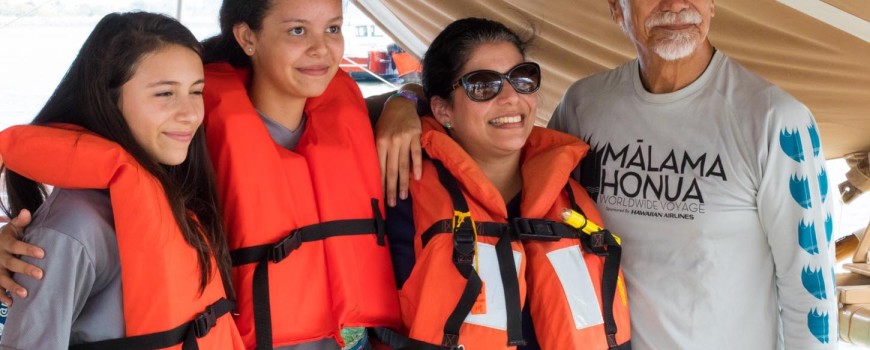
Today, 58 young, enthusiastic 7th and 8th graders join the crew on board the canoe. They chatter excitedly about the canoe, clearly stimulated about what they have learned and the experience of meeting Hōkūleʻa live and in person. Check out their awesome work for yourself: https://vimeo.com/198228781.

This educational opportunity is a beautiful way to close out the early afternoon and make way for the next set of activities. Closing for now, we say mahalo nui from Leg 27 crew to all of you, young and old, for following this voyage around the world as we do our part in service to the mālama honua mission and values while bringing Hōkūleʻa safely home. Aloha!


Homecoming__-_Save_the_Date_-_Banner

Hōkūle‘a Homecoming – Save the Date

Sign up for updates and be the first to know as we continue to detail homecoming festivities during the week of Hōkūleʻa’s homecoming
on June 17, 2017!
Hōkūleʻa Update | January 15, 2017

On Leg 27, Hōkūleʻa will voyage from Panama to the Galapagos. In this update, documentation crewmember Bryson Hoe recounts connecting with members of the local Panamanian community and preparing supplies for the upcoming voyage.

January 15

Blog by Bryson Hoe

The surrounding water has calmed and the air cooled enough to warrant blankets as five of us take turns on watch aboard Hōkūleʻa. Except for the occasional passing of 500+ feet ships making their way into or out of the Panama Canal, the night is quiet. The conditions are a welcome respite from the heat and humidity of the day.

It has been three days since the majority of the Leg 27 crew arrived in Panama. In that time we have diligently worked to prepare both the waʻa and ourselves. Uncles Archie and Billy have been in charge of our safety protocols, meticulously verifying that all equipment is in working order and in the correct place. Tamiko leads a well-oiled team, purchasing and sorting food into day boxes for both Legs 27 and 28 – all within the space of a hotel room and hallway. Earlier this morning the crew moved the waʻa off her mooring to a floating pier so that she was in a better position for the community welcoming ceremony this afternoon.

As usual, Hōkūleʻa has already attracted interest among other mariners and passers by who often stop and gaze for a few minutes. Even the guards and marina staff give a smile whenever we say “Hōkūleʻa.” They may not know of her history or her travels, but they know Hōkūleʻa is special.

The crew hosted a successful day of community outreach and engagement that began at around 10:00am with an intimate welcoming ceremony featuring local Panamanian indigenous groups and Hōkūleʻa well-wishers. It was a chance for many groups to come together and celebrate common values and efforts. The majority of the crew then hosted a large turnout for canoe tours while some of of us headed to prepare for a presentation at the nearby BioMuseum. A shifting schedule put the possibility of canoe tours up in the air, but the crew remained committed to honoring the community members, especially young educational groups, who had come to share their aloha with Hōkūleʻa.

The presentation at the BioMuseum was well-attended and included several former Hawaiʻi residents. Then it was a quick turnaround to head to dinner at the Union Club hosted by Club de Remos de Balboa (CREBA), which puts on the annual Ocean to Ocean Cayuco Race. The event pits dozens of 4-man cayuco canoes (that have no ʻama) in a 41-mile, 3-day race through the Panama Canal from the Atlantic to the Pacific Ocean. It was a great way to end a busy day for the crew, and we are happy to connect and honor our growing Panamanian ʻohana.

Tomorrowʻs crew call is 0500 to beat the heat while loading food with more preparations to follow.

Mahalo nui to our ʻohana back at home who allow us to be here.


Homecoming__-_Save_the_Date_-_Banner

Hōkūle‘a Homecoming – Save the Date

Sign up for updates and be the first to know as we continue to detail homecoming festivities during the week of Hōkūleʻa’s homecoming
on June 17, 2017!
Hōkūleʻa Update | January 11, 2017

On Leg 26, Hōkūleʻa voyages south from Florida to Panama. In this update, crewmembers Kaniela Lyman-Mersereau and Nakua Konohia-Lind share manaʻo on reentering the Pacific through the Panama Canal.

January 11

Blog by Kaniela Lyman-Mersereau

87 feet above sea level we awake to delicious fried rice prepared by Brad Wong and his watch. As we wait for the pilot to arrive Kapena Bruce waxes eloquent stories about the early days of Hōkūleʻa. We cling to each word because we know the value of where we are coming from and where we are going. He emphasizes the lifestyle. We are not part of a project. We are here doing what voyagers do. Sailing the earth. Traveling through space and time. Being adventurous. This is our culture. This is our practice. It’s not for everybody. Making stories and telling stories by taking the risks on the sea and craft we love. No ke kai mai au. We are from the sea.

Cameras and crew dance across our decks to capture massive ships as they transit: Maersk Utah, MOL Magnificent, Maersk Line, Ever Lucent, Cielo Di Tocopilla, MSC Vaishnavir, Guangdong Hong Kong, Fantasia Del Mar. It’s hard to comprehend the capacity of what they carry, where they are going, what they are bringing.

The last lock opens 87 feet back down to sea level. I count 42 manu ʻiwa (frigate birds) watching us return. Hōkūleʻa breathes, she smells, she tastes her sea. Back to the Pacific. A honua, a hokua o ka ale!… Aue ua hiti e! The crew smile, mele and rejoice on another successful leg. Our pilot, Ricardo, joins in our ʻawa with nothing but gratitude for an experience he’ll never forget: a day with Hōkūleʻa. This is Mālama Honua. These are the humans we seek to connect and learn from. Those who care and those who don’t know will begin to care. The path between two seas adds another date to its history book: January 11, 2017, the day Hōkūleʻa passed through. Remember this date.

My good friend and watch mate Nakua adds to the end of another unforgettable huakaʻi:

As this amazing voyage of Leg 26 in transit from Miami, Florida to Balboa, Panama approaches its final hours we look back through our voyage in awe of the amazing experience we are a part of by bringing this iconic voyaging canoe Hōkūleʻa back home to her home waters in the Pacific Ocean. With our hearts heavy with the thought of leaving our fellow ʻohana and merging back into reality we share ʻawa as we depart the last lock of our huakaʻi. Emotions flowing as the ʻapu of ʻawa goes around the circle, the one most important thing we honor is our ʻohana back home who gives every crew member the OK to spend the time away from home to take care of Hōkūleʻa and our Waʻa ʻOhana.

Reflecting on the voyage we had nothing but good times whether we were in an extreme squall, rough seas or overcast days and nights. With our leadership we all were able to maintain a happy, calm, and humble personality no matter what the situation. Every voyage is different. It’s always with a different captain, crew and experiences which make each voyage special and unique. As always, all crew members are from different walks of life. It is a scarce situation to find a fellow crew member in the same line of work which makes every voyage that much more special. We finish off the evening with an ʻohana dinner for our whole crew, including our crew members of the Gershon II, who will continue this voyage of Mālama Honua to bring Hōkūleʻa home safely.


Homecoming__-_Save_the_Date_-_Banner

Hōkūle‘a Homecoming – Save the Date

Sign up for updates and be the first to know as we continue to detail homecoming festivities during the week of Hōkūleʻa’s homecoming
on June 17, 2017!

Nā Kelamoku: Mālama Honua in Miami

The Polynesian Voyaging Society’s Nā Kelamoku visit Miami to share and learn about mālama honua.

Over 30,000 nautical miles, 100s of ports, and many invaluable experiences and exchanges into the Worldwide Voyage, Hōkūleʻa has made a mark on communities across our island Earth, but perhaps some of the greatest impacts are being made back home in Hawaiʻi with various programs such as Nā Kelamoku — the Polynesian Voyaging Societyʻs Youth Leadership Initiative.

Hōkūleʻa crew member Hyejung Kim plays an active role in leading the group. Kim explained, “Nā Kelamoku is a group of youth from all of Hawaiʻi and they come together with a purpose of a common goal of mālama honua and to learn about sailing and to be in the ocean and to do everything that helps us take care of the ocean. Activities range from hikes to planting trees and so it all kind of comes together when we are trying to see what other communities are doing and then learn and share what they have to offer.”

On a recent trip to Miami, Florida, Nā Kelamoku students looked to share and learn more about what various school groups there were doing to mālama honua and one of those schools was Jose Marti MAST academy.

Andrew Kearns is a teacher and sponsor of the school’s Green Club. He said of the club, “Well our green club program here at Jose Marti Mast is designed to make our students stewards of their environment and to make them make our world a better place, essentially to mālama honua.”

Exploring the similarities between Hawai’i and Miami and the potential for these groups of students to connect with each other Kim said, “I think there is a lot of commonalities between Miami and Hawaiʻi in the sense that we are very close to the ocean and so the impacts of everything in the ocean –we see it happening so quickly to us. So when it comes to having a common goal and taking care of our earth they can share a lot and they can bounce ideas off of each other to learn.”

Nā Kelamoku student Brandon Caliwag participated in the trip and explained what he hoped would come about of the experience from the students they interacted with, “I want them to see us as fellow students and by us sharing about what we are doing in the community maybe it will inspire them.”

In reflecting on Nā Kelamoku’s visit to their school, Kearns said, “Our students here at Jose Marti Mast learned that they are not just spectators to their environment, but that they are participants, that they can actually make a difference in the world around them. Having the Nā Kelamoku folks here today was exceptionally powerful for our students to see youth being empowered to take care of the earth.”

Continue to follow Hōkūleʻa as she closes her four year, 60,000 nautical mile voyage by finding and celebrating stories of Mālama Honua from the far corners of the world.


Hōkūle‘a Homecoming – Save the Date

Sign up for updates and be the first to know as we continue to detail

homecoming festivities that will include multiple events!

Crew Blog | Aloha Cerit: Nā Kelamoku trip to Miami

Nā Kelamoku trip to Miami

Written by Nā Kelamoku crewmember, Aloha Cerit

The one week I spent in Miami with the members of Nā Kelamoku was life changing.  My days were filled with an exchange of sustainable ideas with various youth from Miami.  We shared our desires and our actions to take care of the planet and in turn learned the ways that students in Miami were implementing the concept of mālama honua in their classrooms and lives.  Our evenings were equally amazing.  As an aspiring sailor, I jump with excitement at any opportunity to be around the waʻa (canoe) and learn from the seasoned crew members of the Polynesian Voyaging Society.  I quickly fell in love with spending my evenings sharing a meal with the leg twenty six crew of the Worldwide Voyage.  They had so much to teach, and I soon felt welcomed into the awesome journey on which they were about to embark.

When the morning arrived that Hōkūleʻa was set to begin her journey down to Key West, Nā Kelamoku awoke before dawn to see her depart.  Not wanting to get in the way of the crew as they busily prepared for their voyage, we sheepishly stood on the dock.  However, our inhibitions were quickly wiped away when the crew saw us and invited us on board with a smile.  We eagerly offered our help in all the ways we could.  Hōkūleʻa was ready to set sail, but she needed to be turned around.  The crew worked together as a well oiled team.  Each crew member executed their part perfectly and the wa’a slowly spun around.  The Nā Kelamoku members were lucky enough to hold the lines on the dock and help Hōkūleʻa maneuver.  I was overcome with excitement as my training at home to be a sailor was being realized in front of me.  I was actually holding the lines to the Hōkūleʻa.  As she maneuvered around, an immense surge of pride rushed through me.  The canoe was simply turning, but seeing Hōkūleʻa afloat on the water reminded me that this canoe was special.  Our culture, values, and everything that Hawaiʻi emanates was floating in front of me.  We were 5,000 miles from Hawaiʻi yet I was more connected to my culture and my home than ever.

When the Hōkūleʻa was facing forward, our members of Nā Kelamoku were asked to step back on board and join the crew in chanting Oli Mahalo.  As I chanted, I considered the words and the meaning of the oli (chant).  It tells of gratitude to God, to our ancestors, and to love.  In that moment, I had everything and some to be thankful for.  I was living my dream.  I was also overwhelmed with a feeling of gratitude for the crew, the waʻa, the places that had hosted us, and all the experiences I had encountered. We wished the crew a safe journey and kissed them goodbye.  Once again the canoe pushed away from the dock.  As I watched Hōkūleʻa, a gentle shower began to fall.  I looked up into the rain to see a rainbow looming.  There was a rainbow in Miami just for her.  A sign of hope, light, and beauty.  She was being wished a safe journey from the heavens.  In that surreal moment only one thought crossed my mind.  A hui hou (goodbye).  See you at home.  I cannot wait to see you again.  She was beautiful on the water.  The members of Nā Kelamoku walked out to the edge of the pier with each of our eyes fixed on Hokule’a as she drifted away.  Her next adventure awaits.  She was about to continue sharing the message of mālama honua as she finished her tour of the world.  We stood there in silence, unblinking, not wanting to come back to reality after the wonder in which we had all just taken a small part.  She slowly disappeared into the sun and eventually was just a speck.  I felt content.  I was overjoyed that I had seen her, and I felt extremely satisfied with myself for the time and learning I had on the canoe.

When we walked back to the car, still savoring the moments of witnessing Hōkūleʻa on her way, I was overwhelmed with pride, happiness, and awe.  As I was was wrapped up in my head, a man in a wheelchair approached us and asked if we were on the dock to watch Hōkūleʻa depart.  We explained that we were Nā Kelamoku, the youth group of the Polynesian Voyaging Society.  This kind stranger seemed overjoyed to meet us, and introduced himself as the owner of the pier that Hōkūleʻa had been docked at for the past few days.  He and a few of his partners were about to take a boat out to follow Hōkūleʻa.  They asked if we wanted to join them.  Of course!  Another chance to see Hōkūleʻa on the water was something that none of us could deny.  What are the chances that this stranger would come up to us and extend such an amazing offer?  How lucky we are. This only happens when you have a good heart and a good purpose.  Good people find you. They gravitate to your goodness and they want to be apart of what you are doing.  I had never had such kindness extended to me.  I knew that this was happening because of the inspiring mission and team that I had become a part of.

As we coasted into the open ocean, I was excited to see Hōkūleʻa again.  I struck a conversation with our benevolent new friend, Harry.  I was captivated by his story.  He had broken his back a few years ago, and, being someone who loved the water and boats, was inspired by his misfortune to fill a need in the community.  There were no marina’s that catered to disabled peoples, so he founded one.  He called it Shake a Leg.  Shake a Leg Miami became a place of rehabilitation, therapy, and new opportunity for youth with physical and mental disabilities.  I sat behind Harry and his service dog and was filled with so much respect.  To me, he had achieved the definition of a successful life.  Harry had found a need in the community, something he was passionate about, and did it.  I want to be able to say that I did something this meaningful with my life someday.

When we pulled Hōkūleʻa closer to us, I was again struck by how beautiful she was in the water.  Even with her sails closed, she jumped over waves with grace and stood majestic.  She was a beacon of hope and a representative of Hawaiʻi.  Hōkūleʻa was proof that our ancestors were voyagers, made for the water, and able to navigate purposefully without the use of modern technologies.  As we all gazed at Hōkūleʻa with wonder and amazement, Harry asked me to explain the story of Hōkūleʻa to his live video feed.  I was more than happy to share her story because it truly is amazing. The people that made her possible were determined to prove what they believed.  Against the common belief and the criticisms that they received, they constructed Hōkūleʻa and successfully completed a journey.  Their determination prevailed and they proved that they were right.  As I was speaking for the live video feed, a huge wave splashed us and soaked everyone.  I didn’t care one bit.  I love the water it was refreshing and it is a friend.  I sat there soaking wet, telling the story of our amazing waʻa, and staring at her glide over waves.  There was nothing in the world more perfect than that moment.


Hōkūle‘a Homecoming – Save the Date

Sign up for updates and be the first to know as we continue to detail

homecoming festivities that will include multiple events!

Hōkūleʻa Update | January 9-10, 2017

On Leg 26, Hōkūleʻa voyages south from Florida to Panama. In this update, watch captain Kaniela Lyman-Mersereau describes the anxiety of waiting to enter the Panama Canal and the bustle of industry the crew finds inside it.

January 9

Blog by Kaniela Lyman-Mersereau

A man a plan a canal, Panama: this palindrome spins in my head as I awake with expectations of departure. This morning is the moment we’ve been waiting for. It is time to untie from the Shelter Bay marina and tie on to our support vessel for a Panama Canal transit. It is time to take Hōkūleʻa back to the Pacific. Lines are readied, deck is cleared, banners removed. We must only wait for the work boat that will be helping us through the locks. The wind is up, the sun is out. A refreshing 20-30 knot wind is helping to protect us from mosquitos through the night. With this wind there is a slight chop. This side tie to the work boat will be trickier than it was during our simulation in calm conditions a few days ago. I rehearse the scenario in my head wondering what issues to anticipate. Safety of crew and waʻa first. The crew is ready for new scenery, ready to finish this section of the world wide voyage, ready to move forward. It’s been 6 days in this quiet marina. It seems like a lifetime ago we were sailing gracefully through the Carribean Sea.

Phone rings. Kapena Bruce answers. Our ears engage. “…So you’re telling me we’re cancelled for today?…”  Our hearts sink as we listen to our new options. We take time to digest the news and contemplate our disappointment. Captain shares the news with the crew along with his manaʻo during such circumstances. Such factors are out of our control. We must put things in perspective. We are healthy. No sense dwelling and staying frustrated over that which we cannot control. Roll with the punches. Go with the flow. This is what we do best. This is what Hōkūleʻa has done since the beginning. This is when the values we live by matter the most.  Welcome to voyaging. A little patience and understanding, ahonui, goes a long way at sea and in port.

Plan A: we get underway tomorrow.

Plan B: if we get cancelled again we must prepare the canoe for the next crew to take Hōkūleʻa through the canal and on to Galapagos. We will spend a day observing the locks from the sidelines to at least get a taste of the process.

Gentle strums on the guitar and ukulele by Lohiao Paoa and Brad Wong help remedy the wavering spirits. Kaʻau’s guitar sings to us as it has from the beginning of the voyage reminding us why we are here. Reminding us to be selfless. Take it all in, help each other and keep happy. For now we wait and hope ready to accept, understand and flow with whatever comes our way me ka haʻahaʻa. Aloha.

…The sun sets after a day of seeking knowledge about the canal at the canal. Just as I’m finishing the last words of this blog Captain’s phone rings… We depart for el canal de Panama at 3am tomorrow!

January 10

Blog by Kaniela Lyman-Mersereau

“E mau ke ea o ka ʻaina I ka pono” Kanaʻi Aupuni rustles me awake from a deep hour of sleep. I hit the snooze button aggressively. It plays again. It is 2:45am. Time to prepare lines. Time to prepare to side tie to our support vessel through the Canal de Panama.  The wind blusters. 15-25 knots out of the northeast, koʻolau, with occasional rain squalls to keep things interesting.

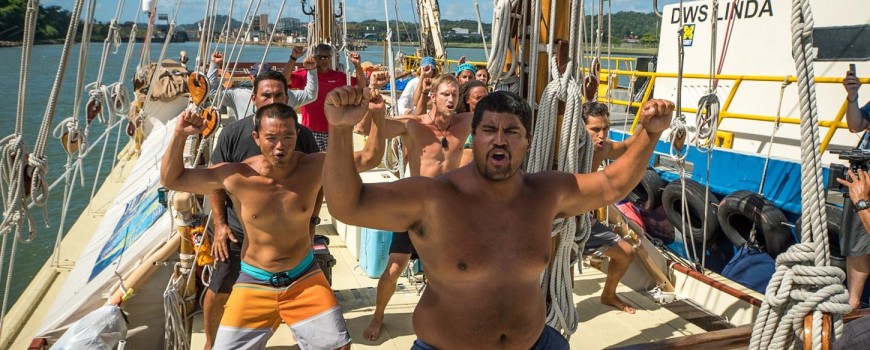
Our support vessel comes roaring into sight around 5:09am. Just in time for our first squall to hit. Crews scramble for jackets and help the 82 foot DWS Linda tie up to the dock. We tie to her starboard with few words exchanged with the captain and crew. My Spanglish only gets me so far but they are smiling and snapping photos so perhaps they are interested in what we are doing and do not think I am a complete idiot after all.

Nothing like the smell of diesel in the morning. We move forward into a windswept, rainy harbor with all energy focused on lines and fenders that separate beautiful Hōkūleʻa from this 82 foot diesel, steel beast. Constant adjustments are made to ensure safe passage as we wait for our pilot to board. We soon find ourselves in the calm waters of the canal entrance moving forward and back under a thundering diesel engine as we wait for a massive ship, Fortune Tiger out of Hong Kong, to enter. Out of the wind and wave the crew feel more relaxed as we wait for our first lock to fill with water and take us 27 feet above sea level.

My thoughts drift to our learning journey yesterday where we spent the afternoon at the Mira Flores lock seeking knowledge about this amazing feat of human ingenuity to connect two seas. My grammarless, flow of consciousness journal entry tried to make sense of it all:  Human ingenuity displaced dirt and a whole lot more. Blood, sweat and tears poured into the land and sea by various corners of humanity seeking excellence in engineering feats beyond the imaginations of the time. Steel and machines and dollar-a-day human labor as nations battle to flex their industrial muscles and get a hold on world commerce. One nation fails to finish. One nation succeeds. Many lives are lost over many years. Young martyrs of the land fueled by the civil rights movement make their plea for independence known. A shortcut to connect two seas and avoid the perils of Cape Horn through a dredged land up and down with gravity and water. The ships get bigger, the cargo gets heavier, the Canal grows larger… People and goods connected, habitat and ecosystems altered, ship traffic made safer, water manipulated. Island earth suffers or grows. Who knows. Hawaiʻi knows these ships well-filled with wants, and wants, and a few needs. We know them too well…

Surrounded by phenomenal feats of human engineering Hōkūleʻa remains timeless and humble amongst it all putting up with the noise and smells so she can make it home safely. The thrilling adventure of travelling half a knot surrounded by enormous ships that seem to clear the walls of the lock by centimeters has lulled me to sleep. I awake 26 meters above sea level staring across man-made lake Gatun which is filled with ships and surrounded by dense forest. We move forward away from the ships, and the surrounding trees and wilderness provide a refreshing respite from the relentless industry. It is a beautiful night with a Hua moon glowing and our friends ʻIwa Keliʻi and Hōkūpaʻa watching over us.  Tomorrow we will re-enter the Pacific. Tomorrow will be a special day. Pō Malie.


Hōkūle‘a Homecoming – Save the Date

Sign up for updates and be the first to know as we continue to detail

homecoming festivities that will include multiple events!