Hōkūleʻa Update | 10 Days in Cape Town

Day 1: November 23, 2015

Today we towed Hōkūle’a by dinghy from the quay at the V&A Marina to Granger Bay.  We passed a couple seals on the way that were playing in the water; it was pretty cool to see.  When we got to Granger Bay, the sled was waiting for us, and we were able to get Hōkūle’a up on to it directly.  After the dry dock folks secured us, we were hauled right up – it was pretty amazing.

We took an early lunch while an employee of the Granger Bay dry dock facility powerwashed the bottom of the canoe for us.  We have been able to shop for food in the leftover provisions from Leg 15, and are planning to cook our breakfast, lunch and dinners at the Granger.  Most of the gang is staying in the rooms right at this dry dock facility, so we can walk upstairs to the rooms to get anything we need.

We got back to work at noon, cleared the deck, got all the sticks and paddles on the ground, and everyone dove right in.  The weather here is perfect…not a cloud in the sky.  That also means it is really hot, and we have to be careful of potential dehydration. 

Our plan is to get right through dry dock quickly and efficiently, working 9 hours a day to get Hōkūleʻa ready to go on her next long series of legs.

Looking forward to tomorrow.

Day 2: November 24, 2015

IMG_0569

The team is focused! A lot of sanding and fiberglass work going on today:

  • Bob fixed the bottom of the mizzen mast where the fiberglass was cracked
  • Kimo replaced the broken cleat on the aft mizzen mast
  • Bill is sanding the paddles and booms
  • Bob and John are redoing the fiberglass patch on starboard manu
  • Nakua, Naia, and Kealoha sanded on deck in the sun all day in the brutal heat  
  • Irish is working on the RO system for the watermaker and checking electrical systems
  • Steve and Bruce went to sailmaker to finalize canvas

It was a good long day of work, everyone is wiped out from the heat, and looking forward to starting again tomorrow.

Day 3: November 25, 2015

Today was a tough day. It was sunny and hot again with a little breeze, a tiny bit cooler than yesterday.  It was a long 9 hours for everyone; the entire crew is wiped out but it was a good productive day.

In terms of our prep work:

  • Deck = 50% complete
  • Bottom of canoe = 90% complete
  • Starboard manu = 90% complete
  • Steering paddles = 70% complete
  • Mast, Spars, Boom = 60% complete
  • Cat walks = 70% complete

Looking forward to completion.

Day 4: November 26, 2015

IMG_0570

Today was windy; it kept us cool and we got a lot done.  Everyone is doing well, and working really hard.

  • the prep for the deck is 99% complete
  • the cleats on deck that were sanded now have one coat of varnish
  • palekai is sanded with one coat of varnish
  • the paddles are sanded and have one coat of varnish
  • the mast, spars, and boom are sanded with one coat of varnish
  • work on ʻiako outside hull and safety rail are complete and ready to refinish, and
  • aft mast is repaired and ready to refinish.

Our paint got delivered today, so tomorrow we will start painting and continue varnishing.

Wishing everyone at home and elsewhere a Happy Thanksgiving!

Day 5: November 27, 2015

IMG_9483

Aloha from South Africa!  Today was another nice day, a little on the hot side.  Behind the vessels here there were a couple birds and 2 penguins who were fishing; we enjoyed watching them.  

As of today:

  • the prep work for the deck is complete, and we will start painting tomorrow
  • the prep work on the bottom of the canoe is 90% complete; the first coat of paint is going on tomorrow
  • paddles and sticks as well as cleats got their second coat of varnish
  • the port catwalk repairs are 70% complete
  • the starboard manu repair is complete
  • Bob started the repair for the port manu
  • we are now beginning the finish work on the canoe parts.  

Everyone is healthy and working really hard; we are close to having all the nasty work done.  This is a good time to be doing this work, as Hōkūle’a could use some TLC – she has done a lot of sailing.  We are working to get her good to go for the next year.  

Day 6 and 7: November 28 and 29, 2015

IMG_0566

Everyone is doing well and working hard.  Irish is our cook, and everyone is enjoying the home-cooked meals.

Yesterday we:

  • painted the two front manu.  
  • put a coat of paint on the hull, over the brown part.
  • got the first coat of primer on deck.  
  • put a third coat of varnish on paddles and sticks.  
  • did all prep work to finish the repair for the catwalk.  
  • oiled the large cleat on front and ohia on nav platform.

Today we plan to:

  • put on first coat of bottom paint, and first coat of paint and non-skid on the deck and the catwalk
  • finish repairs on catwalk
  • put fourth coat of varnish on sticks and paddles.

We are looking at splashing back in on Tuesday, and moving back to the quay at the V&A Marina.  

Day 8: November 30, 2015

IMG_0567

Aloha kākou – Waʻa coming along really well…she looks good!

Today we:

  • put first coat of paint on the deck and scattered sand for non-skid
  • finished caulking seams between deck and gunnels
  • completed the repairs on the port catwalk
  • put a fourth coat of varnish on the paddles and sticks.  
  • put first coat of bottom paint on the canoe
  • put last coat of paint on both manu, so they are completed

The crew looks really good; the guys are having fun today doing all the work.  Everyone is in good spirits, and it’s been a great day.

Day 9: December 1, 2015

IMG_0564

Today was another great day!  We got a lot done – lots of painting and lashing.  She is looking really good, and the crew is doing well.

Today we:

  • got a second coat of bottom paint on
  • finished painting the deck
  • finished painting ʻiako on outboard under catwalk
  • finished varnishing ʻiako underneath the deck
  • got fifth coat of varnish on paddles and sticks
  • put the first coat of paint and non-skid on catwalks
  • put the first coat of paint on the safety rail
  • put on the new cleats on the spar and lashed it
  • lashed the RO system (watermaker) on port 7.  

Tomorrow will be the last day of work on Hōkūleʻa; she will splash on Wednesday December 2nd at 10am.  After Hōkūle’a splashes, Gershon II will haul out for her drydock.

Day 10: December 2, 2015

Much appreciation and mahalo to all those who contributed to this successful dry dock.  

E mālama pono,
Bruce and the Dry Dock Crew

Bruce Blankenfeld
Bob Perkins
Kimo Lyman
Kealoha Hoe
Mike Cunningham
John Kruse
Naia Blankenfeld
William Blankenfeld
Nakua Konohia-Lind


Please help keep us sailing for future generations. All contributions make a difference for our voyage. Mahalo nui loa!
Hōkūleʻa Update | Mālama Honua-inspired Tutudesks

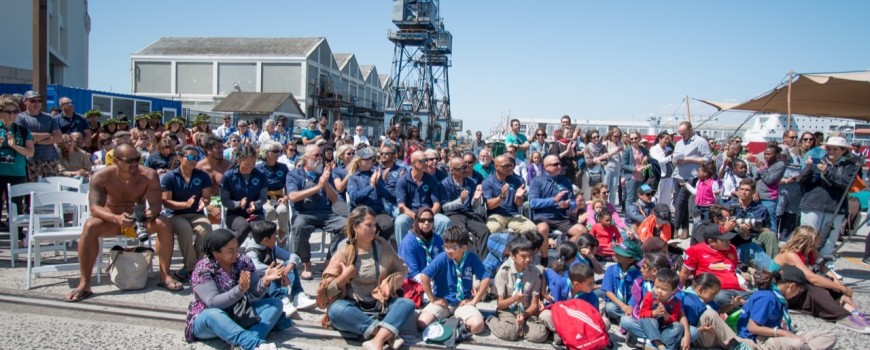
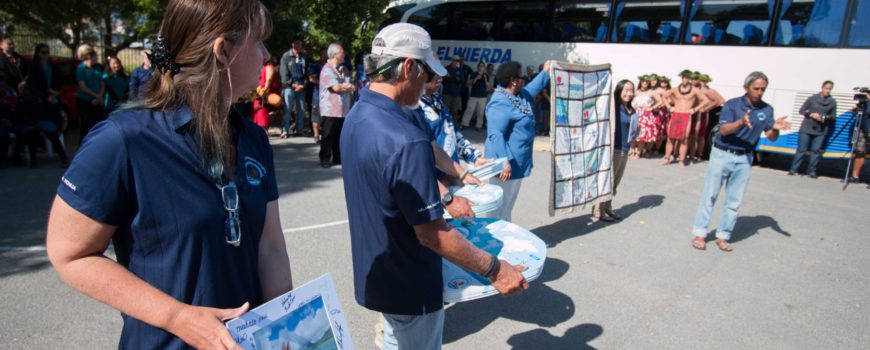
Hōkūle‘a crewmembers and a delegation of Hawai‘i students, teachers and families visited St. Mary’s Catholic Primary School near Cape Town, South Africa to present 50 Tutudesks featuring artwork inspired by the Mālama Honua Worldwide Voyage. An additional 1,000 desks will be delivered to township schools in the Durban, South Africa area in early 2016. The donation of desks will support the campaign’s goal to provide 20 million desks to 20 million children by 2020.

IMG_6141

“These Tutudesks will help students have space at home to do their homework. Even in the classroom, it’s going to help teachers do individual work with each child,” said Vuyiswa Lebenya, principal of St Mary’s Catholic Primary School.

IMG_6343

Following the presentation, Ke Kā o Makaliʻi – a group comprised of teachers and students from Kamehameha Schools and Hālau Kū Māna Public Charter School – offered hula and mele celebrating the past voyages of Hōkūleʻa. Students from St. Mary’s then followed with their own local songs and dances before inviting the Hawaiʻi delegation to participate.

IMG_6782

“When I saw them dancing together, that is what global peace looks like. It’s finding that rhythm that’s down deep inside that allows us to be completely the same, to be respectful and caring of everyone,” said Nainoa Thompson, President of the Polynesian Voyaging Society.

IMG_6225

The Desmond Tutu Tutudesk Campaign provides portable school desks to children in sub-Saharan Africa, where more than 95 million school children do not have the benefit of a classroom desk. This shortage affects the development of literacy and overall academic performance.


Please help keep us sailing for future generations. All contributions make a difference for our voyage. Mahalo nui loa!

Hōkūleʻa Update | Table Mountain National Park

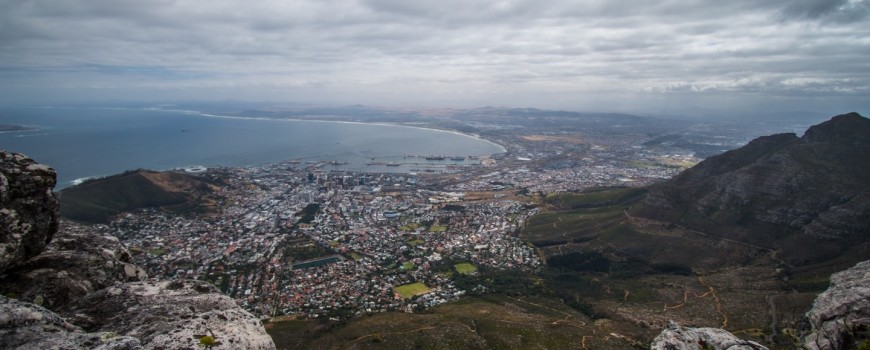
Worldwide Voyage crewmembers and students of Ke Kā o Makaliʻi visited Table Mountain National Park near Cape Town, South Africa that included the Table Mountain, Boulders Beach, and the Cape of Good Hope. The day concluded with a beach clean up where the group collected debris along the shoreline to promote the voyage’s mission of Mālama Honua – Caring for our Island Earth.

About Table Mountain National Park: 
Hoerikwaggo – “Mountain in the Sea” is the original name given to the mountain chain by the indigenous Khoisan people of the Cape, although of course, the history of the mountain dates back roughly 30,000 years, with evidence tracing as far back as the Stone Age.

IMG_8621

The first officially recorded climb to the top of Table Mountain belongs to Portuguese Navigator, Admiral Antonio de Saldanha who in May 1503 anchored his ship in what we know as Table Bay, and climbed to the top via Platteklip Gorge. Since then, many have travelled in de Saldanha’s foot steps and the mountain has been a beacon of hope to many living beneath its glorious splendor.

IMG_8598

Today, this iconic mountain chain and New7Wonder of Nature is known as Table Mountain National Park (TMNP) – one of 21 Parks in the South African National Parks (SANParks) stable. Established in 1998, the TMNP is surrounded entirely by a City and for this reason it is fragmented by urban development and privately owned land. This combined with the fact that it is primarily an open access Park with only four managed pay points, has resulted in it being the most visited of all National Parks receiving an annual quota of 4.2 million visits.

IMG_8700

Prior to the establishment of the Park, a 30,000 hectare area of conservation-worthy land on the peninsula was identified as the Cape Peninsula Protected Natural Environment (CPPNE). Currently the TMNP includes 25,000 hectares of the CPPNE and it is our goal to incorporate the remaining 5 000 hectares into the Park. The TMNP’s jurisdiction also includes 1,000 square kilometers of the seas and coastline around the peninsula.

Also forming part of the TMNP is the Cape Floral Kingdom (CFK), the smallest and richest of the six floral kingdoms that occur on earth. The CFK spans the eastern and western Cape and in June 2004, was declared to be of universal significance to humanity and was inscribed as a UNESCO Natural World Heritage Site.

IMG_8993

The site is a serial nomination and is made up of eight separate areas that are considered to be representative samples of the entire region and is managed by four different authorities namely South African National Parks (SANParks), CapeNature, the Eastern Cape Nature Conservation Board (ECNCB) and the South African Biodiversity Institute (SANBI):

  • Table Mountain National Park and Kirstenbosch National Botanical Gardens, managed by SANParks and SANBI respectively. Kirstenbosch is the first and only botanical garden to be included in a Natural World Heritage Site nomination.
  • Cedarburg Wilderness Area – CapeNature
  • Groot Winterhoek Wilderness Area – CapeNature
  • Boland Mountain Complex – CapeNature
  • De Hoop Nature Reserve – CapeNature
  • Bosmansbos Wilderness Area – CapeNature
  • Swartberg Complex – CapeNature
  • Baviaanskloof Protected Area – ECNCB

Home to an amazing 8 200 plant species – of which around 80% are fynbos, the CFK is also the only kingdom confined to one continent. The significance of this hits home when you consider that the British Isles, 3 ½ times the size, boasts less than 1,500 plant species.

IMG_8678

Many of the plants that occur here are endemic – that means that they occur nowhere else on earth. To add to this there are around 1,406 threatened plant species, 300 of which are endangered or critically endangered and 29 plant species are already extinct. It is this combination of high diversity and levels of threat from issues like urbanization, poor fire management and alien species that makes the CFK the world’s hottest floral hotspot. .


Please help keep us sailing for future generations. All contributions make a difference for our voyage. Mahalo nui loa!

Crew Blog | Michelle Knoetgen: Sailing into (the) Future Primal

“The voyage of the Hōkūle‘a reconnects us [Africans and Hawaiians] at a primal level. It harks back to our oneness. To the starting point of our interconnectedness and our human journey.”
—Reverend Mpho Tutu at the Ceremony of Friendship in Cape Town, South Africa.

Before the delegation of Hawaiʻi educators, students, crewmembers, and documentarians arrived in South Africa, our journey began through interactions with cultural experts such as University of Hawai‘i professor of political science Louis Herman. Herman visited ‘Iolani School on Thursday, October 22 to present ideas from his book Future Primal: How Our Wilderness Origins Show Us the Way Forward. Deeply in touch with the natural world, this Port Elizabeth, South Africa native shared insights on the parallels between Hawai‘i and South Africa.

Herman spoke of his own attraction to opposites, and how revelatory it can be to oscillate between extreme experiences; for example, to travel from Hawai‘i to its antipode (direct opposite on the globe)—Africa—and back. In his words, there is a “powerful symmetry” between the two locations, and he reminded us that we learn the most about what it means to be human from the people who might seem the most different.

We the Navigators

Just as Hōkūle‘a’s journeys around the world to connect a lei of people and communities, Herman writes about looking within to find “a path with heart” and speaks of the “primal planetary culture” to which we all belong. He sees the Mālama Honua Worldwide Voyage as “an example of an organization embodying the primal truth quest.”

Part of this quest is to connect spiritually with nature by being quiet and listening: “quieting the ego, meditating, and just paying attention to our natural surroundings.” He referred to the “shamanic resonance with the natural world” present in indigenous wisdom.  Herman brought up Mau Piailug’s “shamanic navigation” and “acute sensitivity” to the ocean’s swells, the earth’s winds, and the universe’s stars, and reminded us that this sensitivity to nature is recognized as reality by all indigenous cultures.

Voyaging wisdom reveals that our similarities far exceed our differences. As Pwo Navigator Kalepa Baybayan wrote about his revered teacher, “Mau viewed and treated us as an oceanic ‘ohana, defined not by an ocean that separated us, but rather an ocean that joined us around common traditions and a passion for an island lifestyle” (from Baybayan’s article “Piailug’s greatest lesson is that we are a single people” posted July 29, 2010 in the Honolulu Star-Advertiser).

The Birthplace of Consciousness, the Piko of the Planet

Herman celebrates South Africa as the biological hotspot where human consciousness began: “We are all descendants of a very small group—all indigenous to the planet earth.” Members of the Hawaiʻi delegation will travel to Mossel Bay, the origins of Homo sapiens according to prevailing research. Evidence includes bones, tools, the oldest known piece of art (approximately 77,000 years old), and remnants of an art workshop containing toolkits for mixing paint dating back 100,000 years (according to Popular Archaeology) found in Blombos Cave and Pinnacle Point, among other archaeological sites.  When Hōkūleʻa and her crew sailed the southern coast of South Africa, crewmembers anchored in Mossel Bay to pay respect to this origin point, and to learn more about our shared ancestry.

Friends of Louis Herman, South African documentary filmmakers Craig and Damon Foster are working with The Sea Change Project — a multi-media endeavor that tells the story of the birth of humanity, and the ancient relationship we all have with the sea. Here is a fascinating excerpt from The Sea-change Project website:

The latest scientific evidence shows that the first modern humans lived at the coast on the southern tip of Africa, in what is now the Western Cape of South Africa. The archeological records at the “point of origin” show the first evidence of cognitive human development, early nuclear family life, art and human values that we associate with modern humans today.

The leap in our evolution to become Homo sapiens is arguably the greatest “sea-change” in the 250,000 year history of our species. The phrase “sea-change” was first coined by Shakespeare in The Tempest, and it means a profound transformation wrought by nature. It appears that this transformation was wrought in part by our relationship with the sea, as it is believed that the high nutrient content in seafood harvested from the abundant rocky shoreline and kelp forests fuelled the brain and upgraded the architecture of our minds. Because we all share the same ancestors, the southern tip of Africa is quite possibly the original home of everyone alive today.

So, it is possible that South Africa is the birthplace of human consciousness, the original Garden of Eden, the location of our ocean origins.

At the Ceremony of Friendship in Cape Town, Pwo Navigator Nainoa Thompson discussed the incredible experiences the crew of Hōkūle‘a has had in South Africa: sailing around the Cape, diving in the kelp beds, and being welcomed warmly by the beauty of Africa and the African people, Nainoa said, “Across this landscape, in these ancient places of the domain of the beginning of modern man, the funny thing is, we never left home, because that is us. If this is genesis and this is the beginning of mankind, then coming to Hawai’i, you are still you and you are us. And it was an amazing experience to sit there and recognize that you’re half way around the world and you’re still home.”

Into the Future

In our conversation with Louis Herman, a question that arose was, face to face with the catastrophic devastation of nature that is occurring right now – i.e. mass extinction of species (50,000 living species lost per year), rising seas engulfing coastal cities and burying island nations, and the depletion of natural resources – how do we remain hopeful?

Herman finds answers in the generosity of spirit that humans are capable of, and by having “faith that human beings can avert this apocalypse that is underway.” The hope is that we are “shocked into an awakening,” “open to the big picture” and “always growing.”

Mahalo nui to our friends Louis Herman, Craig Foster, and Peter Nilsson for opening our eyes to this shared heritage, our primal connection with Africa.

This was initially posted on Shelley’s blog, and revised to include new content from Shelley’s time with the Hawaiʻi delegation in Cape Town.  To read more of Shelley’s amazing work, please visit https://shellkanoe.wordpress.com/


Please help keep us sailing for future generations. All contributions make a difference for our voyage. Mahalo nui loa!

Continue Reading

Crew Blog | Austin Kino: Sharing at the World Wisdom Gathering

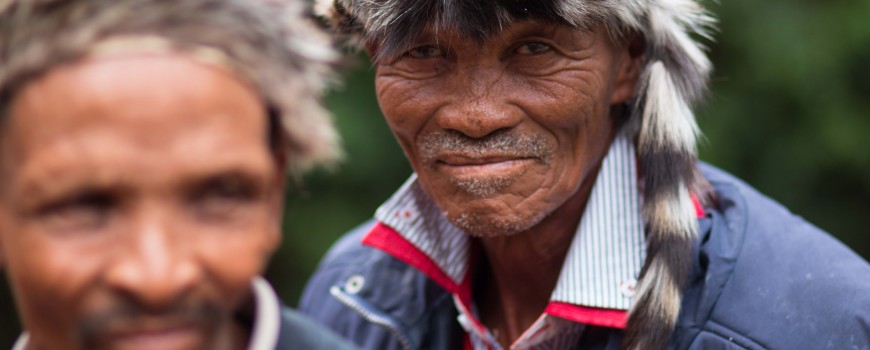
On Sunday November 15, 2015 Hōkūleʻa crewmembers were invited to attend the 2015 World Wisdom Gathering held in Hout Bay, the first Wisdom Gathering for South Africa. The purpose of the Wisdom Gathering is to create a space to celebrate the link between indigenous and modern wisdoms throughout the diverse nations of the World. Local and international Elders in attendance represented a variety of cultural backgrounds including Kalahari Bushmen, Zulu, Koi, AmaMpondo and Xhosa who came together to discuss community building towards a more sustainable earth.

IMG_3154

Captain Billy Richards shared Hōkūleʻa’s story with the Gathering as a testament of how indigenous knowledge makes it possible for seemingly impossible things – like a traditional voyaging canoe successfully sailing halfway around the world – to come to life.

IMG_3246

For me, being at this gathering in South Africa and hearing Uncle Billy share our message of Mālama Honua with these Elders made me realize the power of sharing a story. All of the representatives at this gathering are working hard to preserve their indigeneity, and hearing Uncle Billy talk about celestial navigation going from near extinction to being revitalized and practiced throughout the Pacific today gave confidence to everyone in attendance.

As we embark on the second half of this Worldwide Voyage, I am inspired by what we have encountered thus far with each leg of the voyage, and hopeful for what we will learn in the legs to come.


Please help keep us sailing for future generations. All contributions make a difference for our voyage. Mahalo nui loa!

Crew Blog | Derek Ferrar: Welcome to the Land Voyage

With all the challenges and risk of guiding Hōkūle‘a safely down the dangerous east coast of South Africa to Cape Town – the notorious ‘graveyard of ships’ that in some reports has seen more than 3,000 shipwrecks – Nainoa has wanted to keep Hōkūleʻa as light as possible for manueverability and safety.  In part, he is accomplishing this by reducing the number of crew and amount of excess gear on board. As a result, Hōkūleʻa’s progress down the coast has been paralleled by a “land voyage” crossing hundreds of miles of the South African landscape – I’ve been fortunate enough to be along for the ride.

Garden Route peaks

The first leg down from Richards Bay to Durban, crew members Kaimana Barcarse, Daniel Lin and myself were squeezed into a single-cab pickup truck (or “bakkie,” as they’re called here), reminiscent of a bygone Hawai‘i, with mile after mile of sugarcane fields. As with Hawai‘i, contemporary South African – and especially Durban – society is heavily influenced by the descendents of field hands from abroad who came to work the cane; in this case, Indians who were brought over starting in the 1860s as indentured workers. Today, more than a million South Africans are of Indian descent, and the majority live in Durban, which has often been called the “largest Indian city outside of India.”

Garden Route - Storms River Bridge 2

From Durban to Port Elizabeth, we switched to a roomier passenger van and were joined by crew doctor Carolyn Annerud. We turned inland to the most dramatic portion of the land voyage up to that point, climbing about a mile high into the ancient, arid mountains of the region formerly known as the Transkei, a nominally independent homeland for the Xhosa people under apartheid. Here, sweeping brown vistas offered hardly a tree for what seemed like hundreds of miles, and rounded peaks loomed over villages of small, square homes. Goats, cows and sheep grazed by the road – and apparently often stray into it, creating a living obstacle course that prompted Grant, the harbor pilot who helped guide Hōkūleʻa through this treacherous leg, to comment that “the drive is more dangerous than the sail,” especially at night. Fortunately, we stuck to the daylight hours, and the animals stuck to the dry grassy margins.

PE Departure

We received a cultural education of sorts when we stopped for lunch in the small waypoint town of Harding, where streets are lined with an amazing variety of shops housed in shipping containers, from hair salons and sundry stores to a cell phone shop and even a doctor’s office. At a recently opened strip mall, a long line of citizens queued up to get into the new Shop Rite grocery store, and the fast-food joints all offered a “Hawaiian” version of their burgers, pizza, chicken or fish ‘n’ chips – although no one we spoke to seemed to know where or what Hawai‘i is. We did, however, make new friends through the local practice of sitting in any available seat whether you know the people at the table or not. My favorite was one tutu lady in a brightly printed dress and head wrap, who creaked herself into the chair next to me with a loud series of grunts and groans, then plopped down the final inch with a satisfied “aaah!” As we shared a chuckle, she clicked her tongue and said, “Old age … chee!”

Garden Route Coastline 1

We then turned back to the coast and overnighted in the commercial port town of New London, where the landscape changed dramatically to green, rolling pastures and well-fed cattle herds that Kaimana said reminded him of voyages to Aotearoa. And we knew we were back in familiar territory as we neared the beach holiday city of Port Elizabeth, passing through the small town complete with Quicksilver and Billabong shops, and bakkies driving by with surfboards stacked on top, just like home.

Garden Route Coastline 2

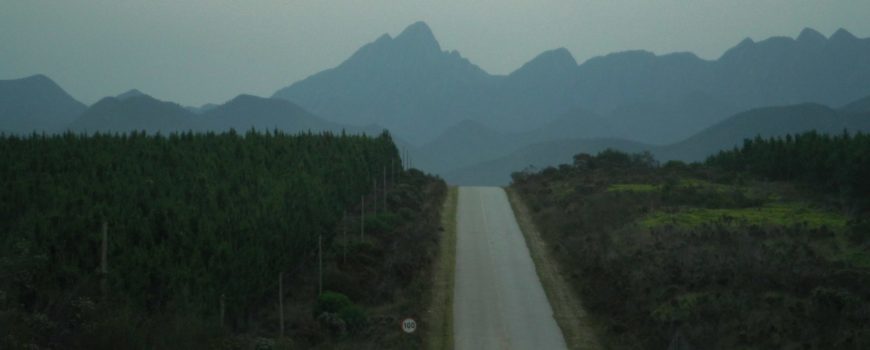
To date, the most spectacular leg of this land voyage so far has been the famous “Garden Route” between Port Elizabeth and Mossel Bay, which winds between rocky mountain peaks and the sea. A few extra-scenic detours along the way revealed deep river gorges, stunning cliff coastlines and the occasional troupe of baboons along the roadside.

From the land crew of this most amazing and scenic land voyage — aloha and stay tuned for more!


Please help keep us sailing for future generations. All contributions make a difference for our voyage. Mahalo nui loa!
Continue Reading

Crew Blog | Derek Ferrar: Eddie Aikau Finds ʻOhana in Apartheid South Africa

Today, as Hōkūleʻa lies moored in Durban Harbour, she has helped bring the spirit of Eddie Aikau back to this place that held deep meaning for him, and for two special families he met here.

In 1972, Eddie – the legendary Hawaiian surfer and lifeguard who later gave his life attempting to paddle for help when Hōkūleʻa capsized off Moloka‘i in 1978 – was invited to compete in the prestigious Gunston 500 surf competition in Durban, his first trip abroad. But from the beginning, there were concerns that Eddie might run into trouble in a country that was then living under the yoke of apartheid, the brutal system of official racial segregation enforced by the white minority government between the late 1940s and early 1990s. Under apartheid, the country’s black majority was restricted in almost every aspect of life; even many of the prime beaches where reserved for whites only.

IMG_3504And indeed, when Eddie arrived shortly before the competition began and tried to check into the hotel where all the other contestants were staying, he was stopped by security in the lobby and promptly escorted out. “He didnʻt even have a chance to tell them, ʻHey, I’m Hawaiian,’” recounts Eddie’s brother Clyde in the recent ESPN documentary Hawaiian: The Legend of Eddie Aikau. “But it didnʻt matter at that time; if you were black, you were out. And Eddie was literally on his own in a foreign country that he’d never been to before, and labeled black.”

Eddie told Honolulu Star-Bulletin writer Pierre Bowman after he returned home that he had even been in a quandary over which segregated restroom to use. “I just didn’t know where to go,” he said. Finally he decided to use the washroom labeled ʻEuropean,’ which caused a huge stir, “but nobody chased me out.” One of the things that stung the most, he said, was that none of the white competitors who also came from Hawai‘i for the contest even bothered to check on how he was doing.

“I was all on my own there,” he told Bowman. “During the day, nobody from home ever asked ʻWhere are you going? Is somebody taking you around?’ … They forgot me, man.”

Eddie Aikau

Fortunately, Eddie was rescued by the father of future South African surfing great Shaun Tomson, who was just a teenager at the time. After Eddie was booted from the hotel for being too dark, Tomson recalls, “my dad and I picked him up. We were staying in a small, private hotel because we had just had a house fire, and he came and stayed with us. I was still at school, but we’d hit the dawn patrol, and my dad took care of him.”

Eddie made it through the first day of the three-day contest, but was eliminated on the second day. However, his air ticket required him to stay in South Africa for at least 10 days. In the meantime, the Tomsons had introduced him to Australian surfboard shaper Darryl Holmes and his wife Lynne, who were living in Durban. The Holmes family threw a party for Eddie, and after he was out of the contest, they loaded him and their two daughters into their VW “combi” van and took a 600-mile road trip south to the legendary surf break Jeffrey’s Bay. “We surfed our guts out,” Eddie recalled later. “People invited us to dinner. I took along a guitar, and it was a big success. I showed them slack key and played the kind of songs we sing here in Hawai‘i.”

“I think Eddie’s experience showed him that there was a lot of love for him in South Africa and that not everyone supported apartheid,” Tomson says. “My dad was deeply troubled when Eddie wasn’t allowed in the hotel.” He notes that after his father was attacked by a shark in Durban in 1946 and traveled to San Francisco for arm surgery, he went to Honolulu to recuperate and while there spent time with Duke Kahanamoku’s family: “I think that after experiencing their aloha he was determined to do the same for Eddie.”

After Eddie met up with the Tomson and the Holmes families, Shaun says, “he only got aloha and good vibes from us and other surfers. Our three families are eternally connected through this, and that’s why I think he always had such a soft spot for South Africans and Australians.”

Lauhala

One of the Holmes’ daughters, Jodi Wilmott – now the general manager of the World Surf League pro tour and executive director of the North Shore’s premier Vans Triple Crown contest series – says, “The focus of Eddie’s story in South Africa has always been cast in a shadow of racism. But what if the situation of Apartheid in Eddie’s case was actually a catalyst that created true friendships that would span a lifetime? My family ended up following Eddie soon after to stay with him and his family. For me, Hawai‘i always felt like home because the Aikaus were here, and that set my life’s path. I have the life, family and career I do because of how we were all brought together by that time in South Africa.”

Eddie’s voice was heard once more aboard Hōkūleʻa this week in Durban as the crew listened to this recoding of a song he wrote for the Holmes family and sent to them using a small recorder that Jodi’s mom had given him. “Long time ago, in South Africa, met this family,” Eddie sings. “Oh, I was lost, and had no place to go. They took took me in, and made me their friend, and shared their love with me. … They came to my islands and lived with us, met my family, yes they did … and fun was had by all of us. … So God please take care of all the Holmes family.”

Jodi reflects: “Out of the adversity that Apartheid presented at that time, racial boundaries were actually dissolved and a very powerful and wonderful three-family bond was created, that has since touched the various generations and lives of our families … a thread that Eddie wove and continues to weave in our lives today. I believe it’s a story that does exactly what the Worldwide Voyage is trying to accomplish, as Nainoa explained it to me once: ʻsewing a thread around the world’ that ultimately ties us all together as one human race on Island Earth.”


Please help keep us sailing for future generations. All contributions make a difference for our voyage. Mahalo nui loa!

Continue Reading